A comprehensive examination by an esteemed international panel of vaccine safety experts, convened by the World Health Organization (WHO), has once again affirmed the definitive absence of any causative link between childhood immunizations and the development of autism spectrum disorders (ASD). This latest declaration decisively reinforces the global health agency’s longstanding conviction that the prophylactic inoculations administered to children are not responsible for the onset of autism. The findings emerge from a thorough review undertaken by the Global Advisory Committee on Vaccine Safety (GACVS), a body that has consistently provided independent, authoritative scientific guidance on critical vaccine-related safety issues since its inception in 1999.
The recent analysis, deliberated by the Committee on November 27, 2025, meticulously scrutinized two primary areas of public concern. Initially, the panel concentrated its efforts on discerning any potential connection between vaccines containing thiomersal, an organic mercury compound historically utilized as a preservative, and ASD. Concurrently, the experts broadened their investigation to assess the relationship between vaccines in general and ASD. Their conclusions were predicated on a substantial body of evidence comprising 31 distinct primary research studies, published within the scientific literature between January 2010 and August 2025. These investigations encompassed extensive datasets gathered from numerous countries across various continents, collectively offering robust support for the established positive safety profile of vaccines administered during both childhood and pregnancy, thereby unequivocally confirming the lack of an etiological association with autism spectrum disorders.
Beyond the thiomersal and general vaccine-ASD inquiry, the Committee also undertook a detailed evaluation of potential health risks that have been theoretically linked to vaccines incorporating aluminum adjuvants. This segment of the review drew upon a diverse collection of scientific inquiries conducted from 1999 through March 2023. Furthermore, the GACVS meticulously considered the insights from a recently published, exceptionally large-scale cohort study. This particular investigation leveraged nationwide registry data pertaining to children born in Denmark between 1997 and 2018, providing an expansive and powerful epidemiological lens through which to examine vaccine safety. The collective weight of this high-quality evidence firmly demonstrated no correlation between the minute quantities of aluminum employed in certain vaccine formulations and the occurrence of ASD, consequently upholding the continued judicious application of vaccines that utilize aluminum adjuvants to enhance immune response.
The controversy surrounding vaccines and autism, though scientifically debunked, has cast a long shadow over public health efforts for decades. Its origins can largely be traced back to a now-retracted 1998 paper published in The Lancet by Andrew Wakefield, which baselessly suggested a link between the measles, mumps, and rubella (MMR) vaccine and autism. Despite overwhelming evidence refuting Wakefield’s claims, and the subsequent revelation of his scientific misconduct, conflict of interest, and the striking off of his medical license, the misinformation he propagated has persistently fueled vaccine hesitancy globally. This enduring skepticism underscores the critical importance of rigorous, independent scientific review bodies like GACVS in providing clear, evidence-based guidance to both health professionals and the public.
Thiomersal, a mercury-containing organic compound, became a particular point of contention due to public anxieties surrounding mercury toxicity. It was widely used in multi-dose vaccine vials to prevent bacterial and fungal contamination. While studies consistently demonstrated that the ethylmercury in thiomersal is metabolized and excreted differently and much faster than methylmercury (the form found in fish, known to be toxic in high doses), and that the trace amounts in vaccines posed no threat, its use was largely phased out of childhood vaccines in many countries by the early 2000s as a precautionary measure, not due to any proven harm. The fact that the GACVS continues to review evidence regarding thiomersal, even after its widespread removal, highlights the Committee’s commitment to exhaustive scientific validation and addressing residual public concerns with up-to-date data.
Similarly, aluminum salts have served as adjuvants in vaccines for nearly a century, enhancing the body’s immune response to the vaccine antigens and thereby improving their efficacy. These trace amounts of aluminum, typically measured in micrograms, are significantly lower than the daily aluminum exposure individuals receive through diet (e.g., in breast milk, infant formula, or certain foods) and the environment. Despite its long history of safe use, questions about aluminum’s role in vaccines have surfaced, often conflating the minute quantities used in immunization with the health risks associated with much larger, chronic exposures to different forms of aluminum. The GACVS’s reaffirmation of the safety of aluminum adjuvants, based on extensive research, is crucial for maintaining confidence in a fundamental component of many effective vaccines.
The GACVS’s consistent findings are not isolated incidents but rather part of a continuous, iterative process of scientific validation. Following its latest exhaustive review, the Committee unequivocally reiterated its prior pronouncements from 2002, 2004, and 2012, all of which concluded that vaccines, irrespective of whether they incorporate thiomersal or aluminum compounds, do not induce autism. This consistent scientific consensus, built upon decades of research involving millions of individuals, stands as a testament to the robust safety monitoring systems in place for vaccines.
The broader implications of these findings for global public health cannot be overstated. The WHO consistently advises national health authorities worldwide to anchor their vaccine policies firmly in the most current and robust scientific evidence available. This guidance is particularly vital in an era marked by widespread misinformation and the persistent challenges of vaccine hesitancy. Trust in immunization programs is paramount for their success, and such trust is built upon transparency, rigorous safety assessments, and clear communication of scientific facts.
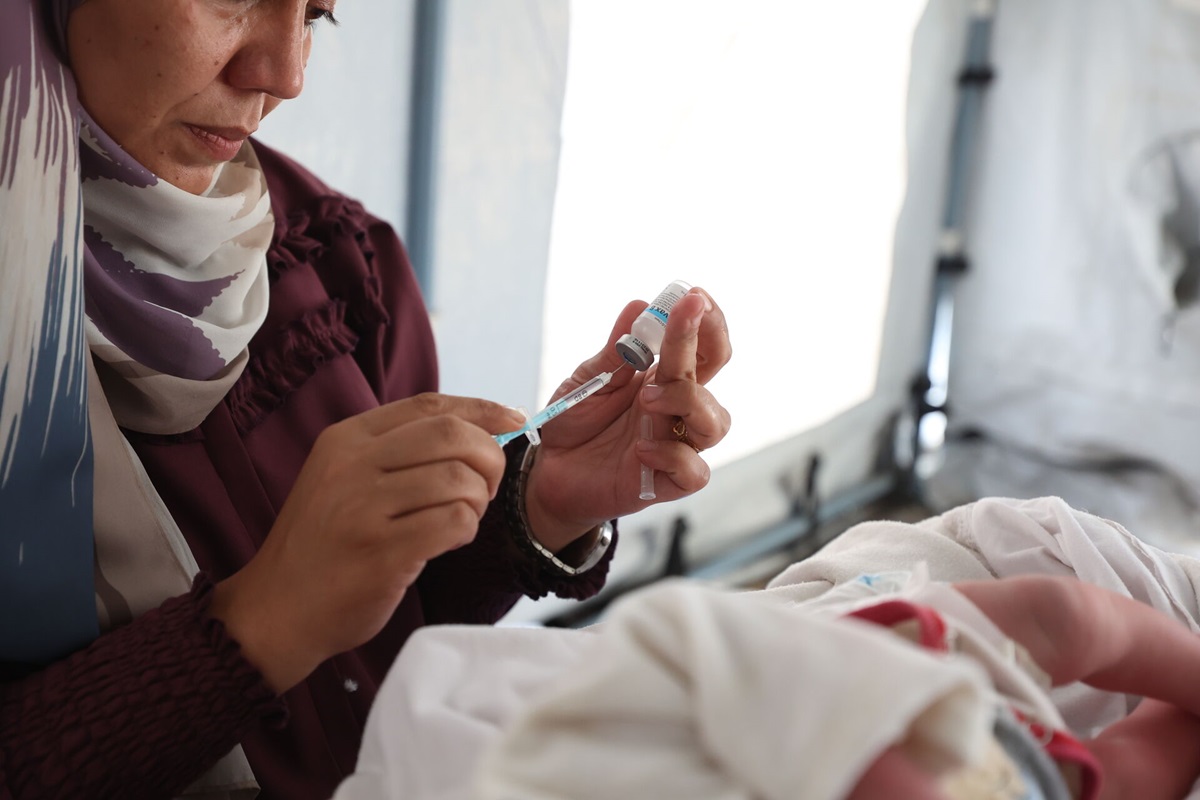
Indeed, global initiatives aimed at childhood immunization stand as one of humanity’s most profound triumphs in the realm of public health. Over the last five decades, these concerted efforts have demonstrably salvaged at least 154 million lives, preventing untold suffering and fostering healthier, more prosperous societies. Vaccines have played an indispensable role in drastically reducing the incidence of numerous devastating infectious diseases, from polio and measles to diphtheria and tetanus, enabling children to survive and thrive into adulthood, free from the threats that once claimed countless young lives.
The ongoing work of bodies like the GACVS is fundamental to sustaining these achievements. By providing transparent, independent, and evidence-based assessments of vaccine safety, they not only address specific public concerns but also fortify the foundational trust required for effective immunization programs. In an increasingly interconnected world, where vaccine-preventable diseases can rapidly cross borders, maintaining high rates of vaccination coverage is a collective responsibility, underpinned by sound science and unwavering commitment to public welfare. The latest GACVS report serves as another critical affirmation of the safety and efficacy of vaccines, providing a clear pathway for evidence-based public health policy and reinforcing the vital role of immunization in protecting global health.
About the Author