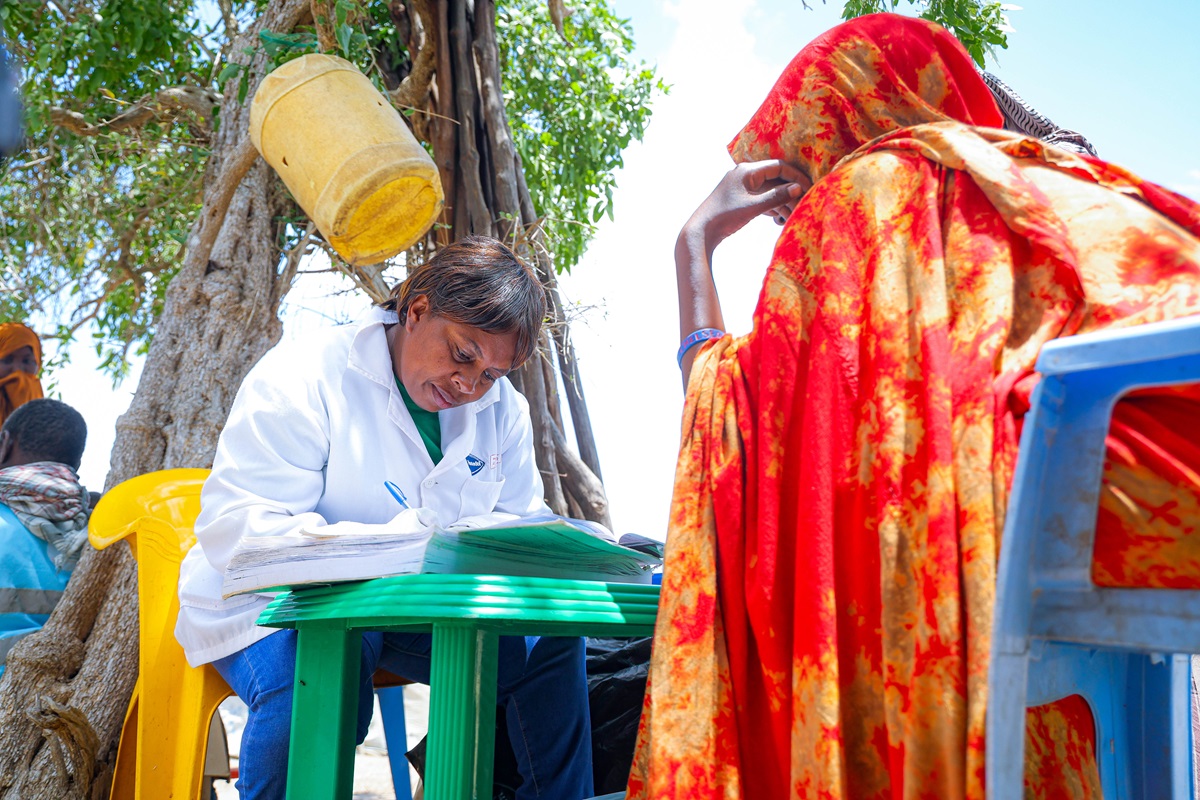
In a stark global assessment, leading United Nations agencies have issued a unified plea, highlighting an urgent imperative to intensify efforts and investment aimed at eradicating Female Genital Mutilation (FGM). Projections indicate a deeply concerning reality: an estimated 4.5 million young girls are anticipated to undergo this harmful procedure in 2026 alone, many of whom are under the age of five. This grim forecast underscores the enduring prevalence of a practice that already impacts over 230 million women and girls globally, forcing them to contend with its profound and often irreversible consequences throughout their lives. The joint statement, released on the International Day of Zero Tolerance for Female Genital Mutilation, serves as a critical call to action, warning that hard-won progress against this egregious human rights violation is jeopardized by waning support and financial shortfalls, threatening the ambitious 2030 elimination target.
Female Genital Mutilation encompasses any procedure involving the partial or total removal of the external female genitalia, or other injury to the female genital organs for non-medical reasons. It is universally recognized as a profound violation of the human rights of girls and women, infringing upon their physical integrity, autonomy, and fundamental right to health. This deeply entrenched practice, often rooted in socio-cultural norms, traditions, and misconceptions about purity, modesty, or premarital virginity, has no health benefits whatsoever. Instead, it inflicts immense and lasting harm, representing a severe form of gender-based violence that disproportionately affects the most vulnerable members of society.
The immediate and long-term health implications of FGM are catastrophic and span physical, mental, and sexual health domains. Immediately after the procedure, girls often endure excruciating pain, severe bleeding, infections, tetanus, and even fatal shock. In the longer term, survivors frequently suffer from chronic pain, recurrent urinary and vaginal infections, menstrual problems, and cysts. The reproductive health consequences are particularly severe, leading to complications during childbirth, including prolonged labor, obstetric fistula, hemorrhage, and increased risk of infant mortality. Beyond the physical scars, FGM leaves deep psychological wounds, contributing to anxiety, depression, post-traumatic stress disorder, and a diminished sense of self-worth. The economic burden associated with treating these lifelong complications is substantial, with global healthcare costs estimated at approximately US$1.4 billion annually, diverting critical resources from other essential health services.
Despite the formidable challenges, the global movement to end FGM has registered significant, albeit uneven, progress over the past three decades. A growing consensus against the practice is evident, with nearly two-thirds of the population in countries where FGM is prevalent now expressing support for its elimination. This shift in public sentiment reflects the efficacy of sustained advocacy, community engagement, and educational campaigns. Crucially, the pace of change has accelerated in recent years; half of all reductions in FGM prevalence observed since 1990 have occurred in the last decade alone, successfully bringing down the proportion of girls subjected to the practice from one in two to one in three. This momentum offers a powerful testament to the impact of dedicated efforts and collaborative initiatives.
This encouraging progress brings the global community closer to achieving Sustainable Development Goal target 5.3, which aims to eliminate all harmful practices, including FGM, by 2030. However, the path ahead remains arduous. To meet this ambitious deadline, the current rate of decline must be significantly accelerated, requiring a renewed and unwavering commitment from governments, civil society, international organizations, and local communities. The UN agencies involved – including the UNFPA, UNICEF, UN Human Rights, UN Women, WHO, and UNESCO – emphasize that while past successes provide a roadmap, they are not a guarantee of future achievements without sustained and enhanced action.
Empirical evidence has clearly identified a range of effective strategies for combating FGM. These include comprehensive health education initiatives that inform communities about the severe dangers and human rights implications of the practice. Engaging influential religious and community leaders, parents, and healthcare workers has proven crucial in challenging deeply entrenched norms and fostering dialogue. The strategic use of both traditional and social media platforms plays a vital role in amplifying prevention messages and reaching wider audiences. Furthermore, investing in and empowering community-led movements, including grassroots organizations and youth networks, is essential for driving change from within. Strengthening education, through both formal schooling and community-based learning approaches, helps to shift perceptions and empower girls and women. Amplifying prevention messages through trusted opinion leaders, particularly health professionals, can significantly enhance credibility and impact. Equally important is providing comprehensive, context-tailored support for survivors, ensuring access to quality healthcare, psychosocial counseling, and legal assistance.
The economic argument for investing in FGM eradication is compelling and demonstrates significant returns. Studies indicate that every dollar invested in programs designed to end FGM yields a tenfold return. Specifically, an estimated investment of US$2.8 billion has the potential to prevent 20 million cases of FGM and generate an impressive US$28 billion in investment returns. These returns extend beyond direct healthcare savings, encompassing increased productivity, improved educational outcomes for girls, enhanced women’s participation in the economy, and the broader societal benefits of a healthier, more equitable population. This data underscores that ending FGM is not merely a humanitarian imperative but also a sound economic investment in human capital and sustainable development.
Despite these clear benefits and the demonstrable progress, the gains achieved over decades are now at severe risk. As the 2030 deadline approaches, global investment and support for FGM elimination efforts are alarmingly waning. Significant funding cuts and a decline in international investment across critical sectors like health, education, and child protection programs are already constraining the capacity of organizations on the ground to prevent FGM and provide essential services to survivors. This financial retreat creates a dangerous vacuum, threatening to undermine successful initiatives and leaving communities vulnerable.
Compounding the challenge is a growing and systematic pushback against efforts to end FGM, often fueled by misinformation and dangerous arguments. Among the most concerning trends is the attempt to legitimize the practice when carried out by doctors or other health workers – a phenomenon known as the medicalization of FGM. This dangerous argument not only fails to mitigate the harm but also normalizes and institutionalizes the practice, lending it a false veneer of safety and acceptability. Medicalization fundamentally undermines the core principle of FGM eradication, which is to eliminate the practice entirely, regardless of who performs it or where. Such efforts add significant hurdles to achieving total elimination and confuse public perception, making the fight against FGM even more complex.
Without adequate and predictable financing, the consequences could be dire. Community outreach programs, which are vital for fostering behavioral change at the grassroots level, risk being scaled back or entirely dismantled. Frontline services for prevention and survivor support could be severely weakened, leading to a reversal of the hard-won gains. Such a setback would place millions more girls at heightened risk, particularly at a critical juncture in the global push to meet the 2030 target. The UN agencies warn that this is not merely a hypothetical scenario but an imminent threat that demands immediate attention and a renewed commitment from all stakeholders.
On this pivotal International Day of Zero Tolerance, the UNFPA Executive Director, UNICEF Executive Director, UN High Commissioner for Human Rights, UN Women Executive Director, WHO Director-General, and UNESCO Director-General collectively reaffirm their unwavering commitment. They pledge to intensify collaboration with a broad spectrum of local and global partners, encompassing public and private entities, civil society organizations, and, critically, survivors themselves. The unified message is clear: the fight to end female genital mutilation once and for all requires a renewed surge of political will, financial investment, and concerted action. Protecting the futures of millions of girls and ensuring the dignity and health of all women hinges on a collective global resolve to dismantle this harmful practice by 2030, transforming a vision of zero tolerance into a tangible reality.
About the Author