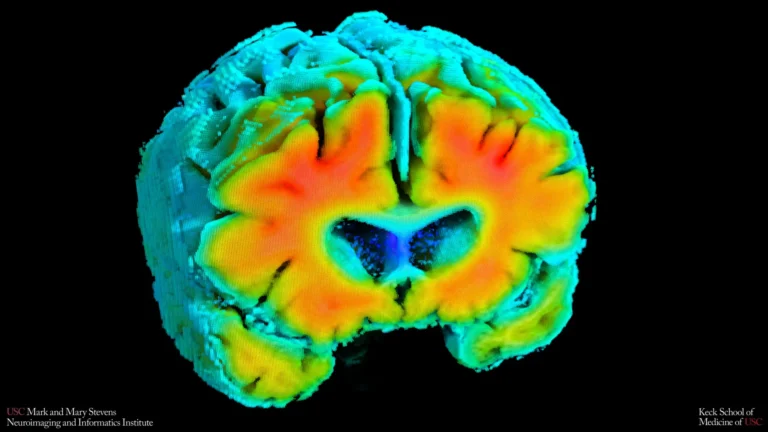
For generations, the intricate workings of the human brain have captivated scientists, leading to monumental strides in understanding the biological underpinnings of thought. The prevailing model within neuroscience has frequently conceptualized the brain as a mosaic of highly specialized components, each meticulously honed for distinct cognitive operations. Researchers have historically dedicated their efforts to isolating and scrutinizing these individual systems—such as those governing attention, memory encoding, perceptual processing, linguistic interpretation, and logical reasoning—often attributing specific functions to discrete neural networks. This modular approach has undoubtedly yielded transformative insights, propelling forward our comprehension of neurological disorders and the localized mechanisms of various mental faculties. However, this granular perspective, while profoundly successful in deconstructing the brain’s parts, has encountered a persistent conceptual challenge: how do these ostensibly separate and specialized systems seamlessly converge to forge the holistic, unified tapestry of human consciousness and intelligent thought?
Addressing this profound question, a team of pioneering researchers at the University of Notre Dame embarked on an ambitious investigation. Leveraging cutting-edge neuroimaging technologies, their inquiry transcended the conventional focus on individual brain regions, instead scrutinizing the brain’s overarching organizational principles and the manner in which this global architecture gives rise to the phenomenon of intelligence. Professor Aron Barbey, the Andrew J. McKenna Family Professor of Psychology and director of both the Notre Dame Human Neuroimaging Center and the Decision Neuroscience Laboratory, underscored the critical gap in current understanding. He articulated that while neuroscience has excelled in elucidating the specific functionalities of particular neural networks, it has been considerably less effective in explaining the emergence of a singular, coherent mind from the complex interplay of these diverse components.
The concept of "general intelligence" has long fascinated psychologists and cognitive scientists. For over a century, empirical observations have consistently revealed a striking correlation among various cognitive abilities: individuals who demonstrate high proficiency in one area, such as verbal comprehension or abstract reasoning, typically exhibit strong performance across a broad spectrum of other intellectual tasks, including attention, memory recall, and problem-solving. This pervasive pattern, often referred to as the "g-factor," significantly influences an individual’s capacity for learning, adapting to novel situations, and effectively navigating academic, professional, social, and health-related challenges. The enduring existence of this observed unity in human cognition has strongly suggested a deep, underlying organizational principle. Yet, a robust neurobiological explanation for why this profound unity exists has remained elusive, largely overshadowed by research paradigms emphasizing functional localization.
Professor Barbey critically re-evaluated the prevailing investigative trajectory, asserting that the fundamental question surrounding intelligence is not merely one of functional localization. He contended that much contemporary research, while valuable, often narrowly focuses on identifying specific networks of regions—particularly within the frontal and parietal cortices—as the presumed origin point of general intelligence. He argued that a more fundamental and illuminating inquiry lies in deciphering how intelligence genuinely emerges from the foundational principles governing global brain function, specifically examining the intricate communication pathways and collective information processing dynamics among widely distributed neural networks.
To explore this expansive perspective, Professor Barbey and his team, including lead author and Notre Dame graduate student Ramsey Wilcox, rigorously tested a novel theoretical framework known as the Network Neuroscience Theory. Their groundbreaking findings, which challenge long-held assumptions about brain function, were subsequently published in the esteemed scientific journal Nature Communications.
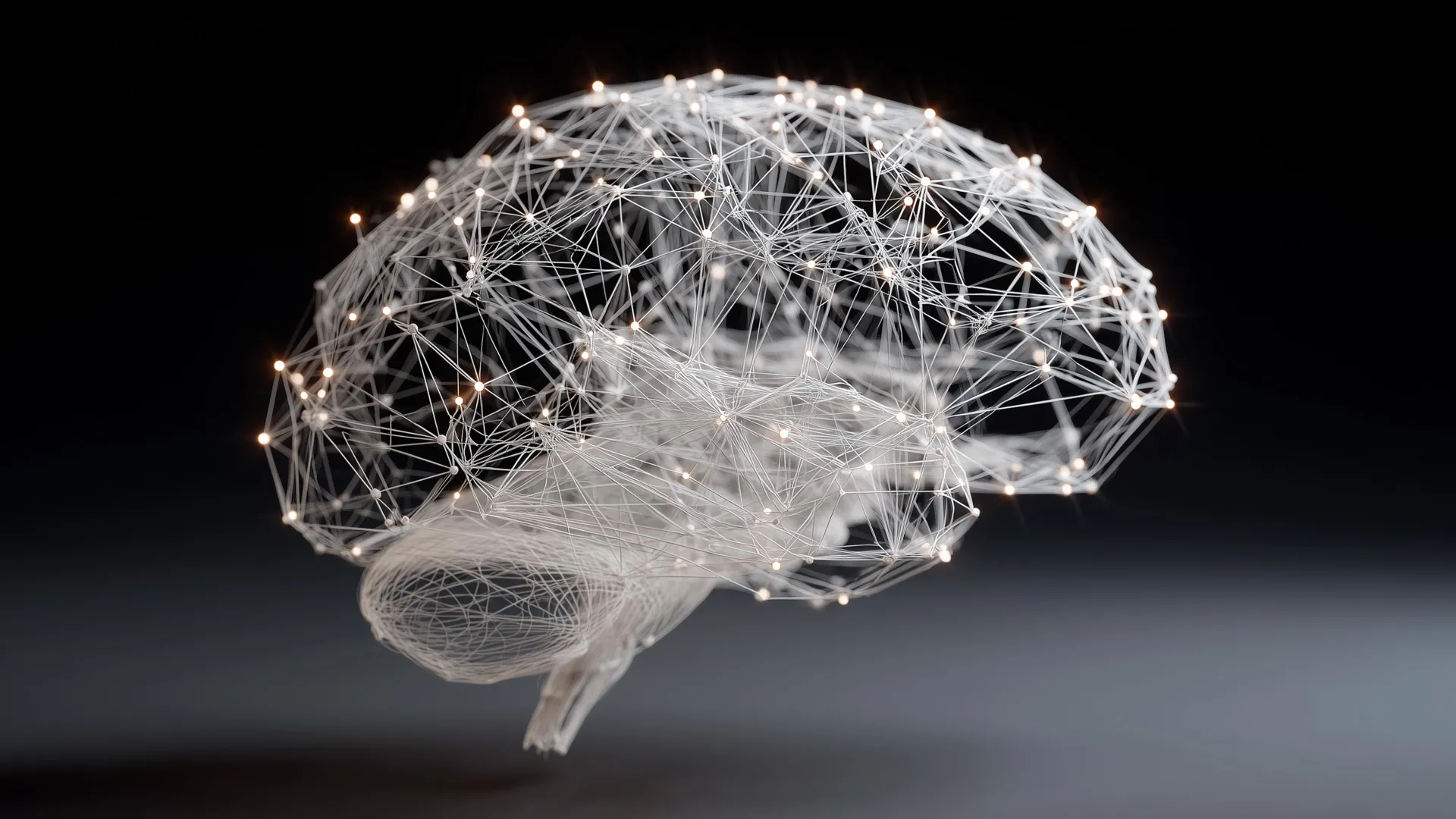
At its conceptual core, the Network Neuroscience Theory posits that general intelligence is not an isolated cognitive ability or a specific mental strategy residing in a singular brain region. Instead, it is understood as an emergent property—a pervasive pattern reflecting the consistent positive interrelationship among numerous cognitive skills. This observed pattern, the researchers propose, stems directly from the inherent efficiency of the brain’s structural organization and the seamless efficacy with which its diverse neural networks collaborate and coordinate their activities.
To empirically evaluate this innovative hypothesis, the research team undertook an extensive analysis of multimodal brain imaging data and corresponding cognitive performance metrics. Their primary dataset comprised information from 831 adult participants drawn from the Human Connectome Project, a large-scale initiative mapping human brain connectivity. To ensure the robustness and generalizability of their findings, they also examined an independent validation group of 145 adults participating in the INSIGHT Study, a research endeavor funded by the Intelligence Advanced Research Projects Activity’s SHARP program. By meticulously integrating measures of both brain structure (how the brain is physically wired) and brain function (how different areas interact), the researchers constructed an exceptionally detailed and comprehensive picture of large-scale brain organization.
This investigative approach represented a significant departure from traditional neuroscience. Rather than attempting to pinpoint intelligence to a solitary brain region or a discrete cognitive function, the Network Neuroscience Theory frames intelligence as an intrinsic property of the brain viewed as an integrated whole. Within this framework, intellectual capacity is intimately linked to the effectiveness with which neural networks dynamically coordinate their activities and flexibly reorganize themselves to adeptly navigate a myriad of cognitive challenges. Barbey and Wilcox characterized this conceptual shift as a pivotal reorientation in understanding the very essence of cognition.
Ramsey Wilcox elaborated on this crucial distinction, stating, "We found compelling evidence for system-wide coordination within the brain that exhibits both remarkable robustness and profound adaptability. Crucially, this coordination does not, in itself, directly execute specific cognitive operations, but rather establishes and defines the entire spectrum of cognitive operations that the overall system is capable of supporting." He further expounded on the theoretical modeling, explaining, "Within this framework, the brain is effectively modeled as a dynamic network whose operational behavior is intrinsically constrained and shaped by overarching global properties such as its overall processing efficiency, its functional flexibility, and its capacity for integration. These fundamental properties are not confined to individual tasks or specific brain networks; instead, they are defining characteristics of the system in its entirety, influencing every cognitive operation without being reducible to any single one of them." Wilcox emphasized the transformative power of this new lens: "Once the investigative focus shifts from identifying where intelligence resides to understanding how the entire system is organized, the empirical targets and methodologies inherently transform."
The extensive empirical analysis conducted by the Notre Dame team yielded robust support for four primary predictions derived from the Network Neuroscience Theory, offering unprecedented insights into the unified nature of human intelligence.
First, the findings unequivocally demonstrated that intelligence does not originate or reside within a single, isolated neural network. Instead, it emerges as a product of information processing distributed across a multitude of interconnected networks. The brain’s remarkable efficiency stems from its ability to judiciously divide complex tasks among its specialized systems while simultaneously possessing the capacity to seamlessly combine their respective outputs when holistic integration is required.
Second, the research underscored that successful cognitive coordination fundamentally necessitates robust integration and efficient long-distance communication among disparate brain regions. Professor Barbey vividly described "a vast and intricate system of connections that function as ‘shortcuts,’ effectively linking distant brain regions and facilitating the rapid integration of information across various networks." These high-speed communicative pathways enable geographically separated areas of the brain to exchange crucial information with remarkable efficiency, thereby underpinning the coherent, unified processing that characterizes intelligent thought.
Third, the study revealed that this critical integration process is heavily reliant on specialized regulatory regions, often referred to as "hubs," which actively guide and orchestrate the flow of information throughout the brain. These pivotal hubs play a crucial role in coordinating activity across diverse networks, dynamically selecting and engaging the most appropriate systems for a given cognitive task. Whether an individual is interpreting subtle social cues, acquiring a novel skill, or deliberating between a meticulous analytical approach and a rapid intuitive judgment, these regulatory areas are instrumental in managing the complex, multi-faceted cognitive process.
Finally, the Network Neuroscience Theory’s predictions highlighted that general intelligence fundamentally depends on achieving an optimal balance between localized specialization and global integration. The brain operates at its peak performance when tightly connected local clusters of neurons can execute their specialized functions with maximal efficiency, while simultaneously maintaining short, effective communication paths to more distant regions. This delicate equilibrium—where highly specialized modules can operate effectively yet remain deeply interconnected within a global network—is precisely what supports flexible, adaptive, and effective problem-solving across a vast array of contexts. Across both the large Human Connectome Project cohort and the independent INSIGHT Study group, differences in general intelligence consistently aligned with these observed large-scale organizational features. Critically, no single brain area or traditionally defined "intelligence network" proved sufficient to explain the comprehensive pattern of results. As Professor Barbey concisely summarized, "General intelligence becomes truly visible and operational when cognition is coordinated—when numerous processes must collaboratively function under the overarching constraints of the entire system."
The implications of this groundbreaking research extend far beyond merely enhancing our understanding of human intelligence. By shifting the focus to large-scale brain organization, these findings offer profound insights into the fundamental reasons why the mind functions as a unified, coherent system in the first place. This novel perspective may also provide a compelling explanation for several well-established phenomena: why intelligence tends to progressively increase throughout childhood and adolescence, why it often experiences a gradual decline with advancing age, and why it is particularly vulnerable to widespread brain injury. In each of these scenarios, the most significant changes observed are not typically confined to isolated cognitive functions but rather involve alterations in the brain’s global, large-scale coordination capabilities.
Moreover, these results contribute significantly to ongoing debates surrounding the development of artificial intelligence (AI). If human intelligence is intrinsically dependent on sophisticated system-level organization and dynamic network coordination, rather than simply a singular, general-purpose mechanism that can be scaled up, then the ambitious goal of constructing truly artificial general intelligence (AGI) may require more than merely enhancing the computational power or scaling up the capabilities of specialized AI tools. Professor Barbey underscored this point, stating, "This research can compel us to think deeply about how to leverage the inherent design characteristics of the human brain to motivate transformative advancements in human-centered, biologically inspired artificial intelligence." He further elaborated on the current limitations of AI, noting, "While many contemporary AI systems can execute highly specific tasks with remarkable proficiency, they continue to struggle significantly when tasked with applying their knowledge and learned skills across diverse, novel situations. Human intelligence, by contrast, is fundamentally defined by this inherent flexibility—a flexibility that, as our research suggests, directly reflects the unique, integrated organization of the human brain."
This seminal research was conducted in collaborative partnership with co-authors Babak Hemmatian and Lav Varshney, both affiliated with Stony Brook University. Their combined efforts have illuminated a new path forward, urging a holistic view of the brain as a dynamically integrated system, rather than a mere collection of parts, in our ongoing quest to unravel the mysteries of intelligence.
About the Author