A recent comprehensive analysis by the Integrated Food Security Phase Classification (IPC) has offered a glimmer of hope in the beleaguered Gaza Strip, confirming that no regions within the territory are currently experiencing catastrophic famine conditions (IPC Phase 5). This development, following the implementation of a ceasefire in October and subsequent improvements in the flow of both humanitarian and commercial goods, represents a critical, albeit precarious, advancement. However, leading United Nations agencies—including the Food and Agriculture Organization (FAO), UNICEF, the World Food Programme (WFP), and the World Health Organization (WHO)—have issued a stark warning: these fragile gains could swiftly unravel without a significant and sustained escalation of support across multiple sectors. The population continues to grapple with the aftermath of extensive infrastructural destruction, the near-total collapse of livelihoods, and severely hampered local food production capabilities, exacerbated by persistent restrictions on humanitarian operations.
The Integrated Food Security Phase Classification (IPC) system provides a standardized, technical framework for classifying the severity and magnitude of food insecurity and malnutrition. Its methodology employs internationally recognized scientific standards to offer a comprehensive assessment of a crisis, which is then used by governments and humanitarian agencies to inform decision-making. The recent IPC report for Gaza, therefore, carries substantial weight, signaling a shift from the direst classification. While the removal of the famine classification is a welcome reprieve, the underlying data paints a sobering picture of pervasive distress. A staggering 1.6 million individuals, representing approximately 77 percent of Gaza’s total population, continue to endure high levels of acute food insecurity, categorized as IPC Phase 3 (Crisis) or higher. Within this deeply vulnerable group, projections indicate that over 100,000 children and 37,000 pregnant and breastfeeding women are at risk of suffering acute malnutrition through April of the coming year.
Four of Gaza’s governorates—North Gaza, Gaza Governorate, Deir al-Balah, and Khan Younis—are presently categorized under IPC Phase 4 (Emergency), a designation expected to persist until April 2026. Notably, Gaza Governorate, which had previously been classified in Phase 5 (Famine), has seen a downgrade to Phase 4. While an improvement, Phase 4 still signifies severe food insecurity, characterized by extensive food consumption gaps, alarmingly high rates of acute malnutrition, and a heightened risk of mortality. This classification underscores that while mass starvation might have been temporarily averted, the majority of the population remains on the precipice of an even deeper crisis, living with insufficient food access and inadequate nutritional intake.
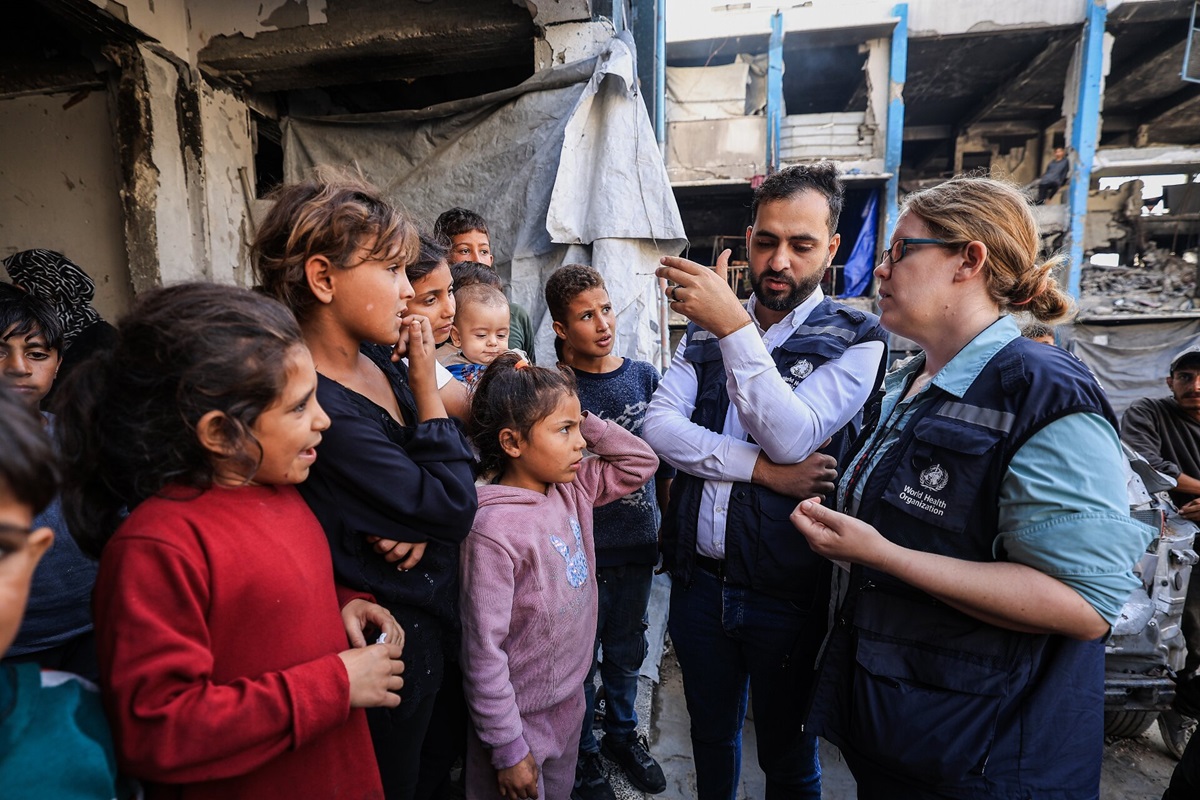
The October ceasefire facilitated a modest but crucial increase in the delivery of vital provisions, including food, animal feed, essential commercial imports, and basic supplies, thereby improving food access for some households. Despite these incremental improvements, a vast majority of families throughout the Strip continue to face profound shortages. The human cost of the ongoing conflict is immense, with more than 730,000 people displaced since the ceasefire alone. These individuals are often forced into precarious living conditions within makeshift shelters, almost entirely dependent on external humanitarian assistance for survival.
The challenges confronting Gaza extend far beyond mere food availability. The widespread destruction of essential infrastructure has crippled access to fundamental services. Limited availability of clean water, sanitation, and hygiene (WASH) services creates a fertile ground for disease outbreaks. Healthcare facilities, already severely compromised, struggle to cope with the surge in illness. The devastation of agricultural lands, livestock, and fishing operations has obliterated local food production capabilities, while the destruction of roads and other critical infrastructure impedes both humanitarian aid distribution and any prospects for economic recovery. These multifaceted crises collectively pose monumental obstacles for the affected population and for the sustained efforts of relief organizations.
Even with markets showing better stock levels of nutritious foods due to improved humanitarian and commercial inflows, a significant barrier remains: affordability. Vulnerable families, particularly those with young children, find themselves unable to purchase these vital provisions. Nutrient-rich foods, especially sources of protein, are not only scarce but also prohibitively expensive. Consequently, approximately 79 percent of households lack the financial means to buy adequate food or access clean water. The implications for child health are particularly dire; no children are currently achieving minimum dietary diversity, and two-thirds are experiencing severe food poverty, consuming only one or two food groups daily. This chronic lack of diverse nutrition can lead to severe long-term health consequences, including stunted growth, impaired cognitive development, and increased susceptibility to infectious diseases.
The precarious living conditions further exacerbate the health crisis. Overcrowded makeshift shelters, severely damaged sewage systems, and unreliable water supplies create unsanitary environments ripe for the rapid spread of illness. The desperate measure of burning wood or trash for warmth in these congested settings contributes to poor air quality and respiratory problems. These combined factors are directly fueling outbreaks of various diseases, accelerating the spread of respiratory infections, debilitating diarrhea, and skin diseases, with children being disproportionately affected. The cumulative effect of malnutrition, lack of sanitation, and inadequate healthcare forms a vicious cycle, trapping families in a state of perpetual vulnerability.
United Nations agencies, including FAO, UNICEF, WFP, and WHO, have expressed their readiness and commitment to significantly scale up their respective responses. However, their capacity to operate at the necessary scale is severely hampered by a confluence of factors. Persistent import restrictions, complex access constraints, and substantial funding gaps collectively impede efforts across critical sectors such as food security, nutrition, health, water, sanitation, hygiene, agriculture, and livelihood recovery. The bureaucratic hurdles and security challenges involved in bringing essential supplies into Gaza, particularly items deemed "dual-use," further complicate an already dire logistical landscape.
Rein Paulsen, Director of FAO’s Office of Emergencies and Resilience, underscored the potential of local communities, stating, "Gaza’s farmers, herders, and fishers are eager to recommence food production, but they are entirely dependent on immediate access to basic supplies and funding to do so." He emphasized that the current ceasefire has opened a "narrow window" of opportunity to deliver life-sustaining agricultural inputs to these vulnerable producers. Paulsen stressed that only through consistent funding and expanded, sustained access can local food production revive, thereby reducing the population’s heavy reliance on external aid and fostering a degree of self-sufficiency.
Lucia Elmi, UNICEF Director of Emergency Operations, highlighted the continued peril faced by Gaza’s children. "While Gaza’s children are no longer facing the immediate threat of deadly famine, they remain in grave danger," Elmi remarked. She noted that two years of relentless conflict have left "deep, lasting scars" on children’s bodies and developing brains. Elmi reiterated that even with food now available in markets, countless families simply cannot afford it. The functional status of health facilities remains severely compromised, clean water and sanitation services are critically scarce, and the onset of winter is intensifying the suffering of displaced individuals huddled in rudimentary shelters. "These fragile gains could vanish overnight if fighting resumes," Elmi warned, advocating for sustained humanitarian access, the restoration of essential services, and, above all, a lasting peace. "Gaza’s children have endured enough. The world must not look away now."
Ross Smith, WFP Director of Emergency Preparedness and Response, reflected on the effectiveness of coordinated efforts. "Once again, we have demonstrated our capacity to push back against famine when we are afforded the necessary access, security, and funding to deliver food and vital support," Smith asserted. He urged the international community to "double down on these gains" and ensure that people can reliably access essential services. Smith affirmed WFP’s commitment to supporting families in Gaza in their transition from aid dependency towards self-sufficiency, envisioning a future free from hunger and grounded in hope, stability, and prosperity.
Altaf Musani, WHO’s Director for Humanitarian and Disaster Management, provided a sobering assessment of the health infrastructure. "The ceasefire has created room for recovery, but it has not erased the damage inflicted by two years of conflict," Musani stated, revealing that only fifty percent of Gaza’s health facilities are even partially functional, with many having sustained damage during the hostilities. He detailed how even operational facilities grapple with severe shortages of essential supplies and equipment, which are subjected to "complex entry procedures and restrictions," with many classified as potentially dual-use. Musani emphasized that malnutrition remains high, particularly among children and women, and noted that WHO is actively supporting seven severe acute malnutrition stabilization centers across the Gaza Strip. "Much more is needed to address the vast health needs," he stressed, calling urgently for the "expedited approval and entry of essential medical supplies, equipment, and prefabricated hospital structures" to scale up life-saving services and expand access to care.
In light of this precarious situation, the four UN agencies – FAO, UNICEF, WFP, and WHO – have issued a unified and urgent call to action. They implore all parties involved to prioritize and facilitate unhindered, safe, and sustained humanitarian access throughout the Gaza Strip. They demand the immediate removal of all obstacles to the delivery of essential aid, including vital food, water, sanitation, health, and agricultural supplies. Crucially, they stress the need for a significant increase in funding to support ongoing and expanded relief operations, as well as long-term recovery initiatives.
The agencies collectively warn that without decisive action and a concerted global effort, the hard-won gains achieved since the ceasefire could rapidly dissipate, plunging Gaza back into the abyss of famine. Only through comprehensive access, the consistent flow of essential supplies, and robust, sustained funding can the international community hope to prevent a catastrophic reversal and facilitate Gaza’s arduous journey from mere survival towards a genuine and sustainable recovery. The current moment represents a critical juncture, demanding unwavering commitment to humanitarian principles and the long-term well-being of a population on the brink.
About the Author