As individuals navigate the landscape of their fifth decade and beyond, the sustained cultivation of physical strength, particularly in the upper body, emerges as a critical determinant of overall health, functional independence, and quality of life. The natural physiological shifts associated with aging, including a progressive decline in muscle mass, a phenomenon known as sarcopenia, and reductions in bone mineral density, underscore the imperative for targeted strength interventions. Beyond mitigating these age-related declines, a robust upper body contributes significantly to maintaining optimal posture, alleviating common discomforts such as neck and back pain, and fostering stability in major joints, thereby profoundly influencing an individual’s capacity to perform everyday activities with ease and confidence.
In the pursuit of enhanced upper body resilience, conventional gym machinery has long been a staple. However, a growing body of expert opinion suggests that alternative modalities, specifically those incorporating bodyweight and resistance bands, may offer a more effective and holistic pathway to strength redevelopment for the demographic aged 50 and above. Karen Ann Canham, CEO and founder of Karen Ann Wellness, advocates for a strategic shift towards exercises that prioritize multi-joint engagement and functional movement patterns over the isolated muscle activation often associated with fixed-path machines. Canham highlights that these alternative movements inherently improve coordination, foster superior postural alignment, and cultivate a type of "real-world" strength that translates directly into improved daily living. She further elaborates that while machines can sometimes restrict natural movement arcs and potentially exacerbate joint irritation, bodyweight and resistance band exercises provide consistent muscular tension, allow for greater control over the range of motion, and lend themselves to more frequent, sustainable integration into a daily routine. For those over 45, she emphasizes, the essence of rebuilding strength lies in the quality and regularity of movement, rather than solely focusing on heavy loads or predetermined mechanical trajectories.
This functional approach moves beyond simply building visible muscle, aiming instead for comprehensive strength that supports joint health, improves balance, and enhances overall physical capacity. The accessibility and versatility of bodyweight and resistance band exercises also mean that effective training can occur virtually anywhere, negating the need for expensive gym memberships or specialized equipment. Herein lies a compelling set of five exercises, recommended for daily inclusion, that can accelerate the restoration of upper body strength, potentially surpassing the efficacy of traditional weight machines for the mature adult population.
1. Incline Pushups
The incline pushup stands as a foundational exercise, offering a highly adaptable means to strengthen the chest, shoulders, and triceps, while simultaneously engaging the core musculature for stability. Unlike standard pushups performed on the floor, the incline variation reduces the percentage of body weight being lifted, making it significantly more accessible and less strenuous on the joints, particularly the wrists and shoulders, which can be prone to discomfort with age. This modification allows individuals to maintain proper form and execute a full range of motion, which is paramount for effective muscle recruitment and injury prevention. To perform, position hands slightly wider than shoulder-width apart on an elevated surface such as a sturdy countertop, a robust table, or even a wall, ensuring the body forms a straight line from head to heels. Lower the chest towards the surface by bending the elbows, keeping them tucked at approximately a 45-degree angle to the body, then push back up to the starting position. The incline can be gradually decreased as strength improves, eventually progressing towards standard pushups or more challenging variations. The multi-joint nature of this exercise ensures synergistic activation of various muscle groups, mimicking movements common in daily life, such as pushing objects or stabilizing oneself.
2. Standing Band Rows
Targeting the critical muscle groups of the upper back—including the rhomboids, trapezius, and latissimus dorsi—along with the biceps, standing band rows are instrumental in improving posture and counteracting the forward-rounded shoulder posture often developed from prolonged sitting. Resistance bands provide a unique advantage due to their progressive resistance, meaning the tension increases as the band is stretched, providing a different stimulus compared to free weights or machines. To execute this movement, secure a resistance band around a stable anchor point, such as a pole or a closed door, at approximately chest height. Grasp the ends of the band with both hands, stepping back until there is moderate tension. With feet shoulder-width apart and a slight bend in the knees, engage the core and pull the band towards the torso, squeezing the shoulder blades together at the peak of the movement. Control the return phase, allowing the band to slowly extend the arms forward, resisting the pull. This exercise not only builds strength but also enhances proprioception and kinesthetic awareness, crucial for maintaining balance and coordination. The standing position further integrates core stability, making it a highly functional movement for overall back health and injury prevention.
3. Standing Overhead Band Press
The standing overhead band press is an excellent exercise for developing strength in the shoulders (deltoids) and triceps, while also demanding significant core engagement for stabilization. For individuals over 50, performing this exercise with a resistance band offers a safer alternative to heavy free weights, as the variable resistance reduces peak stress at the weakest points of the lift and allows for a more controlled movement pattern. To begin, step on the middle of a resistance band with both feet, holding the ends of the band in each hand, palms facing forward, at shoulder height. Engage the core, maintain a straight back, and press the hands directly overhead until the arms are fully extended but not locked. Slowly lower the hands back to the starting position, controlling the band’s resistance throughout the descent. The standing posture necessitates greater activation of stabilizer muscles throughout the entire kinetic chain, from the feet up to the shoulders, fostering improved balance and functional strength. This movement directly translates to daily activities such as reaching for objects on high shelves or lifting items overhead, contributing significantly to independence.
4. Farmer’s Carry
Often underestimated, the Farmer’s Carry is a powerhouse exercise that offers comprehensive benefits, engaging virtually the entire body. While it primarily targets grip strength, which is a key indicator of overall health and longevity, it also profoundly strengthens the shoulders, upper back (traps), core stabilizers, and even the muscles of the legs and glutes, while simultaneously improving walking mechanics and endurance. For the over-50 demographic, enhancing grip strength is particularly important for tasks ranging from opening jars to carrying groceries, and its correlation with reduced risk of falls cannot be overstated. To perform, hold a moderately heavy dumbbell, kettlebell, or even a sturdy bag filled with weight in each hand, ensuring a firm grip. Stand tall with shoulders back and down, chest up, and core engaged. Walk for a predetermined distance or duration, focusing on maintaining upright posture and a steady gait. The objective is not speed, but controlled, stable movement. The unilateral loading inherent in carrying two separate weights challenges the body’s anti-lateral flexion and anti-rotation capabilities, effectively training the core to resist unwanted movement, which is highly beneficial for spinal health and everyday balance.
5. Band Pull-Aparts
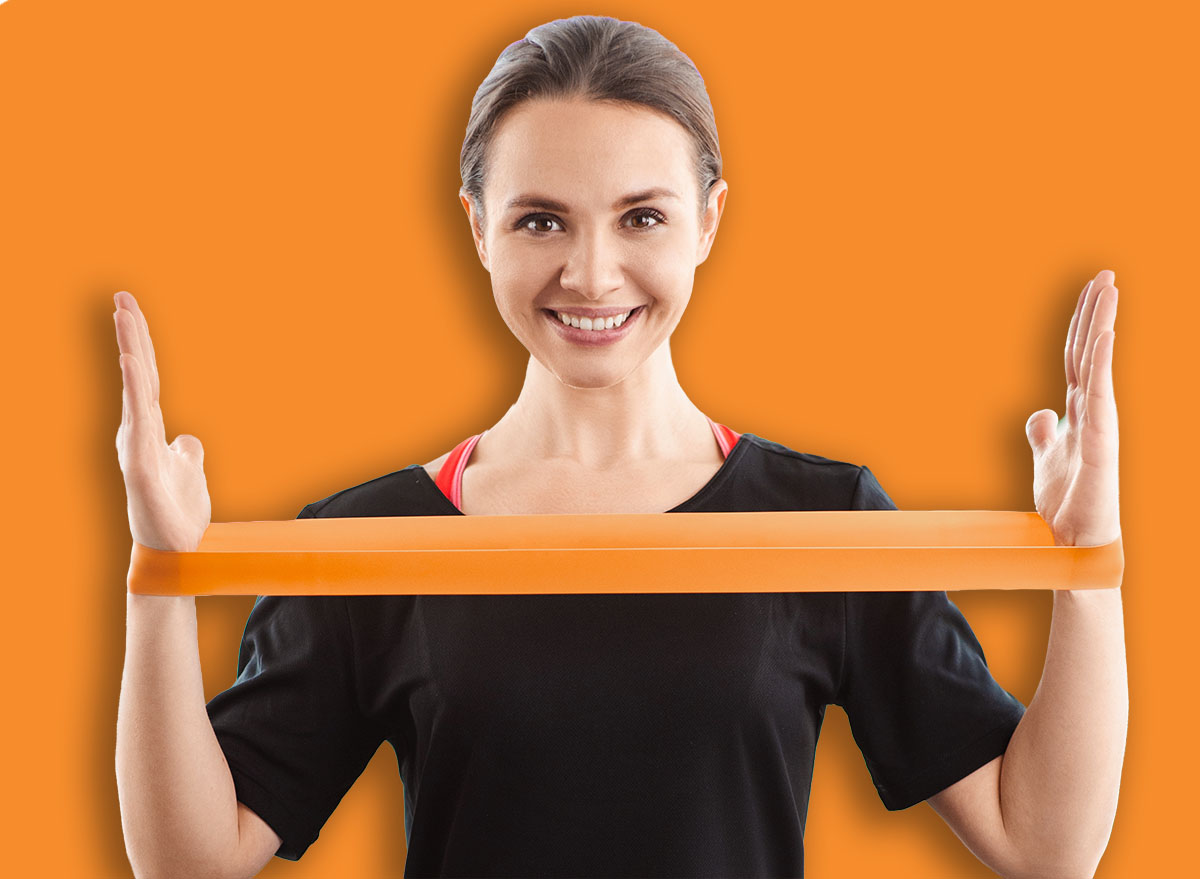
Band pull-aparts are an often-overlooked yet incredibly effective exercise for strengthening the posterior deltoids (rear shoulders) and rhomboids, muscles crucial for shoulder stability and counteracting the internal rotation often caused by prolonged computer use or poor posture. For individuals over 50, maintaining strong and balanced shoulder girdle musculature is vital for preventing shoulder impingement, improving range of motion, and promoting an upright stance. To execute, hold a light to medium resistance band with both hands, arms extended straight out in front of the chest at shoulder height, palms facing each other. Keeping the arms straight or with a very slight bend in the elbows, pull the band apart horizontally by squeezing the shoulder blades together, as if trying to pinch a pencil between them. Continue pulling until the band touches the chest or upper abdomen, then slowly return to the starting position, controlling the band’s resistance. This exercise isolates the smaller, often neglected muscles that support the shoulder joint, which are vital for overall shoulder health and can significantly improve the efficacy of other upper body movements. Its low impact nature and high effectiveness make it an ideal daily inclusion for maintaining optimal shoulder function.
Incorporating these five exercises into a consistent daily regimen can significantly contribute to rebuilding and maintaining upper body strength after the age of 50. The emphasis on functional, multi-joint movements, coupled with the versatility and joint-friendly nature of bodyweight and resistance band training, offers a sustainable and effective alternative to traditional weight machines. However, regardless of the chosen method, consistency remains paramount. Listening to one’s body, ensuring proper form, and gradually increasing resistance or repetitions as strength improves are fundamental principles for safe and effective progression. Furthermore, integrating a balanced diet rich in protein, maintaining adequate hydration, and consulting with a healthcare professional or certified fitness expert before embarking on any new exercise program are essential steps to ensure optimal outcomes and long-term well-being. By embracing this thoughtful and adaptable approach to strength training, individuals over 50 can unlock enhanced mobility, reduced pain, and a more vibrant, active lifestyle.
About the Author