As individuals progress beyond their mid-forties, a noticeable decline in physical capabilities, particularly in upper body strength, often becomes a prevalent concern. This phenomenon, frequently attributed to the natural aging process, is more accurately understood as a confluence of physiological changes and shifts in daily movement patterns. While many instinctively reach for traditional dumbbells to counteract this perceived weakness, a growing body of evidence and expert consensus suggests that a more holistic, functionally oriented approach may yield superior, more sustainable results for restoring and enhancing arm strength. The core issue isn’t a sudden failure of isolated muscle groups, but rather a gradual disengagement of the intricate systems responsible for dynamic, real-world movement.
The diminishment of muscular power and endurance, medically termed sarcopenia, typically commences around the age of 30 and accelerates after 40, leading to a loss of approximately 3-8% of muscle mass per decade. This isn’t merely an aesthetic concern; it profoundly impacts an individual’s capacity to perform everyday tasks such as lifting groceries, pushing open heavy doors, carrying children or grandchildren, or even simply maintaining balance. Traditional strength training, often characterized by repetitive, isolated movements targeting specific muscles like biceps or triceps with free weights, can certainly build muscle volume. However, its effectiveness in translating to robust, functional strength in older adults is often limited because it frequently overlooks the critical components of posture, coordination, and the integrated action of the entire kinetic chain. Real-life demands require the arms to serve not just as prime movers, but as integral components of a larger system, providing support, stabilization, and precise control alongside the core and shoulder girdle.
To effectively combat age-related strength decline and cultivate genuinely usable upper body power, a paradigm shift in exercise philosophy is essential. This contemporary approach emphasizes movements that foster strength through sustained muscular tension, incorporate joint-friendly angles to mitigate strain, and demand whole-body coordination. When the shoulders are properly aligned, the elbows articulate with controlled precision, and the hands maintain a strong connection to the torso, upper limb strength not only returns more rapidly but also endures longer. This methodology cultivates robust, practical strength that transcends a temporary "pump" and translates directly into improved performance in daily activities. It focuses on reawakening dormant stabilizer muscles, enhancing muscular endurance, and retraining the synergistic relationship between the arms and the body’s central core.
A key principle underpinning this functional restoration is the concept of Time Under Tension (TUT). Instead of rapid repetitions, holding a challenging position for an extended duration forces muscles to work continuously, recruiting a broader spectrum of muscle fibers, including those responsible for endurance. This sustained engagement not only builds resilience but also fortifies the connective tissues surrounding joints, improving their integrity and reducing susceptibility to injury. Furthermore, integrating the core is paramount. The strength and stability of the trunk provide a crucial anchor from which the limbs can generate force efficiently. Without a stable foundation, the arms are forced to compensate, leading to inefficient movement patterns, fatigue, and potential injury.
Let’s explore four foundational movements, rooted in certified personal training (CPT) principles, that embody this integrated approach, offering a compelling alternative to solely relying on traditional dumbbell routines for individuals over 45 seeking to revitalize their upper body capabilities.
The Standing Wall Press: Rebuilding Pushing Power and Shoulder Integrity
Often, the initial signs of diminishing arm strength manifest in the shoulders, rather than the more commonly perceived biceps. The standing wall press serves as an excellent starting point for rebuilding fundamental pushing strength while simultaneously safeguarding delicate shoulder joints. By performing this exercise against a stable vertical surface, the body remains in an upright, supported posture. This deliberate positioning compels the chest, shoulders (specifically the deltoids), triceps, and core musculature to engage in concert, rather than operating in isolation.
The act of pressing into the wall creates a sustained isometric and concentric contraction across the entire anterior kinetic chain. Because the body’s alignment is maintained, the arms are compelled to generate force without introducing undue strain or compromising joint mechanics. The continuous pressure exerted throughout the movement is instrumental in restoring muscular endurance and reinforcing joint integrity, making this a profoundly effective daily alternative to weighted overhead or horizontal pressing movements that might place excessive stress on aging joints. It mimics the functional push needed to move furniture, close heavy doors, or push oneself up from a seated position, translating directly into enhanced real-world capability.
The Integrated Arm Hold with Scapular Setting: Enhancing Shoulder Girdle Stability
A significant contributor to perceived arm weakness in many individuals is a compromised foundation provided by the shoulder girdle. When the scapulae (shoulder blades) lose their optimal positioning, drifting forward or upward, the arms quickly succumb to fatigue. This exercise directly addresses this deficiency by instructing the shoulders to remain anchored and stable while the arms actively maintain tension.
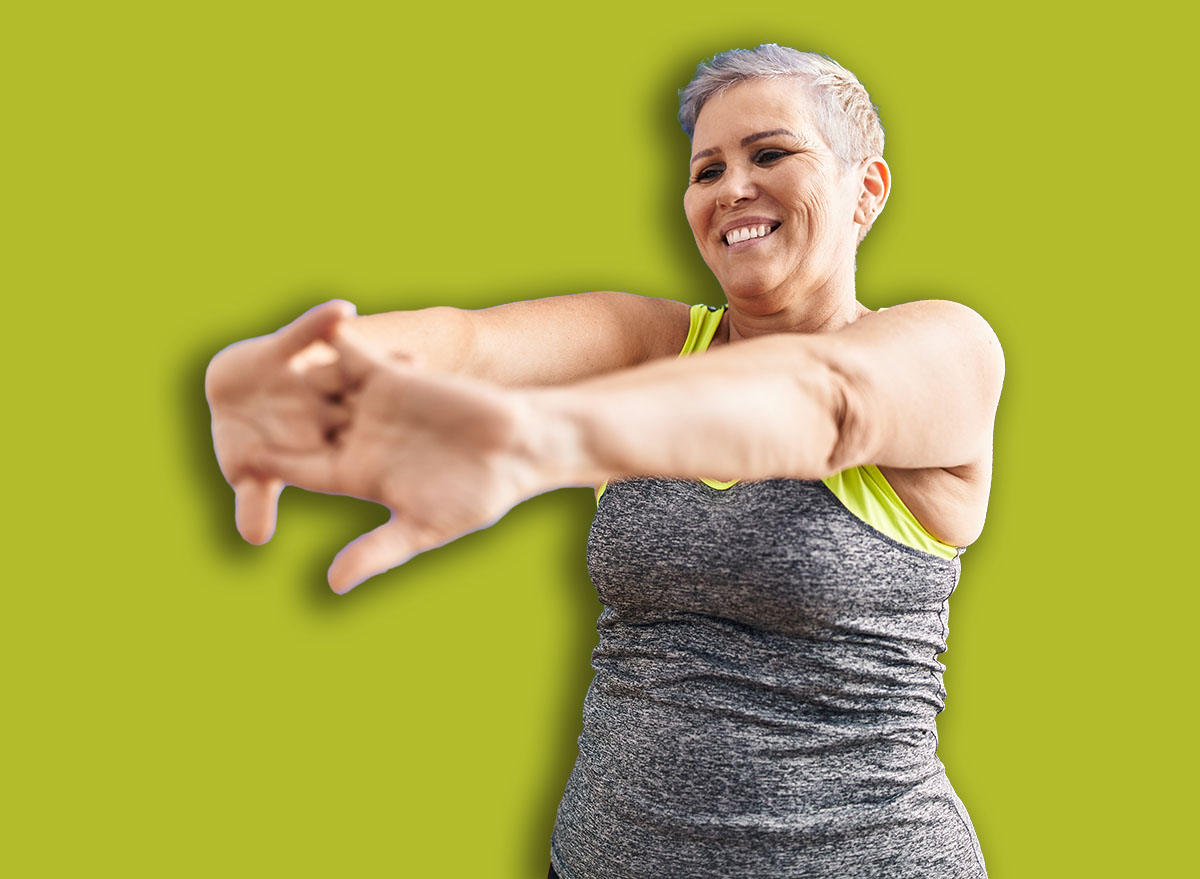
By holding the arms in a specific, controlled position, endurance is progressively built across the shoulders, the upper arms, and the upper back musculature simultaneously. This isometric strength training component is invaluable. It fosters stability in the rotator cuff muscles, which are crucial for dynamic shoulder movement and injury prevention, and strengthens the muscles responsible for scapular retraction and depression. This type of foundational strength directly translates into improved capacity for tasks involving lifting and carrying objects, where a stable shoulder platform is indispensable for both efficiency and safety. It also has profound implications for posture, counteracting the common forward-slouching posture often associated with prolonged desk work or age.
Elevated Push-Up Isometric Hold: Developing Foundational Pushing Strength and Endurance
The decline in arm strength is often most keenly felt when everyday pushing actions become challenging. The elevated push-up isometric hold offers a safe, progressive, and highly effective method to reconstruct pushing power without the inherent stresses associated with traditional floor push-ups, which can be demanding on wrists, shoulders, and the lower back. By utilizing an elevated surface such as a kitchen counter, sturdy table, or chair, individuals can support their body weight at a manageable angle, adjusting the difficulty by altering the height of the support.
In this exercise, the triceps, shoulders, and chest are under continuous activation, while the core muscles work vigilantly to stabilize the torso and maintain a rigid, plank-like body alignment. The static hold aspect significantly increases the time under tension, which is a more efficient mechanism for building enduring strength compared to rapid, momentum-driven repetitions. Consistent daily practice of this movement progressively enhances arm endurance and cultivates greater joint confidence, empowering individuals to engage in a wider range of activities with reduced apprehension about their physical capabilities. It builds the prerequisite strength for eventually progressing to more challenging pushing variations, always prioritizing controlled, stable movement.
Controlled Arm Sweep with Elbow Articulation: Improving Arm-Shoulder Coordination
Underlying upper-arm weakness frequently stems from suboptimal coordination between the elbow and shoulder joints. This dynamic movement specifically targets and restores this crucial connection by strengthening the arms through a carefully controlled range of motion while simultaneously reinforcing proper postural alignment. The action of sweeping the arms backward actively engages the triceps and the muscles of the upper back, which are vital supporting structures for long-term arm strength and shoulder health.
Maintaining meticulous control throughout the entire arc of the movement cultivates endurance without introducing strain or relying on momentum. This deliberate, mindful execution enhances the neuromuscular connection between the brain and the working muscles. Over time, consistent practice of this exercise contributes to improved arm definition and robust strength by ensuring that the shoulders and elbows function synergistically and efficiently. It addresses common muscular imbalances, particularly those that result from over-reliance on anterior (front of the body) muscles and underutilization of posterior (back of the body) muscles. The controlled sweep enhances mobility in the shoulder capsule and strengthens the muscles that stabilize the scapula during dynamic movements, leading to smoother, more powerful arm function in daily life.
The overarching implications of integrating these functional movements extend far beyond mere physical strength. Restoring robust upper body capacity contributes significantly to an improved quality of life, fostering greater independence and autonomy as individuals age. It actively reduces the risk of injuries, particularly those resulting from falls or strains during lifting and carrying. Furthermore, maintaining and building muscle mass through such exercises has profound benefits for metabolic health, helping to regulate blood sugar and improve body composition. On a psychological level, regaining physical prowess can dramatically boost self-confidence and overall mental well-being, enabling continued participation in hobbies and social activities that might otherwise become challenging.
For optimal results, consistency is key. Integrating these movements into a daily routine, even for short durations, will yield cumulative benefits. It is always advisable to listen to one’s body, ensuring movements are performed with proper form and without pain. Gradually increasing the duration of holds or the resistance (e.g., by adjusting the angle of the elevated push-up) can facilitate progressive overload. While these exercises provide a powerful foundation, consulting with a certified fitness professional can offer personalized guidance and ensure the routine is tailored to individual needs and health considerations.
Ultimately, the journey to revitalized arm strength beyond midlife is less about lifting the heaviest weight in an isolated fashion and more about cultivating integrated, functional power that serves the multifaceted demands of everyday living. By embracing this holistic approach, individuals can not only reverse the tide of age-related decline but also build a resilient, capable upper body that supports a vibrant and active lifestyle for years to come.
About the Author