As individuals advance into their later decades, the maintenance of physical autonomy, particularly robust lower body strength, emerges as a critical determinant of overall well-being and life quality. The capacity to perform everyday actions—such as rising from a seated position, ascending stairs, maintaining equilibrium, and preventing falls—is intrinsically tied to the condition of one’s leg musculature. Beyond these practical considerations, compelling research underscores the profound connection between lower limb power and extended vitality, sustained independence, and a superior quality of life. Epidemiological studies consistently highlight that the strength of the lower body serves as a powerful indicator of future mobility and the susceptibility to injuries as the aging process unfolds.
A significant challenge often arises in how adults over the age of fifty approach the cultivation and preservation of this crucial leg strength. The conventional wisdom frequently points towards traditional weight training as the primary solution. While this method undeniably holds merit, particularly for specific populations or rehabilitation contexts, certain modalities, such as resistance machines, can present inherent limitations when viewed through the lens of functional fitness for older adults. These machines often restrict the natural range of motion within joints, diminish the engagement of vital stabilizer muscles, and eliminate the necessity for the user to engage their intrinsic balance mechanisms. This constrained approach, while valuable for initial strength building or post-injury recovery, often fails to adequately translate into the dynamic, multi-directional strength and stability required for confident, independent movement in diverse real-world scenarios. The goal for this demographic isn’t merely to lift heavy objects in a controlled environment, but to navigate the complexities of daily life with ease and resilience.
In contrast, a paradigm shift is offered by targeted, chair-based exercises. These routines inherently leverage an individual’s own body weight, demand full joint articulation, and directly reinforce the fundamental movement patterns that are indispensable in daily living—such as the transition from sitting to standing, or the mechanics involved in stair climbing. Furthermore, these exercises facilitate a slower, more deliberate execution, allowing for extended periods of muscle engagement under tension and promoting enhanced joint health through controlled, fluid motion. Contemporary studies investigating strength development in individuals over fifty increasingly suggest that factors like the duration of muscle contraction (time under tension), the quality of movement execution, and consistent adherence to a routine are equally, if not more, impactful than the sheer magnitude of weight lifted. This emphasis on mindful, controlled engagement over maximal load aligns perfectly with the physiological needs and safety considerations of an aging population.
Fitness experts championing accessible and effective strength training for older adults frequently advocate for these seated methodologies. They highlight that when these movements are performed with careful intent and precision, they can elicit substantial physiological adaptations, leading to significant gains in strength without imposing undue stress on joints or creating the intimidating atmosphere often associated with high-intensity gym environments. This approach democratizes strength training, making it approachable and sustainable for a broader demographic.
Let us explore five foundational chair-based exercises designed to bolster lower body strength and functional capacity:
1. Chair-Assisted Stand-Ups (Sit-to-Stands): The Cornerstone of Independence
This exercise is arguably the most fundamental and functionally relevant movement for mature adults, directly mirroring the essential daily task of transitioning from a seated to a standing position. It effectively engages and strengthens the major muscle groups of the lower body, including the quadriceps, glutes, and hip extensors, while simultaneously sharpening balance, coordination, and proprioception (the body’s awareness of its position in space). Mastering this movement translates directly to enhanced confidence and safety in daily activities, significantly reducing the risk of falls.
- Execution: Begin by sitting upright in a sturdy chair with your feet flat on the floor, hip-width apart, positioned slightly behind your knees. Lean your torso slightly forward from the hips, engaging your core muscles. Initiate the movement by pressing through your heels and driving upwards, extending your hips and knees until you are standing fully upright. Maintain control throughout the ascent, avoiding any sudden jolts. To return to the seated position, slowly lower yourself back down by hinging at the hips and bending your knees, ensuring a controlled descent until you lightly touch the chair’s surface before immediately pushing back up. The goal is a fluid, continuous motion.
- Focus: Emphasize a controlled, deliberate tempo on both the upward and downward phases. Keep your chest lifted and avoid rounding your back. Progress by gradually reducing reliance on your hands for support, eventually aiming to perform the movement without using your arms.
2. Seated Single-Leg Extensions: Targeted Quadriceps Activation and Knee Stability
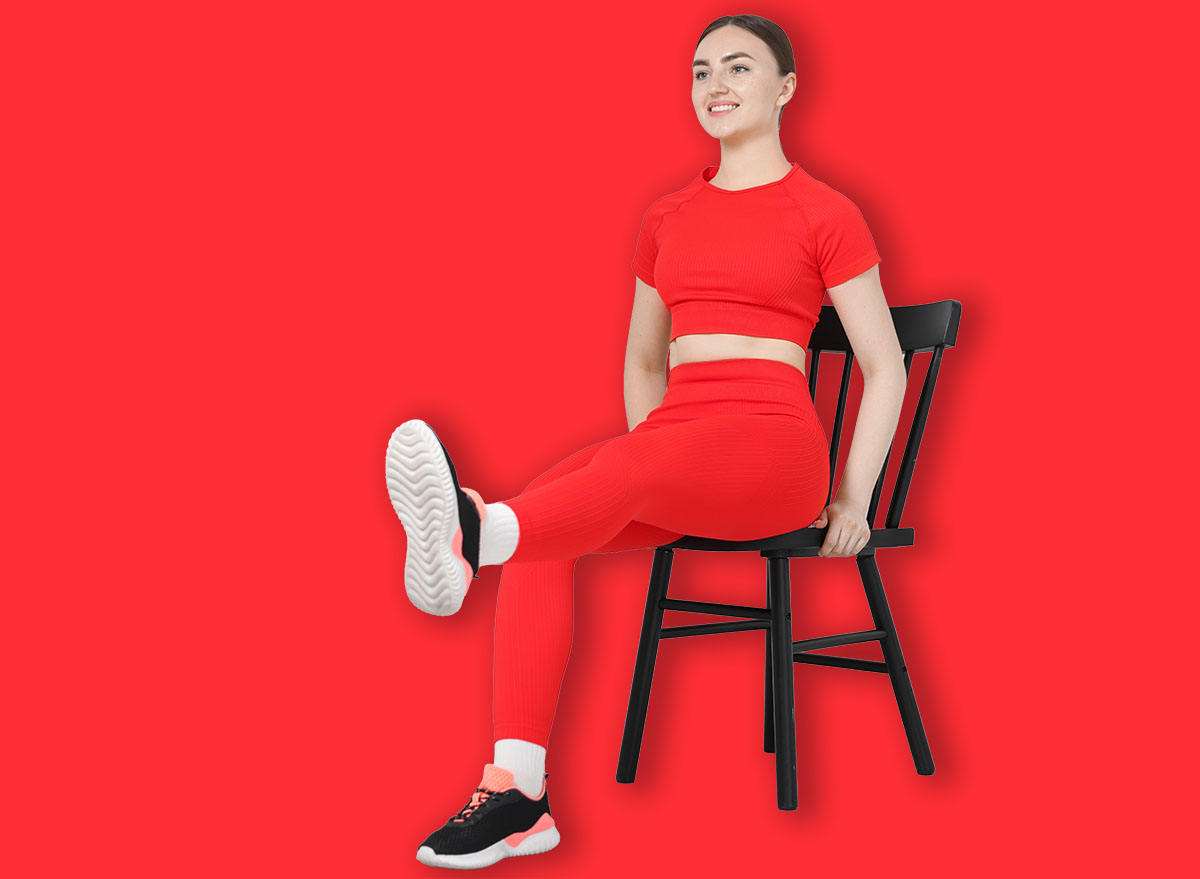
This exercise provides a focused approach to strengthening the quadriceps muscles, which are crucial for knee stability and mobility. As individuals age, the muscles surrounding the knee joint frequently experience weakening, contributing to instability and discomfort. Unilateral training, like this single-leg extension, is particularly beneficial for addressing muscular imbalances between the left and right sides of the body and fortifying the knee joints, thereby enhancing the safety and efficiency of walking and stair climbing.
- Execution: Sit tall in a chair, ensuring your back is supported and your feet are flat on the floor. Select one leg to work. Slowly extend that leg straight out in front of you until it is parallel to the floor, or as close as comfortably possible, fully engaging your quadriceps. Hold this extended position briefly, feeling the contraction in the front of your thigh. Gradually lower your foot back to the starting position with control, resisting gravity. Avoid swinging the leg or using momentum.
- Focus: Concentrate on a smooth, controlled extension and return. Maintain a slight bend in the knee at the top of the extension to avoid hyperextension. Perform an equal number of repetitions on both legs to promote balanced strength development.
3. Seated Dynamic Marches: Hip Flexor Strength and Gait Enhancement
Seated marches are an excellent exercise for fortifying the hip flexor muscles and the surrounding thigh musculature. Beyond muscle building, they play a vital role in cultivating coordination and engaging the core stabilizers. Strong hip flexors are indispensable for effective gait mechanics, enabling a fluid leg swing during walking and mitigating excessive strain on the lower back. This simple motion translates directly to a more energetic and less strenuous walking pattern.
- Execution: Sit upright in your chair, engaging your abdominal muscles to maintain a stable posture. Place your feet flat on the floor. Begin by slowly lifting one knee towards your chest, maintaining a controlled movement. The height of the knee lift should be comfortable and within your pain-free range of motion. As you lower that foot back to the floor, immediately begin lifting the opposite knee. Continue alternating legs in a rhythmic, marching motion, keeping your core engaged and your spine elongated throughout.
- Focus: Emphasize a deliberate, controlled lift and lower for each leg. Avoid leaning back or rocking your torso excessively. Focus on the activation of your hip flexors and deep abdominal muscles. To increase intensity, hold the knee at the peak of its lift for a brief moment.
4. Chair-Support Squat Holds: Isometric Power and Joint Protection
This isometric exercise builds significant leg strength by keeping the muscles under constant tension without requiring dynamic joint movement. Isometric contractions, where muscles generate force without changing length, are highly effective for increasing muscle activation and endurance while simultaneously minimizing the impact and stress on joints. This makes chair-supported squat holds an ideal way to build foundational strength, especially for those who might find dynamic squats challenging.
- Execution: Stand in front of a sturdy chair, facing away from it, with your feet shoulder-width apart. Slowly begin to lower your hips as if you are going to sit down, pushing your glutes backward. Descend only until your glutes lightly make contact with the chair’s edge, or just hover above it, maintaining tension in your leg muscles. Hold this semi-squat position for a predetermined duration, typically 15-30 seconds, ensuring your chest remains lifted and your back straight. To release, push back up to a standing position.
- Focus: Maintain continuous tension in your quadriceps, glutes, and hamstrings throughout the hold. Ensure your knees track in line with your toes and do not collapse inward. Breathe deeply and consistently during the hold, avoiding breath-holding. This exercise is excellent for building muscle endurance and strength at specific joint angles.
5. Seated Calf Raises: Ankle Stability and Propulsive Power
The strength of the calf muscles and ankles is paramount for maintaining balance, generating propulsive power during walking, and preventing falls. Strong calves contribute significantly to the "push-off" phase of gait, making each step more efficient and powerful. Furthermore, robust ankle stability is a critical defense against slips and trips, enhancing overall mobility and confidence.
- Execution: Sit upright in a chair with your feet flat on the floor, knees bent at a 90-degree angle. Keep your spine erect and shoulders relaxed. Slowly lift both heels off the floor as high as comfortably possible, rising onto the balls of your feet. Hold this elevated position briefly, feeling the contraction in your calf muscles. With control, slowly lower your heels back to the starting position, allowing them to gently touch the floor.
- Focus: Concentrate on a full range of motion, both in the upward lift and the controlled downward phase. Avoid using momentum; the movement should be driven by your calf muscles. For increased challenge, you can perform single-leg calf raises or place a light weight (e.g., a small book) on your thighs for added resistance.
Integrating into Your Routine: A Path to Sustained Vitality
To maximize the benefits of these chair-based exercises, consistency is key. Aim to incorporate these movements into your daily or weekly routine, perhaps performing 2-3 sets of 10-15 repetitions for each exercise, adjusting the duration of isometric holds as appropriate. Always prioritize proper form and controlled movement over speed or the number of repetitions. Listen to your body, and if any exercise causes pain, modify it or discontinue it.
Before embarking on any new exercise regimen, especially if you have underlying health conditions or concerns, it is always advisable to consult with a healthcare professional or a certified fitness trainer. They can provide personalized guidance and ensure the exercises are appropriate for your individual needs and capabilities.
By embracing these accessible, effective, and functionally relevant chair-based exercises, individuals over fifty can proactively cultivate and sustain crucial lower body strength. This commitment not only contributes to immediate improvements in daily function and physical confidence but also lays a robust foundation for enduring mobility, independence, and an enhanced quality of life throughout their mature years. It’s a testament to the fact that meaningful strength gains are achievable through intelligent, body-aware movement, regardless of age.
About the Author