
Achieving a toned midsection often becomes a more challenging endeavor as individuals progress past their mid-forties, with many discovering that traditional abdominal exercises, such as crunches, yield diminishing returns. This common experience prompts a search for alternative, more effective strategies to address changes in body composition that naturally occur with age. Rather than solely focusing on isolated muscle contractions, a holistic approach centered on functional movement and sustained core engagement proves significantly more beneficial for developing enduring abdominal strength and definition.
The physiological landscape of the human body undergoes notable transformations around the age of 45, directly influencing fat distribution and muscle maintenance. Key factors contributing to the stubborn persistence of abdominal adiposity include shifts in hormonal balance, such as declining estrogen levels in women and a gradual reduction in testosterone for men. These hormonal fluctuations can promote fat storage around the midsection. Furthermore, sarcopenia, the age-related loss of muscle mass, plays a critical role. Muscle tissue is metabolically active, meaning it burns more calories at rest compared to fat. A decrease in lean muscle mass consequently lowers basal metabolic rate (BMR), making it easier to accumulate fat and harder to shed it. Reduced insulin sensitivity, where the body’s cells become less responsive to insulin, can also contribute to increased fat storage, particularly in the visceral area surrounding organs. Lastly, a general decrease in daily energy expenditure, often due to less active lifestyles, further exacerbates the challenge of maintaining a lean physique. It is imperative to understand that the concept of "spot reduction"—the idea that exercising a specific body part will burn fat from that area—is a myth. Scientific research consistently demonstrates that fat loss occurs systemically across the entire body, necessitating a comprehensive strategy that boosts overall calorie expenditure and builds lean muscle mass.
James Brady, a distinguished personal trainer at OriGym, advocates for a pragmatic and age-conscious approach to fitness for adults over 45. He underscores the paramount importance of prioritizing safety, actively working to retain muscle mass, and cultivating consistency in exercise routines. "For adults over 45, weight loss exercise should focus on safety, muscle retention, and consistency," Brady explains. He asserts that "Simple bodyweight movements, when done correctly and regularly, meet all three criteria." This perspective shifts the focus from high-impact, potentially injurious exercises to sustainable, foundational movements that support long-term health and functional capability.
Traditional crunches, while a staple in many fitness regimens, primarily target the rectus abdominis through spinal flexion. While this can build some muscle endurance, crunches often neglect the deeper core muscles essential for stability, such as the transverse abdominis and multifidus. Moreover, the repetitive flexion can place undue stress on the lumbar spine, potentially exacerbating existing back issues or leading to new ones, particularly in an aging population where disc degeneration might be a concern. Their isolated nature also means they burn a relatively small number of calories compared to compound movements that engage larger muscle groups. For these reasons, relying solely on crunches for abdominal definition or fat loss after 45 often leads to frustration and limited results. Instead, a more integrated approach that incorporates the core as a stabilizer and power generator within full-body movements is far more efficacious.
The bodyweight exercises recommended by experts like Brady are designed to offer a multi-faceted approach to core strength and metabolic enhancement. They leverage compound movements, engaging several muscle groups simultaneously, which leads to a higher caloric expenditure during and after exercise. These movements also prioritize functional strength, training the core to perform its real-world job: stabilizing the spine, transmitting force between the upper and lower body, and supporting dynamic movement. Furthermore, their low-impact nature makes them gentle on joints, a critical consideration for older adults. By building and maintaining lean muscle through these strength exercises, individuals can effectively increase their resting metabolic rate, transforming their bodies into more efficient calorie-burning machines.
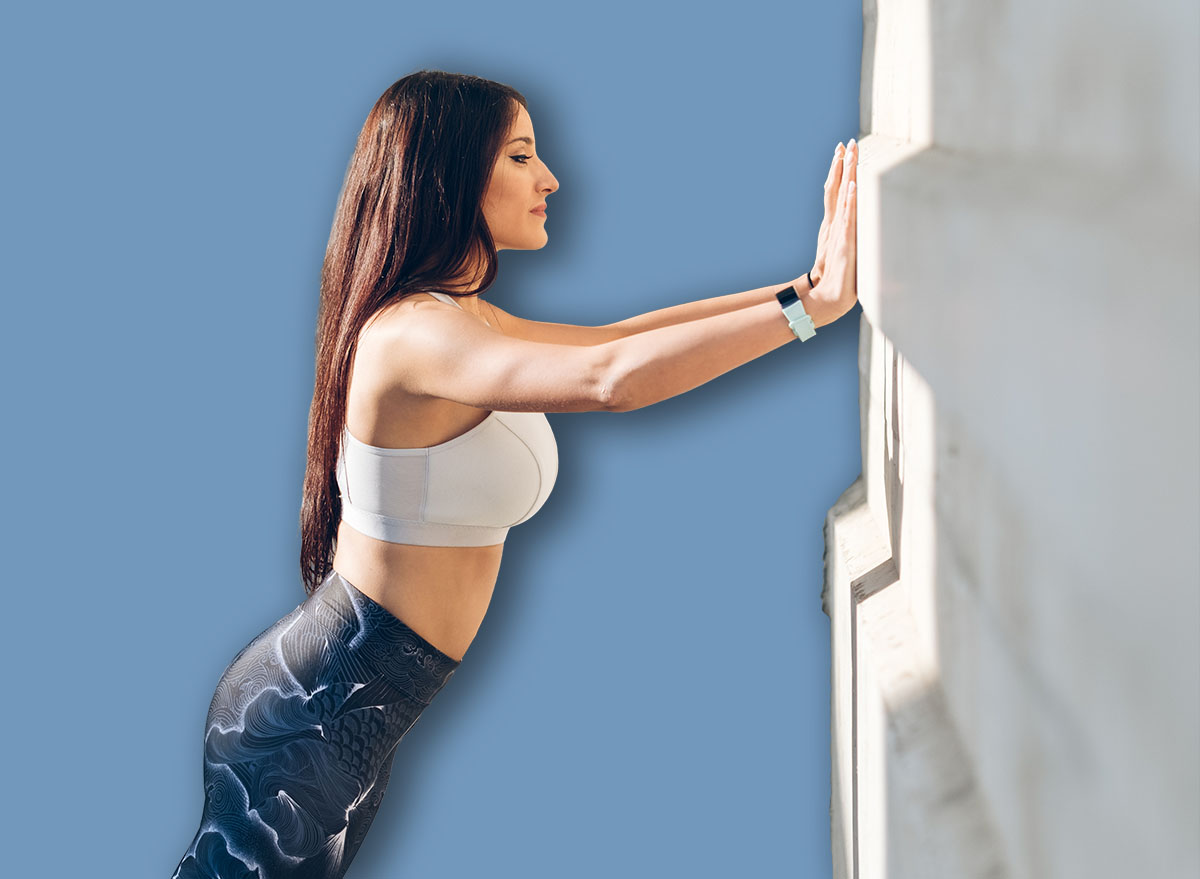
Let’s explore four highly effective bodyweight exercises that surpass the efficacy of crunches for individuals over 45, offering superior core engagement, metabolic benefits, and joint protection:
1. Chair Squats
Chair squats are an exceptionally underrated exercise, particularly beneficial for fat loss and comprehensive core engagement in the over-45 demographic. While their primary function is to strengthen the glutes and quadriceps, they simultaneously demand significant bracing from the core muscles to stabilize the torso throughout the movement. This exercise beautifully mimics everyday actions like sitting down and standing up, making it highly functional.
- How to do it:
- Begin by standing directly in front of a sturdy chair or bench, with your feet hip-width apart and toes pointing slightly outward. Keep your chest lifted and shoulders relaxed.
- Engage your core by gently drawing your navel towards your spine.
- Slowly lower your hips back and down as if you are going to sit in the chair. Maintain a straight back and ensure your knees track over your toes, not collapsing inward.
- Lightly tap the chair with your glutes, or sit down briefly, then push through your heels to stand back up, squeezing your glutes at the top.
- Perform 10-15 repetitions for 2-3 sets, focusing on controlled movement.
2. Wall Push-Ups
Wall push-ups provide an excellent, joint-friendly method for developing upper body strength while actively engaging the core. This variation significantly reduces strain on the wrists, shoulders, and lower back compared to traditional floor push-ups, making it ideal for those seeking effective upper body and core work without discomfort. This exercise builds strength in the chest, shoulders, and triceps, and the increased muscle engagement contributes to a higher daily energy expenditure, supporting overall fat loss efforts.
- How to do it:
- Stand facing a sturdy wall, about an arm’s length away. Place your hands slightly wider than shoulder-width apart on the wall, at chest height.
- Step your feet back until your body forms a straight line from head to heels, engaging your core and glutes. Avoid arching your back or letting your hips sag.
- Slowly bend your elbows, allowing your chest to move towards the wall. Keep your elbows pointing slightly downward and back, not flaring out to the sides.
- Push firmly off the wall to return to the starting position, extending your arms fully but without locking your elbows.
- Complete 12-20 repetitions for 2-3 sets, maintaining a consistent tempo.
3. Step Backs (Reverse Lunges)
Step backs, often referred to as reverse lunges, are a superb lower-body exercise that simultaneously enhances balance, coordination, and caloric expenditure without imposing excessive stress on the knees. This movement primarily activates the glutes and hamstrings, offering a powerful way to strengthen the posterior chain. The controlled, backward stepping motion places less shear force on the knee joint compared to forward lunges, rendering them particularly suitable for adults over 45 who prioritize joint longevity.
- How to do it:
- Start by standing tall with your feet hip-width apart and your hands on your hips or clasped in front of your chest for balance.
- Engage your core. Take a large step backward with one foot, landing on the ball of that foot.
- Lower your hips until both knees are bent at approximately a 90-degree angle. Ensure your front knee is directly above your ankle and your back knee hovers just above the floor. Keep your torso upright.
- Push off the back foot to return to the starting standing position, bringing your feet together.
- Alternate legs, performing 8-12 repetitions per leg for 2-3 sets. Focus on stability and control.
4. Standing Marches
Standing marches are deceptively powerful for promoting abdominal definition because they seamlessly blend low-impact cardiovascular activity with active core engagement. This dynamic exercise compels your abdominal muscles to stabilize your pelvis as your legs move, mimicking the real-world function of your core during walking, running, and other daily activities. They effectively elevate heart rate, improve hip mobility, and contribute significantly to overall calorie burn, all while supporting excellent posture and robust core engagement.
- How to do it:
- Stand tall with your feet hip-width apart, shoulders back and down, and core engaged.
- Slowly lift one knee towards your chest, aiming for a 90-degree angle at your hip and knee. Maintain an upright posture and avoid leaning back or to the side.
- Lower that foot back to the ground with control, then immediately lift the opposite knee.
- Continue alternating legs in a rhythmic, controlled marching motion. Focus on engaging your lower abdominal muscles to lift your knees.
- Perform this exercise for 30-60 seconds per set, completing 2-3 sets. For increased intensity, you can slightly increase the speed or height of the knee lift.
These functional bodyweight movements collectively offer a far more comprehensive and sustainable pathway to enhanced abdominal definition and overall well-being than isolated crunch variations, especially for those navigating the physiological shifts of midlife. By engaging multiple muscle groups, fostering core stability in dynamic contexts, and being gentle on the joints, they contribute to a higher daily energy expenditure, improved posture, better balance, and greater functional independence. Embracing these exercises regularly, with a focus on correct form and consistent effort, can pave the way for a stronger, more resilient core and a visibly more toned midsection, supporting a vibrant and active lifestyle well beyond 45. Remember to always consult with a healthcare professional or certified personal trainer before starting any new exercise program, particularly if you have underlying health conditions.
About the Author