
As men progress beyond the age of 55, an often-underestimated yet profoundly significant marker of physical health, grip strength, typically begins a noticeable decline. While commonly perceived as merely affecting the hands and forearms, the robustness of one’s grip extends far beyond localized muscular capability, serving as a critical indicator of overall physiological resilience, functional independence, and even longevity. Modern research consistently highlights the intricate connection between a firm handshake and various systemic health parameters, positioning grip strength as a powerful, non-invasive diagnostic tool for assessing an individual’s general well-being. This comprehensive exploration delves into the multifaceted reasons behind age-related grip diminishment, elucidates its far-reaching health implications, and outlines a targeted, daily exercise regimen recommended by rehabilitative movement specialist TJ Pierce to rejuvenate this vital physical attribute, thereby enhancing neurological function and long-term performance.
The profound importance of maintaining robust grip strength in later life cannot be overstated. Far from being a niche concern for athletes or manual laborers, a strong grip correlates with a host of positive health outcomes. Epidemiological studies have repeatedly demonstrated that individuals with superior grip strength tend to exhibit a lower incidence of cardiovascular disease, better cognitive function, increased bone mineral density, and a significantly reduced risk of falls—a primary concern for the aging population. Moreover, it is associated with improved surgical recovery, a greater capacity for performing daily activities (ADLs) such as opening jars, carrying groceries, or rising from a chair, and ultimately, a higher quality of life and extended lifespan. In essence, the strength of your hands acts as a window into the health of your entire system, reflecting the integrity of your muscles, nervous system, and overall vitality.
The degradation of grip strength in men over 55 is rarely attributable to a single factor. Instead, it typically emerges from a confluence of interconnected, age-related physiological shifts that conspire to diminish hand and forearm power. Understanding these root causes is paramount to implementing effective restorative strategies.
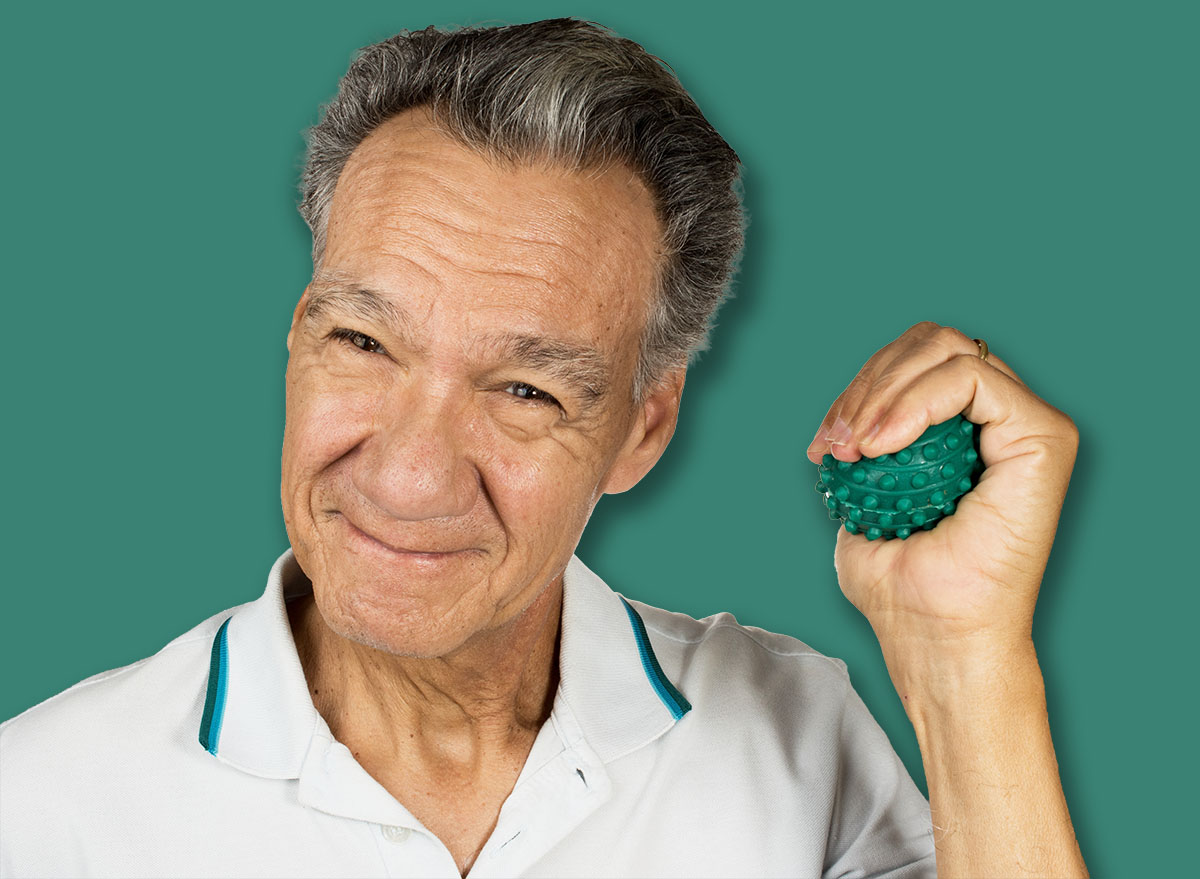
One primary culprit is sarcopenia, the age-associated loss of muscle mass and strength. This natural biological process affects all skeletal muscles throughout the body, including the intricate network of small muscles within the hands and forearms that are crucial for fine motor control, endurance, and powerful grasping. As these muscles atrophy, and the neural signals commanding them become less potent, force production invariably declines. Compounding this issue is the fact that these smaller, yet critical, muscle groups are frequently neglected in conventional strength training routines, accelerating their deterioration.
A less commonly recognized, yet equally impactful, contributor to grip weakness originates not in the hands themselves, but in the cervical spine and upper back. The brachial plexus, a complex network of nerves responsible for innervating the entire arm and hand, exits the spinal cord primarily between the C4 and T1 vertebrae. Suboptimal posture, particularly the rounded upper back (thoracic kyphosis) and forward head position prevalent in modern sedentary lifestyles, can lead to chronic compression or impingement of these delicate nerve roots. When nerve pathways are compromised, the electrical signals transmitted to the arm and hand muscles are diminished, resulting in a perceptible reduction in grip strength, even if the muscles themselves retain a degree of intrinsic power. Addressing spinal alignment and nerve decompression is therefore a crucial, often overlooked, component of grip restoration.
Furthermore, the aging process, coupled with repetitive, limited-range movements common in daily life (e.g., using a keyboard, steering wheel, or smartphone), contributes significantly to tendon and fascial stiffness. Fascia, the connective tissue that encases muscles and organs, can become rigid and inelastic over time, restricting the full range of motion of tendons and muscles in the hands and forearms. This stiffness reduces not only the maximal force that can be generated but also impairs grip endurance, coordination, and overall hand dexterity.
Finally, various joint degenerative and inflammatory conditions frequently observed in older adults can directly impede grip function. Ailments such as osteoarthritis, which causes cartilage breakdown in the joints, or inflammatory conditions like rheumatoid arthritis, can lead to pain, swelling, and structural changes in the wrist and hand joints. Other conditions like carpal tunnel syndrome (nerve compression in the wrist), trigger finger (inflammation of a tendon sheath), and Dupuytren’s contracture (thickening of fascia in the palm) all contribute to diminished hand mobility and strength, especially when exacerbated by underlying postural issues or reduced neurological input.
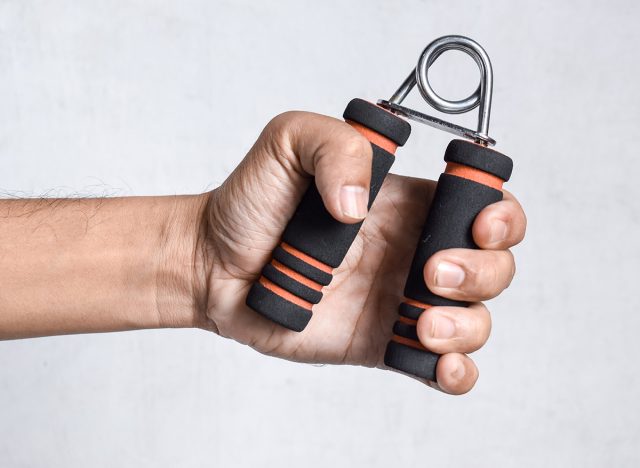
Recognizing these multifaceted challenges, a truly effective approach to restoring grip strength must be holistic, targeting not just the muscles but also the neurological pathways, fascial integrity, and joint health. The following four daily exercises, curated by rehabilitative movement specialist TJ Pierce, embody this comprehensive philosophy, designed to fortify the entire kinetic chain from the neck to the fingertips.
The Four Pillars of Hand and Forearm Fortification
-
Tennis Ball Grip Crushing
- Why it works: This exercise specifically targets the intrinsic muscles of the hand—the small, deep muscles situated within the palm that are vital for fine motor control, dexterity, and sustained grip endurance. By engaging these often-neglected muscles through a full range of motion, this movement enhances localized strength, improves coordination, and supports overall hand health, counteracting the effects of sarcopenia in the hand.
- How to do it: Hold a tennis ball or a similar compressible object firmly in one hand. Squeeze the ball with maximum effort for a sustained period, typically 5-10 seconds, focusing on recruiting all fingers and the thumb. Release slowly and completely, allowing the hand to fully open and relax before repeating. Perform 10-15 repetitions per hand, aiming for 2-3 sets daily. Ensure the squeeze is deliberate and controlled, not a quick, shallow clench.
-
Plate Pinch Holds
- Why it works: Pinch strength, which involves the thumb and fingers opposing each other, is a fundamental component of real-world functional grip. This exercise specifically strengthens the thumb’s adductors and the flexors of the fingers, critical for tasks like carrying heavy bags, opening jars, or stabilizing objects. By training this specific grip pattern, it directly enhances practical strength and addresses weaknesses that can arise from generalized muscle loss and lack of varied hand engagement.
- How to do it: Select a weight plate (or two smaller plates) that you can comfortably pinch between your thumb and fingers. Grasp the smooth, flat side of the plate(s) with your fingers on one side and your thumb on the other. Lift the plate(s) slightly off the ground and hold this position for as long as possible, aiming for 15-30 seconds per hand. Maintain a straight wrist and avoid letting the plate tilt excessively. Perform 2-3 sets per hand, gradually increasing the duration of the hold or the weight of the plate as your strength improves.
-
Fingertip Push-Up Progressions

- Why it works: This dynamic exercise goes beyond simple grip strength, training the entire fascial chain of the arm and hand. It significantly improves wrist stability, strengthens the finger flexors in a weight-bearing capacity, and enhances proprioception—your body’s sense of its position in space. By progressing through various levels, it gradually builds strength and resilience, making the wrist and hand more robust against injury and improving overall functional power and control.
- How to progress:
- Wall Push-Ups: Start by performing push-ups against a wall, leaning in and pushing back using only your fingertips. This reduces body weight, allowing for focus on finger engagement.
- Knee Push-Ups: Once comfortable with wall push-ups, move to the floor, performing push-ups on your knees, supporting your weight on your fingertips. Keep your body in a straight line from head to knees.
- Full Fingertip Push-Ups: Progress to full push-ups on your toes, maintaining a rigid plank position and supporting your body entirely on your fingertips.
- Elevated Feet: For advanced individuals, elevate your feet on a stable surface (e.g., a low bench) to increase the load on your hands.
Perform 3 sets of 8-12 repetitions, focusing on controlled movement and full engagement of the fingertips and wrist stabilizers.
-
C4 C5 ELDOA Neurological Grip Reset
- Why it works: This specialized exercise, derived from the ELDOA (Etirements Longitudinaux avec Decoaptation Ostéo-Articulaire) methodology, directly addresses the neurological component of grip strength. By specifically targeting the decompression of the cervical spine at the C4-C5 level, it aims to alleviate pressure on the brachial plexus, the nerve network supplying the arms and hands. Poor posture, as previously discussed, can compress these nerves, leading to diminished signal transmission and subsequent grip weakness. This exercise helps to restore optimal fascial balance and neurological communication, allowing the hand muscles to receive clearer, stronger signals from the brain.
- How to do it: This exercise requires precise positioning and is best learned with visual guidance (e.g., a video demonstration). Generally, it involves sitting or standing with specific body alignment cues to create longitudinal stretching and decoaptation (separation) at the targeted vertebral segment. The head is often tilted and rotated, and the spine is lengthened while breathing deeply. The goal is to create tension throughout the fascial chains that indirectly decompress the C4-C5 segment. Hold the position for 60 seconds, focusing on the sensation of lengthening and decompression. Repeat 1-2 times daily. This exercise is unique in its direct focus on the neural pathway, making it an indispensable component of a holistic grip restoration program.
Integrating These Practices into Your Routine
Consistency is the cornerstone of any successful physical improvement regimen. These exercises can be seamlessly woven into your daily life through two primary approaches:
- Option 1: Daily Circuit: Perform all four exercises consecutively as a single circuit each day. This ensures regular stimulation of the muscles, fascia, and nervous system, promoting continuous adaptation and neurological re-patterning. A typical circuit might involve one set of each exercise, followed by a brief rest, and then repeating the entire circuit 2-3 times.
- Option 2: Four-Day Rotation: Distribute the exercises across four days, focusing on one or two exercises per day. For example, Monday: Tennis Ball Grip Crushing & Plate Pinch Holds; Tuesday: C4 C5 ELDOA; Wednesday: Fingertip Push-Up Progressions; Thursday: Tennis Ball Grip Crushing & Plate Pinch Holds; etc., allowing for recovery and varied stimulus.
Both methodologies are effective, with the choice often depending on individual preferences and time constraints. The critical factor remains consistent, mindful engagement with the movements.
Anticipating Outcomes and Tracking Progress
Within 4 to 8 weeks of consistent application, most men undertaking this program can expect to observe tangible improvements. These often include:

- A noticeable increase in the ease and strength of everyday gripping tasks, such as opening jars, carrying bags, or using tools.
- Enhanced dexterity and coordination in the hands.
- A reduction in hand or wrist pain, particularly if caused by overuse or nerve compression.
- Improved performance in hobbies or sports requiring hand strength.
- A general feeling of increased vitality and functional independence.
To quantitatively track your progress, consider using a hand dynamometer to measure your grip strength at regular intervals. Alternatively, time how long you can hold a specific weight in a pinch grip, or simply note the increasing ease with which you perform challenging daily tasks. Journaling your subjective experiences and improvements can also provide valuable insights into your progress. Often, the most meaningful metric is the simple realization that "things just feel easier."
Final Reflection: Grip Strength as a Holistic Indicator
The journey to restoring and enhancing grip strength for men over 55 transcends the mere physical act of strengthening hands. It represents a proactive investment in overall nervous system health, spinal integrity, fascial elasticity, and long-term physical resilience. By adopting a comprehensive strategy that combines direct hand and forearm training with crucial elements like posture correction and neurologically-focused exercises such as the ELDOA technique, individuals can effectively address the underlying causes of grip decline, rather than merely treating its symptoms. This integrated approach not only fortifies your grip but also contributes significantly to maintaining independence, improving quality of life, and extending healthy longevity. Embrace consistency, and the benefits will reverberate throughout your entire being, empowering you for years to come.
About the Author