
The modern professional landscape has undergone a significant transformation, with remote work becoming a cornerstone of many industries. While offering unparalleled flexibility and convenience, this shift has inadvertently fostered a more sedentary lifestyle for a substantial segment of the workforce. For individuals navigating their careers from home, particularly those over the age of 40, the consequences of prolonged sitting often extend beyond simple discomfort, contributing to specific physiological changes, including a noticeable increase in abdominal protrusion. This phenomenon, often colloquially referred to as a "belly pooch," is not solely attributable to fat accumulation but frequently stems from diminished core muscle activation and compromised postural integrity. Addressing this challenge requires innovative and accessible fitness strategies that seamlessly integrate into the daily routine of a desk-bound professional.
Enter the realm of seated exercises, a remarkably effective yet often underestimated approach to cultivating core strength and stability. Far from requiring a dedicated gym session or specialized equipment, these movements can be executed from the comfort of an office chair, transforming idle moments into opportunities for physical engagement. Felicia Hernandez, a distinguished NASM-certified personal trainer and community engagement lead at Eden Health Club, emphasizes the profound benefits of incorporating such exercises into one’s day. Her insights highlight that traditional perceptions of abdominal training, often involving extensive floor work like crunches, overlook the unique advantages offered by a stable, seated position.
Hernandez articulates that an "actively seated" posture fundamentally alters how core muscles are recruited. When properly positioned and stable in a chair, individuals are compelled to engage their deep abdominal muscles to maintain equilibrium and execute movements, effectively minimizing reliance on momentum. This heightened engagement translates into a more targeted and efficient workout for the core musculature. Unlike isolated, high-intensity gym sessions, the consistent application of these seated exercises throughout the workday generates a cumulative "total tension" on the abdominal region. This constant, real-time activation leverages existing sitting periods, making fitness an inherent part of the work structure rather than an additional, often deferred, commitment.
A comprehensive understanding of the abdominal musculature reveals why targeting the deep core is paramount, especially for those with prolonged sitting habits. The core is not a single muscle but a complex system comprising several layers, including the rectus abdominis (the "six-pack" muscle), the external and internal obliques, and critically, the transverse abdominis (TVA). The TVA acts like a natural corset, wrapping around the midsection and playing a vital role in stabilizing the spine and internal organs. When an individual spends extensive periods seated, the TVA often becomes dormant, allowing the hip flexors to overcompensate and the lumbar spine to stiffen. This muscular imbalance contributes to an anterior pelvic tilt and a relaxed abdominal wall, which can visually manifest as increased midsection prominence, irrespective of subcutaneous fat levels.
Hernandez underscores that reactivating this intrinsic muscle system is crucial for restoring the core’s natural function. Engaging the deep core while seated helps to re-establish a neutral spinal alignment, counteract the tendency for forward pelvic tilting, and provide sustained internal support. This consistent activation delivers precisely the kind of functional strength the core is designed for: maintaining stability under continuous pressure throughout the day. For individuals over 40, these considerations take on added importance. Age-related physiological changes, including a natural decline in muscle mass (sarcopenia), shifts in hormone levels, and a potentially slower metabolism, can exacerbate core weakness and contribute to fat redistribution, making targeted abdominal support even more critical for overall health and well-being.
Integrating mindful movement into the workday transcends mere exercise; it represents a commitment to "active sitting" and micro-breaks that enhance both physical and mental acuity. These four expert-recommended seated exercises offer a practical pathway to strengthen the core, improve posture, and alleviate the physical toll of a sedentary lifestyle. They require only a sturdy chair and a few moments of focused effort.
1. Seated Leg Lifts (Both Legs)
This fundamental movement directly engages the lower abdominal muscles while enlisting the hip flexors for synergistic support. By maintaining an erect posture throughout the exercise, individuals compel their deep core stabilizers to work harder, resisting gravitational forces and sustaining a controlled position.
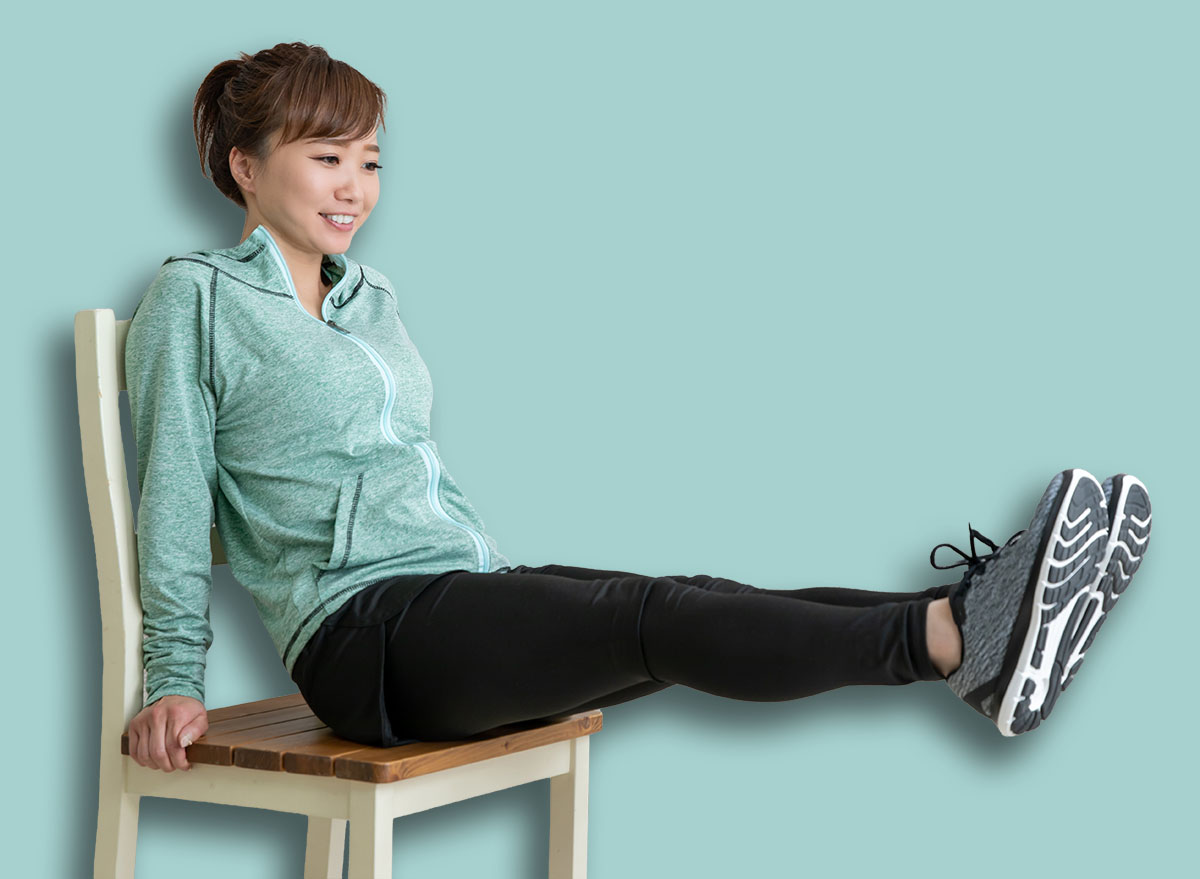
- Execution: Begin by sitting tall at the edge of your chair, ensuring your back is straight and your feet are flat on the floor. Place your hands on the sides of the chair for support if needed. Engage your abdominal muscles, drawing your navel towards your spine. Slowly lift both feet a few inches off the floor, keeping your knees bent at approximately a 90-degree angle. Hold this elevated position for a count of 2-3 seconds, feeling the tension in your lower abdomen. Gradually lower your feet back to the floor with control.
- Benefits: This exercise builds endurance in the lower rectus abdominis and provides an isometric challenge to the deep core, enhancing spinal stability and pelvic control.
2. Tummy Twists
The tummy twist is an excellent maneuver for targeting the oblique muscles, which are responsible for rotational movements of the torso, as well as further engaging the lower transverse abdominis. This exercise uniquely trains the spine to articulate independently of the hips, a critical component in preventing lateral abdominal bulging and developing precise waistline control.
- Execution: Sit upright with your feet firmly planted on the floor, hip-width apart. Clasp your hands together or place them lightly behind your head, keeping your elbows wide. Engage your core and slowly rotate your torso to one side, leading with your rib cage while keeping your hips relatively stable and facing forward. Feel the stretch and contraction along your side. Hold the twist for a brief moment, then return to the center with control. Repeat the movement to the opposite side.
- Benefits: Enhances rotational strength, improves spinal mobility, and strengthens the side abdominal muscles, contributing to a more defined waistline.
3. Seated Crunch + Reach
This exercise mirrors the benefits of a traditional crunch but with an added emphasis on spinal control and upright posture due to the seated position. It promotes internal compression through the abdominal wall, which is essential for reinforcing core integrity.
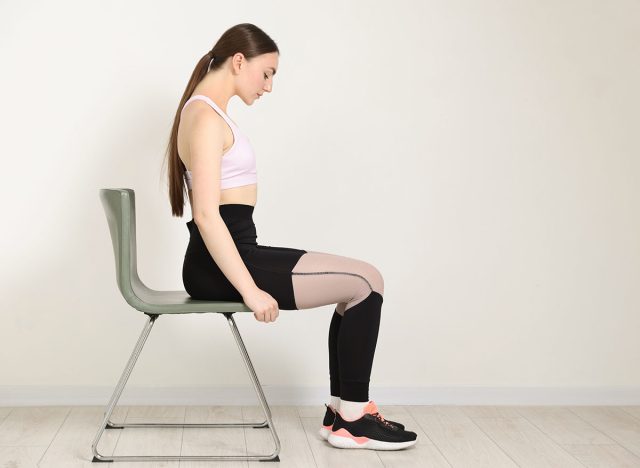
- Execution: Position yourself in your chair with your feet flat on the ground and your back straight. Place your hands lightly behind your head or cross them over your chest. Exhale deeply as you gently crunch forward, bringing your chest towards your thighs. Simultaneously, extend your arms forward as if reaching for something directly in front of you. Focus on contracting your upper and lower abdominal muscles. Inhale as you slowly return to the upright starting position, maintaining control throughout the movement.
- Benefits: Strengthens the rectus abdominis, encourages proper spinal flexion and extension, and aids in cultivating better overall posture.
4. Chair Scissor Kicks
The chair scissor kick offers dynamic engagement for the lower abdominal region, maintaining constant tension across the core musculature. This rhythmic motion mimics patterns that, when performed consistently, contribute significantly to reducing the appearance of lower abdominal mass.
- Execution: Sit towards the front edge of your sturdy chair, leaning back slightly to engage your core, but ensure your back remains straight and supported. Place your hands on the sides of the chair for stability. Lift both feet off the floor, extending your legs forward with a slight bend in the knees. Keeping your core tight, alternately "scissor" your legs up and down in a controlled motion, ensuring one leg is slightly higher than the other at all times. Maintain a steady pace and avoid letting your feet touch the floor.
- Benefits: Builds endurance in the lower abdominals, improves hip flexor strength, and enhances coordination and sustained core stability.
To maximize the efficacy of these exercises, consistency is paramount. Hernandez suggests incorporating these movements into your daily schedule, perhaps performing a set of each during short breaks, between tasks, or even during virtual meetings. The key is regular, mindful activation rather than infrequent, strenuous exertion. It is vital to ensure your chair is stable and provides adequate support to prevent injury. While these chair-based exercises are powerful tools for core strengthening, they should be viewed as supplementary components of a broader wellness strategy. A holistic approach for remote professionals over 40 also includes regular cardiovascular activity, strength training for major muscle groups, a balanced nutritional intake, adequate hydration, and sufficient restorative sleep.
In conclusion, the seemingly simple act of engaging your core while seated can yield profound benefits for physical health and well-being, particularly for those navigating the demands of remote work post-40. By transforming your desk chair into an unexpected fitness apparatus, you can actively combat the adverse effects of prolonged sitting, strengthen vital core muscles, enhance postural alignment, and ultimately contribute to a more energetic and comfortable work life. The power lies in consistent, small efforts that collectively forge significant, lasting improvements in core health and overall physical vitality.
About the Author