As individuals progress into their later years, typically beyond the age of 65, the maintenance of physical autonomy and overall well-being becomes increasingly paramount. A significant challenge in this phase of life is the physiological phenomenon known as sarcopenia, characterized by the progressive and generalized loss of skeletal muscle mass and strength. This natural decline in musculature is not merely an aesthetic concern but a critical determinant of an individual’s capacity to perform daily activities, maintain balance, and sustain an independent lifestyle. Without consistent engagement in resistance training and adequate nutritional support, a person can anticipate losing approximately 3% to 8% of their muscle mass each decade after reaching 30 years of age, a rate that regrettably accelerates notably after the sixth decade of life. This accelerated muscle deterioration elevates the risk of falls, impairs mobility, and can significantly diminish the quality of life.
Recognizing the pervasive impact of sarcopenia, health and fitness professionals are increasingly advocating for accessible and effective exercise modalities tailored for older adults. Among these, chair-based strength training has emerged as a particularly beneficial approach, offering a safe and sustainable pathway to rebuilding lost muscle and enhancing functional strength. This method addresses several common barriers that often deter seniors from traditional resistance training, such as concerns about balance, joint strain, and the perceived complexity of gym equipment.
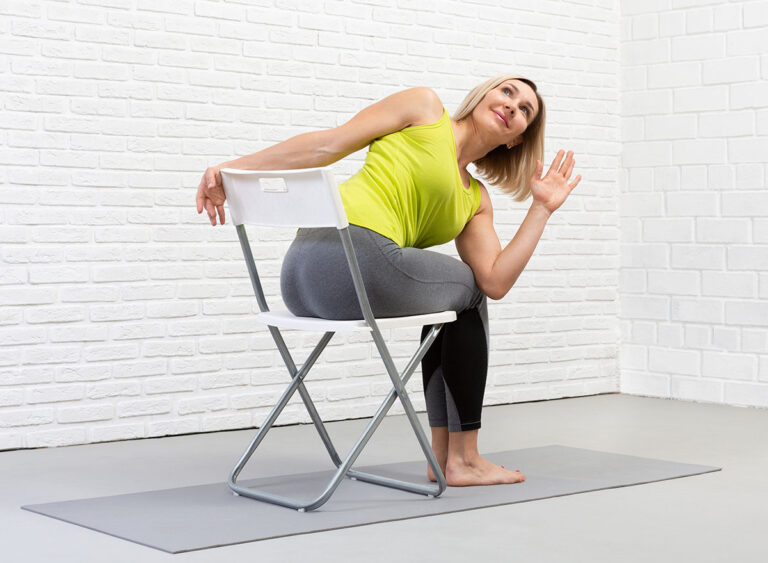
Theresa Rowe, a nationally certified fitness professional with extensive experience in personal training, group fitness, Pilates, and senior strength, underscores the efficacy of this approach. She explains that chair-supported exercise is not a substandard alternative to conventional weight training but rather a highly viable and often superior option for adults over 50. The inherent stability provided by a chair minimizes excessive joint stress and alleviates demands on balance, thereby enabling participants to concentrate more effectively on precise muscle engagement and proper anatomical alignment. This focused attention is crucial for maximizing the benefits of each movement and reducing the likelihood of injury. Rowe further elaborates that when a comprehensive program integrates exercises for the upper body, lower body, and core, chair-based training effectively cultivates functional strength. This type of strength directly translates into improved performance of everyday tasks, such as confidently standing up from a seated position, walking with greater stability, reaching for objects, and lifting groceries or household items.
The foundational principle of strength development, regardless of age or physical capacity, revolves around applying consistent and progressive stress to the muscles. Jose Guevara, a fitness instructor, chiropractor, and home gym equipment tester, emphasizes this biological reality. He asserts that the body’s physiological response to building strength does not differentiate between the source of resistance—whether it originates from a dumbbell, a resistance band, or one’s own bodyweight in a chair-supported exercise. The critical factors are the application of sufficient stress, its repetitive nature, and a gradual increase in challenge over time, whether through more repetitions, additional sets, or increased resistance. This concept, known as progressive overload, is fundamental to muscle adaptation and growth. For older adults utilizing chair-based exercises, progressive overload might involve increasing the number of repetitions, performing movements at a slower tempo to enhance time under tension, or introducing light ankle weights or resistance bands as strength improves.
The benefits of targeted lower body strength training for older adults extend far beyond merely rebuilding muscle mass. Strong leg muscles are integral to maintaining good balance, which is a primary defense against falls—a leading cause of injury and diminished independence among seniors. Furthermore, regular weight-bearing and resistance exercises contribute to improved bone density, helping to mitigate the risk of osteoporosis and fractures. Enhanced circulation, better glucose metabolism, and improved mood are additional systemic advantages of consistent physical activity, all contributing to a more robust and vibrant aging process.
Incorporating specific, well-executed chair exercises can significantly contribute to these goals. Here are four foundational movements that target key muscle groups in the legs, designed for safety and effectiveness:
1. Unilateral Calf Raises (Single-Leg Calf Raises):
This exercise primarily targets the gastrocnemius and soleus muscles in the calf, which are vital for ankle stability, pushing off during walking, and preventing falls. Performing them unilaterally increases the challenge and effectively isolates each calf muscle.
- Execution: Begin by sitting upright in a sturdy chair with both feet flat on the floor, hip-width apart. Maintain a tall posture, engaging your core slightly. Lift one foot slightly off the floor, placing all your weight on the heel of the standing foot. Slowly raise the heel of the grounded foot as high as possible, lifting your body using only the calf muscle. Hold the peak contraction for a moment, then slowly lower the heel back to the floor with control. Repeat for 10-15 repetitions before switching to the other leg.
- Benefits for Seniors: Improves ankle strength and flexibility, crucial for navigating uneven surfaces and maintaining dynamic balance during walking. It also enhances circulation in the lower legs.
- Modifications/Progressions: For easier execution, perform bilateral (both legs) calf raises. To increase intensity, hold a light weight on your lap, or increase the duration of the hold at the top of the movement.
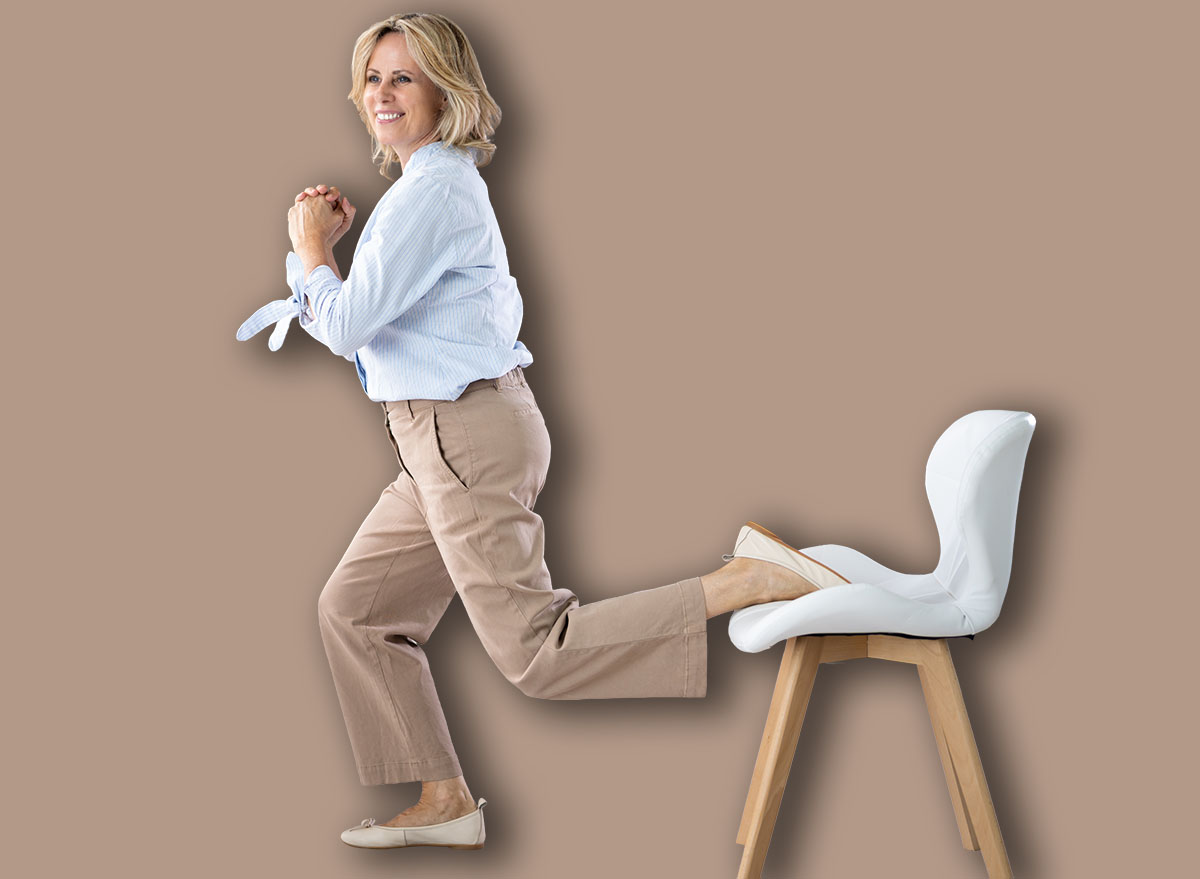
2. Bulgarian Split Squats (Chair-Supported):
While often performed freestanding, using a chair for support transforms this potent lower body exercise into a safe and accessible option for older adults. It targets the quadriceps, hamstrings, and glutes, while also challenging balance and hip mobility.
- Execution: Position a sturdy chair behind you. Stand a comfortable distance in front of it, facing away from the chair. Extend one leg backward and place the top of your foot on the seat of the chair. Ensure your front foot is far enough forward that your knee does not extend past your toes when you squat. Keeping your torso upright, slowly lower your body by bending your front knee, as if performing a lunge, until your front thigh is parallel to the floor (or as deep as comfortable). The back knee will descend towards the floor. Push through the heel of your front foot to return to the starting position. Perform 8-12 repetitions per leg.
- Benefits for Seniors: This exercise significantly strengthens the major muscles of the legs and buttocks, improving power for standing and walking. The chair support reduces the balance challenge, making it safer. It also helps in improving single-leg stability, which is essential for gait.
- Modifications/Progressions: To reduce difficulty, decrease the range of motion. To increase the challenge, use a slightly lower surface for the back foot (if balance allows) or hold light dumbbells in each hand.
3. Chair Squats (Sit-to-Stands):
Often referred to as sit-to-stands, chair squats are a highly functional exercise that directly mimics a fundamental daily movement: getting up from a chair. This exercise engages the quadriceps, hamstrings, and glutes, improving the strength and power needed for independence.
- Execution: Sit on the edge of a sturdy chair with your feet flat on the floor, shoulder-width apart. Lean forward slightly, engaging your core. Without using your hands for support (if possible), push through your heels to stand up fully. Maintain control as you slowly lower yourself back down to the chair, gently tapping the seat before standing up again. Ensure your knees track over your toes and do not collapse inward. Aim for 10-15 repetitions.
- Benefits for Seniors: Directly improves the ability to rise from a seated position, which is a critical measure of functional independence. It strengthens the entire lower body and reinforces proper movement patterns.
- Modifications/Progressions: To make it easier, use your hands on your thighs or the chair arms for assistance. To increase difficulty, perform the movement more slowly, pause at the bottom before standing, or hold a light weight against your chest. For advanced users, try reducing the height of the chair slightly.
4. Seated Leg Extensions:
This exercise primarily isolates and strengthens the quadriceps muscles at the front of the thigh, which are essential for knee stability, walking, and climbing stairs.
- Execution: Sit upright in a sturdy chair with your back supported. Place your feet flat on the floor, hip-width apart. Engage your core. Slowly extend one leg straight out in front of you, lifting your foot off the floor until your leg is parallel to the ground, or as straight as comfortable without locking the knee. Focus on contracting the quadriceps muscle. Hold this extended position briefly, then slowly lower your foot back to the starting position with control. Avoid swinging the leg. Perform 10-15 repetitions per leg.
- Benefits for Seniors: Strengthens the quadriceps, which are often weakened with age, improving knee support and power for activities like climbing stairs and walking. It can be performed safely by individuals with knee issues as it’s non-weight-bearing.
- Modifications/Progressions: To increase resistance, use a light ankle weight or loop a resistance band around your ankles, anchoring it under the chair or with your other foot. For easier execution, reduce the height the leg is lifted or perform fewer repetitions.
Beyond structured exercise, a holistic approach to muscle health in older age encompasses several other vital components. Adequate protein intake is critical for muscle repair and synthesis; seniors often require more protein than younger adults to counteract muscle breakdown. Hydration also plays a key role in muscle function and overall health. Furthermore, allowing sufficient rest and recovery time between exercise sessions is imperative for muscles to repair and grow stronger.
Before embarking on any new exercise regimen, particularly for individuals over 65 or those with pre-existing health conditions, it is strongly recommended to consult with a healthcare professional, such as a physician or a physical therapist. These experts can provide personalized guidance, assess individual capabilities and limitations, and help design a safe and effective program that aligns with specific health needs and fitness goals. Certified fitness professionals specializing in senior exercise can also offer invaluable instruction on proper form and progressive techniques.
In conclusion, the journey of aging need not be synonymous with inevitable physical decline. Through consistent, targeted, and appropriately modified physical activity, such as chair-based leg exercises, older adults possess the remarkable capacity to rebuild muscle mass, enhance functional strength, improve balance, and significantly elevate their quality of life. Embracing these accessible strategies empowers individuals to maintain their independence, engage more fully with their communities, and continue enjoying an active and fulfilling existence well into their golden years. It is a powerful reminder that it is truly never too late to invest in one’s physical health and reap the profound benefits of a stronger, more resilient body.
About the Author