As individuals navigate the landscape of aging, maintaining robust physical health becomes increasingly vital, particularly after the age of 65. A cornerstone of this well-being is core strength, which plays an indispensable role in preserving balance, preventing falls, mitigating back pain, and supporting overall independence in daily life. While numerous fitness modalities exist, an approach emphasizing foundational, functional movements can offer a direct and highly effective pathway to cultivating a resilient core. This article delves into the profound importance of core stability for older adults and outlines a series of four straightforward, bodyweight exercises recommended by fitness expert Jill Brown, a personal trainer with Jill Brown Fitness & Coaching, that can be readily integrated into a daily routine, promoting significant gains in strength and stability.
The human core is far more than just the visible abdominal muscles; it encompasses a complex network of muscles that stabilize the spine and pelvis, serving as the body’s central powerhouse. This intricate system includes the transverse abdominis, multifidus, internal and external obliques, erector spinae, diaphragm, pelvic floor muscles, and even the glutes. As we age, physiological changes such as sarcopenia (age-related muscle loss), reduced bone density, and decreased proprioception (the body’s sense of self-movement and position) can compromise core integrity. This decline often manifests as poorer posture, increased susceptibility to lower back pain, and a heightened risk of falls, which can have severe consequences for older adults. By actively engaging and strengthening these core muscles, seniors can create an internal "corset" of support, directly addressing these age-related challenges and fostering a greater sense of security and freedom in their movements.
The expert perspective underscores the value of functional exercises that directly translate to real-world activities. Jill Brown, an experienced fitness professional, highlights that while some popular fitness methods offer comprehensive benefits, their complexity or equipment requirements can present barriers. Instead, she advocates for a simplified yet potent strategy focused on creating total-body tension and stability through accessible movements. This approach prioritizes the development of a strong, stable trunk that can effectively support dynamic movements, rather than focusing on intricate choreography or isolated muscle contractions. The goal is to build a core that enhances mobility, speed, and overall quality of life, enabling individuals to move more efficiently and confidently in their daily routines.
Integrating specific bodyweight exercises into a regular fitness regimen provides an excellent starting point for seniors seeking to fortify their core. These movements require no specialized equipment, can be performed in the comfort of one’s home, and are designed to engage multiple muscle groups simultaneously, promoting holistic strength and coordination. The emphasis is on precise execution and mindful engagement of the core muscles, ensuring that each repetition contributes effectively to building foundational stability.
1. The Bird Dog:
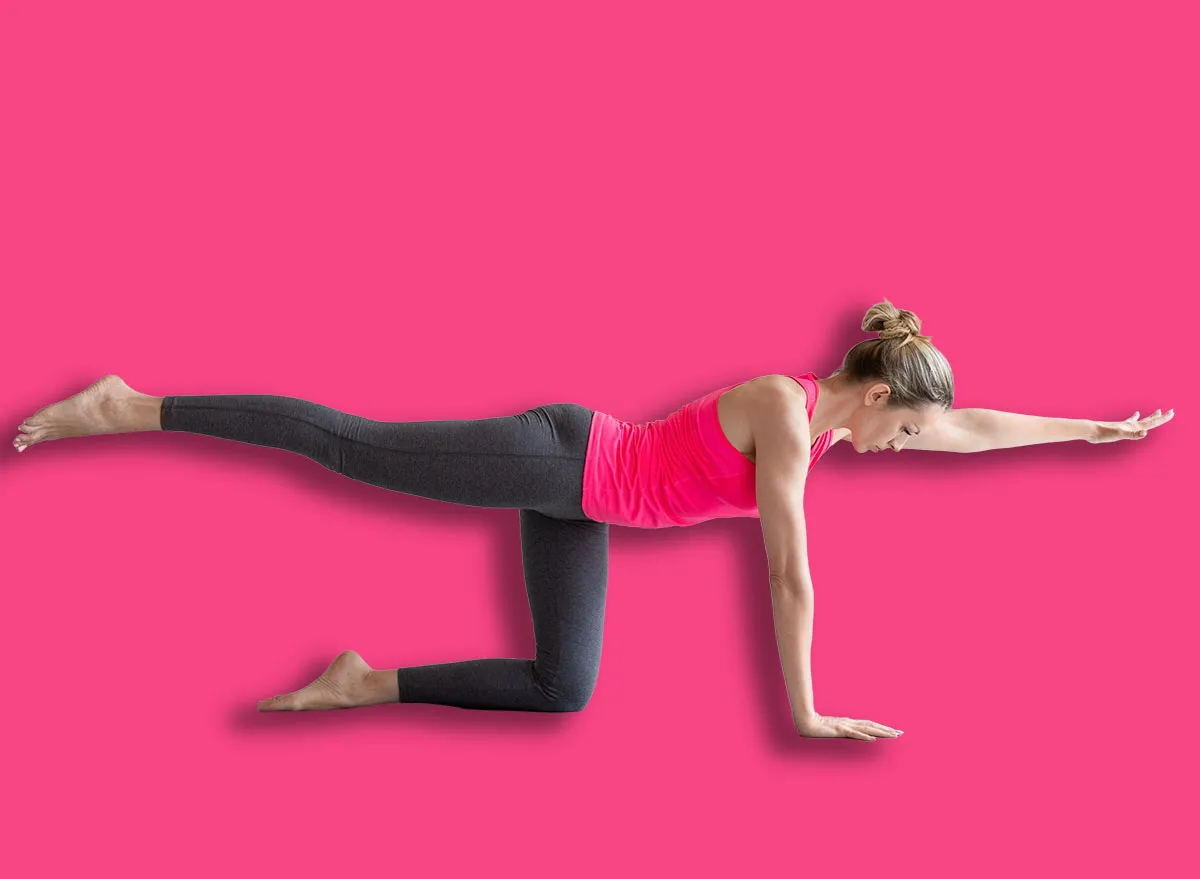
The Bird Dog exercise is a fundamental movement renowned for its ability to enhance spinal stability and counteract rotational forces, making it crucial for maintaining balance and preventing injuries. This exercise primarily targets the deep core stabilizers, including the transverse abdominis and multifidus, alongside the glutes and erector spinae.
- Execution: Begin on all fours, positioning your hands directly under your shoulders and your knees under your hips. Maintain a neutral spine, ensuring your back is flat like a tabletop, not arched or rounded. Engage your core gently, drawing your navel towards your spine. Slowly extend one arm straight forward to shoulder height while simultaneously extending the opposite leg straight back to hip height, keeping the foot flexed. The key is to execute this movement with deliberate control, avoiding any rocking or shifting in the hips or torso. Imagine balancing a fragile object on your lower back that you mustn’t let tip. Hold this extended position momentarily, focusing on the engagement of your core and glute, then smoothly return to the starting position. Alternate sides, performing the movement with the other arm and leg.
- Common Mistakes and Corrections: A frequent error is allowing the hips to sway or tilt during the limb extension, which reduces the core’s stabilizing work. To correct this, actively brace your core throughout the movement, visualizing your abdominal muscles acting as a supportive girdle. Another mistake is over-arching the lower back; ensure your spine remains neutral by keeping your gaze slightly forward and down, aligning your neck with your spine.
- Functional Relevance: This exercise directly translates to everyday actions that involve reaching or lifting while standing or bending, such as picking up an object from the floor, reaching for something on a shelf, or even simply walking, where the arms and legs move in opposition. It teaches the body to maintain stability under dynamic conditions.
- Recommendations: Aim for 8-12 repetitions on each side, completing 2-3 sets daily. Focus on slow, controlled movements rather than speed.
2. The Forearm Plank:
The Forearm Plank is an isometric exercise that effectively strengthens the entire anterior core musculature, promoting total-body tension and endurance. It engages not only the rectus abdominis and obliques but also the shoulders, glutes, and quadriceps.
- Execution: Start by lying face down on the floor. Prop yourself up onto your forearms, placing your elbows directly beneath your shoulders, with your palms flat on the ground or hands clasped. Extend your legs straight back, resting on the balls of your feet. Push through your forearms and toes to lift your entire body off the floor, forming a straight line from the crown of your head to your heels. Crucially, resist the urge to let your hips sag towards the floor or pike up towards the ceiling. Engage your glutes powerfully, as if you are trying to hold a small object between them; this action helps to "turn on" the core more effectively. Maintain a neutral spine and neck, gazing towards the floor. Hold this position for a sustained period, focusing on consistent tension throughout your body.
- Common Mistakes and Corrections: A common mistake is allowing the hips to drop, which places undue strain on the lower back rather than engaging the core. Conversely, raising the hips too high shifts the load to the arms and shoulders. To correct, constantly visualize a straight line from head to heels and actively squeeze your glutes. If a full plank is too challenging, drop your knees to the floor while maintaining the straight line from head to knees, ensuring your hips don’t jut upwards.
- Functional Relevance: A strong plank directly improves static posture, enabling seniors to stand taller and with less effort. It also provides the foundational strength required for actions like lifting heavy objects, carrying groceries, or simply standing for extended periods without fatigue or discomfort in the lower back.
- Recommendations: Hold the plank for 20-60 seconds, performing 2-3 sets. Gradually increase the hold time as your strength improves.
3. The Half Side Plank:
The Half Side Plank is a powerful exercise for targeting the oblique muscles and enhancing lateral stability, which is critical for preventing falls from sideways forces and improving walking mechanics. This variation is particularly accessible for older adults.
- Execution: Lie on your side with your knees bent and stacked, and your forearm positioned directly beneath your shoulder, perpendicular to your body. Your elbow should be directly under your shoulder. Engage your core and lift your hips off the floor, forming a straight line from your head through your hips to your knees. The side of your waist closest to the floor is the working side. Actively imagine squeezing a tennis ball between your bottom side ribs and hips to maximize oblique engagement. Keep your top hand on your hip or extend it towards the ceiling. Ensure your top shoulder does not roll forward towards the floor; maintain an open chest and stacked shoulders. Hold this position with controlled tension.
- Common Mistakes and Corrections: A common error involves allowing the hips to sag towards the floor, which disengages the obliques. Another is letting the top shoulder collapse forward, compromising spinal alignment. To correct, actively push through your forearm to keep your torso elevated and stacked, and focus on maintaining an open chest.
- Functional Relevance: This exercise is invaluable for improving stability during activities that involve lateral movement or require resisting sideways forces, such as walking on uneven terrain, turning corners, or preventing a stumble if bumped from the side. Strong obliques are essential for dynamic balance and rotational control.
- Recommendations: Hold for 20-45 seconds on each side, completing 2-3 sets. Ensure you perform the exercise equally on both sides to maintain muscular balance.
4. The Dead Bug:
The Dead Bug exercise is an excellent anti-extension movement that focuses on core control, coordination, and the ability to maintain a stable spine while moving the limbs. It primarily activates the deep core stabilizers, particularly the transverse abdominis, while also engaging the hip flexors and shoulder stabilizers.
- Execution: Lie on your back with your knees bent at a 90-degree angle directly over your hips and your shins parallel to the floor. Extend your arms straight up towards the ceiling, aligning them with your shoulders. Press your lower back firmly into the floor, ensuring there’s no arch. This is your starting position. Slowly and with control, extend one arm overhead towards the floor behind you while simultaneously extending the opposite leg straight forward towards the floor, hovering it just above the ground. The crucial element is to maintain constant contact between your lower back and the floor throughout the entire movement. If your lower back begins to arch, you’ve extended too far or too fast. Breathe steadily. Return the extended arm and leg to the starting position with equal control, then repeat on the opposite side.
- Common Mistakes and Corrections: The most significant error is allowing the lower back to arch off the floor as the limbs extend. This indicates a loss of core engagement. To correct, reduce the range of motion of your limbs if necessary, and focus intensely on pressing your lower back into the mat. Ensure movements are slow and deliberate, not rushed.
- Functional Relevance: This exercise trains the core to stabilize the spine during dynamic limb movements, which is fundamental for everyday tasks like lifting groceries, putting on shoes, reaching for items in various positions, or even getting in and out of a chair or bed. It enhances the body’s ability to protect the spine under load and during complex movements.
- Recommendations: Perform 8-12 repetitions on each side, for 2-3 sets. Emphasize deliberate, slow motion over the number of repetitions.
Integrating These Movements into Your Routine:
Consistency is paramount when building core strength. Aim to incorporate these four exercises into your daily routine, or at least most days of the week. While the recommended sets and repetitions provide a general guideline, it is crucial to listen to your body. Begin with fewer repetitions or shorter holds if necessary, always prioritizing proper form over quantity. As your strength and confidence grow, you can gradually increase the duration or number of repetitions.
Before embarking on any new exercise program, especially after 65, it is always advisable to consult with a healthcare professional or a certified personal trainer. They can provide personalized guidance, address any pre-existing conditions, and ensure the exercises are appropriate for your individual needs and capabilities.
By embracing these accessible, functional core exercises, older adults can proactively invest in their physical resilience. A strong core is not merely about aesthetics; it is a vital component of an active, independent, and fulfilling life, enabling seniors to navigate their world with greater stability, comfort, and confidence. The path to sustained vitality in later years is paved with consistent, purposeful movement, and these foundational exercises offer an excellent starting point.
About the Author