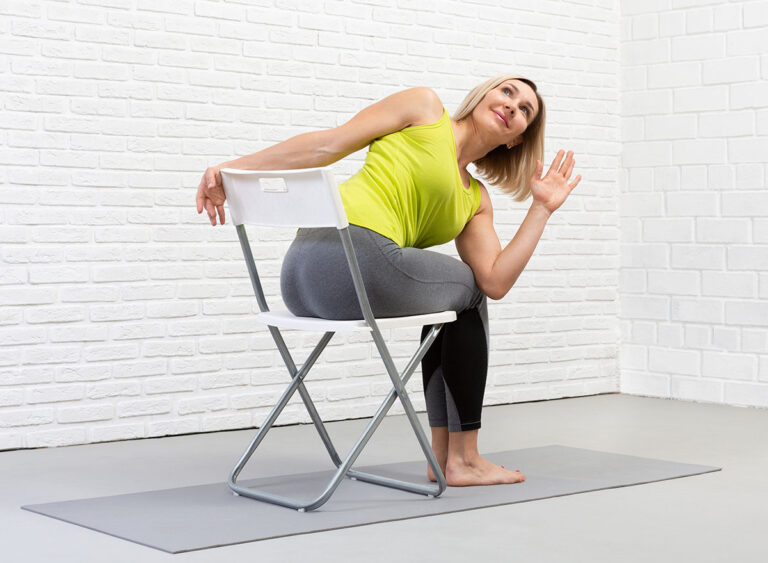
As individuals progress beyond their mid-fifties, many observe distinct changes in their body composition, particularly around the midsection. What is often perceived solely as an accumulation of adipose tissue in the lower abdominal region—commonly referred to as a "hanging belly"—is frequently a multifaceted phenomenon. This presentation is rarely attributable to fat storage alone but rather emerges from a complex interplay of postural degradation, altered respiratory mechanics, increased tension in the hip flexors, and a diminished capacity of the deep core musculature to adequately support the trunk against gravitational forces. Addressing this requires a nuanced, comprehensive approach that transcends conventional abdominal exercises, focusing instead on integrated, functional movements that restore fundamental biomechanical efficiency.
The human body is an intricate kinetic chain, where the function of one segment profoundly influences others. With advancing age, factors such as reduced physical activity, hormonal shifts, and the cumulative effects of daily habits can lead to muscle atrophy (sarcopenia), decreased flexibility, and changes in connective tissue elasticity. These physiological shifts often manifest as a forward-tipped pelvis, a slumped upper back, and an overreliance on superficial abdominal muscles, leaving the deeper, stabilizing core system underutilized. When the body’s natural alignment falters, the abdominal contents tend to protrude, creating the visual effect of a distended lower abdomen, even in individuals who maintain a healthy weight.
Traditional intense core workouts, while valuable for some goals, often fall short in rectifying these underlying postural and functional deficits. Such routines can sometimes even exacerbate issues if performed with improper form, reinforcing dysfunctional movement patterns. A more effective strategy involves consistent, low-stress engagement that systematically recalibrates the body’s innate ability to maintain upright posture, stabilize the spine, and support the abdominal wall. When the musculoskeletal system receives frequent signals to stand with improved alignment, gently activate the deep core, and move with greater efficiency, the abdomen naturally begins to draw inward, providing sustained internal support. This not only mitigates the outward pressure on the belly but also creates an environment conducive to more efficient fat metabolism over time.
The following seven standing exercises are specifically designed to cultivate alignment, conscious control, and muscular endurance, rather than simply focusing on brute strength or isolated contractions. Incorporated into a daily routine, these movements serve to retrain the body’s habitual holding patterns throughout the day, representing a highly effective pathway to improving abdominal appearance and overall core health post-55.
1. Foundational Abdominal Bracing with Mindful Respiration
A common contributor to lower abdominal protrusion is an unconscious tendency for the abdomen to expand excessively during inhalation, particularly in an upright stance. Over extended periods, this outward pressure can become an ingrained, automatic behavior, further weakening the deep core’s capacity for inward support. This exercise specifically targets the re-education of the transverse abdominis—the body’s natural corset—to provide subtle internal bracing while maintaining relaxed and steady breathing. The standing posture intrinsically elevates the demand on the core, as gravity constantly challenges the abdominal wall to resist collapsing forward. Daily practice instills a habit of continuous, gentle core engagement throughout the day, rather than episodic activation during formal exercise sessions. This fosters improved intra-abdominal pressure regulation, which is vital for spinal stability and organ support.
2. Restoring Pelvic Neutrality through Sustained Tilt
An anterior pelvic tilt, where the pelvis tips forward, directly contributes to the outward projection of the lower abdomen and exaggerates the appearance of a "hanging belly." This postural imbalance often results from tight hip flexors and weak gluteal and lower abdominal muscles. The sustained pelvic tilt exercise actively works to counteract this by engaging the deep lower abdominal muscles and the glutes in concert, facilitating the restoration of a neutral pelvic position. The emphasis on holding the corrected alignment builds muscular endurance, a crucial element for long-term postural change, far surpassing the benefits of brief, forceful contractions. Executing this while upright necessitates active core engagement to maintain spinal integrity, rather than relying on external supports. Over time, an improved pelvic orientation significantly diminishes the anatomical space available for abdominal protrusion.
3. Dynamic Core Control During Standing Marching
Unilateral leg movements, such as lifting one foot off the ground, immediately expose any deficiencies in abdominal support. When the core lacks engagement, the pelvis can tilt and the abdomen may shift forward as weight transfers. This slow-paced marching exercise deliberately removes momentum, compelling the deep abdominal muscles to actively stabilize the pelvis and spine with each step. Integrating this controlled march into a daily regimen fundamentally re-patterns how the core behaves during natural locomotion, which exerts a far greater influence on abdominal form than isolated strength training. Consistent, conscious control during this movement gradually leads to a noticeable tightening and flattening of the abdominal wall. This also improves balance and proprioception, reducing the risk of falls.
4. Hip Hinge Mastery with Integrated Abdominal Tension
When the hip joint loses its capacity for proper hinging—a fundamental movement pattern for bending and lifting—the lower back and abdomen often compensate by rounding or pushing forward. This exercise is designed to re-establish the correct biomechanical relationship between hip movement and core stability, teaching the hips to articulate effectively while the abdominal wall maintains supportive tension. Correct hip hinging not only alleviates strain on the lumbar spine but also reduces the downward pressure exerted on the abdominal cavity. The slow, deliberate execution of this movement prioritizes coordination and neuromuscular control over mere flexibility. Over time, this refined movement pattern helps the abdomen remain flatter and more engaged during everyday activities that involve bending or lifting.
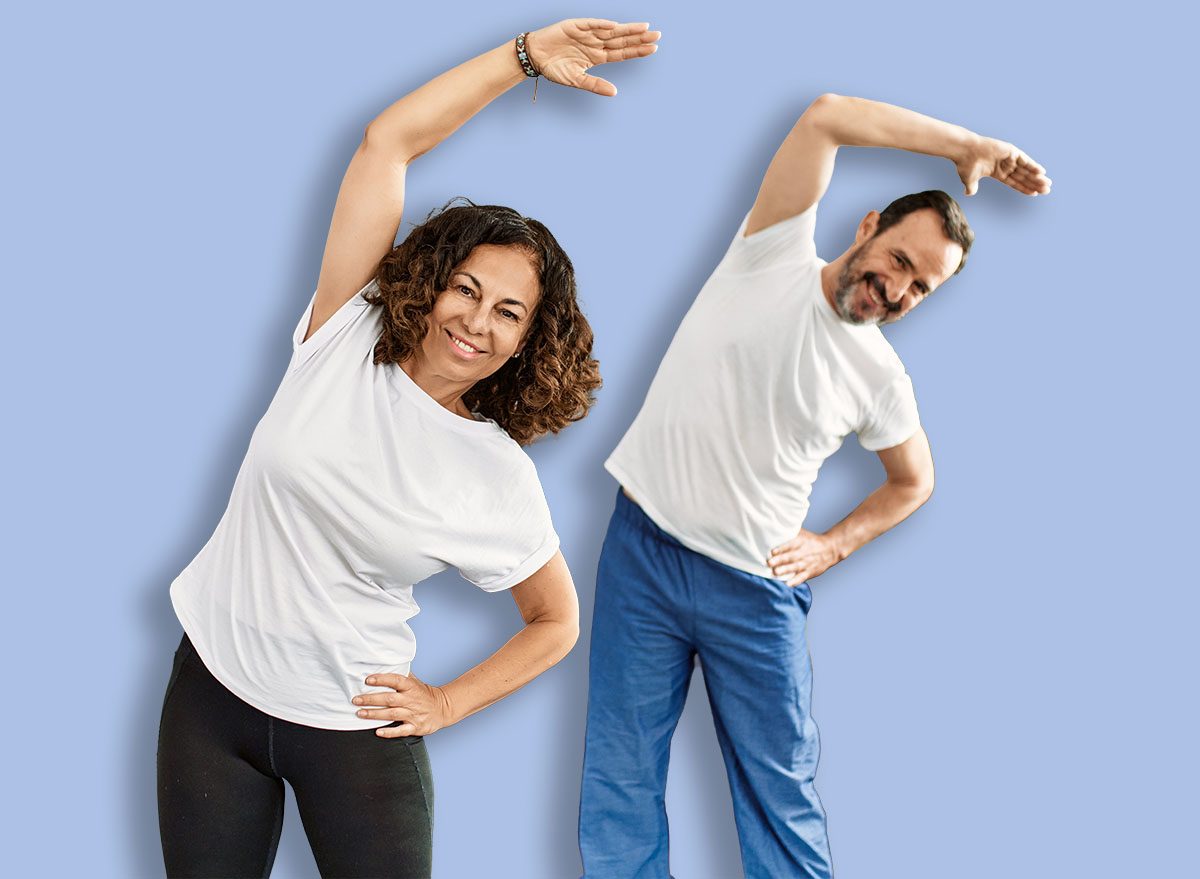
5. Lateral Trunk Stability via Standing Side Reach
Persistent abdominal protrusion can often be linked to inactivity or weakness in the lateral abdominal wall, specifically the oblique muscles. The standing side reach exercise is engineered to strengthen these crucial muscles, which play a pivotal role in cinching the waistline and providing robust support for the lower abdomen. Performing this movement in an upright position forces the obliques to work dynamically against gravity, preventing the trunk from merely collapsing sideways. The slow, controlled nature of the reach builds muscular endurance without compromising spinal health through excessive compression. Stronger obliques are instrumental in counteracting the downward pull and outward expansion that contribute to abdominal overhang, contributing to a more sculpted and supportive midsection.
6. Postural Reinforcement Through Standing Heel Raises
The often-underestimated connection between calf muscle engagement and overall abdominal posture is significant. Insufficient strength and endurance in the calves can compromise postural stability, leading to a tendency for the body to lean forward, which in turn encourages the core to relax and the abdomen to protrude. This exercise specifically aims to rebuild lower-leg endurance while simultaneously reinforcing optimal upright alignment throughout the entire kinetic chain. By consciously maintaining a tall, stacked posture during repeated heel raises, the body learns to align its segments vertically, from the feet up through the core and head. This vertical stacking inherently reduces the forward gravitational pull that exacerbates abdominal hang, improving overall balance and stability.
7. Upper Body Alignment with Standing Reach-Back Arm Sweep
The posture of the upper body has a direct and profound impact on the appearance and function of the abdominal region. Rounded shoulders and a hunched upper back shift the body’s center of gravity forward, significantly increasing the pressure exerted on the abdomen. This arm sweep exercise actively works to open the chest, strengthen the muscles of the upper back (such as the rhomboids and lower trapezius), and facilitate a more efficient stacking of the torso directly over the hips. By improving thoracic spine mobility and scapular stability, better upper body alignment is achieved. This reduction in anterior strain on the abdominal wall encourages the belly to draw inward more naturally and consistently throughout the day, enhancing not just aesthetics but also respiratory efficiency and overall spinal health.
Integrating these seven intentional movements into a daily routine offers a powerful, holistic strategy for individuals over 55 seeking to enhance abdominal definition and core functionality. This approach moves beyond superficial solutions, addressing the root causes of abdominal changes by fostering improved posture, efficient breathing, balanced muscle engagement, and functional movement patterns. The cumulative effect of consistent, mindful practice is not merely an improved physical appearance but also augmented balance, reduced incidence of lower back pain, enhanced mobility, and a profound sense of confident, capable movement in daily life. Consistency, patience, and attention to proper form are paramount, transforming these exercises into a sustainable pathway toward lifelong core vitality.
About the Author