A groundbreaking advancement in neuroscience has been achieved by a Japanese research consortium, who have successfully engineered functional human brain circuits in a laboratory setting. This innovative approach utilizes sophisticated three-dimensional structures, termed "assembloids," meticulously grown from induced pluripotent stem cells. These assembloids are specifically designed to replicate the intricate connections and communication pathways characteristic of distinct regions within the human brain. Through this pioneering methodology, the scientists have elucidated the pivotal role of the thalamus in orchestrating the development of specialized neural circuits within the cerebral cortex, a revelation published in the esteemed journal Proceedings of the National Academy of Sciences of the United States of America.
The cerebral cortex, the outermost layer of the brain, is a complex network comprising a vast array of neuron types. The seamless integration and effective communication among these neurons, as well as with other brain areas, are fundamental to executing higher cognitive functions such as perception, abstract thought, and overall cognition. Disruptions in the formation or function of these cortical neural circuits are frequently implicated in a spectrum of neurodevelopmental disorders, including autism spectrum disorder (ASD). Consequently, a profound understanding of how these intricate neural connections are established and mature is paramount for unraveling the underlying biological mechanisms of these conditions and for paving the way toward novel therapeutic interventions.
For decades, research in animal models, particularly rodents, has suggested a significant influence of the thalamus on the organization of cortical neural circuits. However, the precise nature of the interaction between the thalamus and the cortex during circuit formation within the human brain has remained a formidable enigma. Direct investigation of this developmental process in humans presents substantial ethical and technical hurdles, primarily due to the limited accessibility of human brain tissue for study. To circumvent these limitations, the scientific community has increasingly turned to organoids—self-organizing, three-dimensional structures cultivated from stem cells that bear a striking resemblance to actual organs.
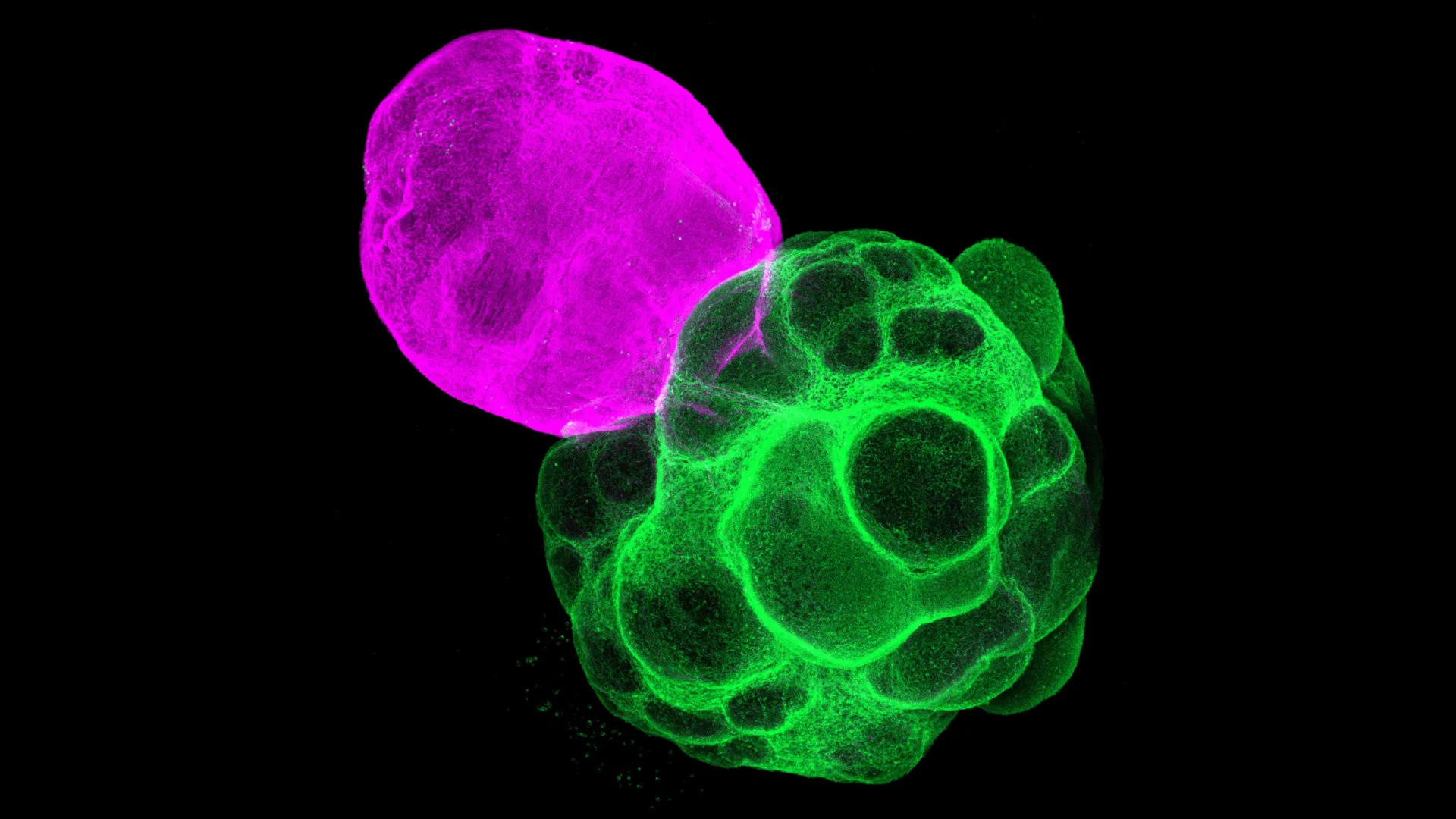
While brain organoids have proven invaluable for studying localized brain development, a solitary organoid is inherently incapable of capturing the dynamic interplay between separate brain regions. To more accurately model the complexities of neural circuit formation, researchers have advanced to the utilization of assembloids. These sophisticated constructs are fabricated by physically integrating two or more distinct organoids, thereby enabling the study of inter-regional communication and its impact on development.
In this latest endeavor, Professor Fumitaka Osakada, alongside graduate student Masatoshi Nishimura and their colleagues at the Graduate School of Pharmaceutical Sciences at Nagoya University, meticulously developed assembloids designed to simulate the interactions between the thalamus and the cerebral cortex. The experimental protocol commenced with the independent generation of cortical and thalamic organoids, both derived from human induced pluripotent stem cells. Subsequently, these differentiated organoids were carefully fused, creating an environment where the researchers could meticulously observe and analyze the developmental dialogue between these two crucial brain components.
The observation of nerve fiber growth provided compelling evidence of the intricate connectivity being established. The scientists noted that axonal projections from the thalamic organoid extended towards the cortical organoid, while concurrently, fibers originating from the cortical organoid grew in the direction of the thalamus. Crucially, these nascent nerve fibers formed functional synaptic connections with each other, mirroring the precise anatomical and functional interconnections observed in the developing human brain.
To quantify the influence of this cross-talk on developmental trajectories, the research team performed a comparative analysis of gene expression profiles within the cortical tissue of the assembloid and that of a control cortical organoid cultured in isolation. The findings revealed a distinct pattern: the cortical tissue that was integrated with the thalamus exhibited molecular markers indicative of enhanced maturation compared to its standalone counterpart. This observation strongly suggests that the communication established between the thalamus and the cortex actively promotes cortical growth and facilitates its developmental progression.
Further investigation delved into the dynamics of signal propagation within the assembloid. The researchers discovered that neural activity emanated from the thalamus and propagated into the cortex in discernible wave-like patterns. This synchronized neural firing across cortical networks is a hallmark of coordinated brain function. To pinpoint the specific neuronal populations involved in this orchestrated activity, the scientists measured the electrical signaling within three primary classes of excitatory neurons in the cortex: intratelencephalic (IT) neurons, pyramidal tract (PT) neurons, and corticothalamic (CT) neurons.
The results indicated that synchronized neural activity was predominantly observed in PT and CT neurons, both of which are characterized by their projection pathways back to the thalamus. In contrast, IT neurons, which do not project to the thalamus, did not exhibit the same degree of synchronized activity. This differential response provides compelling evidence that thalamic input selectively influences and strengthens specific neuronal subtypes, thereby playing a critical role in their functional maturation and their integration into coordinated neural ensembles.
The successful creation of human neural circuits within these assembloids represents a significant leap forward, providing a powerful and unprecedented experimental platform for dissecting the fundamental processes of brain circuit formation, function, and inter-neuronal communication across diverse cell types. Professor Osakada articulated the far-reaching implications of this research, stating, "We have made significant progress in the constructivist approach to understanding the human brain by reproducing it." He further emphasized the potential of these findings, "We believe these findings will help accelerate the discovery of mechanisms underlying neurological and psychiatric disorders, as well as the development of new therapies." This novel experimental system holds immense promise for advancing our comprehension of brain development and for accelerating the development of targeted treatments for a wide range of neurological and psychiatric conditions. The ability to model these complex interactions outside of a living organism opens up new avenues for drug discovery and for personalized therapeutic strategies, marking a pivotal moment in the quest to understand and treat brain disorders.
About the Author