The intricate architecture of the human circulatory system, characterized by its dynamic branching, constrictions, and expansions, has long presented a formidable challenge for scientific replication. Historically, laboratory models of blood vessels were largely confined to simplified, linear conduits, a stark contrast to the complex, three-dimensional realities where numerous vascular pathologies manifest. This fundamental limitation hindered the precise study of diseases and the accurate assessment of therapeutic interventions. Addressing this critical gap, researchers at Texas A&M University’s Department of Biomedical Engineering have pioneered a sophisticated, adaptable microfluidic platform designed to emulate the nuanced morphology and functionality of living human blood vessels. This innovative system promises to unlock unprecedented insights into vascular disease mechanisms and establish a robust paradigm for evaluating novel pharmacological agents.
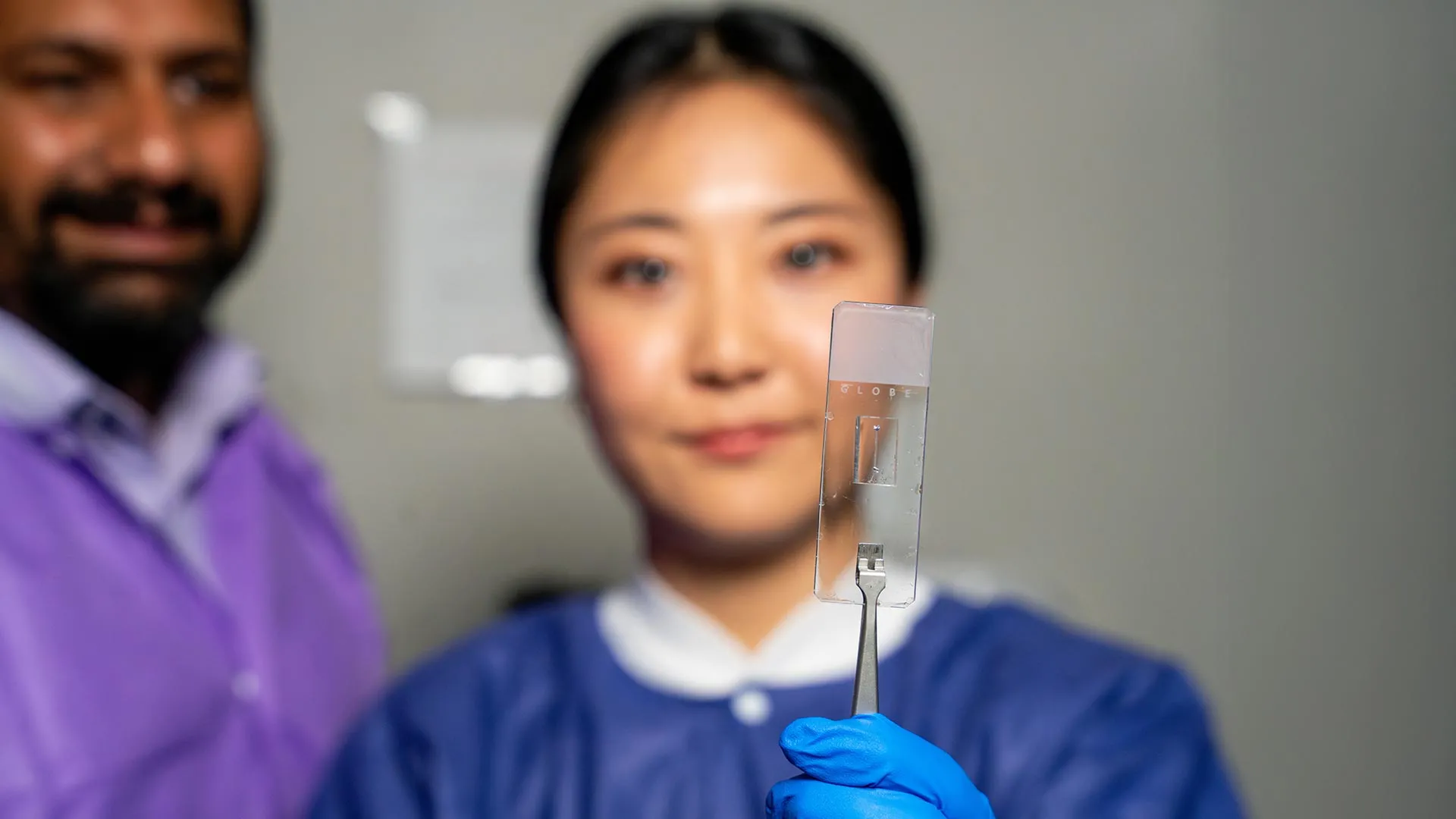
At the heart of this advancement lies the "vessel-chip," a microfluidic device meticulously engineered to recreate human vasculature on a miniature scale. What distinguishes this technology is its remarkable customizability, enabling the creation of models tailored to the specific physiological characteristics of individual patients. This personalized approach not only offers a more relevant preclinical testing ground but also presents a compelling alternative to traditional animal models for studying blood flow dynamics and drug efficacy. Jennifer Lee, a master’s student in biomedical engineering, was instrumental in the development of this sophisticated vessel-chip, working under the guidance of Dr. Abhishek Jain, an associate professor and faculty fellow in biomedical engineering. Her contribution focused on designing a system capable of reproducing the diverse array of shapes and forms inherent in real-world blood vessels.
Lee articulated the significance of this morphological complexity, explaining that variations such as arterial bifurcations, aneurysmal dilations, and stenotic constrictions profoundly influence blood flow patterns. These altered flow dynamics, in turn, directly impact the endothelial lining of the vessels, altering critical biomechanical forces like shear stress. "All these different types of vessels cause the blood flow pattern to be significantly changed, and the inside of the blood vessel is affected by the level of shear stress caused by these flow patterns," Lee stated, underscoring the team’s objective to accurately model these phenomena. This endeavor builds upon foundational work within Dr. Jain’s Bioinspired Translational Microsystems Laboratory, where earlier iterations of the vessel-chip focused on simpler, straight vessel designs. The latest research, detailing the creation of these complex, living vascular structures, was recently published in the esteemed journal Lab on a Chip, and is slated to be featured on the cover of its May 2025 issue.
The implications of this advanced vessel-chip technology extend far beyond mere structural replication. "We can now start learning about vascular disease in ways we’ve never been able to before," Dr. Jain commented. "Not only can you make these structures complex, you can put actual cellular and tissue material inside them and make them living. These are the sites where vascular diseases tend to develop, so understanding them is critical." By incorporating living cellular components, the platform moves beyond inert physical models to create functional micro-environments that more closely mirror the dynamic biological processes occurring within the body. This capability is crucial for understanding diseases that originate from cellular dysfunction or interaction within the vascular wall.
Jennifer Lee’s journey into this cutting-edge research began during her undergraduate studies, where she sought hands-on experience in a research setting. Initially unfamiliar with the burgeoning field of organs-on-a-chip technology, her immersion in Dr. Jain’s lab ignited a profound interest in its potential to revolutionize medical research. This burgeoning passion motivated her to continue her academic pursuits through a Master of Science fast-track program, allowing her to delve deeper into the project. Dr. Jain lauded Lee’s dedication, noting her "perseverance, curiosity, and creativity," which enabled her to rapidly engage with complex research challenges. He emphasized that the fast-track program empowers students to undertake "high-impact, high-risk research," guiding them not merely through a scientific project but through the entire process of discovery, analysis, and publication.
While the current iteration of the vessel-chip represents a significant leap in realism, the research team is already envisioning further enhancements. The existing model primarily incorporates endothelial cells, the fundamental building blocks of the vessel lining. Future developments aim to integrate additional cell types, such as smooth muscle cells and pericytes, which play vital roles in vascular function and disease. Such a multi-cellular approach would enable researchers to investigate the complex interplay between different tissue components and their response to blood flow, offering a more holistic understanding of vascular health and disease progression. Dr. Jain described this evolution as a move towards "the fourth dimensionality of organs-on-a-chip," where the focus shifts to the intricate interactions between cells, flow, and increasingly complex architectural configurations, marking a novel frontier in the field.
Beyond the technical acquisition of scientific knowledge and laboratory techniques, Lee highlighted the invaluable professional development fostered by her involvement in Dr. Jain’s lab. The collaborative environment, where she interacted with peers, graduate students, and postdoctoral researchers, proved instrumental in cultivating essential soft skills. She emphasized the importance of teamwork, effective communication, and the development of a robust work ethic, all honed through the process of tackling challenging research problems and experimenting with novel solutions. "It’s such a good environment to interact with not only peers but also graduate students and postdoctoral researchers," Lee remarked. "You’re able to learn teamwork and communication, work ethic, and just trying different things out. I think it’s such a valuable experience that students have available. We have such good faculty research labs." This holistic approach to research training underscores the program’s commitment to nurturing well-rounded scientists.
The ambitious scope and pioneering nature of this research have been bolstered by significant financial support from a consortium of leading national and governmental organizations. Funding from the U.S. Army Medical Research Program, NASA, the Biomedical Advanced Research and Development Authority, the National Institutes of Health, the U.S. Food and Drug Administration, the National Science Foundation, and the Texas A&M University Office of Innovation Translational Investment Funds collectively underscores the recognized importance and potential impact of this work on public health and scientific advancement. This broad-based support is indicative of the broad applicability and potential transformative power of the engineered micro-vascular networks.
About the Author