As individuals navigate the landscape of active aging, maintaining core strength and abdominal health emerges as a critical component of overall well-being. Beyond aesthetic considerations, a robust core is foundational for balance, posture, functional movement, and mitigating the risk of falls, all of which become increasingly vital past the age of 55. While traditional floor-based exercises like planks are often lauded for core development, a growing body of fitness expertise suggests that dynamic, standing core movements offer a distinct advantage for older adults, particularly in addressing common age-related changes to the midsection.
The phenomenon often referred to as "belly overhang" in the post-55 demographic is not merely a superficial concern; it’s frequently symptomatic of a confluence of physiological shifts. These include age-related muscle atrophy, medically known as sarcopenia, which reduces lean muscle mass and consequently slows metabolic rate. Concurrently, hormonal fluctuations, such as those experienced during menopause in women and andropause in men, can predispose the body to store fat more readily around the abdomen, specifically visceral fat, which surrounds internal organs and carries significant health implications. Furthermore, a decline in regular physical activity compounds these factors, contributing to reduced calorie expenditure and compromised core musculature.
While scientific consensus firmly rejects the notion of "spot reduction"—the idea that one can selectively lose fat from a specific body part through targeted exercises—the overarching principle of increasing total daily calorie burn and fostering lean muscle mass remains paramount for overall fat reduction, including in the abdominal region. This is precisely where the strategic integration of standing core exercises proves highly effective. These dynamic movements naturally engage a larger proportion of the body’s musculature compared to static, floor-bound alternatives. The expanded muscle recruitment inherently elevates heart rate more efficiently, leading to a greater caloric output during the workout session.
James Brady, a certified personal trainer at OriGym, underscores the importance of a sustainable approach for this age group. "For those over 55, consistency beats intensity every time," Brady asserts. "Standing exercises are easier to stick to, and when you train the core daily and stay upright, you burn more calories overall. That is what helps belly overhang reduce faster over time." This emphasis on accessibility and adherence is a cornerstone of effective long-term fitness strategies for older adults, as movements that are less intimidating or physically demanding are more likely to be performed regularly.
Beyond caloric expenditure, standing core exercises offer multifaceted benefits tailored to the needs of an aging body. They significantly enhance neuromuscular coordination, which refers to the intricate communication between the brain and muscles. Improved coordination translates directly to better balance, agility, and a reduced risk of falls, a critical consideration for individuals over 55. Moreover, these movements are particularly adept at activating the deep abdominal muscles—the transverse abdominis and multifidus—which act like an internal corset, drawing the abdomen inward and providing crucial spinal support. This deep core engagement is vital not only for a flatter appearance but also for maintaining healthy posture and alleviating lower back discomfort.
Let’s explore a selection of highly beneficial standing core exercises, designed to be performed without specialized equipment and without the need to get down onto the floor, thus making them accessible and convenient for daily practice.
1. Standing Knee Lifts
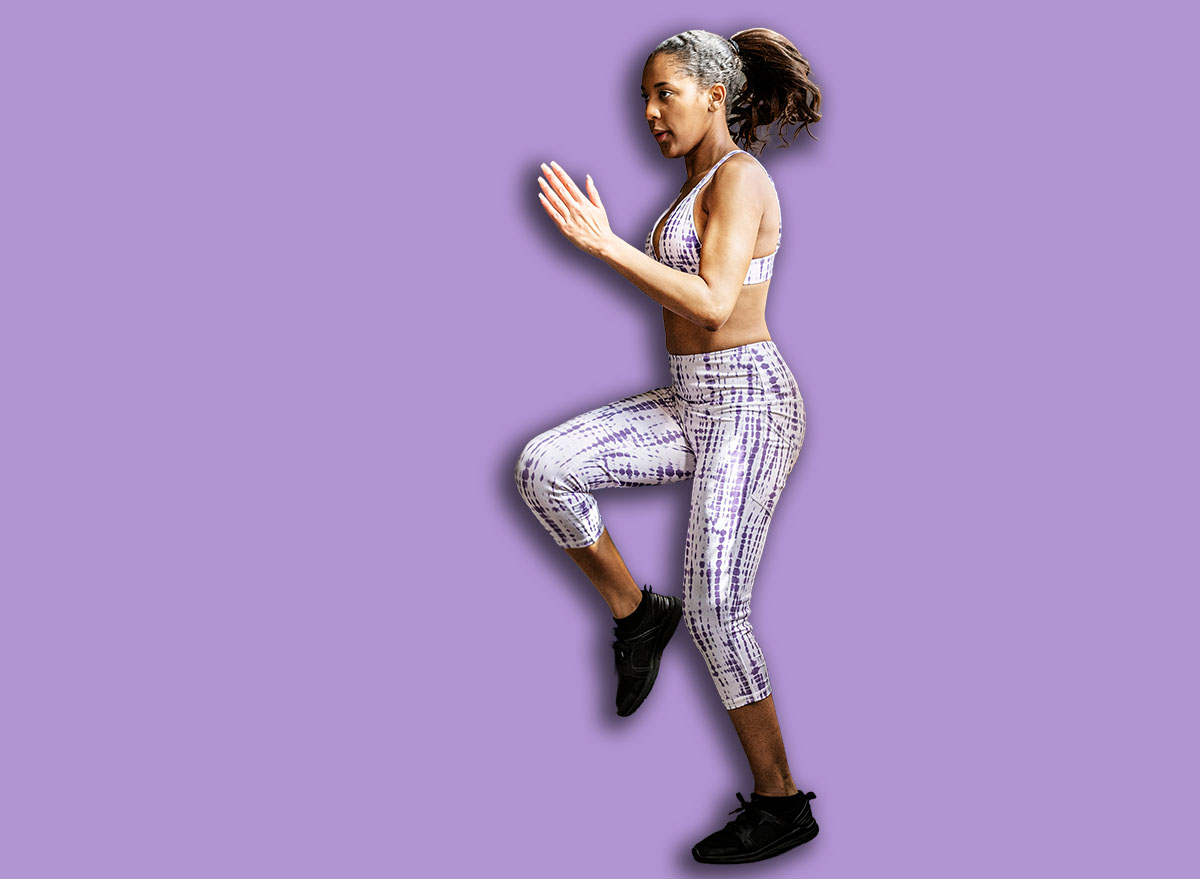
This foundational movement effectively targets the lower abdominal region while simultaneously challenging balance and hip flexor control. Unlike many floor exercises, standing knee lifts minimize stress on the wrists and shoulders, making them suitable for those with joint sensitivities.
- Execution Guidance: Begin standing tall with feet hip-width apart, core gently engaged. Slowly lift one knee towards your chest, aiming for a comfortable height, typically around a 90-degree angle at the hip, while striving to keep your torso erect and stable. Hold briefly at the apex of the movement, consciously focusing on engaging your lower abdominal muscles to sustain the lift. Gradually lower the leg back to the starting position with deliberate control. Alternate legs, performing 10-15 repetitions per side.
2. Standing Crunches with Reach
This exercise skillfully integrates spinal flexion with conscious diaphragmatic breathing, two elements critical for optimal deep core muscle activation. The added reach component extends the range of motion, further engaging the rectus abdominis and oblique muscles.
- Execution Guidance: Stand with feet positioned shoulder-width apart, hands either gently placed behind your head or lightly touching your ears. Inhale deeply, preparing for the movement. As you exhale, slowly articulate your upper body by bringing your elbows towards your knees, concurrently rounding your upper back slightly and contracting your abdominal muscles. Simultaneously, extend your hands towards your shins or the floor. Concentrate on the sensation of your core contracting and fully expelling air. Inhale as you smoothly return to the upright, extended position. Perform 10-15 repetitions. Brady highlights the importance of respiration here: "Remembering to breathe during this exercise matters as it helps activate the deep core muscles that flatten the stomach area. Breathing is the secret weapon to perform this successfully."
3. Standing Oblique Twists
Targeting the muscles along the sides of the waist (the internal and external obliques), this exercise is crucial for developing a cinched waistline and providing robust support for spinal rotation and dynamic posture. The rotational element also significantly contributes to balance improvement, a key concern for older adults.
- Execution Guidance: Adopt a standing position with feet hip-width apart, hands lightly clasped behind your head or held at chest height. Maintain relatively stable hips, striving to keep them facing forward throughout the movement. Exhale as you slowly twist your torso to one side, initiating the movement from your core and leading with your elbow, feeling the distinct contraction in your obliques. Inhale as you fluidly return to the central position. Repeat the motion on the opposite side. Ensure the rotational impetus originates from your core, not merely your arms. Perform 10-15 twists per side. As Brady notes, "Standing oblique twists help improve balance, which matters more as you age."
4. Marching Holds
This advanced variation of the standing knee lift intensifies core engagement by introducing a period of "time under tension." The sustained hold at the peak of the knee lift forces the abdominal muscles to work more strenuously to stabilize the pelvis and maintain balance, offering a more challenging stimulus than continuous, faster movements.
- Execution Guidance: Assume the initial standing knee lift position. Instead of immediately lowering the leg, hold your raised knee at hip height for an extended duration of 3-5 seconds. Actively engage your core muscles, imagining pulling your belly button towards your spine, and consciously contract the glutes on the standing leg to enhance body stabilization. Gradually lower the leg with complete control and then smoothly transition to the other side. Perform 8-12 sustained holds per leg.
5. Standing Side Bends
Focused on the lateral core musculature, including the obliques and quadratus lumborum, standing side bends are instrumental in enhancing spinal alignment and promoting improved posture. Strong lateral core muscles are essential for preventing habitual slouching and supporting the spine’s natural curvature.
- Execution Guidance: Stand tall with feet positioned hip-width apart, one hand resting on your hip and the other arm extended directly overhead. Keeping your core firmly engaged and hips stable, slowly bend sideways towards the hand on your hip, simultaneously reaching the overhead arm towards the ceiling and slightly over. Feel the stretch along the elongated side of your torso and the contraction on the bending side. Crucially, avoid leaning forward or backward during the movement. Inhale as you gracefully return to the upright position. Perform 10-15 repetitions per side. Brady emphasizes the visual impact: "Better posture alone can make the stomach look flatter."
6. Cross-Body Knee Drives
This dynamic exercise stands out as a comprehensive core activator, skillfully combining elements of rotation, hip flexion, and balance. It engages the obliques, rectus abdominis, and hip flexors in a coordinated, functional movement pattern that closely mimics real-life actions such as reaching or turning.
- Execution Guidance: Stand with feet shoulder-width apart, hands either lightly clasped behind your head or held at your chest. Initiate the movement by lifting one knee towards your chest while simultaneously twisting your torso to bring the opposite elbow towards the raised knee. Envision driving the knee upwards and diagonally across your body. Focus intently on the contraction in your oblique muscles and the stability provided by your standing leg. Slowly return to the starting position with controlled precision. Alternate sides, performing 10-15 repetitions per side.
Integrating Core Work into Your Routine
For optimal results, consistency is key, as Brady highlighted. Aim to incorporate these standing core exercises into your daily routine, perhaps as a dynamic warm-up, a revitalizing midday break, or a structured cool-down segment. While these movements are generally safe and accessible for many, it’s always advisable for individuals over 55, or anyone with pre-existing health conditions, to consult with a healthcare professional or a certified fitness expert before embarking on a new exercise regimen.
Beyond the exercises themselves, a holistic approach to abdominal health comprehensively includes a balanced nutritional intake rich in whole foods, adequate hydration throughout the day, sufficient restorative sleep, and proactive strategies for managing stress levels. These interconnected lifestyle factors collectively contribute to overall fat loss and support the physiological processes that influence body composition and well-being. By prioritizing functional core strength through dynamic, standing movements, individuals over 55 can not only work towards a more toned midsection but also significantly enhance their balance, posture, and overall quality of life for years to come. The emphasis shifts from an isolated pursuit of aesthetics to a comprehensive strategy for active, healthy aging.
About the Author