
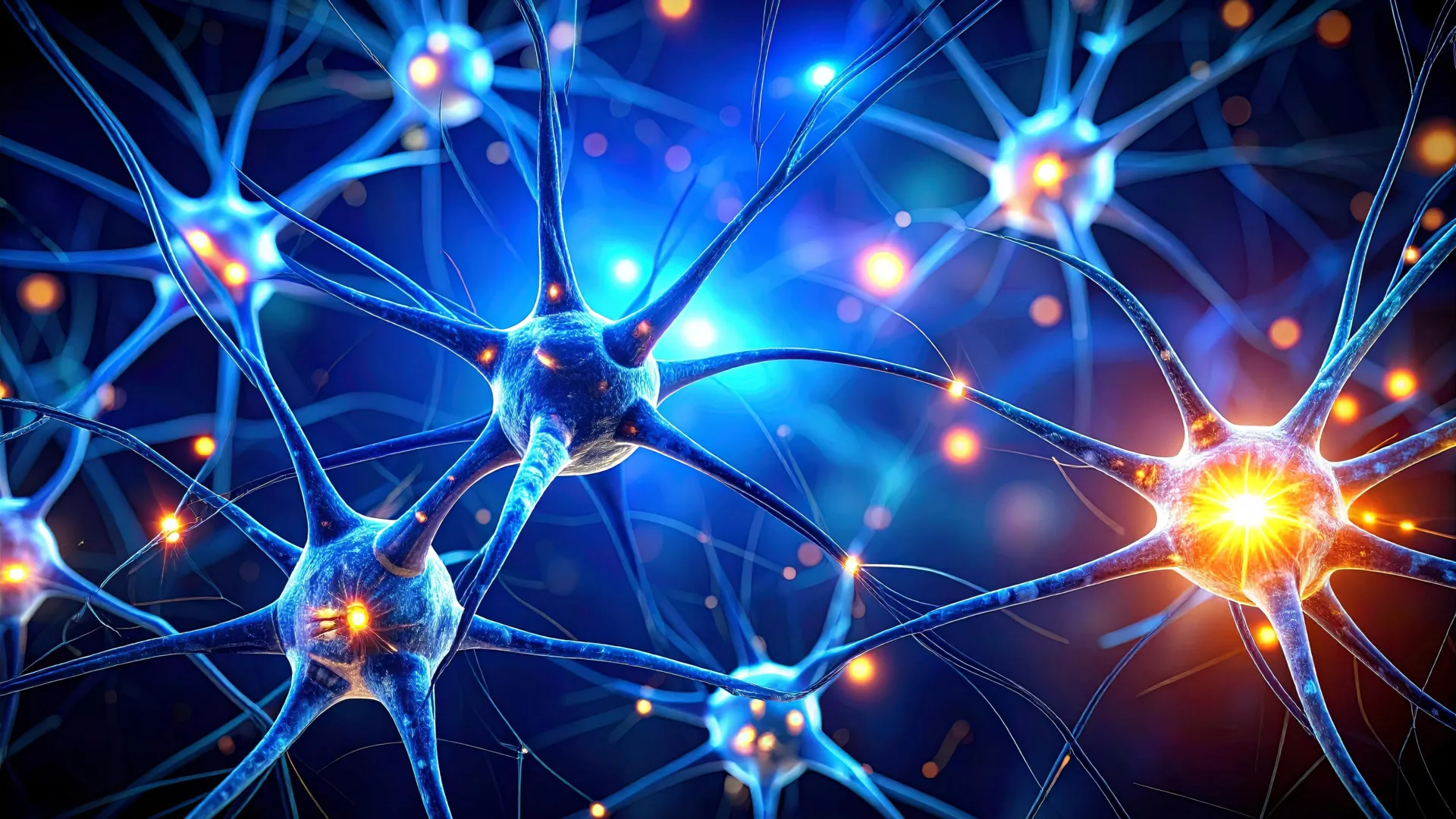
A significant advancement in neuroscience has been unveiled with the development of a genetically engineered protein capable of meticulously documenting the chemical messages that brain cells receive, shifting the scientific focus from merely observing outgoing signals to capturing the subtler, incoming streams of information. This groundbreaking innovation allows researchers to directly monitor the critical influx of glutamate, a principal neurotransmitter instrumental in the intricate network of brain communication. Glutamate’s profound involvement in fundamental cognitive processes such as learning and memory has long been recognized, yet its fleeting and often faint activity has posed substantial challenges to direct measurement, effectively rendering this crucial aspect of neural interaction largely imperceptible until now.
The newly engineered protein, christened iGluSnFR4, has been meticulously crafted by a collaborative effort between scientists at the Allen Institute and HHMI’s Janelia Research Campus, offering an unprecedented molecular "glutamate indicator." Its remarkable sensitivity empowers it to detect even the most attenuated incoming signals that are exchanged between individual neurons. This capability provides neuroscientists with a powerful new lens through which to interpret the complex, dynamic patterns of brain activity that underpin essential functions like learning, memory consolidation, and emotional processing. The ability to visualize the precise timing and locus of glutamate release in real-time, as neurons converse within the living brain, promises to fundamentally alter how neural activity is observed and dissected in scientific inquiry. The findings detailing this breakthrough were recently disseminated in the esteemed scientific journal Nature Methods, signaling a potential paradigm shift in the field.
Understanding the implications of this discovery necessitates a brief exploration of the fundamental mechanisms by which neurons interact. The human brain comprises billions of these specialized cells, which communicate through a sophisticated system of electrical impulses transmitted along elongated, branching projections known as axons. When an electrical signal reaches the terminus of an axon, it cannot directly traverse the microscopic chasm separating it from an adjacent neuron. This gap, termed the synapse, serves as the critical interface for interneuronal communication.
Instead of direct electrical transmission, the arrival of an electrical signal at the axonal terminal triggers the release of chemical messengers, neurotransmitters, into the synaptic cleft. Among these chemical couriers, glutamate stands out as the most prevalent and plays a pivotal role in a wide array of cognitive and emotional functions. Upon binding to receptors on the postsynaptic neuron, glutamate can elicit an electrical response, potentially initiating an action potential in that cell and thereby propagating the communicative chain.
While this process can be conceptually likened to a cascade of falling dominoes, the reality of neural communication is vastly more intricate. Each individual neuron is a recipient of input from potentially thousands of other neurons, and its decision to generate an outgoing signal, or "fire," is contingent upon the precise integration and pattern of these myriad incoming signals. The newly developed protein sensor, iGluSnFR4, grants researchers the unprecedented ability to discern which specific patterns and combinations of incoming activity ultimately lead to a neuron’s activation.
Prior to this innovation, the direct observation of these incoming synaptic signals within living brain tissue was a formidable, if not insurmountable, hurdle. Existing technological approaches were either too sluggish to capture the rapid synaptic events or lacked the requisite sensitivity to resolve activity at the level of individual synapses. Consequently, scientific understanding was largely confined to observing isolated fragments of the communication process, akin to listening to only parts of a conversation. This novel protein sensor, however, enables researchers to capture the entirety of the neural exchange, providing a holistic view of synaptic interactions.
Kaspar Podgorski, Ph.D., a lead author of the study and a senior scientist at the Allen Institute, drew a compelling analogy to illustrate the significance of this advancement, comparing the previous state of neuroscience to reading a book with all its words jumbled, making comprehension impossible. He expressed that this new tool effectively adds the crucial connections between neurons, allowing for the understanding of word order and meaning, thereby deciphering the narrative of neural communication. Before the advent of protein sensors like iGluSnFR4, researchers were primarily limited to measuring the outgoing signals emitted by neurons. This created a substantial void in understanding, as the incoming signals, being both exceedingly swift and remarkably faint, remained largely undetectable.
Dr. Podgorski further elaborated on this critical gap, noting that neuroscientists possessed effective methods for mapping structural connections between neurons and, in separate experimental paradigms, could ascertain the output of specific neurons. However, the integration of these two distinct types of information—structural connectivity and functional output—proved exceptionally challenging. "It’s hard to measure what neurons are saying to which other neurons," he stated, underscoring the long-standing need for a method to track incoming information. "What we have invented here is a way of measuring information that comes into neurons from different sources, and that’s been a critical part missing from neuroscience research."
The successful development of iGluSnFR4 is a testament to the power of interdisciplinary collaboration, as highlighted by Jeremy Hasseman, Ph.D., a scientist affiliated with HHMI’s Janelia Research Campus. He attributed the breakthrough to the synergistic partnership initiated at HHMI’s Janelia Research Campus between the GENIE Project team and Dr. Podgorski’s laboratory, an endeavor that subsequently expanded to encompass the extensive in vivo characterization work undertaken by the Allen Institute’s Neural Dynamics group. This initiative serves as a prime illustration of how cross-institutional collaboration can catalyze groundbreaking discoveries in the field of neuroscience.
This remarkable discovery effectively dismantles a significant impediment in contemporary neuroscience, affording scientists the direct observational capacity to comprehend how neurons process incoming information. With iGluSnFR4 now accessible to the broader scientific community through distribution by Addgene, researchers are equipped with a potent new instrument to probe the complexities of brain function with unprecedented detail. As this technology proliferates and is adopted by laboratories worldwide, it holds the potential to unlock answers to some of the most enduring and profound mysteries of the brain. The implications extend to a deeper understanding of information processing, decision-making, and the intricate neural underpinnings of consciousness itself.
Moreover, the capacity to precisely measure glutamate signaling offers fertile ground for advancing research into a spectrum of neurological and psychiatric disorders. Aberrant glutamate signaling has been implicated in a variety of debilitating conditions, including Alzheimer’s disease, schizophrenia, autism spectrum disorders, and epilepsy, among others. By enabling more precise quantification of these crucial synaptic events, researchers may gain critical insights into the fundamental biological mechanisms that contribute to the etiology of these diseases. This could pave the way for earlier and more accurate diagnostics, as well as the identification of novel therapeutic targets.
The pharmaceutical industry also stands to benefit considerably from this technological leap. Experimental treatments designed to modulate neural activity can now be rigorously evaluated for their precise effects on real-world synaptic dynamics. This direct assessment of drug efficacy at the neuronal level could significantly accelerate the preclinical stages of drug development, streamlining the arduous search for more effective and targeted therapies for a range of neurological conditions. The ability to visualize the direct impact of interventions on glutamate signaling provides a crucial validation step, moving beyond indirect behavioral measures to a more fundamental understanding of a drug’s mechanism of action. The potential to observe how these incoming signals are integrated and processed within neuronal networks could also inform the design of more sophisticated and nuanced therapeutic strategies, aiming to restore or enhance specific neural circuit functions.
About the Author