As individuals navigate the landscape of life beyond their fifth decade, the conventional wisdom surrounding fitness often suggests a necessary decline in physical capabilities, or perhaps an arduous commitment to demanding gym routines. However, a growing body of evidence, alongside expert recommendations, underscores a more empowering reality: sustained physical strength and overall well-being are not only achievable but can be significantly enhanced through consistent, intentional exercise performed within the comfort and convenience of one’s own home. This approach challenges the notion that robust fitness requires extensive time commitments, heavy equipment, or a monthly gym membership, instead advocating for targeted daily movements that yield profound benefits.
The physiological shifts that typically commence around age 50, such as sarcopenia—the progressive loss of muscle mass and strength—and a gradual decrease in bone density, necessitate a proactive approach to physical activity. Without intervention, these changes can compromise functional independence, increase the risk of falls, and diminish overall quality of life. Regular resistance training, even with minimal or no external weights, serves as a powerful countermeasure, stimulating muscle protein synthesis, improving bone mineral density, and boosting metabolic health. Beyond the purely physical, engaging in consistent exercise has well-documented benefits for cognitive function, mood regulation, and stress reduction, fostering a holistic sense of vitality.
Before embarking on any new fitness regimen, particularly after a period of inactivity or if managing pre-existing health conditions, it is unequivocally advisable to consult with a medical professional. This crucial step ensures that the chosen exercises are appropriate for individual health status and helps prevent potential injuries. Once cleared, the focus can shift to integrating effective movements into daily life, transforming the home environment into a personal wellness sanctuary. Certified fitness professionals, such as those with credentials from the National Academy of Sports Medicine (NASM-CPT), frequently advocate for foundational, multi-joint exercises that are both efficient and highly effective for building comprehensive strength.
Here are four such exercises, designed to build substantial strength and functional capacity, demonstrating that strategic home workouts can indeed rival the benefits of more elaborate gym programs for individuals over 50. These movements emphasize core stability, functional strength, and muscle engagement across various planes of motion.
1. Supine Hip Elevation with Pectoral Adduction
This compound exercise effectively targets the posterior chain—the muscles along the back of the body—while simultaneously engaging the chest and shoulders. Begin by lying comfortably on your back on a mat or carpet, with your knees bent and feet flat on the floor, positioned roughly hip-width apart and a comfortable distance from your glutes. If using weights, hold a light dumbbell or a household item like a canned good in each hand, with palms facing each other or slightly upward, elbows gently bent and resting on the floor out to your sides.
Initiate the movement by pressing through your heels and engaging your glutes to lift your hips off the floor, forming a straight line from your shoulders to your knees. It’s crucial to maintain a stable pelvis, preventing any tilting or unevenness in your hips. Concurrently, bring your hands together directly above your chest, maintaining the slight bend in your elbows throughout the arc of motion, as if you are hugging a large tree. This constitutes the pectoral adduction (chest fly) component. Carefully lower your hands back to the starting position with elbows returning to the floor, then smoothly lower your hips back down, vertebrae by vertebrae, until your glutes gently touch the mat. This exercise strengthens the glutes, hamstrings, and lower back, while the upper body movement targets the pectorals, anterior deltoids, and stabilizes the shoulder joint, contributing significantly to improved posture and functional pressing strength.
2. Quadruped Hip Mobility and Extension Sequence
This dynamic sequence is exceptional for enhancing hip stability, strengthening the glutes, and improving core control, all vital for gait and balance. Adopt a tabletop position on your hands and knees, ensuring your wrists are aligned directly beneath your shoulders and your knees directly beneath your hips. Your back should be flat and neutral, not arched or rounded, and your abdominal muscles gently engaged to prevent any sagging in your lower back.
The sequence involves two distinct but flowing movements for each leg. First, keeping the knee bent at approximately a 90-degree angle, lift one knee directly out to the side, away from your body, as if a dog lifting its leg. Focus on using your outer hip muscles (gluteus medius and minimus) to perform this abduction, maintaining a stable torso without leaning or twisting. Return the knee to the starting position beneath your hip. Immediately following, extend the same leg straight back behind you, pointing your toe towards the ceiling, and lift it upward using your gluteal muscles. The movement should originate from the hip, with minimal arching of the spine. The goal is to lift the heel higher than the glute, not necessarily to lift the leg excessively high. Return the leg to the starting position. Alternate these two movements on the same leg for the desired repetitions before switching to the other side. To intensify, consider light ankle weights or carefully securing a small dumbbell behind the working knee, which also enhances inner thigh engagement. This exercise is paramount for hip health, preventing imbalances, and bolstering lower body power for activities like walking and climbing stairs.
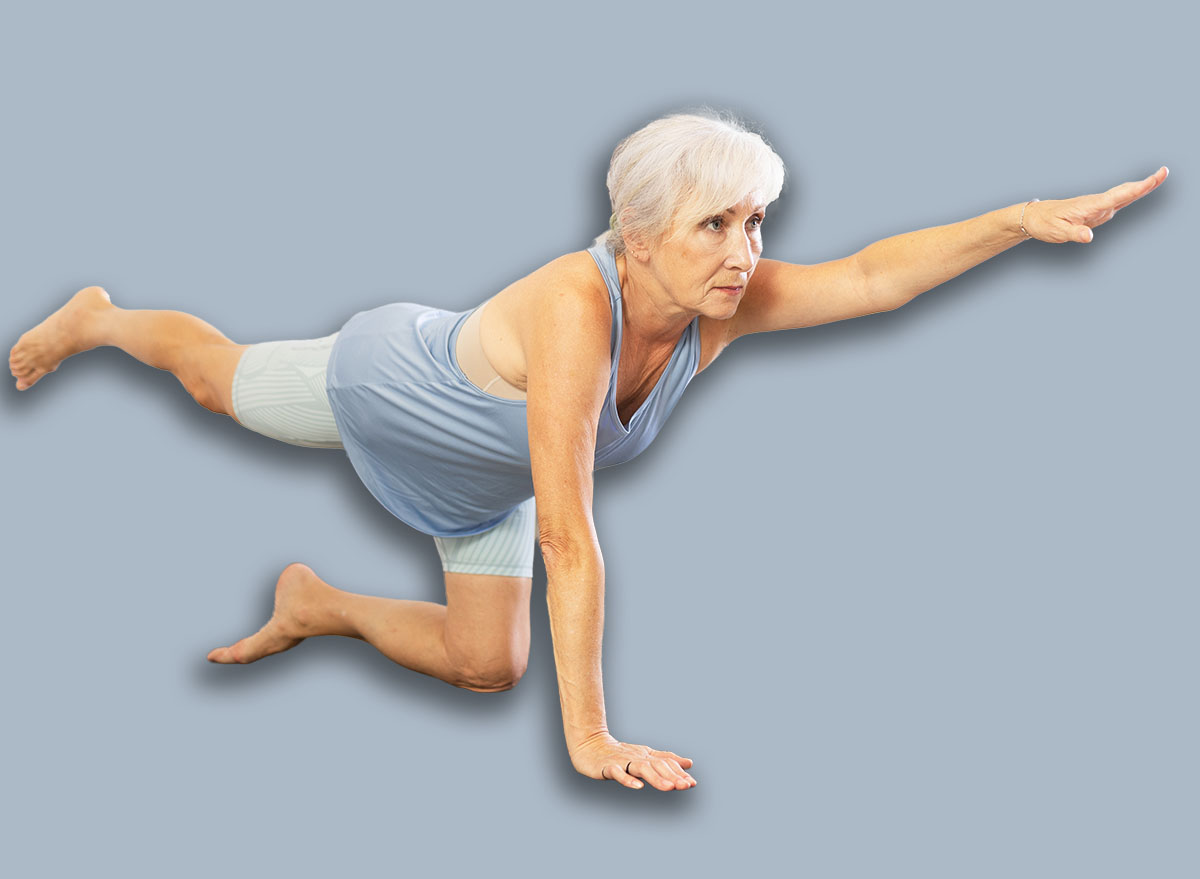
3. Contralateral Limb Extension (Bird Dog)
The "Bird Dog" is a cornerstone exercise for developing core strength, spinal stability, and coordination, making it invaluable for maintaining a robust and resilient back. Begin again in the tabletop position, with wrists under shoulders and knees under hips, maintaining a neutral spine and engaged core.
The movement involves simultaneously extending one arm straight forward, parallel to the floor, and the opposite leg straight back, also parallel to the floor. Imagine reaching through your fingertips and pushing through your heel. The key is to keep your torso perfectly still and stable, resisting any rotation or arching in your lower back. Your gaze should remain downward to maintain a neutral neck alignment. Hold this extended position briefly, focusing on the deep core muscles, before smoothly and slowly returning both limbs to the starting tabletop position. Repeat on the alternate side, extending the other arm and leg. The deliberate, controlled nature of this movement is crucial; avoid rushing or using momentum. For added challenge, small wrist or ankle weights can be incorporated, or the duration of the hold can be extended. This exercise not only fortifies the core and lower back but also enhances balance and proprioception, reducing the risk of falls and improving overall body awareness.
4. Isometric Wall Squat with Anterior Shoulder Raises
This exercise combines an isometric hold for lower body endurance and strength with a dynamic upper body movement, effectively targeting the quadriceps, glutes, and shoulders. Stand with your back pressed flat against a sturdy wall, your feet positioned slightly wider than your shoulders and a comfortable distance away from the wall. Slowly slide down the wall, bending your knees as if sitting into an imaginary chair, until your thighs are roughly parallel to the floor or to a point where you feel significant engagement in your quadriceps without discomfort in your knees. Your knees should track over your ankles, not past your toes. Maintain this static squat position.
While holding the wall squat, rotate your palms to face each other. Keeping a slight bend in your elbows, slowly lift your arms straight out in front of your torso, reaching to shoulder height. Focus on engaging the front of your shoulders (anterior deltoids) and upper chest. Control the movement as you lower your arms back down to the starting position. Continue performing these arm raises for your desired repetitions while maintaining the wall squat. Once all repetitions are completed, gently push off the wall to return to a standing position. To increase intensity, use light dumbbells or wrist weights for the arm raises. This exercise is exceptional for building quadriceps endurance and strength, which is fundamental for everyday activities like standing up from a chair, walking, and climbing stairs, while simultaneously fortifying the shoulder girdle for various pushing and lifting tasks.
For optimal results, aim to complete two to three sets of 10-15 repetitions for each of these exercises, adjusting the number based on individual fitness levels and progression. The beauty of these movements lies in their versatility and scalability; as strength improves, one can increase repetitions, add more sets, incorporate heavier (but still manageable) weights, or slow down the tempo to increase time under tension. Consistency is paramount; incorporating these exercises into a daily or near-daily routine will yield far greater benefits than sporadic, intense sessions.
Beyond the structured exercises, adopting a holistic approach to well-being is key. This includes prioritizing nutrient-dense foods, ensuring adequate hydration, getting sufficient restorative sleep, and integrating cardiovascular activity for heart health. These elements synergistically contribute to the overall effectiveness of a strength training program. By embracing these strategic, accessible home workouts, adults over 50 can confidently build and maintain significant physical strength, fostering an enduring sense of vitality, independence, and an enhanced quality of life for years to come. Age, it turns out, is not a barrier to physical resilience, but rather an invitation to redefine one’s approach to fitness.
About the Author