Cultivating Enduring Functional Strength: An Efficient Daily Protocol for Adults Over Fifty
As individuals progress beyond their fifth decade, the landscape of physical well-being undergoes significant shifts, notably concerning muscular strength and overall functional capacity. A prevalent misconception often suggests that maintaining robust physical capabilities in later life demands extensive, time-consuming gym commitments. However, contemporary fitness philosophy and expert observation increasingly point towards a paradigm where the efficacy of strength development, particularly for mature adults, is less contingent upon the sheer duration of a workout session and more on its strategic focus and unwavering consistency. This shift in understanding challenges the traditional view, proposing that a meticulously designed, brief daily regimen can yield superior results compared to sporadic, lengthy bouts of exercise.
The physiological phenomenon known as sarcopenia, the progressive age-related loss of muscle mass, strength, and function, underscores the critical importance of regular resistance training as we age. Left unaddressed, sarcopenia can precipitate a decline in mobility, increase the risk of falls, diminish metabolic health, and ultimately compromise independence and quality of life. Yet, combating this natural decline does not necessarily require hours of complex routines or heavy equipment. Experienced fitness professionals often observe that individuals dedicating an hour or more to weightlifting a few times weekly may exhibit limited tangible progress if their approach lacks precision. Conversely, others achieve remarkable transformations in strength and vitality by embracing a concentrated, targeted routine completed within minutes, often before the day’s demands fully begin. The differentiating factor almost invariably lies in the quality and intentionality of the movement, not merely the quantity of time spent.
Many individuals harbor the belief that significant muscular development necessitates endless repetitions, specialized heavy apparatus, and extended recovery periods between sets. In actuality, the human musculature responds with remarkable efficiency to compound movements—exercises that simultaneously engage multiple muscle groups and joints. A concise training segment that deliberately targets the body’s major muscle groups—including the legs, hips, core, chest, shoulders, and back—frequently delivers more profound and practical functional benefits than isolated exercises performed on machines for considerably longer durations. This principle forms the bedrock of an approach that encourages maximizing the value of every single minute invested in physical activity, rather than merely accumulating more minutes without purpose.
For years, dedicated coaches working with adults over the age of fifty have consistently noted that their most resilient clients rarely complicate their exercise regimens. Instead, these individuals prioritize mastering fundamental movement patterns, executing them with impeccable form, and adhering to their chosen routine week after week. This disciplined consistency, coupled with a focus on foundational movements, is what cultivates lasting strength, improved balance, enhanced posture, and greater mobility. Such an approach demonstrates that all that is truly required is a stable chair, a modest amount of personal space, and a genuine commitment to investing a mere fraction of one’s day into personal health.
A foundational element of any comprehensive strength program, particularly for older adults, involves movements that activate the largest muscle groups, thereby efficiently stimulating the entire physiological system. The Sit-to-Stand exercise serves as an excellent starting point, typically occupying the initial two minutes of a structured routine. This deceptively simple movement is a powerful activator for the quadriceps, glutes, hamstrings, and core musculature. More importantly, it reinforces one of the most vital functional movement patterns performed countless times throughout an ordinary day. Each successful repetition builds strength and confidence in the legs, preparing them for everyday tasks such as walking, navigating stairs, and rising from seated positions with greater ease and stability. Participants often report an immediate sense of invigoration, a testament to the broad muscular recruitment inherent in this exercise. Its direct correlation to independent living makes it an indispensable component of an age-appropriate fitness regimen.
Following the activation of the lower body, attention shifts to strengthening the upper body while judiciously minimizing undue stress on the joints. Wall Push-Ups, typically allocated for minutes three and four, represent an ideal method for achieving this. This modified pushing exercise effectively engages the chest, shoulders, triceps, and core, simultaneously fostering improved shoulder stability and promoting better postural alignment. The emphasis during wall push-ups should be on deliberate, controlled repetitions rather than rapid, momentum-driven movements. Individuals often discover a noticeable increase in strength during common pushing tasks—such as opening heavy doors or moving furniture—after consistently incorporating this exercise into their daily morning ritual, highlighting its direct functional transferability.
The subsequent phase of this efficient routine, often spanning minutes five and six, ingeniously combines strength development with crucial elements of balance and coordination. Standing Knee Drives are dynamic movements that activate the core, hip flexors, and glutes, while simultaneously challenging the stability of the supporting leg. This exercise also gently elevates the heart rate, providing a mild cardiovascular benefit. Its inherent value lies in its close resemblance to the powerful, coordinated movements involved in brisk walking or climbing, making its benefits immediately applicable to everyday locomotion. Those who regularly perform standing knee drives frequently report feeling more agile, lighter on their feet, and generally more energized, reflecting the integrated nature of this movement in improving overall dynamic stability.
To foster comprehensive upper-body strength and address common muscular imbalances, the routine then incorporates targeted pulling movements. Resistance Band Rows, typically occupying minutes seven and eight, are excellent for strengthening the upper back, the posterior deltoids (rear shoulders), and the biceps. These muscles are crucial for maintaining healthy posture and safeguarding the shoulders from strain, particularly given that many adults spend disproportionately more time engaged in pushing activities than pulling ones during their daily lives. Integrating resistance band rows actively encourages superior shoulder blade movement and retraction, which is fundamental for proper scapular health. Cultivating robust upper-back strength often empowers individuals to stand taller, project a more confident posture, and experience greater comfort throughout their daily activities.
A powerful and stable hip complex is paramount for supporting the lower back and generating force for virtually every lower-body action. Glute Bridges, performed during minutes nine and ten, effectively activate the glutes, hamstrings, and core without imposing unnecessary pressure on the knees or spine. This ground-based exercise provides a distinct challenge for the legs compared to the initial sit-to-stand movement, reinforcing the crucial role of the posterior chain. Many clients attest that cultivating stronger hips makes a vast array of daily movements feel substantially easier, from simply rising from a seated position to ascending flights of stairs. Glute bridges lay a solid foundation for lower-body power and stability, which are critical for maintaining mobility and preventing injury.
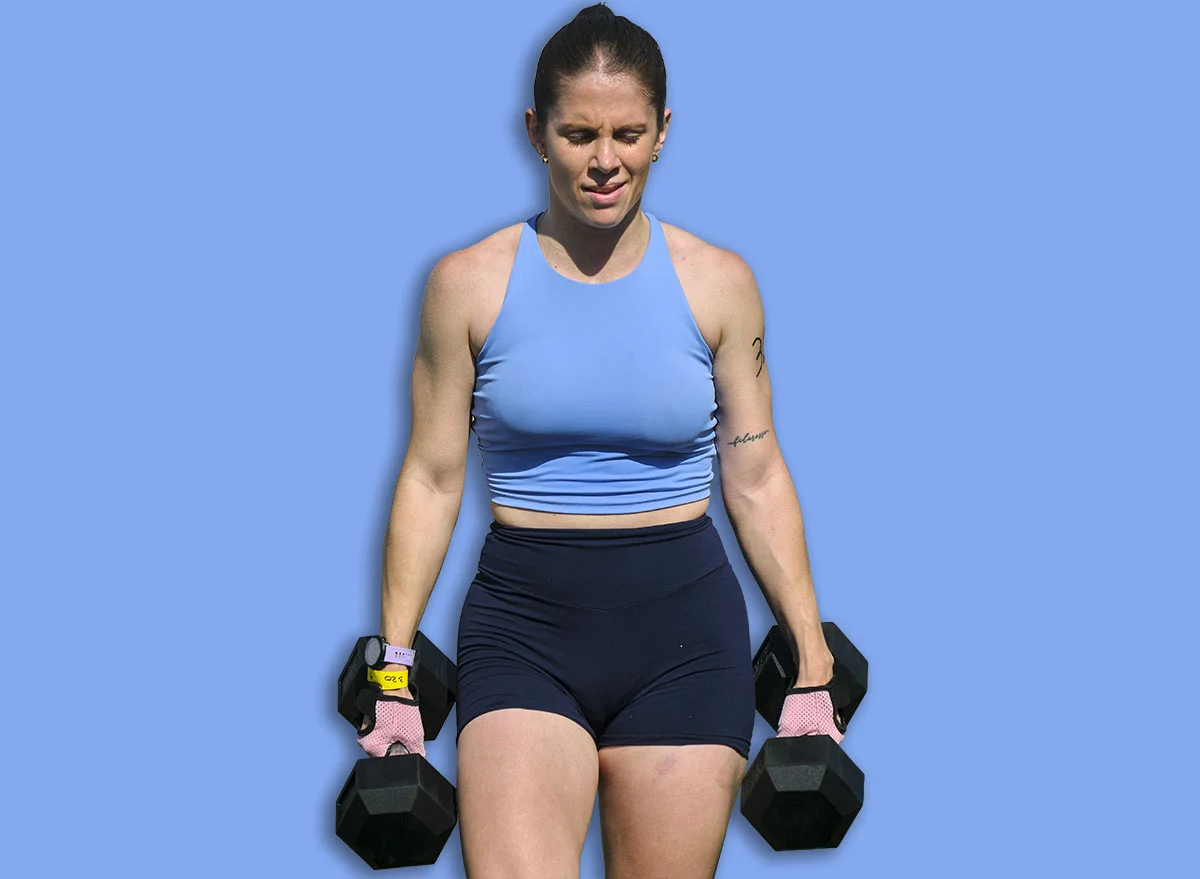
To culminate the routine with a holistic, full-body integration, the final two minutes (eleven and twelve) are dedicated to the Farmer’s Carry. This exercise is a masterclass in functional strength, simultaneously enhancing grip strength, shoulder stability, core engagement, leg endurance, and the activation of postural muscles, all while reinforcing proper biomechanical alignment during ambulation. The act of holding a substantial weight while moving challenges the body in a manner that closely mimics real-world scenarios, making it one of the most practically beneficial exercises available. Individuals consistently performing the Farmer’s Carry frequently report significant improvements in their ability to handle everyday loads, such as carrying groceries, luggage, or other personal items. It serves as an exemplary conclusion to a routine specifically engineered to develop strength that directly translates to enhanced quality of life and sustained independence.
Beyond the immediate physical benefits, consistent engagement in such a focused, daily strength routine offers a multitude of broader implications for overall well-being. Regular muscular exertion contributes significantly to improved bone mineral density, a critical factor in mitigating the risk of osteoporosis and related fractures. It also enhances metabolic health by increasing lean muscle mass, which in turn boosts resting metabolism and helps regulate blood sugar levels. The profound impact on balance and coordination directly reduces the likelihood of falls, a leading cause of injury and disability in older adults. Furthermore, the discipline and accomplishment associated with adhering to a consistent fitness regimen can positively influence mental well-being, fostering a sense of self-efficacy, reducing stress, and potentially improving cognitive function.
In an era where time is a precious commodity, the realization that meaningful physical gains can be achieved through highly efficient, targeted exercise is profoundly empowering. This 12-minute morning protocol transcends the conventional wisdom that equates fitness with lengthy gym sessions. Instead, it champions the power of consistency, functional movement, and a deliberate focus on the body’s foundational strength. By embracing such a regimen, adults over fifty can not only counteract the natural decline associated with aging but actively cultivate a stronger, more agile, and resilient physique, ensuring a richer, more independent, and vibrant future.

Related News