As individuals progress into their mid-50s and beyond, the human body undergoes a series of natural physiological transformations that significantly influence physical health and body composition. These changes often encompass shifts in hormonal balance, a gradual decline in muscle mass known as sarcopenia, and a slowing of metabolic rate. Concurrently, many experience an increased tendency for adipose tissue, specifically visceral fat, to accumulate around the midsection. This phenomenon not only alters physical appearance but also carries substantial implications for overall health, increasing the risk for conditions such as metabolic syndrome, cardiovascular disease, and type 2 diabetes. Understanding these age-related shifts is paramount for developing an effective and sustainable fitness strategy that addresses both aesthetic concerns and foundational wellness.
The approach to maintaining a strong, functional core must evolve with these physiological changes. Traditional abdominal exercises, while popular, often fall short or can even be counterproductive for older adults if not executed within a comprehensive framework. The emphasis must shift from targeting superficial muscles to nurturing the deep stabilizing musculature that underpins core integrity and supports optimal posture. This nuanced understanding forms the cornerstone of expert-recommended fitness regimens tailored for this demographic.
Karen Ann Canham, a Board-Certified Wellness Coach, Nervous System Specialist, and the CEO and founder of Karen Ann Wellness, brings nearly two decades of experience to this crucial area of health. Her philosophy underscores that the primary objective for individuals over 55 extends far beyond merely achieving "abs." Instead, the focus should be on establishing robust deep core support and enhancing overall postural alignment. Canham highlights that an overly simplistic reliance on exercises like endless crunches represents a common misstep. Crunches predominantly engage the rectus abdominis, the outermost abdominal muscle responsible for the "six-pack" appearance, while neglecting the critical deeper muscles essential for true core stability. Moreover, these movements can inadvertently elevate intra-abdominal pressure, potentially exacerbating any existing abdominal protrusion if the underlying transverse abdominis (TVA) and pelvic floor muscles are not adequately strong.
To effectively address core health in this age group, Canham emphasizes prioritizing specific muscle groups: the pelvic floor, the transverse abdominis, the glutes, and the multifidus. The pelvic floor muscles provide crucial support for the bladder, bowel, and uterus, playing a vital role in continence and core stability. The transverse abdominis, often referred to as the body’s natural corset, wraps around the torso and, when properly engaged, draws the abdominal wall inward, providing significant spinal support. The gluteal muscles (glutes) are essential for hip stability and power, influencing pelvic alignment and reducing strain on the lower back. Finally, the multifidus muscles are small, deep muscles running along the spine, critical for segmental spinal stability and posture. When these interconnected muscle groups are strengthened in concert, they create an internal "girdle" effect, contributing to a more supported and toned abdominal region even before significant body fat reduction occurs.
Establishing a consistent exercise routine, particularly in the morning, offers a strategic advantage. Beginning the day with physical activity can significantly enhance adherence to a fitness program, minimizing the likelihood of distractions or fatigue interfering later in the day. Morning workouts can also boost energy levels, improve mental clarity, and positively influence metabolic processes throughout the waking hours, contributing to better overall health outcomes. This proactive approach sets a positive tone for the day and reinforces a commitment to long-term well-being.
Drawing upon these principles, Canham advocates for a sequence of four foundational movements that effectively target these deep core stabilizers and promote functional strength. These exercises are designed to be accessible, emphasize proper form over intensity, and offer comprehensive benefits for individuals over 55.
1. Glute Bridges:
This exercise serves as an excellent starting point for cultivating hip strength and correcting common postural imbalances. Performed lying supine with knees bent and feet flat on the floor, the movement involves lifting the hips off the ground, creating a straight line from the shoulders to the knees. The primary focus is on activating the gluteal muscles, which are often underactive in sedentary lifestyles. Strengthening the glutes is instrumental in correcting an anterior pelvic tilt, a common postural deviation where the pelvis tilts forward, often contributing to a more prominent lower abdominal appearance. By engaging the glutes and posterior chain, glute bridges also implicitly support the pelvic floor and lower back, fostering a more stable and aligned core. The controlled elevation and lowering of the hips promote both strength and mobility in the hip joint, crucial for maintaining functional independence.
2. Dead Bug:
The Dead Bug is a sophisticated anti-extension exercise that builds profound core stability without imposing strain on the neck or lower back, a common concern with traditional abdominal work. Executed by lying on the back with arms extended towards the ceiling and knees bent at a 90-degree angle, the movement involves slowly extending one arm and the opposite leg towards the floor while maintaining a completely stable and braced core. The challenge lies in resisting the natural tendency of the lower back to arch, thus engaging the transverse abdominis to stabilize the spine. This exercise specifically trains the deep core muscles to work synergistically to prevent unwanted movement, enhancing spinal control and coordination. For individuals over 55, this translates into improved balance, better body awareness, and a reduced risk of injury during everyday activities, all while strengthening the internal abdominal musculature.
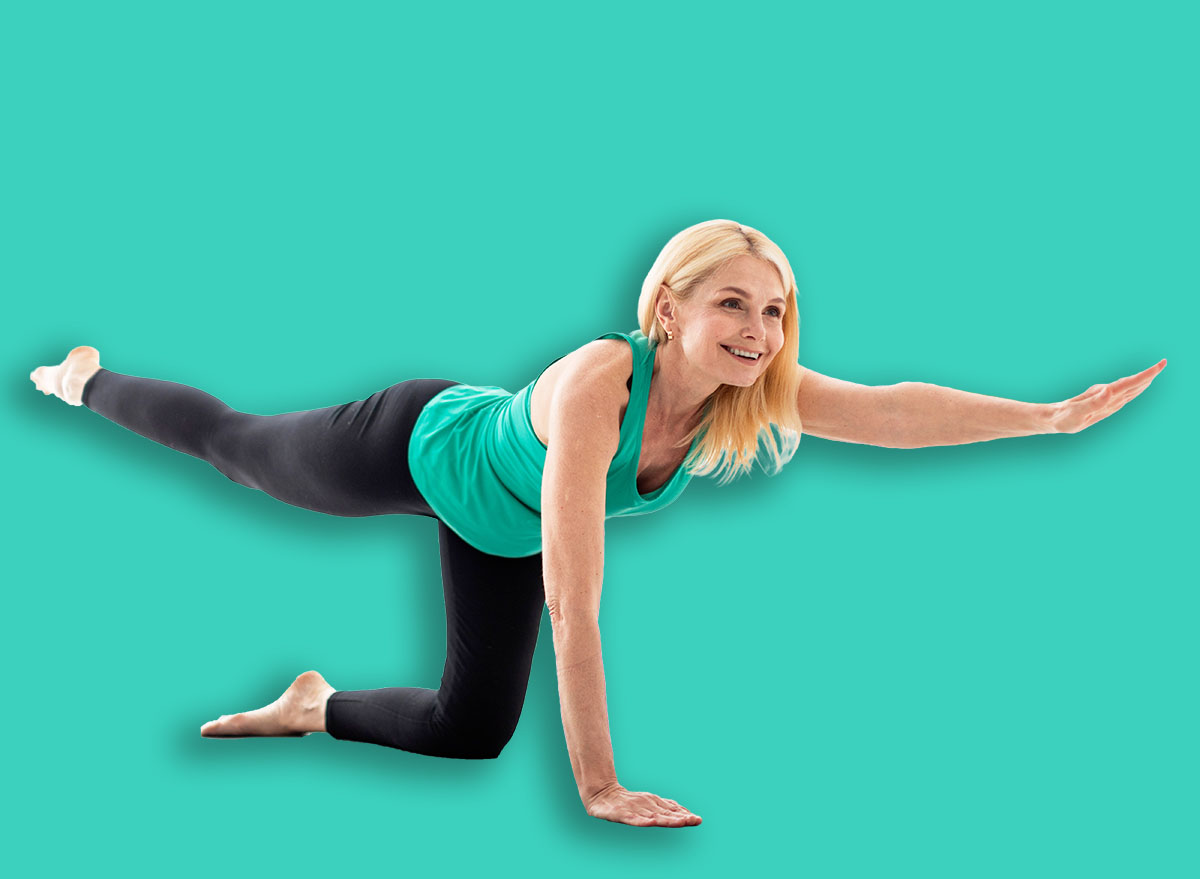
3. Bird Dog:
Originating from a quadruped position (on hands and knees), the Bird Dog exercise is a cornerstone for activating spinal stabilizers and enhancing postural control. The movement involves simultaneously extending one arm forward and the opposite leg backward, striving for a straight line from the extended hand to the extended foot, all while maintaining a level pelvis and a stable torso. This exercise is particularly effective at engaging the multifidus muscles, along with the glutes and core, to stabilize the spine against rotational forces. It promotes contralateral coordination, which is vital for gait and balance, and strengthens the muscles responsible for maintaining an upright posture. By consistently practicing the Bird Dog, individuals can improve their proprioception—the body’s sense of its position in space—and significantly reduce the risk of falls, a critical concern for older adults.
4. Incline Pushups:
While often perceived as an upper-body exercise, Incline Pushups offer significant full-body tension and metabolic stimulation, engaging the core as a crucial stabilizer. Performed against a wall, a sturdy counter, or an elevated surface, this exercise allows for adjustable intensity based on the angle of inclination. As the body moves through the pushup, the core muscles, including the TVA, must engage powerfully to maintain a rigid torso and prevent sagging hips. This integrated approach to strength training ensures that the abdominal muscles are working in conjunction with the chest, shoulders, and arms, promoting functional strength that mimics real-life movements. The metabolic stimulus provided by this compound movement also contributes to overall energy expenditure, supporting body composition goals. Its adaptability makes it suitable for various fitness levels, allowing for progressive overload as strength improves.
Beyond the specific exercises, integrating a holistic approach to wellness is crucial for optimal results. Exercise is most effective when complemented by other healthy lifestyle choices. Adequate protein intake is vital for combating sarcopenia and supporting muscle repair and growth. Consistent hydration, sufficient sleep, and effective stress management techniques all play interconnected roles in hormonal balance, metabolic function, and overall physical and mental resilience. Viewing exercise as one pillar within a broader wellness strategy ensures that all aspects of health are addressed synergistically.
Before embarking on any new exercise regimen, especially after the age of 55 or with pre-existing health conditions, it is always advisable to consult with a healthcare provider or a certified fitness professional. This ensures that the chosen activities are appropriate for individual health status and can be performed safely. Emphasizing proper form, listening to one’s body, and gradually progressing the intensity and volume of exercises are fundamental principles for long-term success and injury prevention.
In conclusion, for individuals over 55, a strategic focus on deep core strength and postural support through targeted morning movements offers profound benefits that extend far beyond superficial aesthetics. By prioritizing exercises like Glute Bridges, Dead Bug, Bird Dog, and Incline Pushups, as recommended by experts like Karen Ann Canham, individuals can proactively address age-related physiological changes, enhance functional movement, improve balance, and foster a robust sense of well-being, paving the way for a more vibrant and active life.
About the Author