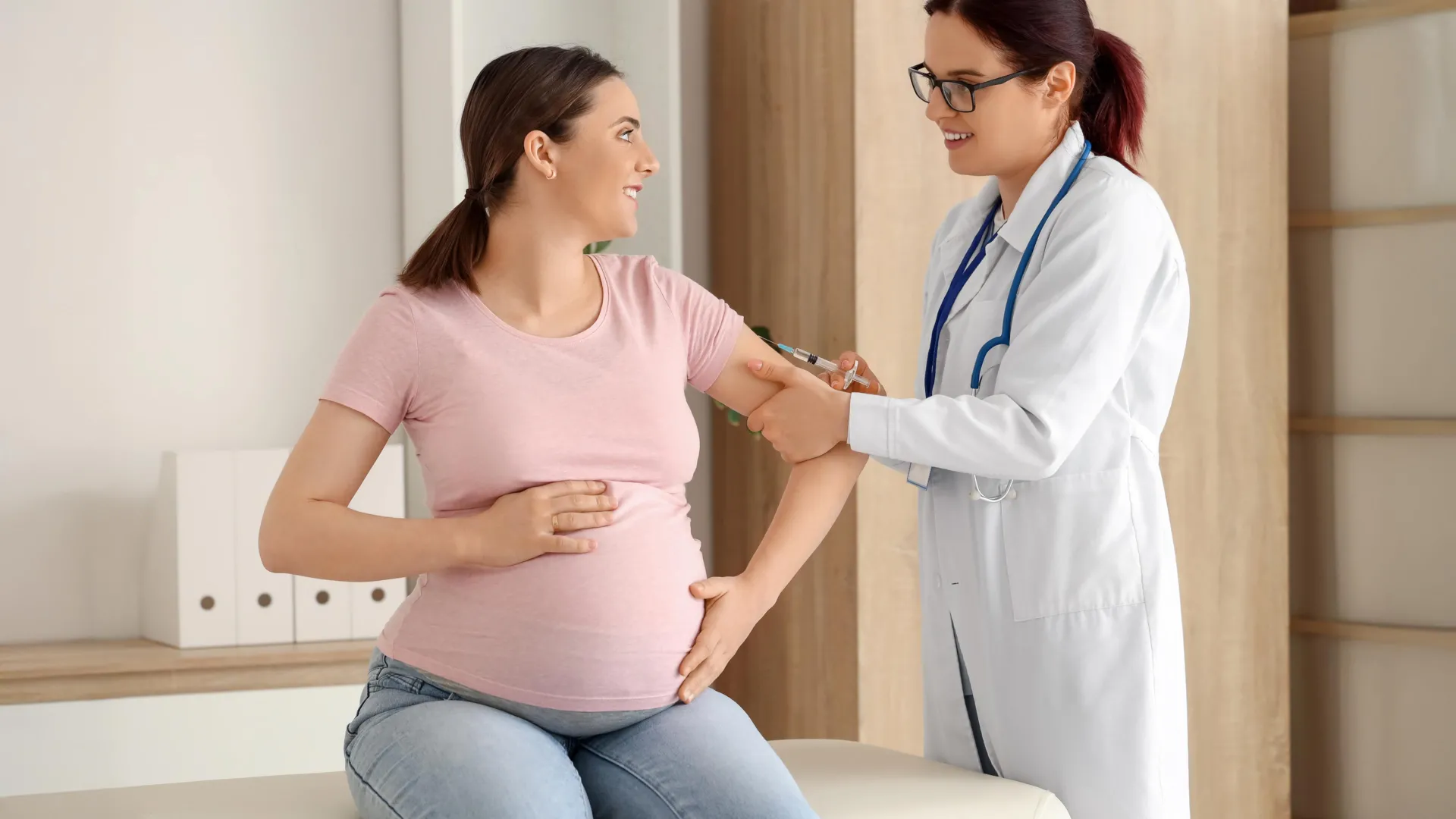
A substantial body of research, unveiled at the Society for Maternal-Fetal Medicine (SMFM) 2026 Pregnancy Meeting, has definitively concluded that the administration of mRNA COVID-19 vaccines either in the period preceding pregnancy or at any stage during gestation does not elevate the risk of autism spectrum disorder (ASD) or other neurodevelopmental challenges in offspring. These newly presented findings contribute significant longitudinal data concerning the health trajectories of children whose mothers underwent COVID-19 vaccination around the critical gestational period.
Within the United States, two primary vaccine technologies are recommended for the prevention of COVID-19: the messenger ribonucleic acid (mRNA) platform and the protein subunit vaccine. Health authorities universally endorse both vaccine types as safe and appropriate for use across all trimesters of pregnancy, emphasizing their crucial role in fortifying the health of both the expectant mother and the developing infant against the severe impacts of SARS-CoV-2 infection.
The investigation, a cornerstone of the Maternal-Fetal Medicine Units Network’s ongoing efforts, meticulously examined 434 young children, aged between 18 months and 30 months, for the presence of autism-related characteristics and other developmental variances. This extensive inquiry was designed as a prospective, multi-center, observational study, with data collection spanning from May 2024 to March 2025. The cohort was strategically divided, with precisely half of the participants—217 children—being born to mothers who had received at least one dose of an mRNA COVID-19 vaccine either during their pregnancy or within the 30 days immediately preceding conception. The remaining 217 children constituted the control group, born to mothers who had not received an mRNA vaccine within the aforementioned timeframe.
Dr. George R. Saade, MD, a distinguished Professor and Chair of Obstetrics and Gynecology, and Associate Dean for Women’s Health at Macon & Joan Brock Virginia Health Sciences at Old Dominion University in Norfolk, VA, who served as the senior researcher, articulated the study’s core revelation. He stated that "Neurodevelopment outcomes in children born to mothers who received the COVID-19 vaccine during or shortly before pregnancy did not differ from those born to mothers who did not receive the vaccine." This statement underscores the absence of any discernible disparity in developmental milestones or the presence of neurodevelopmental disorders between the two groups.
To ensure the highest degree of analytical precision and to mitigate potential confounding variables, the researchers implemented a rigorous matching protocol. Each mother in the vaccinated group was carefully paired with a mother in the unvaccinated group. This pairing was based on a constellation of demographic and logistical factors, including the specific healthcare facility where delivery occurred (e.g., hospital, birthing center), the precise date of birth, the mother’s insurance status, and her racial or ethnic background. Furthermore, pregnancies that did not meet specific criteria were deliberately excluded from both arms of the study. These exclusions encompassed preterm births (those occurring before 37 weeks of gestation), pregnancies resulting in multiple births (twins, triplets, etc.), and pregnancies where the child was diagnosed with a significant congenital malformation at birth. This meticulous exclusion process aimed to isolate the effect of vaccination from other known factors that could influence child development.
Upon reaching the developmental stage between 18 and 30 months of age, the children underwent a comprehensive developmental assessment. This evaluation employed the Ages and Stages Questionnaire Version 3 (ASQ-3), a widely recognized and validated screening tool designed to gauge developmental progress across five critical domains: communication skills, gross motor abilities, fine motor dexterity, problem-solving capabilities, and interpersonal social interactions. Complementing the ASQ-3, the research team also reviewed results from several other key instruments. These included the Child Behavior Checklist (CBCL), the Modified Checklist for Autism in Toddlers (M-CHAT), and the Early Childhood Behavior Questionnaire (ECBQ). These additional assessments provided a more nuanced understanding of behavioral patterns and developmental trajectories, further strengthening the study’s capacity to detect subtle differences.
Dr. Brenna L. Hughes, MD, MSc, Edwin Crowell Hamblen Distinguished Professor of Reproductive Biology and Family Planning and Interim Chair of the Department of Obstetrics and Gynecology at Duke University in Raleigh, NC, provided further commentary on the study’s significance. She highlighted, "This study, conducted through a rigorous scientific process in an NIH clinical trials network, demonstrates reassuring findings regarding the long-term health of children whose mothers received COVID-19 vaccination during pregnancy." Her remarks emphasize the high scientific caliber of the research and its capacity to offer comfort and clarity to expectant and new mothers regarding vaccine safety.
The research initiative was generously supported by funding from the Eunice Kennedy Shriver National Institute of Child Health and Human Development (NICHD). The authors of the study were transparent in their disclosure, noting that the conclusions presented are solely their own interpretations and analyses of the data, and do not necessarily represent the official stance or policy of the National Institutes of Health (NIH) as an institution.
The full findings of this pivotal study, identified as oral abstract #8 and titled "Association between SARS-CoV-2 vaccine in pregnancy and child neurodevelopment at 18-30 months," are slated for publication in the February 2026 issue of Pregnancy, the official, peer-reviewed medical journal of the Society for Maternal-Fetal Medicine. This forthcoming publication will make the detailed methodology, statistical analyses, and comprehensive results accessible to the broader scientific and medical community, facilitating further review and understanding.
The development and widespread recommendation of mRNA vaccines, particularly in the context of a global pandemic, spurred extensive research into their safety profiles, especially concerning vulnerable populations such as pregnant individuals and their developing fetuses. Early in the pandemic, concerns about novel vaccine technologies and their potential impact on pregnancy were prevalent. However, a cascade of observational studies and clinical trials, including the one detailed here, has progressively built a robust evidence base demonstrating the safety and efficacy of these vaccines during pregnancy.
Autism Spectrum Disorder (ASD) is a complex neurodevelopmental condition characterized by challenges with social interaction, communication, and repetitive behaviors. The exact causes of ASD are not fully understood, but research points to a combination of genetic and environmental factors. Historically, misinformation and unfounded claims linking vaccines to ASD have caused significant public anxiety. The scientific community has repeatedly debunked these associations, with numerous large-scale studies examining various vaccines and finding no causal link to autism. This recent study adds a crucial piece to that ongoing body of evidence, specifically addressing the mRNA COVID-19 vaccines.
The decision to recommend COVID-19 vaccination during pregnancy was based on several key considerations. Pregnant individuals are at an increased risk of severe illness from COVID-19, which can lead to adverse outcomes such as preterm birth, stillbirth, and intensive care unit admission. Vaccination offers a vital layer of protection for the mother, reducing her risk of infection and severe disease. Furthermore, emerging evidence suggested that maternal antibodies could be transferred to the fetus, potentially offering some protection to the newborn in the critical early months of life.
The methodology employed in this study, particularly the prospective, observational, and multi-center design, coupled with the rigorous matching and the use of validated developmental screening tools, lends substantial weight to its findings. Prospective studies, which follow participants forward in time, are generally considered stronger than retrospective studies for establishing temporal relationships and minimizing recall bias. The multi-center nature increases the generalizability of the results across different populations and healthcare settings.
The Ages and Stages Questionnaire (ASQ) is a widely used developmental screening tool for children from birth to age five. Its comprehensive domains cover key areas of development essential for early childhood functioning. The inclusion of other validated instruments like the M-CHAT and CBCL further strengthens the diagnostic and behavioral assessment, providing a multi-faceted view of each child’s development. The M-CHAT, specifically designed for toddlers, is a well-established tool for identifying children who may be at risk for ASD, making its use particularly relevant for this research.
The implications of this study are far-reaching. For expectant mothers who received or are considering receiving the mRNA COVID-19 vaccine, these findings provide strong reassurance. They underscore the consensus among leading health organizations that the benefits of maternal COVID-19 vaccination, in terms of protecting both mother and child from the risks of the virus, significantly outweigh any potential, and in this case, unsubstantiated, risks related to neurodevelopmental outcomes like autism. This research is vital for informing public health messaging and promoting evidence-based decision-making regarding vaccination during pregnancy. The continued commitment to rigorous scientific inquiry in this area is paramount to ensuring the health and well-being of future generations.
About the Author