Maintaining robust physical independence throughout the later stages of life stands as a primary objective for many individuals. As the global population ages, the imperative to discover effective, accessible, and safe methods for preserving strength and mobility becomes increasingly critical. While traditional strength training methods, such as squats, are widely recognized for their efficacy, they often present significant barriers for older adults due to concerns about balance, joint stress, or simply the perceived difficulty of gym environments. However, a highly efficient, chair-based exercise regimen has emerged as a potent alternative, demonstrating superior benefits for individuals over 65 seeking to rebuild lower body strength and enhance functional movement, all within an easily manageable timeframe. This eight-minute routine, performed consistently four days a week, offers a strategic pathway to counteract age-related decline and foster a renewed sense of confidence and autonomy in daily activities.
The physiological landscape of the human body undergoes predictable transformations with advancing age, particularly impacting the musculoskeletal system. After the age of 65, individuals typically experience a phenomenon known as sarcopenia, characterized by a progressive loss of muscle mass, estimated at a rate of 1-2% annually if no preventative measures are taken. Beyond mere muscle bulk, a more insidious change is dynapenia—the age-related loss of muscle power, which declines at approximately twice the rate of muscle mass. Power, defined as the ability to generate force quickly, is crucial for rapid movements like catching oneself during a stumble, stepping onto a curb, or quickly crossing a street. This accelerated decline in power primarily affects fast-twitch muscle fibers, which are responsible for explosive, strong contractions, leading to a noticeable reduction in the speed and force of movement.
Furthermore, the intricate communication network between the brain and muscles, known as the neuromuscular connection, also attenuates with age. This reduced neural efficiency means that signals from the brain reach the muscles more slowly and with less intensity, resulting in delayed reactions and diminished muscular output. Concurrently, joints—the hinges that allow movement—experience cumulative wear and tear over decades. Cartilage, the protective cushioning between bones, can thin, and synovial fluid, which lubricates joints, may decrease. This often leads to stiffness, discomfort, and a reduced range of motion in key joints like the hips, knees, and ankles. Consequently, older adults may instinctively adopt compensatory behaviors, such as avoiding full joint articulation, which unfortunately exacerbates the stiffness and weakens surrounding musculature.
These physiological shifts manifest in tangible challenges during everyday life. Tasks once performed effortlessly, such as rising from a chair, begin to require conscious effort, often involving rocking motions or reliance on armrests for assistance. Navigating stairs transforms from an alternating stride to a more cautious, step-by-step ascent, often necessitating handrail support. Even routine walking can become slower and more shuffling, leading to increased stress in situations demanding quick movement, such as crossing a busy intersection. The cumulative effect of these adaptations is a spiraling decline: individuals unwittingly "work around" their weakening bodies by choosing higher chairs, parking closer to destinations, or eschewing stairs, thereby accelerating the very decline they seek to manage. This embodies the fundamental principle of "use it or lose it" – muscles and motor patterns that are not regularly challenged will inevitably diminish.
Recognizing these pervasive challenges, the development of exercise protocols that are both effective and supremely accessible becomes paramount. Many older adults express reservations about traditional fitness environments, citing lack of familiarity with equipment, crowded gym spaces, or uncertainty about where to begin. The fear of injury, particularly falls, is a significant deterrent to engaging in physical activity. This is precisely where a chair-assisted strength training approach distinguishes itself. By providing a stable, known support structure, the chair effectively removes the "fear factor" associated with many exercises, particularly those that challenge balance or require significant core stability. This psychological comfort is crucial; an exercise program, no matter how beneficial, will only be effective if individuals feel confident and motivated enough to consistently engage with it.
Compared to traditional, unassisted squats, chair-based exercises offer several strategic advantages for the over-65 demographic. Firstly, they provide a built-in safety net. The chair limits the depth of movement and offers a reliable point of contact, significantly reducing the risk of losing balance or falling backward, a common concern with free-standing squats. This inherent stability allows the exerciser to focus intently on muscle activation rather than constantly battling for equilibrium. Secondly, chair exercises facilitate gradual progression. Individuals can start by utilizing significant arm assistance, slowly reducing their reliance on upper body support as their leg strength improves. They can also control the depth and duration of the movement, incrementally increasing the challenge over time. This adaptable nature ensures that the routine remains appropriately challenging without becoming overwhelming, fostering sustained engagement and long-term adherence.
Moreover, the biomechanics of chair-assisted movements are particularly advantageous for aging joints. A standard dining chair typically positions a seated individual at approximately a 90-degree knee angle, which is an optimal range of motion for building functional leg strength without imposing undue stress on the knee or hip joints. Traditional deep squats often demand a high degree of flexibility in the hips, knees, and ankles, along with robust core stability—attributes that may be compromised in older adults. Attempting deep squats without these prerequisites can lead to poor form, such as knees caving inward, heels lifting, or excessive forward lean, all of which can strain joints rather than strengthen muscles. Chair exercises, by contrast, allow for controlled movement within a safer, more beneficial range, directly targeting the muscle groups essential for daily activities like standing, sitting, and navigating steps.

The five foundational exercises comprising this effective eight-minute routine are specifically chosen to target key muscle groups crucial for lower body strength and functional independence.
-
Chair Sit-to-Stand: This movement directly replicates the fundamental action of rising from a seated position, a critical component of daily mobility. It engages the quadriceps (front of thighs), glutes (buttocks), and core muscles, while simultaneously promoting hip and knee mobility through a practical range of motion. To perform, sit upright with feet flat, hip-width apart. Lean slightly forward from the hips, drive through your heels, and stand up, aiming to minimize arm assistance. Slowly and controlled, lower yourself back to the chair, lightly touching the seat before immediately rising again. Avoid falling into the chair or using excessive momentum.
-
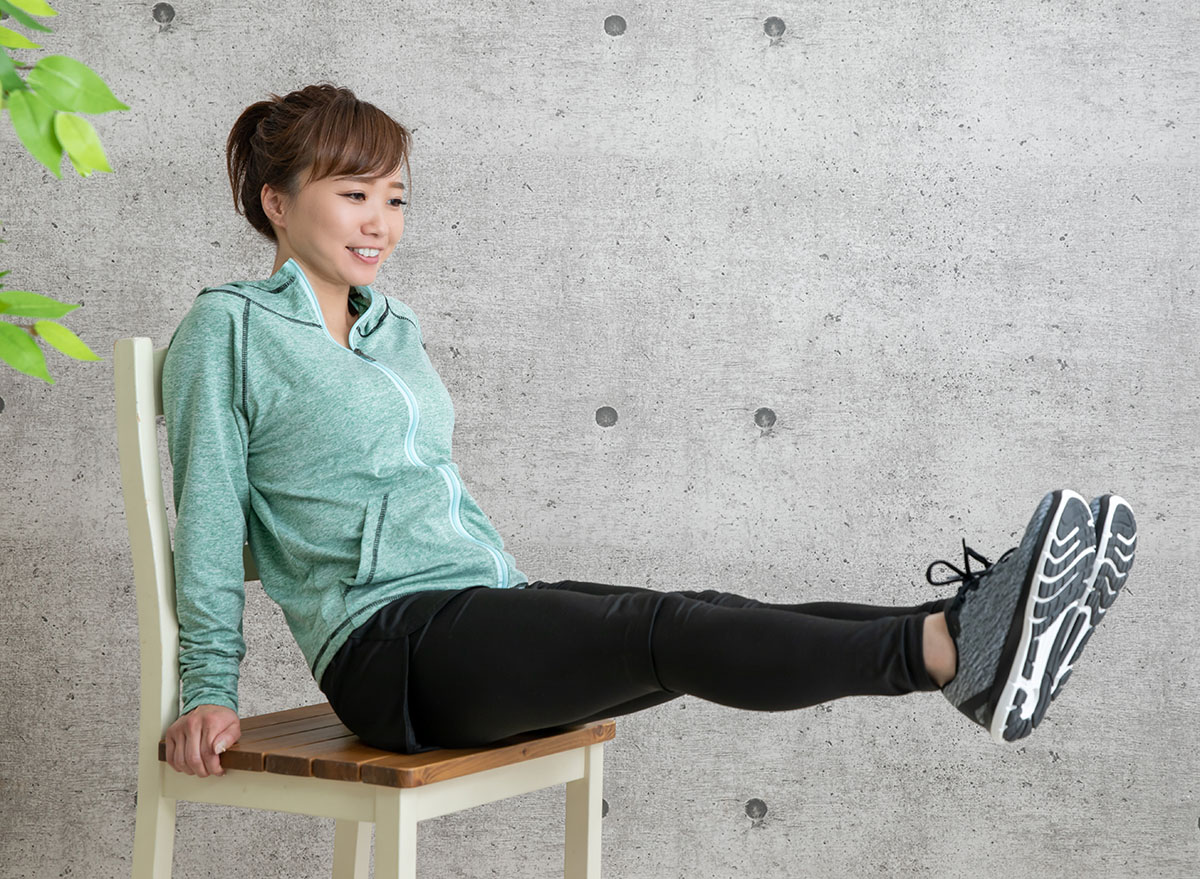
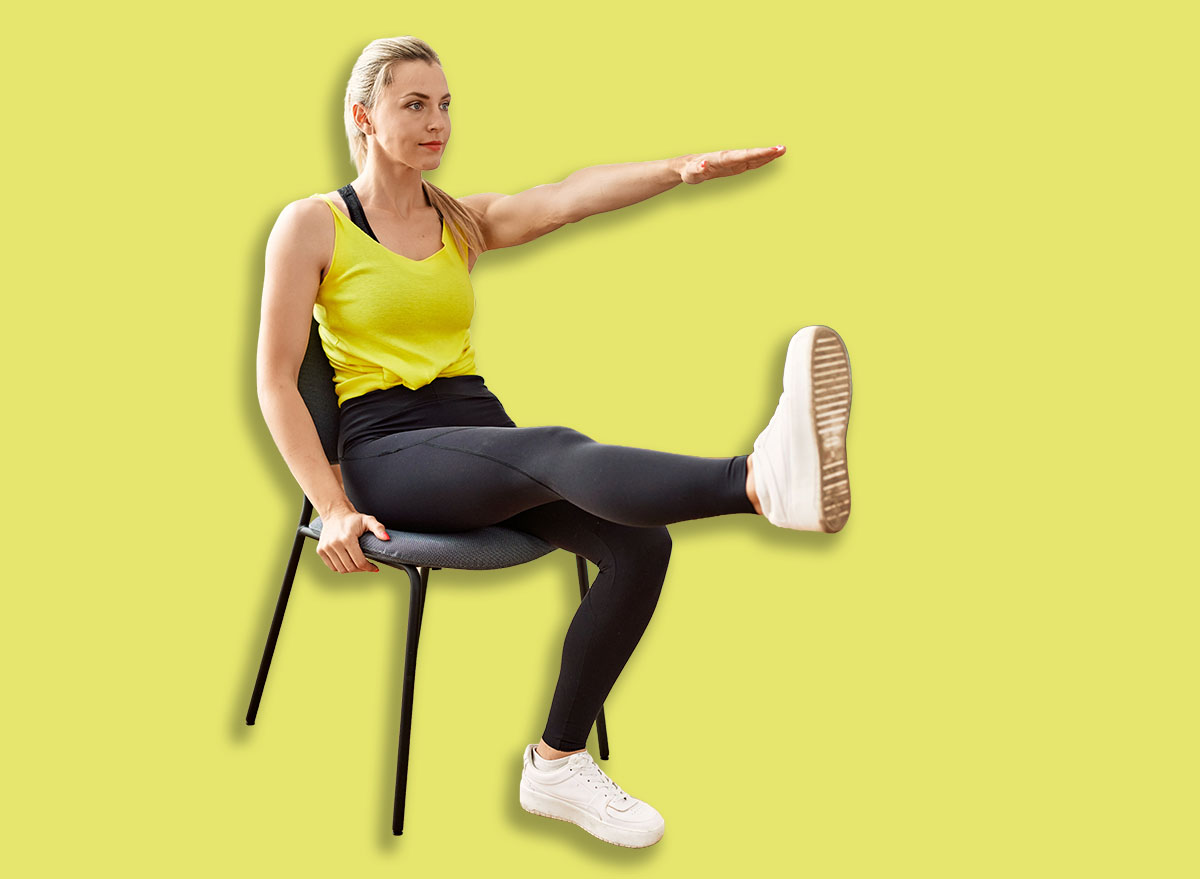
Seated Leg Extensions: This exercise isolates the quadriceps, which are often a primary area of weakness in older adults and vital for knee extension, walking, and stair climbing. While seated, extend one leg straight out in front of you, flexing your quad at the top, then slowly lower it back down. Alternating legs helps identify and address strength imbalances between sides. Focus on controlled movement rather than swinging the leg.
-
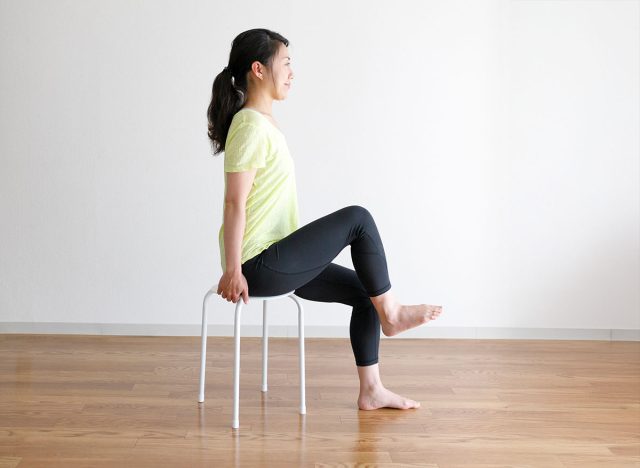
Chair Marching: This dynamic exercise strengthens the hip flexors and quadriceps, crucial for lifting the legs to clear obstacles or ascend stairs. It also improves hip flexibility, coordination, and engages the core. While seated, lift one knee towards your chest, maintaining an upright posture, then slowly lower it. Alternate legs, performing the movement in a controlled, deliberate manner. Avoid leaning back excessively or using momentum to lift the leg.

-
Chair Stand with Pause: Building on the basic sit-to-stand, this variation enhances muscle power and control by eliminating momentum. The pause, both at the top of the stand and during the controlled descent, forces the muscles to work harder throughout the entire range of motion. This builds the specific strength needed for sustained effort, like when momentarily stuck halfway up from a low seat. The controlled descent is often more challenging, further strengthening the muscles.
-
Seated Calf Raises: Often overlooked, the calf muscles (gastrocnemius and soleus) are essential for pushing off during walking, maintaining balance, and stabilizing the ankles. Seated calf raises specifically target the soleus, a deeper muscle vital for walking endurance. While seated with feet flat, lift your heels as high as possible, engaging your calf muscles, then slowly lower them. This movement should be controlled and rhythmic. Avoid bouncing or lifting the entire foot off the ground.
Implementing this regimen effectively involves a structured approach. The recommended frequency is four days per week, with at least one rest day interspersed between sessions to allow for muscle recovery and growth. For instance, a Monday, Wednesday, Friday, Sunday schedule works well. The order of exercises is also purposeful: beginning with seated leg extensions warms up the quadriceps without demanding balance, preparing the legs for more functional movements. The sit-to-stand exercises follow, performed when muscles are warm but not fatigued. Concluding with calf raises and a final set of sit-to-stands ensures that key muscle groups are thoroughly worked and the session ends on a manageable note, even if some fatigue has set in.
Progressive overload, the principle of gradually increasing the challenge over time, is integral to continued strength gains. After two to three weeks, individuals should aim to reduce their reliance on arm support during sit-to-stands. Prioritizing the quality of movement—performing fewer repetitions with excellent form and minimal assistance—is always superior to attempting more repetitions with compensatory movements. As strength improves, subtle additions like holding light weights (e.g., cans of food) during calf raises or increasing the duration of the pause in the chair stand can further challenge the muscles.
The tangible benefits of consistent adherence to this routine become apparent relatively quickly. After approximately four weeks, or sixteen sessions, individuals will typically observe significant practical improvements in daily functional tasks. Standing up from chairs and toilets will feel noticeably easier, often requiring little to no arm assistance. Entering and exiting vehicles will cease to be a daunting maneuver. The subtle shakiness or uncertainty in the legs, particularly on uneven ground or when fatigued, will begin to dissipate, replaced by a greater sense of stability. Navigating stairs will demand less effort and instill more confidence. Moreover, many will notice a natural increase in their walking pace, a direct consequence of improved leg power and endurance. Perhaps most importantly, the mental transformation is profound: a renewed trust in one’s own legs and a diminishing apprehension before everyday movements.
By the eight-week mark, after 32 sessions, the progress often extends beyond personal perception. Friends and family might comment on a more confident gait or improved posture. While dramatic aesthetic changes are not the primary goal, some individuals may notice a subtle increase in muscle definition in their thighs, indicating a reversal of sarcopenia. More challenging movements, such as rising from a low couch or even the floor, become achievable without conscious planning or excessive effort. The fear of falls significantly reduces as improved balance and quicker muscular responses allow for better self-correction during minor stumbles. The exercises themselves, once challenging, will feel considerably easier, signaling that it’s time to further increase the intensity through progressive modifications.
It is important to maintain realistic expectations. This program will not instantaneously restore the legs of a 30-year-old or enable participation in competitive athletics. However, its profound impact lies in its ability to halt and reverse age-related decline, fundamentally rebuilding the strength necessary to reclaim functional independence and enhance the quality of daily life. For individuals over 65, the ultimate goal is not necessarily peak athletic performance, but rather the freedom to move without physical limitations, to engage fully with their environment, and to experience life with greater autonomy and confidence. This simple, time-efficient, chair-based regimen offers precisely that—a powerful tool for active and independent aging.
About the Author