
As individuals navigate the landscape of later life, the imperative to maintain physical autonomy and comfort becomes increasingly pronounced. Among the various pillars of functional fitness, the strength and stability of the lower back stand as a cornerstone, directly influencing one’s capacity for everyday activities, from the simple act of rising from a chair to engaging in recreational pursuits. For those over the age of 50, a proactive approach to cultivating lumbar resilience is not merely beneficial; it is a critical investment in sustained quality of life, mitigating the risks of discomfort and preserving independence.
The natural physiological shifts that accompany aging, such as a gradual decline in muscle mass (sarcopenia), changes in bone density, and decreased joint flexibility, can collectively render the spine more vulnerable to strain and injury. Tasks once performed effortlessly may become challenging, and prolonged periods of sitting or standing can exacerbate existing aches. Consequently, the focus of physical conditioning for this demographic often pivots towards fostering functional strength – the ability of muscles to support movements relevant to daily living – rather than purely aesthetic or performance-driven goals. A robust and well-supported lower back ensures smoother transitions, greater ease in carrying objects, and enhanced endurance for extended periods of activity, contributing significantly to overall well-being.
In this context, the humble chair emerges as an unexpectedly powerful tool for targeted lumbar strengthening. Far from being a symbol of inactivity, a sturdy chair provides a uniquely supportive and controlled environment for exercise, making it an ideal platform for older adults or those seeking a gentler introduction to strength training. By offering inherent stability, the chair effectively minimizes the balance demands typically associated with standing exercises. This reduction in extraneous effort allows individuals to concentrate more intently on the specific muscle groups being worked, fostering a stronger mind-muscle connection. Furthermore, the seated position naturally limits the range of motion for many movements, which can be advantageous in preventing overextension or improper form, thereby significantly reducing the risk of injury.
The benefits of chair-based training extend beyond safety and focused muscle engagement. This modality encourages consistency through its accessibility and low impact nature. Repetition, performed with precision and control, is a powerful catalyst for long-term strength gains and improved muscular endurance. Unlike high-intensity workouts that can lead to rapid fatigue or joint wear, chair exercises promote sustained engagement without undue stress. This systematic, gentle approach allows for frequent practice, enabling the body to progressively adapt and build resilience. Over time, this consistent reinforcement of proper movement patterns and spinal stabilization translates into tangible improvements in posture, balance, and the overall ability to navigate daily challenges with greater confidence and comfort.
Certified fitness professionals frequently advocate for these types of movements because they prioritize the fundamental principles of posture, controlled muscle activation, and stabilization. Each exercise is meticulously designed to reinforce the lower back’s multifaceted role as both a primary stabilizer and an efficient transmitter of force throughout the kinetic chain. This cultivation of "useful strength" – power that feels intuitive and integrated into natural movement – stands in contrast to strength gained through brute force, which can sometimes bypass crucial stabilizing muscles. The following five chair-based exercises, recommended by experts, exemplify this philosophy, offering a comprehensive pathway to fortify the lower back after the age of 50.
1. Seated Good Mornings
The seated good morning is a foundational exercise that masterfully teaches and strengthens the hip hinge movement, a critical pattern for safely bending and lifting objects from the ground. By performing this movement while seated, individuals can effectively isolate the posterior chain – comprising the lower back, glutes, and hamstrings – without the added complexity of balancing or generating momentum from the lower body. The chair acts as a constraint, ensuring that the movement originates primarily from the hips rather than the spine, thereby building endurance in the spinal erector muscles and ingraining proper postural mechanics.
- Muscles Engaged: Lumbar extensors (lower back), gluteal muscles, hamstrings, and core stabilizers.
- Execution: Sit tall on the edge of a sturdy chair with feet flat on the floor, hip-width apart. Place hands gently behind your head or cross them over your chest. Maintaining a long, neutral spine, slowly hinge forward from your hips, allowing your chest to move towards your thighs. Keep your gaze directed slightly forward to help maintain spinal alignment. Feel the stretch in your hamstrings and the engagement in your lower back. Lower only as far as comfortable, typically until your torso is roughly parallel to the floor or slightly above. Reverse the movement by squeezing your glutes and engaging your lower back to return to the upright seated position.
- Recommended Protocol: Execute 3 to 4 sets of 10 to 15 repetitions, allowing for approximately 45 seconds of rest between sets.
- Refinements and Progressions: For increased challenge, consider holding a light dumbbell against your chest. Alternatively, performing tempo good mornings (e.g., 3 seconds down, 1-second pause, 3 seconds up) enhances muscular time under tension. A simpler variation involves placing hands on thighs and sliding them down as you hinge.
- Form Focus: Prioritize pushing your chest forward and maintaining a flat back, rather than rounding your shoulders or letting your upper back collapse. The movement should feel like a controlled bow, not a slump.
2. Seated Knee Marches
This deceptively simple exercise is a powerful tool for cultivating dynamic lower back strength through controlled stabilization. Each deliberate lift of a knee challenges the trunk’s ability to remain upright and steady, engaging the deep core muscles and fostering synergistic coordination between the abdominal wall and the lumbar spine. Furthermore, seated knee marches contribute to improved hip flexor strength, which is instrumental in maintaining optimal spinal positioning and pelvic alignment. Regular practice incrementally enhances both postural integrity and overall trunk control.
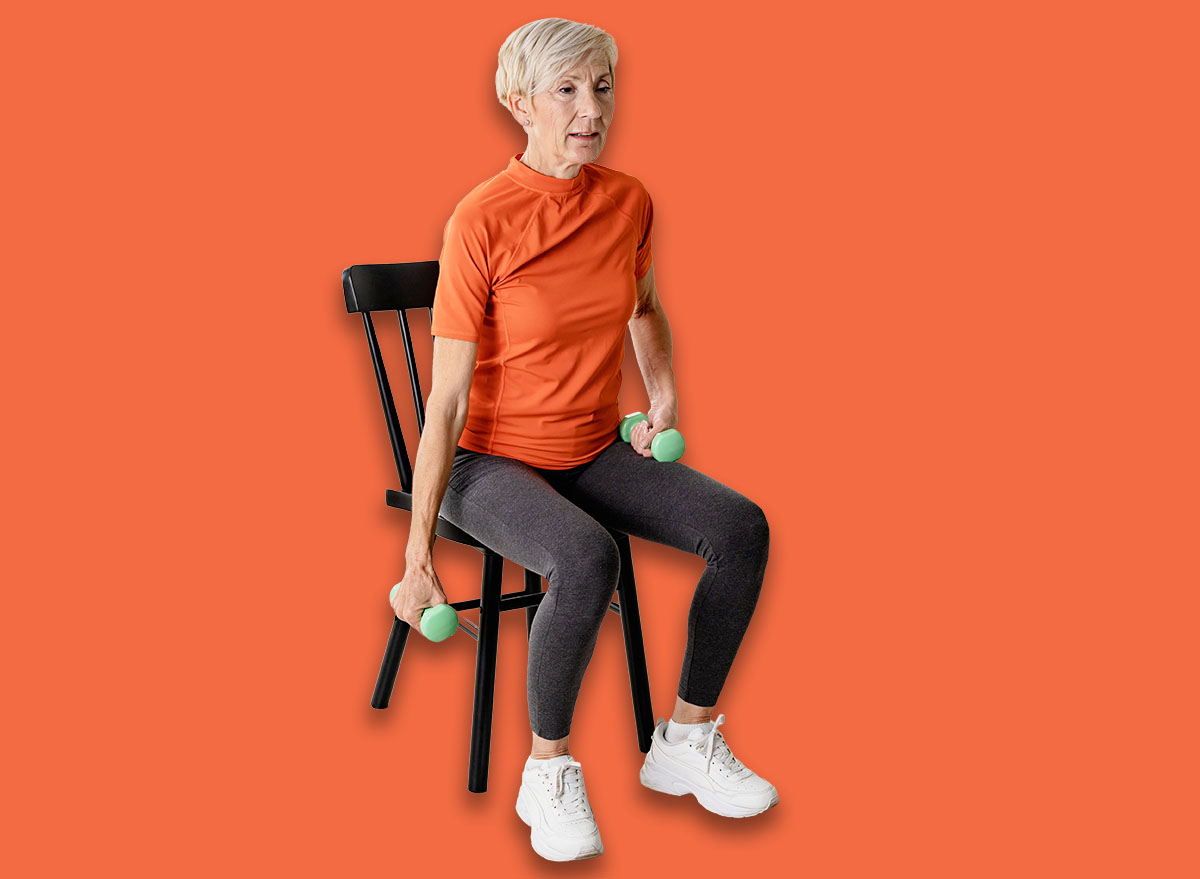
- Muscles Engaged: Lower back stabilizers, deep core musculature (transversus abdominis, obliques), and hip flexors.
- Execution: Begin by sitting tall and upright in a chair, with your feet flat on the floor and hands resting lightly on your thighs or by your sides. Engage your core gently. Slowly lift one knee towards your chest, maintaining an upright posture and avoiding any leaning or rocking of your torso. Hold briefly at the peak of the movement, focusing on the activation of your core and lower back to prevent instability. Deliberately lower the foot back to the floor. Alternate legs, performing the movement in a controlled and rhythmic fashion.
- Recommended Protocol: Complete 3 sets of 8 to 12 repetitions per side, resting for about 30 seconds between sets.
- Refinements and Progressions: To intensify the challenge, introduce a pause (2-3 seconds) at the top of each lift. Alternating tempo marches (e.g., lift quickly, lower slowly) can further engage stabilizing muscles. For an advanced variation, cross your arms over your chest to remove the support of your hands.
- Form Focus: Maintain a tall posture throughout the exercise, actively resisting the urge to lean back as the knee elevates. Imagine a string pulling your head towards the ceiling.
3. Seated Pallof Press
The seated Pallof press is an exceptional anti-rotation exercise, which means it trains the core to resist unwanted movement rather than to create it. This unique demand is crucial for building robust deep core strength that directly translates to spinal support during daily activities, protecting the lower back from injurious twisting forces. By performing this exercise from a seated position, any momentum from the lower body is eliminated, forcing the trunk musculature to work harder in resisting the rotational pull of the resistance band or cable. It is a highly effective, low-compression method for enhancing spinal stability and posture.
- Muscles Engaged: Core musculature (rectus abdominis, obliques, transversus abdominis), lower back stabilizers, and hip stabilizers.
- Execution: Position a resistance band or cable machine at chest height, perpendicular to your body. Sit sideways in a chair, a few feet away from the anchor point, ensuring tension on the band/cable when your hands are extended forward. Grasp the handle with both hands, palms together, at the center of your chest. With feet flat on the floor and your torso upright and facing directly forward, slowly press the handle straight out in front of your chest. The band/cable will attempt to pull your torso towards the anchor point; actively resist this rotation by engaging your core and maintaining a rigid, stable posture. Hold briefly at full extension, then slowly and with control, bring the handle back to your chest.
- Recommended Protocol: Perform 3 to 4 sets of 8 to 12 repetitions per side, resting for approximately 45 seconds between sets.
- Refinements and Progressions: Isometric Pallof holds (holding the extended position for a longer duration) significantly increase time under tension. An alternating press Pallof involves pressing one arm at a time. For an increased challenge, an overhead Pallof press places greater demand on core stability.
- Form Focus: Press the handle out slowly and deliberately, keeping your rib cage stacked directly over your hips. Avoid any twisting or leaning of the torso.
4. Sit-to-Stand Transitions
This exercise is arguably one of the most functionally relevant movements, directly reinforcing proper spinal mechanics during a ubiquitous daily activity. The sit-to-stand transition demands coordinated effort between the powerful muscles of the lower body (quadriceps and glutes) and the stabilizing muscles of the core and lower back. As the hips and legs generate the force to propel the body upwards, the lower back must maintain a neutral, stable position, effectively transmitting this force without undue strain. Regular, intentional practice of this movement not only builds practical strength but also enhances confidence in movement and can alleviate stiffness, making everyday tasks feel significantly easier and safer.
- Muscles Engaged: Quadriceps, gluteal muscles, hamstrings, lower back stabilizers, and core musculature.
- Execution: Sit in a sturdy chair with your feet flat on the floor, slightly wider than hip-width apart, and positioned a little behind your knees. Lean your torso slightly forward from your hips, maintaining a neutral spine. Engage your core and push through your heels and midfoot to stand up, driving your hips forward. Avoid using your hands for support if possible. Once standing tall, slowly and with control, hinge at your hips and bend your knees to sit back down, aiming to gently tap the chair before rising again, or fully sit and reset.
- Recommended Protocol: Complete 3 to 5 sets of 6 to 10 repetitions, resting for about 60 seconds between sets.
- Refinements and Progressions: To increase difficulty, pause for 2-3 seconds at the bottom just before sitting completely. Performing the eccentric (lowering) phase very slowly challenges control. Progress to hands-free stands, then eventually to single-leg sit-to-stands.
- Form Focus: Maintain a neutral spine throughout the entire movement, avoiding any rounding of the back or excessive arching. Control the descent as much as the ascent.
5. Seated Pelvic Tilts
Seated pelvic tilts serve as a foundational exercise, primarily designed to enhance awareness and control over the subtle movements of the lower spine and pelvis. This gentle yet effective movement helps to mobilize the lumbar region, strengthening the intrinsic muscles that support optimal spinal positioning while simultaneously reducing stiffness. By moving the pelvis through a small, controlled range of motion – alternating between an anterior (forward) and posterior (backward) tilt – individuals can improve segmental control and cultivate a deeper understanding of their spinal mechanics. Regular practice can lead to improved comfort, enhanced coordination, and serves as an excellent warm-up or cool-down, complementing every other exercise.
- Muscles Engaged: Deep core muscles, lower back muscles, and hip flexors/extensors for subtle control.
- Execution: Sit comfortably in a chair with your feet flat on the floor, hip-width apart. Place your hands gently on your hips or lower abdomen to feel the movement. Begin by performing a posterior pelvic tilt: gently round your lower back slightly, tucking your tailbone underneath you, as if flattening your lower back against the chair. Then, transition to an anterior pelvic tilt: gently arch your lower back, pushing your tailbone slightly back, as if increasing the natural curve of your lumbar spine. Move slowly and fluidly between these two positions, focusing on the subtle engagement of your abdominal and lower back muscles.
- Recommended Protocol: Perform 3 sets of 12 to 15 repetitions, with a brief 30-second rest between sets.
- Refinements and Progressions: Introduce longer holds (3-5 seconds) at the peak of each tilt to deepen muscle engagement. Experiment with a slower tempo, coordinating the movement with your breath (e.g., exhale on posterior tilt, inhale on anterior tilt) to enhance mind-body connection.
- Form Focus: The movement should be small, controlled, and pain-free. Avoid any forceful or jerky movements. Let your breath guide the rhythm, using it to facilitate relaxation and control.
Cultivating Lasting Lumbar Strength: Holistic Habits for Adults Over 50
Achieving and maintaining a strong lower back, particularly after the age of 50, extends beyond the structured execution of exercises. It is a synergistic endeavor where targeted movements are integrated into a broader lifestyle that supports spinal health. The chair-based exercises outlined above are most impactful when viewed as components of a holistic strategy.
- Embrace Consistency: Sporadic, intense workouts yield fewer dividends than regular, controlled movement. Make these exercises a consistent part of your routine, even if it means shorter, more frequent sessions. The goal is progressive adaptation, not immediate exhaustion.
- Prioritize Mind-Muscle Connection: Rather than simply moving through the motions, consciously focus on feeling the muscles engage during each repetition. This deliberate attention enhances neurological pathways and optimizes muscle activation.
- Listen to Your Body’s Signals: Pain is an indicator to stop or modify. It is crucial to distinguish between muscle effort and discomfort or sharp pain. Adjust the range of motion, speed, or resistance as needed.
- Gradual Progression: As strength and control improve, subtly increase the challenge. This could involve adding more repetitions, slowing down the movement tempo, incorporating brief pauses, or introducing light external resistance (e.g., a light resistance band or small hand weights where appropriate).
- Optimize Daily Ergonomics: Pay attention to your posture throughout the day, especially during prolonged sitting or standing. Ensure your workstation is set up ergonomically, with your feet flat, back supported, and screen at eye level. Take frequent breaks to stand, stretch, and move.
- Hydration and Nutrition: Adequate hydration supports disc health and overall tissue elasticity. A balanced diet rich in lean protein, healthy fats, and micronutrients provides the building blocks for muscle repair and bone density.
- Incorporate General Movement: These chair exercises are excellent, but they should complement a broader active lifestyle that includes walking, stretching, and other forms of low-impact activity.
- Seek Professional Guidance: If you experience persistent back pain, have underlying health conditions, or are unsure about proper form, consult with a physical therapist or a certified personal trainer specializing in older adults. They can provide personalized advice and modifications.
By integrating these principles and consistently practicing chair-based training, individuals over 50 can effectively build and sustain remarkable lower back strength and resilience. This proactive engagement not only reduces the risk of pain and injury but also significantly enhances the capacity to enjoy an active, independent, and fulfilling life for years to come.
About the Author