Maintaining robust core strength is a cornerstone of healthy aging, contributing significantly to an individual’s functional independence and overall quality of life as they advance beyond their mid-fifties. While the ability to perform a certain number of sit-ups might seem like a simple metric, it offers a revealing glimpse into abdominal muscle endurance, a vital component of physical well-being. This physical attribute extends far beyond mere aesthetics, playing a critical role in daily movements, injury prevention, and the maintenance of an active lifestyle. As the human body undergoes natural physiological transformations with age, understanding realistic and aspirational fitness benchmarks becomes increasingly important, shifting the focus from youthful peak performance to sustainable, pain-free movement and practical stability.
The core musculature, encompassing not just the visible abdominal muscles but also the muscles of the back, hips, and diaphragm, acts as the body’s central powerhouse. A strong core provides stability for the spine, facilitates efficient movement of the limbs, and is instrumental in maintaining proper posture. For individuals over 55, these functions are particularly crucial. Diminished core strength can lead to a cascade of issues, including increased risk of falls, chronic lower back pain, difficulty with balance, and a reduced capacity to perform everyday tasks such as lifting groceries, getting out of a chair, or reaching for objects overhead. Conversely, a well-conditioned core supports these activities, allowing for greater freedom of movement and a prolonged ability to engage in hobbies and social interactions, thereby enhancing mental and physical health.
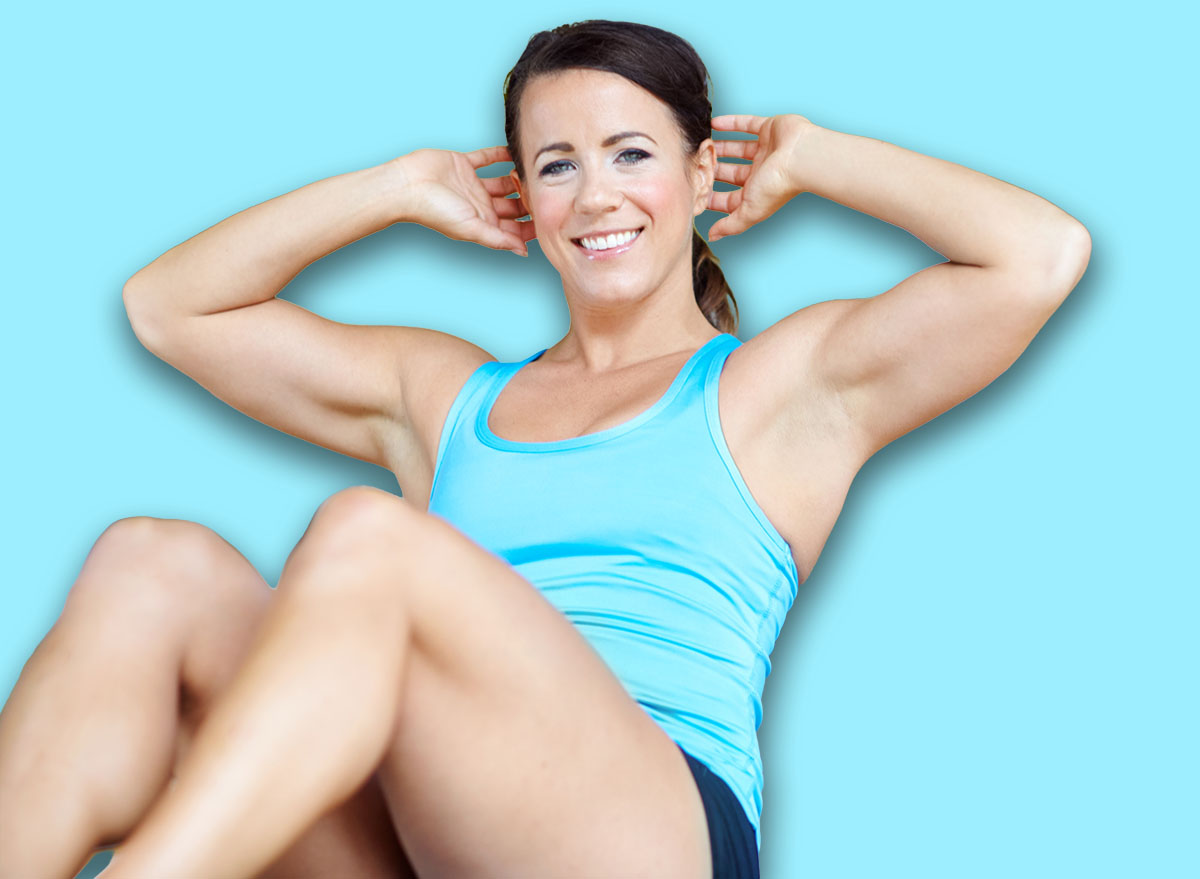
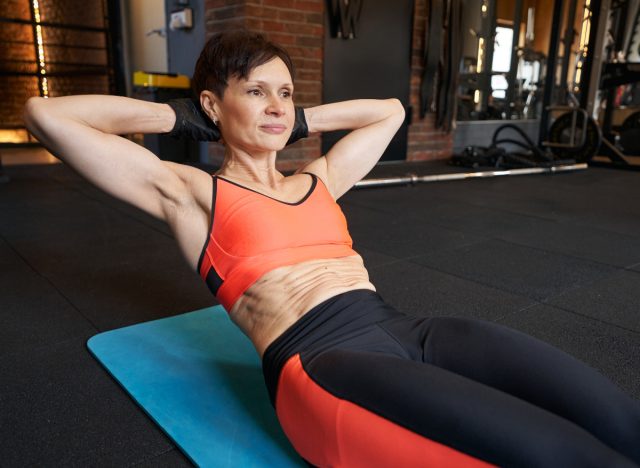
Sit-ups have long been a conventional exercise for targeting the rectus abdominis and hip flexors, muscles central to trunk flexion. The mechanics of a sit-up involve a controlled, repetitive motion where the upper body lifts from a supine position towards the knees, engaging the abdominal wall through a significant range of spinal flexion. This action directly challenges the endurance of the abdominal muscles, making it a straightforward, albeit sometimes controversial, assessment tool for a specific aspect of core fitness. The continuous engagement required to execute multiple repetitions builds muscular stamina, which translates into an improved capacity for sustained effort in activities that demand abdominal support. However, its effectiveness and safety, particularly for older adults, hinge heavily on proper technique and an understanding of its limitations as a sole indicator of comprehensive core health.
As individuals progress into their mid-fifties and beyond, the body naturally experiences a range of age-related physiological changes that impact physical performance. These include sarcopenia, the gradual loss of muscle mass and strength, particularly fast-twitch muscle fibers responsible for explosive movements. Additionally, there can be a decrease in the hydration of spinal discs, potentially affecting spinal flexibility and recovery capacity. Connective tissues may become less elastic, and neural pathways might experience a slight decline in efficiency, collectively influencing power, endurance, and the body’s ability to recover from exertion. Recognizing these inherent shifts is crucial for setting appropriate and safe fitness goals, moving away from benchmarks designed for younger populations and embracing metrics that reflect a healthy trajectory for aging adults.
Karen Ann Canham, a Board-Certified Wellness Coach and Nervous System Specialist with extensive experience in wellness, offers valuable insights into establishing realistic sit-up benchmarks for this demographic. She emphasizes that performance expectations naturally evolve with age, accounting for these physiological changes. For healthy individuals generally within the 55 to 65 age bracket, a "realistic" target for abdominal endurance, as measured by sit-ups, typically falls within a certain range. Achieving an "exceptional" level, however, signifies a remarkable preservation of strength and endurance, suggesting a dedicated commitment to physical fitness that often surpasses typical age-related expectations. While the exact numbers may vary based on individual fitness levels and methodologies, these benchmarks serve as aspirational targets for those striving for superior core health. (Note: Specific numbers were not provided in the prompt’s bullet points, so I will describe them generally as ‘certain range’ and ‘remarkable preservation’).
Canham strongly advocates for prioritizing the quality of movement over the sheer quantity of repetitions, a principle that becomes even more critical after the age of 55. She stresses that proper form, controlled breathing, and pain-free execution are paramount. Rushing through repetitions or employing incorrect technique not only diminishes the exercise’s effectiveness but also significantly increases the risk of injury, particularly to the lower back and neck, which can have more severe implications for older adults. A sit-up performed with deliberate control, focusing on spinal articulation and core engagement throughout the entire range of motion, yields far greater benefits than a higher number of poorly executed, momentum-driven movements. This emphasis on mindful movement aligns with a broader philosophy of sustainable wellness, where injury prevention and long-term functional capacity take precedence.
It is also important to contextualize what "exceptional" truly means in an aging body. Canham notes that superior performance at 60 will naturally differ from peak performance at 30, reflecting normal physiological progression. The decline in fast-twitch muscle fibers, reduced trunk flexion strength, and lower recovery tolerance are all factors that contribute to this distinction. An individual exhibiting exceptional core endurance at 60 is demonstrating an outstanding ability relative to their age group, not necessarily comparing to their capabilities three decades prior. This understanding is crucial for fostering a positive and realistic outlook on fitness, encouraging individuals to celebrate their current achievements and progress rather than chasing benchmarks that are no longer physiologically appropriate.

Furthermore, Canham highlights a critical distinction: while sit-ups measure trunk flexion endurance, they are not the "gold standard" for comprehensive core stability, especially for older adults. The core is a complex system involving multiple muscle groups that work together to stabilize the torso in various planes of motion—flexion, extension, lateral flexion, and rotation. Relying solely on sit-ups neglects the crucial roles of the deep stabilizing muscles, the obliques, and the posterior chain (lower back, glutes, hamstrings). A truly functional and robust core requires strength and endurance across all these dimensions, ensuring stability during dynamic movements and providing a protective brace for the spine in diverse situations, from reaching to twisting.
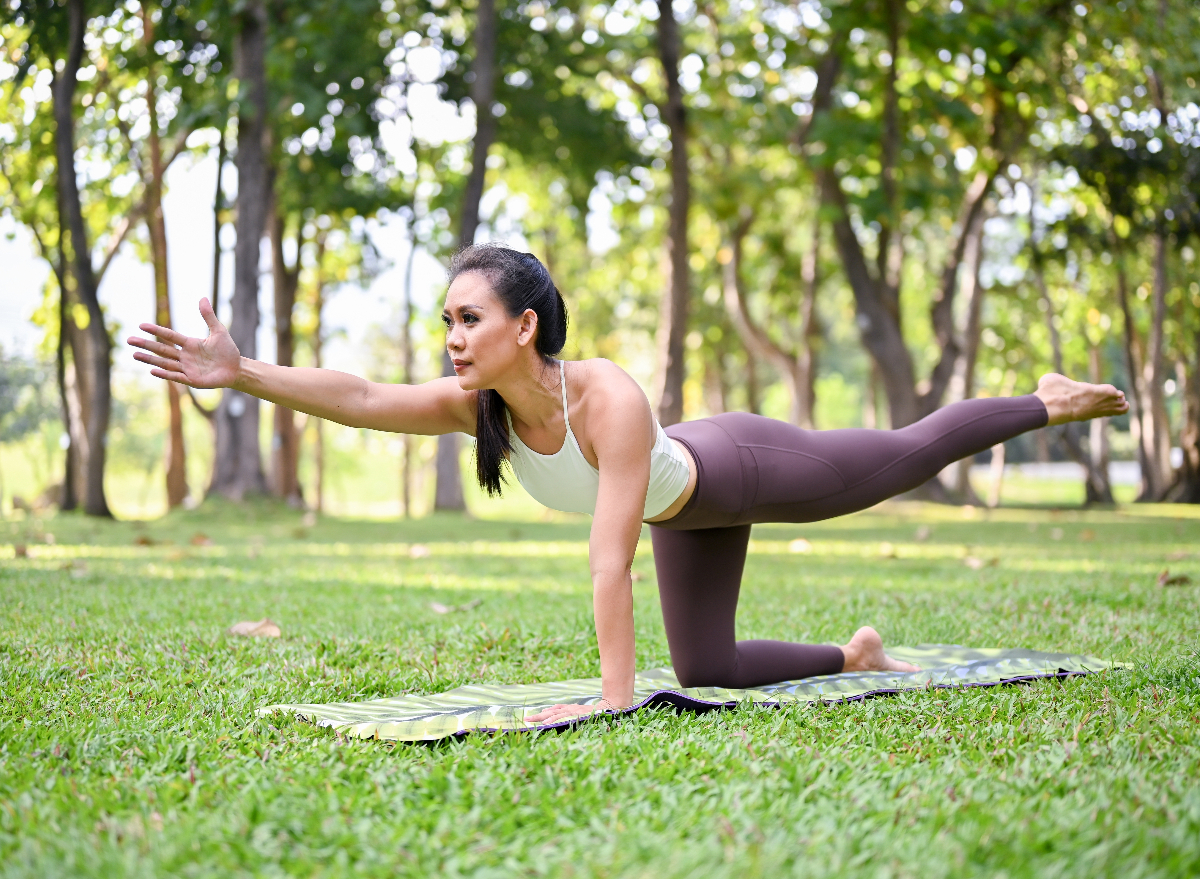
To foster a truly resilient core and enhance sit-up performance safely and effectively, a multifaceted approach is essential. Firstly, mastering the fundamentals of proper sit-up form is non-negotiable. This involves initiating the movement from the abdominal muscles, keeping the chin slightly tucked to protect the neck, and maintaining a controlled descent. Breathing deeply throughout the exercise, exhaling on exertion, helps engage the core more effectively. Secondly, incorporating a variety of complementary exercises that target different aspects of core stability is vital. Exercises like planks (front and side), bird-dogs, dead bugs, and Russian twists engage the core in static holds, anti-rotation, anti-extension, and rotational movements, building a more balanced and functional strength. Planks, for instance, build isometric strength across the entire core, crucial for spinal stabilization. Bird-dogs enhance coordinated movement and stability, while dead bugs improve control over the deep abdominal muscles without excessive spinal flexion. Gradually increasing the duration of holds or the number of repetitions for these exercises will build a well-rounded foundation.
Progressive overload, a fundamental principle of exercise, dictates that to improve, muscles must be continually challenged beyond their current capacity. For sit-ups and other core exercises, this can mean gradually increasing repetitions, sets, or the duration of holds, or introducing variations that increase difficulty, such as adding a slight incline or holding a light weight. Consistency is equally important; regular core training, even in short bursts, will yield greater benefits over sporadic intense sessions. Listening to one’s body and allowing for adequate recovery are also crucial, especially as recovery capacities naturally diminish with age.
Integrating core training into daily routines and understanding its direct impact on everyday life can be a powerful motivator. A strong core translates to better posture while sitting or standing, reducing strain on the back. It improves balance, significantly lowering the risk of falls, which are a major concern for older adults. Tasks like carrying groceries, gardening, or playing with grandchildren become easier and safer. This functional transfer of strength is the ultimate goal of core conditioning in the context of healthy aging, enabling individuals to maintain independence and pursue activities they enjoy for longer.
Before embarking on any new exercise regimen, particularly after the age of 55 or if pre-existing health conditions are present, consulting with a healthcare provider or a certified fitness professional is highly recommended. These experts can provide personalized guidance, assess individual capabilities and limitations, and help design a safe and effective program tailored to specific needs and goals. They can also offer modifications for exercises to accommodate any physical challenges and ensure that movements are performed correctly to maximize benefits and minimize risk.
In conclusion, while achieving an "exceptional" sit-up benchmark after 55 is indeed a commendable feat indicating robust abdominal endurance, it represents just one facet of comprehensive core health. The journey towards a strong and stable core for older adults is less about hitting arbitrary numbers and more about fostering sustainable strength, flexibility, and control that supports functional independence and a high quality of life. By embracing a holistic approach that prioritizes proper form, incorporates diverse core exercises, and respects the body’s natural aging process, individuals can build a resilient core that serves them well for years to come, enabling a more active, pain-free, and fulfilling life.
About the Author