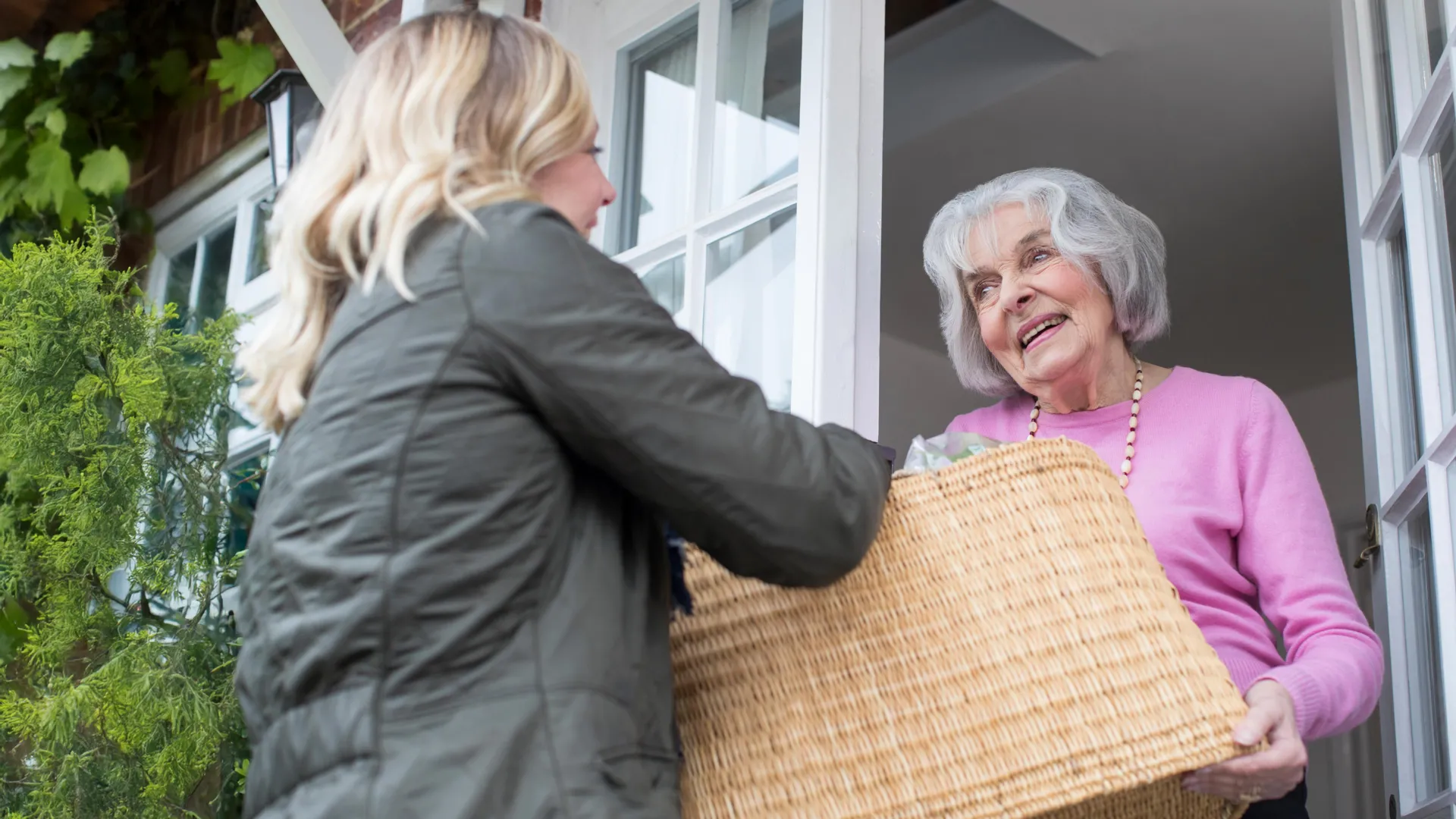
A significant body of evidence has long underscored the profound connection between robust social networks and overall well-being, with recent scientific inquiry now illuminating a distinct neurological advantage conferred by consistent acts of altruism. Researchers affiliated with The University of Texas at Austin and the University of Massachusetts Boston have presented compelling findings indicating that regularly extending assistance to individuals beyond one’s immediate household can demonstrably decelerate the rate of cognitive decline in adults navigating middle and advanced age. This groundbreaking research offers a tangible strategy for individuals seeking to maintain mental acuity as they mature, highlighting the cognitive benefits of proactive engagement in helping others.
The comprehensive investigation, which meticulously tracked the trajectories of over 30,000 adults residing in the United States over a span of two decades, revealed a discernible correlation: those individuals who consistently offered aid to others outside their domestic sphere exhibited a slower progression of age-related cognitive deterioration. The quantitative analysis indicated that this protective effect translated to a reduction in cognitive decline ranging from approximately 15% to 20% among participants who engaged in either structured volunteer activities or more informal modes of support, such as assisting neighbors, friends, or extended family members. Notably, the most pronounced and enduring cognitive advantages were observed in individuals dedicating between two and four hours per week to such helpful endeavors.
These pivotal findings have been disseminated through a recent publication in the esteemed journal Social Science & Medicine. The research endeavor itself received crucial financial backing from prominent national institutions, including the National Institute on Aging, a division of the National Institutes of Health, and the Eunice Kennedy Shriver National Institute of Child Health and Human Development, underscoring the significance and policy relevance of this scientific exploration.
Dr. Sae Hwang Han, an assistant professor specializing in human development and family sciences at The University of Texas at Austin and the principal investigator of this study, articulated the far-reaching implications of the research. "The everyday acts of support, whether they are part of an organized initiative or arise from personal connections, possess the capacity to yield enduring benefits for cognitive function," Dr. Han stated. "What particularly resonated with me was the observation that the cognitive advantages derived from assisting others were not fleeting improvements but rather accumulated over time through sustained involvement. Furthermore, these benefits were evident across both formal volunteering and informal helping scenarios. And to add to this, a moderate level of engagement, as little as two to four hours weekly, was consistently associated with substantial positive outcomes."
A distinguishing characteristic of this study is its pioneering approach in simultaneously examining the cognitive impacts of both formal volunteering and informal helping behaviors. Informal assistance encompasses a broad spectrum of actions, from chauffeuring someone to medical appointments and providing childcare to assisting with yard work or helping a neighbor or relative with their tax preparations.
Existing research suggests that roughly one in every three older Americans participates in scheduled or formal volunteering programs. In contrast, a considerably larger segment of the population, exceeding fifty percent, regularly engages in less structured forms of assistance for individuals within their acquaintance.
"There can sometimes be an assumption that informal helping might offer fewer health advantages due to its lack of public recognition or formal validation," Dr. Han explained. However, the study’s results challenged this notion directly. "It was a gratifying revelation to discover that informal helping confers cognitive benefits that are remarkably comparable to those derived from formal volunteering," she added.
The robustness of these conclusions is significantly amplified by the utilization of extensive, long-term national data, which provides a powerful longitudinal perspective. To meticulously analyze these patterns over an extended period, the research team leveraged data from the Health and Retirement Study, a nationally representative longitudinal survey of U.S. residents aged 51 and older, with data collection commencing in 1998.
The researchers employed sophisticated statistical methods to control for a multitude of confounding variables that could potentially influence both helping behaviors and cognitive health. These factors included an individual’s financial status, their physical and mental health conditions, and their educational attainment. Even after rigorously accounting for these influential elements, the data consistently demonstrated that cognitive decline tended to slow down when individuals initiated helping behaviors and maintained this engagement. The findings also suggested that the positive effects might be amplified when helping activities become an integrated and consistent aspect of an individual’s routine year after year.
"Conversely, our findings indicate that a complete cessation of helping activities is associated with a decline in cognitive function," Dr. Han observed. "This observation underscores the critical importance of maintaining older adults’ engagement in some form of helping role for as long as feasible, ensuring that appropriate support systems and accommodations are in place to facilitate their participation."
The implications of these findings extend significantly to the realms of public health and aging policy. The researchers advocate for the recognition of volunteering, informal helping, and neighborhood-based social connection as integral components of public health strategies. This perspective holds particular weight in later life, a period when the prevalence of conditions associated with cognitive decline and impairment, such as Alzheimer’s disease, tends to increase.
The published paper also draws upon and contextualizes related research conducted by the same lead investigator. A separate, recent study spearheaded by Dr. Han discovered that volunteering activities could effectively counteract the detrimental effects of chronic stress on systemic inflammation, a biological pathway that has been strongly implicated in cognitive decline and the development of dementia. The beneficial impact of volunteering on inflammation was found to be most pronounced among individuals who exhibited higher baseline levels of inflammatory markers.
Collectively, these interconnected findings suggest that the act of helping others may support brain health through multiple synergistic mechanisms. It is plausible that altruistic engagement can mitigate the physiological strain associated with stress, while simultaneously strengthening the social bonds that provide essential psychological, emotional, and cognitive support. In an era characterized by an aging global population and escalating concerns about social isolation and loneliness, these results lend further credence to the ongoing imperative of fostering opportunities for individuals to contribute, even after the onset of some cognitive challenges.
"Many older adults who may not be in optimal health continue to make invaluable contributions to those around them," Dr. Han emphasized. "Furthermore, these individuals may stand to benefit particularly from being provided with opportunities to help others." The research team also acknowledged the contributions of co-authors Shiyang Zhang, a former postdoctoral researcher at UT, and Jeffrey Burr from the University of Massachusetts Boston, who played integral roles in the study’s execution and analysis.
About the Author