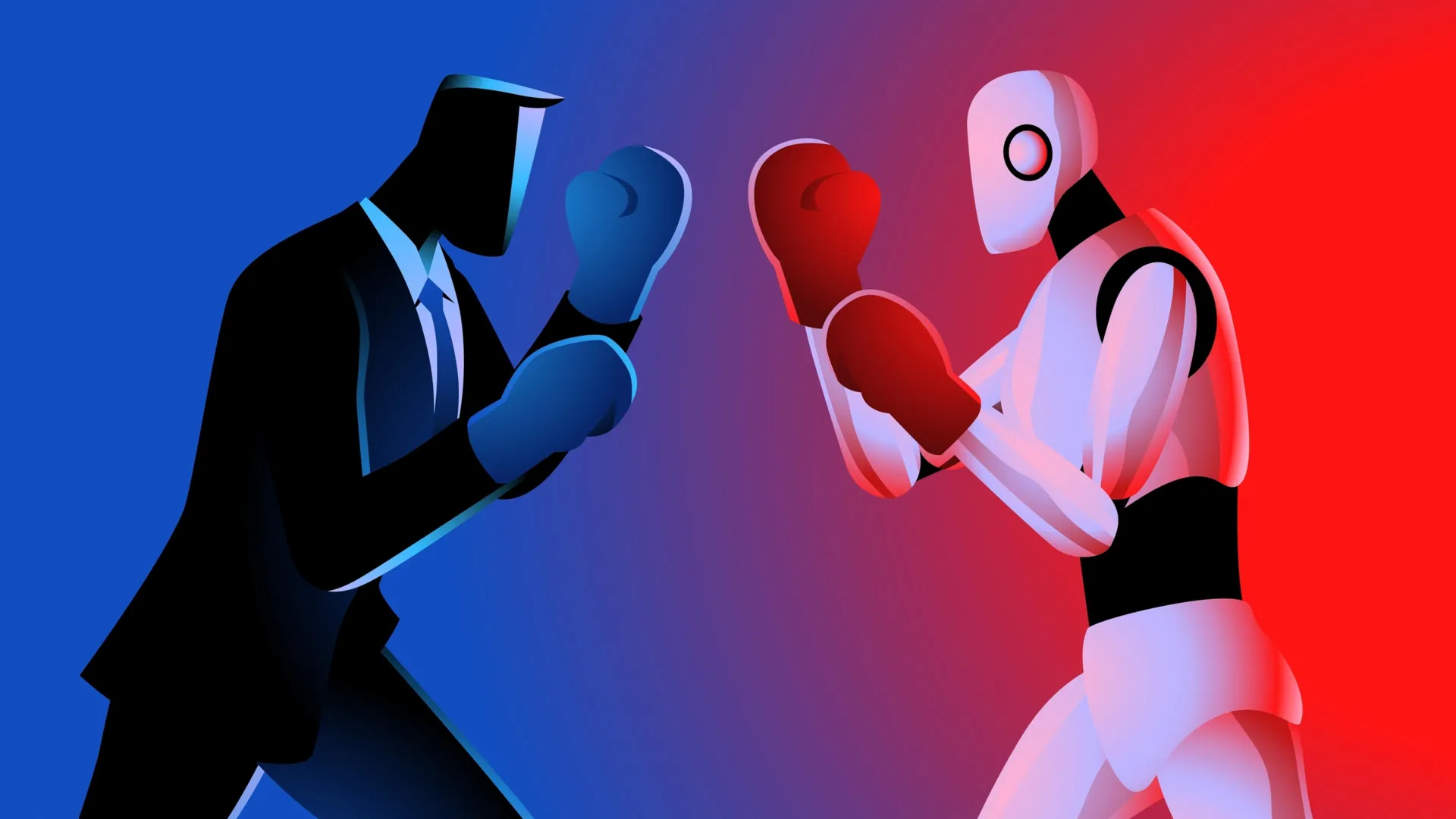
A groundbreaking investigation, spearheaded by Professor Karim Jerbi of the University of Montreal’s Department of Psychology and featuring insights from eminent AI pioneer Yoshua Bengio, has undertaken the most extensive direct comparison to date between human inventive capabilities and those of advanced artificial intelligence. This monumental study, encompassing over 100,000 human participants, probes the fundamental question of whether sophisticated generative AI, such as the widely recognized ChatGPT, can truly originate novel concepts. The findings, disseminated in the esteemed journal Scientific Reports (a Nature Portfolio publication), signify a pivotal moment in the evolution of AI, demonstrating that certain artificial intelligence systems have ascended to a level where they can surpass the median human performance in specific metrics of creativity. Concurrently, however, the research underscores a persistent and discernible advantage held by the most imaginative individuals over even the most potent AI architectures.
The research meticulously assessed a spectrum of leading large language models, including but not limited to ChatGPT, Claude, and Gemini. These AI systems were benchmarked against the creative outputs of a vast cohort exceeding 100,000 individuals. The results illuminate a clear inflection point: while some AI, notably GPT-4, have demonstrated the capacity to achieve scores exceeding the average human benchmark in tasks designed to gauge divergent linguistic creativity, the zenith of human ingenuity remains a distinct domain. "Our investigation reveals that certain AI systems built upon large language models can now outperform average human creativity in well-defined scenarios," Professor Jerbi articulated. "While this outcome might evoke surprise, perhaps even disquiet, our study concurrently highlights an equally critical observation: the most advanced AI systems still fall considerably short of the creative heights attained by the most exceptional human minds."
Further in-depth analysis, conducted by the study’s co-first authors, postdoctoral researcher Antoine Bellemare-Pépin from the University of Montreal and PhD candidate François Lespinasse from Concordia University, unveiled a compelling dichotomy. Although specific AI models now demonstrate superiority over the typical individual in creative tasks, the apex of inventive thought continues to reside firmly within the human sphere. In fact, upon examining the most creatively adept half of the human participants, their aggregate scores consistently outstripped those of every AI model subjected to the tests. This divergence in performance widened considerably when focusing on the top decile of individuals exhibiting the highest levels of creativity. Professor Jerbi, who also holds an associate professorship at Mila, emphasized the robustness of their methodology: "We devised a stringent analytical framework enabling us to juxtapose human and AI creativity using identical evaluative instruments, drawing upon data from over 100,000 participants, in collaboration with Jay Olson from the University of Toronto."
To establish a fair and equitable assessment of creativity across both humans and machines, the scientific team employed a multi-faceted approach. The cornerstone of their evaluation was the Divergent Association Task (DAT), a widely recognized psychological instrument designed to measure divergent creativity – the faculty for generating a diverse array of original ideas stemming from a singular stimulus. Developed by study co-author Jay Olson, the DAT prompts participants, whether human or artificial, to enumerate ten words that possess the greatest possible semantic dissimilarity. An illustrative example of a highly creative response might comprise terms such as "galaxy, fork, freedom, algae, harmonica, quantum, nostalgia, velvet, hurricane, photosynthesis." The efficacy of performance on this particular task has been empirically linked to outcomes on other established creativity assessments, including those related to written expression, ideation, and innovative problem-solving. While the DAT is fundamentally a language-based exercise, its reach extends beyond mere lexical proficiency, engaging broader cognitive processes integral to creative thinking across a multitude of disciplines. The task also offers practical advantages, requiring a mere two to four minutes for completion and being readily accessible to the general public via online platforms.
The researchers then sought to ascertain whether the proficiency demonstrated by AI in this relatively straightforward word association exercise translated to more intricate and real-world creative endeavors. To this end, they compared the performance of AI systems and human participants in creative writing challenges, which included composing haiku – a concise, three-line poetic form – generating synopses for movie plots, and crafting brief narrative stories. The patterns observed in these more complex tasks mirrored those identified in the initial word association tests. While AI systems occasionally surpassed the output of average human participants, the most accomplished human creators consistently produced work that was both more profound and demonstrably more original.
This research also illuminated the malleability of AI creativity. A critical question arose: is the creative capacity of AI a fixed attribute, or can it be influenced and refined? The study demonstrated that AI creativity can indeed be modulated through adjustments to technical parameters, most notably the model’s "temperature" setting. This parameter functions as a dial, controlling the degree of predictability versus adventurousness in the AI’s generated responses. At lower temperature settings, AI tends to produce outputs that are more conservative and conventional. Conversely, elevating the temperature leads to responses that are more varied, less predictable, and more exploratory, empowering the system to venture beyond established or commonly held ideas. Furthermore, the researchers discovered that the framing of instructions plays a significant role in shaping AI creativity. For instance, prompts that specifically encourage models to consider word etymology and structural origins tend to elicit more unexpected associations and yield higher creativity scores. These findings underscore the profound dependence of AI creativity on human direction, positioning interaction and skillful prompting as indispensable components of the creative process itself.
Consequently, the study offers a nuanced perspective on prevalent anxieties regarding the potential for artificial intelligence to supplant human creative professionals. While AI systems have now reached a parity with, or even surpassed, average human creativity in specific domains, they continue to exhibit distinct limitations and remain inherently reliant on human guidance. "Even though AI can now achieve human-level creativity on certain tests, we must move beyond this potentially misleading narrative of competition," Professor Jerbi advised. "Generative AI has, above all, emerged as an exceptionally potent instrument in service of human creativity; it is not poised to replace creators, but rather to fundamentally transform the very methods by which they conceive, explore, and actualize their work – for those who embrace its utilization." Rather than signaling an obsolescence of creative professions, the research findings suggest a future wherein AI functions as an indispensable creative collaborator. By augmenting ideation and opening novel avenues for exploration, AI possesses the potential to amplify human imagination rather than diminish it. "By directly confronting the capabilities of humans and machines, studies such as ours compel us to re-examine and redefine our very understanding of creativity," Professor Jerbi concluded.
The seminal paper, bearing the title "Divergent creativity in humans and large language models," was officially published in Scientific Reports on January 21, 2026. This collaborative research effort brought together a distinguished group of scientists from institutions including the University of Montreal, Concordia University, the University of Toronto Mississauga, Mila (Quebec AI Institute), and Google DeepMind. Professor Karim Jerbi spearheaded the research initiative, with Antoine Bellemare-Pépin (University of Montreal) and François Lespinasse (Concordia University) serving as co-first authors. The esteemed research team also included Yoshua Bengio, the visionary founder of Mila and LoiZéro, and a globally recognized pioneer in deep learning, the foundational technology underpinning contemporary AI systems like ChatGPT.
About the Author