As individuals navigate the landscape of life beyond their fifth decade, maintaining robust physical capabilities, particularly in critical joints like the shoulder, transcends mere aesthetics to become a cornerstone of independent living and overall well-being. The shoulder complex, a marvel of human biomechanics, facilitates a vast range of movements essential for daily tasks, from reaching for objects on a high shelf and carrying groceries to maintaining an upright posture and participating in recreational activities. Diminished shoulder strength and mobility can profoundly impact quality of life, leading to increased risk of injury, chronic discomfort, and a gradual erosion of functional independence. Addressing this decline through targeted, intelligent exercise is not just beneficial; it is imperative.
The natural physiological changes that accompany aging, such as sarcopenia (age-related muscle loss) and decreased bone density, underscore the critical need for consistent strength training. While traditional weightlifting often comes to mind, a more nuanced and joint-friendly approach focusing on standing movements and resistance bands presents a highly effective strategy for cultivating and restoring formidable shoulder strength, particularly for those over 50. This methodology offers distinct advantages, including enhanced core engagement, improved postural alignment, and a more natural articulation of the shoulder joint through its full range of motion, all without the potentially compressive forces associated with very heavy free weights.
The human shoulder is an intricate ball-and-socket joint, renowned for its exceptional mobility, making it the body’s most flexible joint. This mobility, however, comes at the cost of inherent instability, demanding strong, balanced musculature for support and controlled movement. Key muscle groups include the deltoids (anterior, medial, and posterior heads, responsible for lifting and moving the arm in various directions), the rotator cuff (a group of four smaller muscles—supraspinatus, infraspinatus, teres minor, and subscapularis—crucial for stabilizing the humerus within the shoulder socket and initiating rotation), and the scapular stabilizers (muscles like the rhomboids and trapezius that anchor and move the shoulder blade, providing a stable base for arm movements). An effective shoulder strengthening regimen must address all these components to ensure comprehensive development, balance, and injury resilience.
The incorporation of standing exercises inherently engages the body’s core musculature, transforming isolated arm movements into integrated, full-body actions. This holistic engagement not only provides a stable foundation for the shoulder joint but also reinforces functional movement patterns that directly translate to everyday activities. Furthermore, resistance bands offer a uniquely adaptable form of progressive resistance, where the tension increases as the band is stretched, providing a smooth, accommodating challenge that is gentle on joints yet highly effective for muscle stimulation. This variable resistance curve minimizes peak forces at the weakest points of a lift while maximizing tension at the strongest, optimizing muscle activation and growth without undue strain.
Below are five exemplary standing exercises, incorporating resistance bands and bodyweight, designed to comprehensively fortify the shoulder complex for individuals over the age of fifty, fostering both strength and functional longevity.
1. Resistance Band Front Raise: Cultivating Anterior Deltoid Strength
The anterior deltoid muscles, located at the front of the shoulder, play a pivotal role in pushing, pressing, and lifting objects forward and upward. Strengthening this region is fundamental for tasks like reaching into cabinets or lifting items onto a counter. The resistance band front raise offers a controlled, joint-friendly method to target these muscles effectively.
Muscles Engaged: Primarily the anterior deltoids, with synergistic contributions from the upper pectorals, trapezius, and core stabilizers.
Execution Guide:
- Stand upright with feet hip-width apart, gently engaging your core.
- Place one end of a resistance band under your feet, holding the other end with an overhand grip, arms extended downwards in front of your thighs.
- Keeping your arms mostly straight (a slight bend in the elbows is fine), slowly raise the band directly in front of you until your hands reach approximately shoulder height.
- Focus on controlling the movement throughout, resisting the band’s pull on the descent.
- Lower the band slowly back to the starting position.
Key Considerations: Maintain a stable torso, avoiding any leaning back or swinging. The movement should be deliberate and controlled, isolating the front of the shoulder. Stopping at shoulder height prevents excessive stress on the joint and keeps tension focused on the deltoids.
Recommended Protocol: Perform 3 sets of 12 to 15 repetitions. Allow 45 to 60 seconds of rest between sets.
Variations: Single-arm raises, alternating arm raises, or incorporating a slow tempo (e.g., a 2-second raise, a 1-second pause at the top, and a 3-second lower) can further enhance muscle engagement.
2. Resistance Band Pull-Aparts: Enhancing Posterior Shoulder Health and Posture
In an era dominated by sedentary lifestyles and forward-focused activities (e.g., computer use, driving), the muscles of the posterior shoulder and upper back often become neglected, leading to rounded shoulders and postural imbalances. Band pull-aparts are an exceptional exercise for directly addressing this, strengthening the often-underutilized muscles that retract and stabilize the shoulder blades, thereby improving posture and mitigating anterior shoulder pain.
Muscles Engaged: Predominantly the rear deltoids, rhomboids, and middle trapezius, along with critical rotator cuff stabilizers.
Execution Guide:
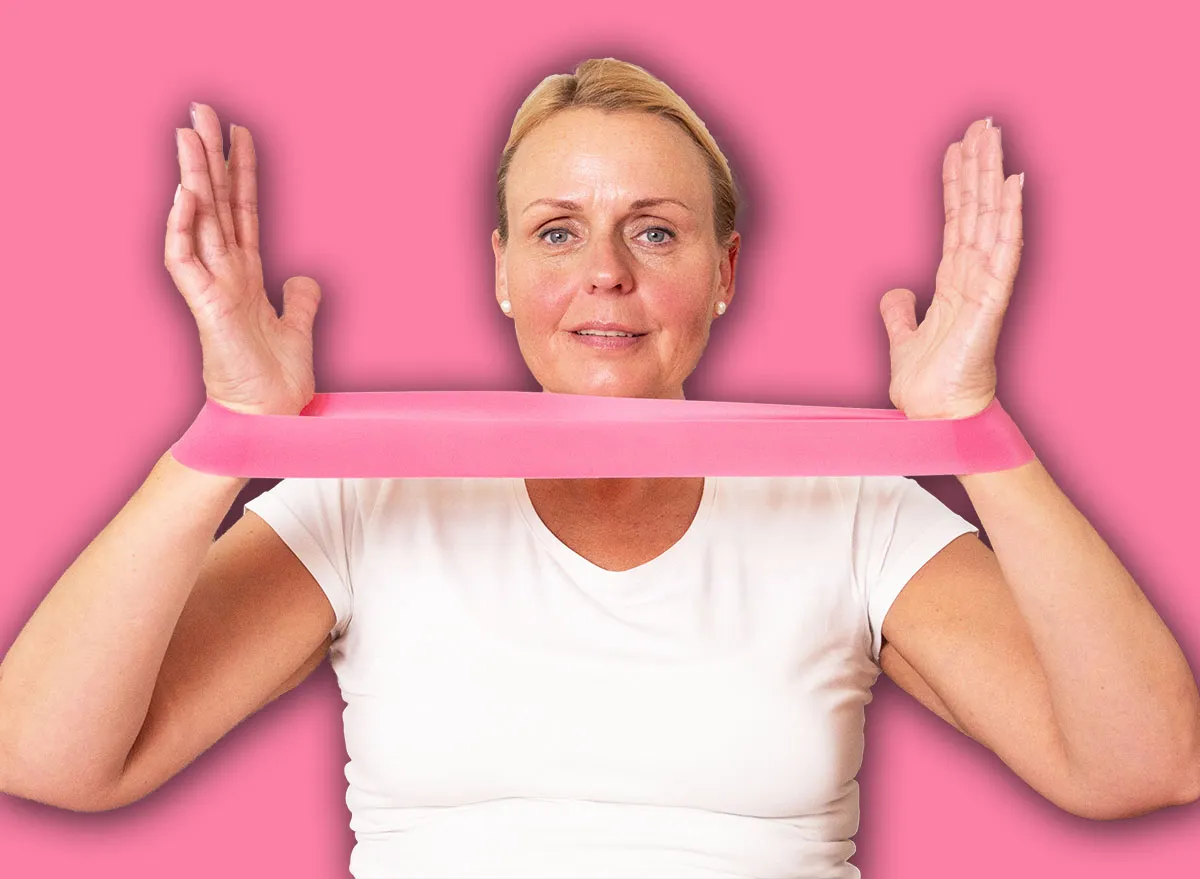
- Stand tall with a slight bend in your knees, holding a resistance band with both hands, palms facing down, approximately shoulder-width apart. Your arms should be extended straight out in front of your chest at shoulder height.
- Initiate the movement by squeezing your shoulder blades together, pulling the band apart horizontally across your chest.
- Continue pulling until the band touches your chest or your arms form a straight line with your shoulders.
- Control the return to the starting position, allowing the band to slowly bring your hands back together.
Key Considerations: The focus should be on the squeeze between your shoulder blades, not just pulling with your arms. Keep your shoulders down, away from your ears, and avoid shrugging.
Recommended Protocol: Execute 3 sets of 15 to 20 repetitions, with a 45-second rest interval between sets.
Variations: Experiment with an underhand grip, or introduce a brief pause (1-2 seconds) at the peak contraction to intensify the squeeze on the posterior chain muscles.
3. Resistance Band Shoulder Press: Developing Overhead Strength and Core Stability
The overhead press is a fundamental human movement, essential for reaching high, lifting objects above the head, and maintaining functional independence. Performing this exercise in a standing position with a resistance band offers a potent combination of strength building and core stabilization, without the high impact or potential joint stress of heavy barbells or dumbbells.
Muscles Engaged: All three heads of the deltoids, triceps, upper chest, and a significant contribution from the core stabilizers to maintain an upright posture.
Execution Guide:
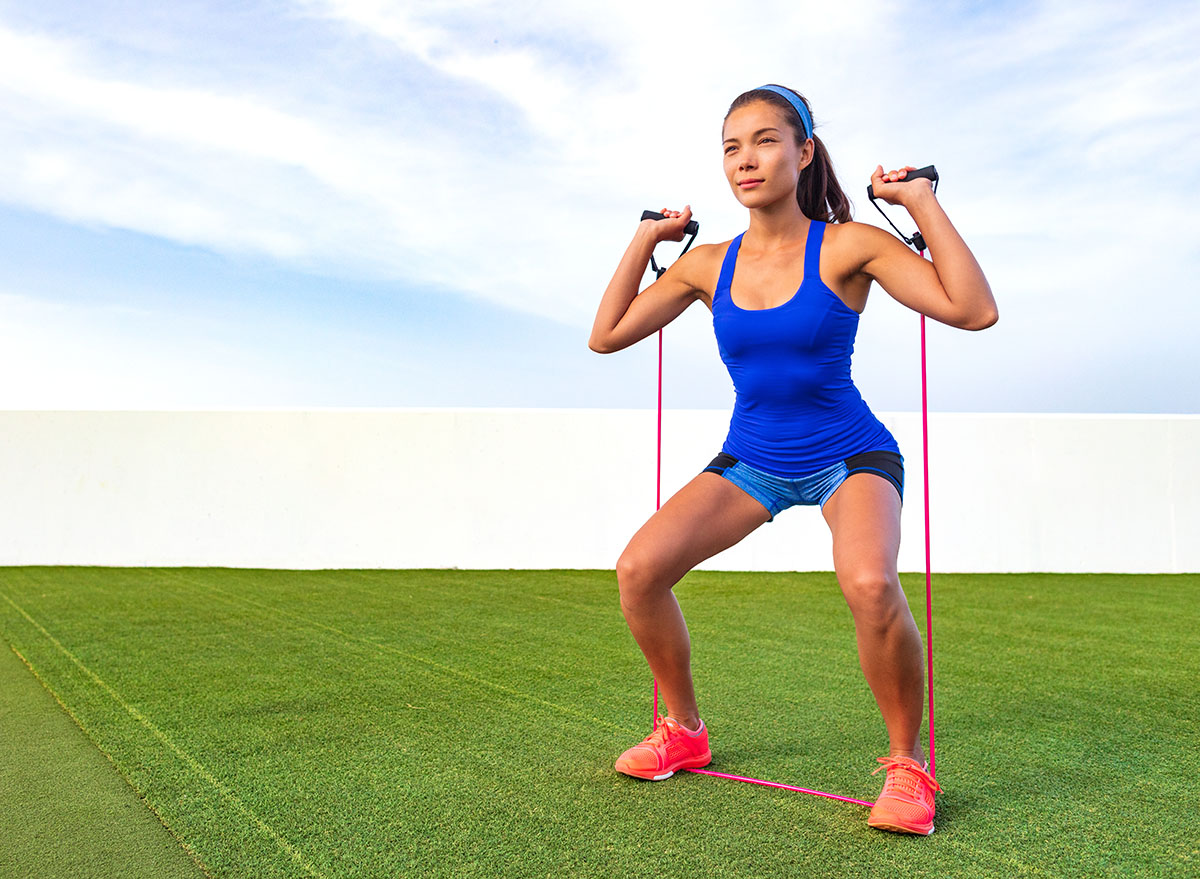
- Stand with the middle of the resistance band secured under both feet, hip-width apart.
- Grasp an end of the band in each hand, bringing your hands up to shoulder height, palms facing forward, elbows bent and pointing downwards. This is your starting "rack" position.
- Engage your core and press both hands straight overhead, extending your arms fully but without locking your elbows.
- Control the descent, bringing your hands slowly back to the starting shoulder-height position.
Key Considerations: Avoid leaning back excessively as you press; maintain a neutral spine. The movement should be a controlled vertical press, driven by the shoulders and triceps.
Recommended Protocol: Aim for 3 sets of 10 to 12 repetitions, resting for 60 seconds between sets.
Variations: Single-arm presses can highlight and correct muscular imbalances, while a half-kneeling position can further challenge core stability.
4. Resistance Band Lateral Raise: Sculpting Medial Deltoid and Shoulder Width
The medial (side) deltoid is responsible for giving the shoulder its characteristic "capped" appearance and is crucial for lifting the arm out to the side (abduction). Resistance band lateral raises effectively isolate this muscle, providing constant tension throughout the movement, which is often superior to using heavy dumbbells where momentum can easily take over.
Muscles Engaged: Primarily the medial deltoids, with assistance from the upper trapezius and core stabilizers.
Execution Guide:
- Stand with one end of the resistance band secured under one foot, keeping the other foot slightly forward for balance.
- Hold the other end of the band in the hand on the same side, with your arm extended downwards alongside your body, palm facing your thigh.
- Keeping a slight bend in your elbow, slowly raise your arm out to the side, leading with your elbow, until your hand reaches approximately shoulder height.
- Focus on engaging the side of your shoulder and controlling the movement.
- Slowly lower your arm back to the starting position, resisting the band’s pull. Complete all repetitions on one side before switching.
Key Considerations: Avoid shrugging your shoulders towards your ears. The movement should originate from the shoulder joint, not from swinging the arm. Imagine pouring water out of a pitcher as you lift your hand.
Recommended Protocol: Perform 3 sets of 12 to 15 repetitions per arm. Rest for 45 to 60 seconds between sets.
Variations: Leaning slightly away from the working arm (if using a sturdy anchor) can increase the range of motion and intensity. Slow tempo raises are also highly effective.
5. Downward-Facing Dog (Adho Mukha Svanasana): Holistic Strength and Mobility
While not a traditional strength exercise, Downward-Facing Dog, a foundational yoga pose, offers a unique blend of isometric strength building, flexibility enhancement, and improved circulation throughout the upper body. It places the shoulders in a loaded overhead position, promoting stability and endurance without impact, making it an excellent functional complement to band-based exercises.
Muscles Engaged: A broad spectrum including the deltoids, triceps, upper back muscles (rhomboids, trapezius), lats, core, and even glutes and hamstrings for body alignment.
Execution Guide:
- Begin on your hands and knees, hands slightly forward of your shoulders, knees directly under your hips.
- Spread your fingers wide, pressing firmly through your palms.
- Exhale as you lift your hips towards the ceiling, straightening your legs as much as comfortable (a slight bend in the knees is perfectly fine, especially initially).
- Press your chest gently towards your thighs, lengthening your spine. Let your head hang naturally.
- Actively push the floor away with your hands, engaging your shoulders and upper back to create space.
- Hold this position, breathing deeply.
Key Considerations: Focus on creating a long, straight line from your wrists to your hips. If your hamstrings are tight, keep a generous bend in your knees to prioritize spinal length and shoulder engagement.
Recommended Protocol: Hold the pose for 3 sets of 20 to 40 seconds, with 30 to 45 seconds of rest in between.
Variations: Incorporate gentle movements like "pedaling" the feet (alternately bending knees) to deepen hamstring stretches, or carefully perform shoulder taps (lifting one hand to tap the opposite shoulder) to challenge stability.
Principles for Sustained Shoulder Health After Fifty
Beyond the specific exercises, a thoughtful and consistent approach is paramount for long-term shoulder vitality.
- Prioritize Form Over Load: Especially as one ages, maintaining impeccable exercise technique is more crucial than lifting heavy weights. Correct form ensures target muscles are engaged effectively and minimizes the risk of injury.
- Progressive Overload, Gently Applied: To continue building strength, muscles need to be challenged incrementally. With resistance bands, this means progressing to bands with higher tension or increasing repetitions and sets.
- Listen to Your Body: Acknowledge discomfort and differentiate between muscle fatigue and joint pain. If an exercise causes pain, modify it or seek professional advice. Recovery is as important as training.
- Warm-up and Cool-down: Always begin workouts with light cardio and dynamic stretches to prepare the joints and muscles, and conclude with static stretches to improve flexibility and aid recovery.
- Nutrition and Hydration: Adequate protein intake is essential for muscle repair and growth, while proper hydration supports overall physiological function.
- Consistency is Key: Regular engagement in these exercises, ideally 2-3 times per week, will yield the most significant and lasting results.
By embracing this comprehensive strategy of standing exercises and resistance training, individuals over 50 can proactively build and maintain formidable shoulder strength, enhancing their functional capacity, preserving independence, and ultimately, enriching their quality of life for years to come. This intelligent approach moves beyond mere muscle building, fostering a holistic resilience that supports an active and fulfilling lifestyle.
About the Author