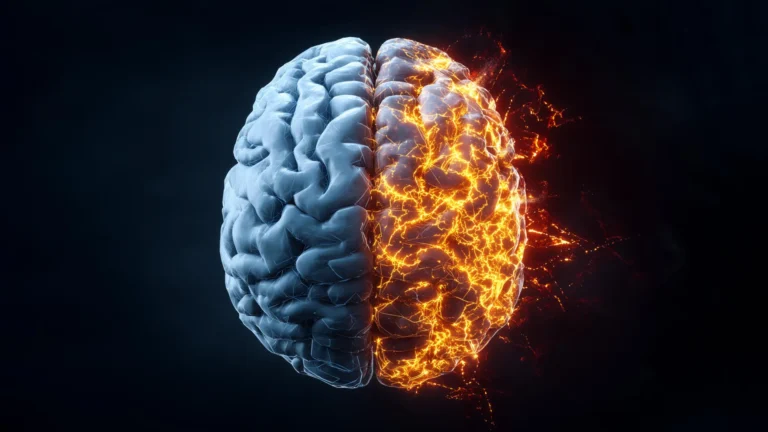
A consistent commitment to aerobic exercise can significantly influence the brain’s biological aging process, potentially leading to a cognitively younger-appearing brain over time, according to recent investigations from the AdventHealth Research Institute. This robust finding offers a tangible strategy for enhancing cognitive functions such as memory and clarity of thought, contributing to overall mental vitality. The research indicates that adhering to a structured aerobic regimen for a full year can result in participants’ brains exhibiting a biological age nearly a year less than individuals who maintained their usual activity levels.
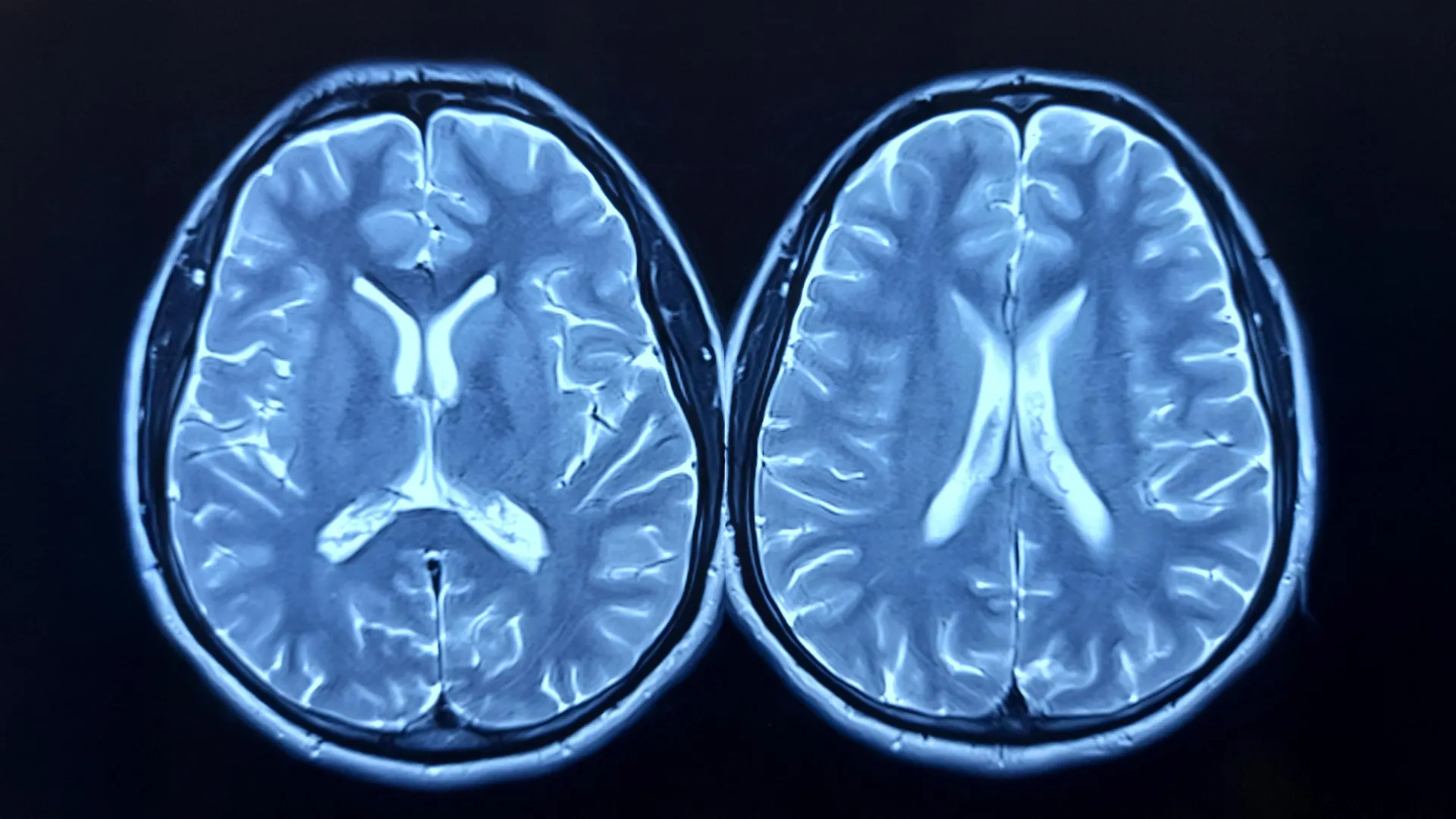
The scientific exploration, detailed in the Journal of Sport and Health Science, aimed to ascertain whether sustained engagement in aerobic exercise could decelerate or even reverse what is termed "brain age." This metric is derived through sophisticated magnetic resonance imaging (MRI) techniques, allowing researchers to gauge how old a brain appears in comparison to an individual’s chronological age. A discrepancy where the brain appears older than the person’s actual age, often quantified as brain-predicted age difference (brain-PAD), has been previously linked to diminished physical and cognitive capabilities, alongside an elevated risk of mortality.
Dr. Lu Wan, the lead author and a data scientist at the AdventHealth Research Institute, highlighted the study’s key takeaway: "We discovered that a straightforward, guideline-adherent exercise program can demonstrably make the brain appear younger within a mere 12-month period." She further elaborated on the implications for public health, noting, "Many individuals harbor concerns about safeguarding their brain health as they mature. Investigations such as this provide encouraging insights rooted in accessible, daily practices. While the absolute changes observed were modest, even a one-year shift in perceived brain age holds considerable potential significance when extrapolated over several decades."
The rigorous clinical trial involved 130 healthy adults, aged between 26 and 58 years, who were equitably divided into two cohorts. One group embarked on a program of moderate-to-vigorous aerobic exercise, while the other served as a control group, continuing their typical lifestyle. Participants in the active group engaged in two supervised 60-minute workout sessions weekly within a controlled laboratory setting, supplemented by at-home exercises to collectively achieve approximately 150 minutes of aerobic activity per week. This regimen precisely mirrored the physical activity recommendations established by the American College of Sports Medicine.
At the commencement of the study and again following a 12-month period, researchers meticulously assessed participants’ brain structures using MRI scans. Concurrently, cardiorespiratory fitness was evaluated through the measurement of peak oxygen uptake, or VO2peak.
Upon completion of the year-long intervention, a distinct divergence became evident between the two study groups. Those who actively participated in the exercise program demonstrated a measurable reduction in their brain age. Conversely, individuals in the control group experienced a slight increase in their brain age. On average, the exercise cohort recorded a decrease in their brain-PAD by approximately 0.6 years, signifying that their brains appeared biologically younger by the study’s conclusion. In contrast, the brains of the control group aged an average of 0.35 years, a change that did not reach statistical significance. When directly comparing the two groups, the exercise intervention resulted in a nearly one-year difference in favor of younger-appearing brains.
Dr. Kirk I. Erickson, the senior author of the research, a neuroscientist, and director at both the AdventHealth Research Institute and the University of Pittsburgh, commented on the impact of these findings: "Even though the observed difference is less than a full year, prior research indicates that each additional ‘year’ of advanced brain age is associated with notable disparities in later-life health outcomes." He emphasized the long-term implications, stating, "From a lifespan perspective, positively influencing the brain towards a younger trajectory during midlife could be profoundly important."
In an effort to elucidate the underlying mechanisms through which exercise exerts its influence on brain aging, the research team scrutinized several potential contributing factors. These included alterations in physical fitness levels, changes in body composition, modifications in blood pressure, and fluctuations in levels of brain-derived neurotrophic factor (BDNF), a crucial protein known to support neural plasticity. Intriguingly, despite clear improvements in cardiorespiratory fitness among the exercise group, none of these measured factors statistically accounted for the observed reduction in brain-PAD.
Dr. Wan expressed her surprise at this outcome: "We had anticipated that improvements in fitness or blood pressure would explain the observed effect, but they did not." She posited that "Exercise may be acting through additional pathways that we have not yet fully identified, such as subtle alterations in brain structure, inflammatory processes, vascular health, or other molecular mechanisms."
A distinctive aspect of this study was its focus on individuals in early to mid-adulthood, a departure from many existing investigations that concentrate on older populations where age-related brain changes are already more pronounced. The rationale behind targeting this demographic stems from the understanding that intervening during earlier life stages, when brain changes are less apparent but potentially more amenable to modification, could yield greater long-term benefits.
Dr. Erickson underscored the proactive advantage of this approach: "Initiating interventions in one’s 30s, 40s, and 50s provides us with a significant head start." He elaborated, "If we can effectively slow the process of brain aging before the emergence of substantial issues, we may be able to delay or mitigate the risk of cognitive decline and dementia in later years."
The researchers are careful to temper expectations, noting that the study’s participants were healthy, relatively well-educated volunteers, and that the observed changes in brain age were modest. They advocate for further, larger-scale studies with extended follow-up periods to definitively ascertain whether these reductions in brain-PAD translate into a decreased incidence of stroke, dementia, or other neurological disorders.
Addressing a common concern among the public, Dr. Erickson stated, "People frequently inquire, ‘Is there anything I can do now to protect my brain in the future?’" He concluded by affirming the study’s contribution to this dialogue: "Our findings lend support to the notion that adhering to current exercise guidelines—specifically, 150 minutes per week of moderate-to-vigorous aerobic activity—may indeed help maintain the brain’s biological youthfulness, even during midlife."
Dr. Lu Wan has been a Data Scientist at AdventHealth in Orlando, Florida, since June 2024, bringing a wealth of experience from prior roles as a Data Engineer at the University of Pittsburgh and a Biomedical Engineer at Spaulding Rehabilitation Hospital. Her academic background includes a PhD and graduate research training at the University of Florida, with a research focus on brain aging, physical activity, and cognitive health across the adult lifespan. She is affiliated with the AdventHealth Neuroscience Institute, a nationally recognized hub for brain research and patient care.
Dr. Kirk I. Erickson holds the distinguished positions of Director of Translational Neuroscience and the Mardian J. Blair Endowed Chair of Neuroscience at the AdventHealth Research Institute. He earned his Ph.D. from the University of Illinois at Urbana-Champaign and completed his postdoctoral training at the esteemed Beckman Institute. Formerly a Professor at the University of Pittsburgh, his extensive research career is dedicated to understanding how physical activity impacts brain health throughout different stages of life. His contributions to the field include authoring over 350 publications, leading significant trials funded by the National Institutes of Health (NIH), and serving on the U.S. Physical Activity Guidelines Advisory Committee.
The research initiative was generously supported by grants from the National Institutes of Health and the National Heart, Lung, and Blood Institute (Grant P01 HL040962), awarded to Peter J. Gianaros and Kirk I. Erickson.
About the Author