Maintaining robust lower body strength and agility becomes an increasingly critical endeavor as individuals progress into their senior years, profoundly influencing daily independence and overall quality of life. While traditional exercises like squats are widely recognized for their efficacy in building muscle across the quadriceps, hamstrings, and glutes, they can present formidable challenges for older adults due to concerns around balance, joint impact, and the inherent risk of falls. A burgeoning field of adaptive exercise, specifically utilizing a chair as a support and a tool, offers a compelling and often superior alternative for cultivating significant leg power and stability, particularly for those over 65. This methodology not only targets essential muscle groups but also addresses the psychological barriers that can deter seniors from engaging in vital physical activity.
The physiological changes associated with aging, notably sarcopenia—the progressive and generalized loss of skeletal muscle mass and strength—underscore the urgency of effective strength training interventions. Sarcopenia contributes to a decline in physical function, an increased likelihood of falls, and a diminished capacity to perform routine activities of daily living (ADLs) such as walking, rising from a seated position, or navigating stairs. Weakness in the lower extremities is a primary predictor of mobility limitations and fall-related injuries, which can have cascading negative effects on an individual’s independence and mental well-being. Consequently, any exercise regimen designed for this demographic must prioritize safety, accessibility, and direct transferability to real-world movements.
Felicia Hernandez, a NASM-certified personal trainer and community engagement lead at Eden Health Club, champions the profound benefits of chair-assisted movements, highlighting their capacity to restore leg strength more rapidly and safely than many conventional standing exercises for the older population. Her insights reveal that the perceived difficulty and potential hazards of exercises like unsupported squats often create a "fear factor" that discourages participation altogether. By integrating a chair into the exercise routine, this psychological barrier is significantly mitigated, fostering an environment of security and confidence crucial for consistent engagement. The chair acts as a stable anchor, allowing individuals to focus on muscular exertion rather than struggling with equilibrium, thereby maximizing the effectiveness of each repetition as a form of resistance training.
Moreover, the low-impact nature of chair exercises renders them exceptionally joint-friendly, a considerable advantage for seniors who may contend with osteoarthritis, joint pain, or recovering from injuries. These controlled movements are meticulously designed to fortify the lower body, enhancing not only raw strength but also crucial aspects of mobility, balance, and the functional capacity necessary for everyday tasks. Hernandez emphasizes that the fundamental principle of resistance training—working muscles against gravity or an external load—remains entirely applicable, even when seated. The critical distinction lies in the added layer of support and safety, which allows for deeper muscle engagement without the concomitant risk. These adaptive exercises are not merely modified versions but powerful training modalities specifically tailored to address the unique needs of an aging body, teaching movement patterns directly applicable to daily life.
Let us delve into specific chair-based exercises that exemplify this approach, offering a comprehensive path to revitalized lower body strength and improved functional fitness.
Supported Chair Squats: Building Foundational Power and Everyday Mobility
The chair squat is a cornerstone exercise in this adaptive regimen, directly mirroring the essential movement of transitioning between sitting and standing. This compound exercise effectively engages the primary muscles of the lower body: the quadriceps (front of the thighs), glutes (buttocks), and hamstrings (back of the thighs). For older adults, the ability to independently rise from a toilet, exit a car, or stand up from a sofa is paramount to maintaining autonomy. Hernandez observes that individuals have successfully utilized chair squats to regain proficiency in these very actions, underscoring the exercise’s direct functional relevance.
Unlike traditional standing squats, where maintaining balance throughout the entire range of motion can be precarious, supported chair squats leverage the chair to control the descent. This provides a crucial safety net, allowing the individual to lower themselves with confidence, knowing the chair will prevent an uncontrolled fall. The ascent phase then becomes a powerful concentric contraction against gravity, effectively building strength in the muscles responsible for propulsion. The chair essentially acts as a spotter, enabling individuals to push their muscles harder without the inherent fear of instability. This regulated movement not only builds strength but also refines proprioception—the body’s sense of its position in space—and coordination, both vital for fall prevention.
Seated Leg Extensions: Isolating Quadriceps for Enhanced Stability and Fall Prevention
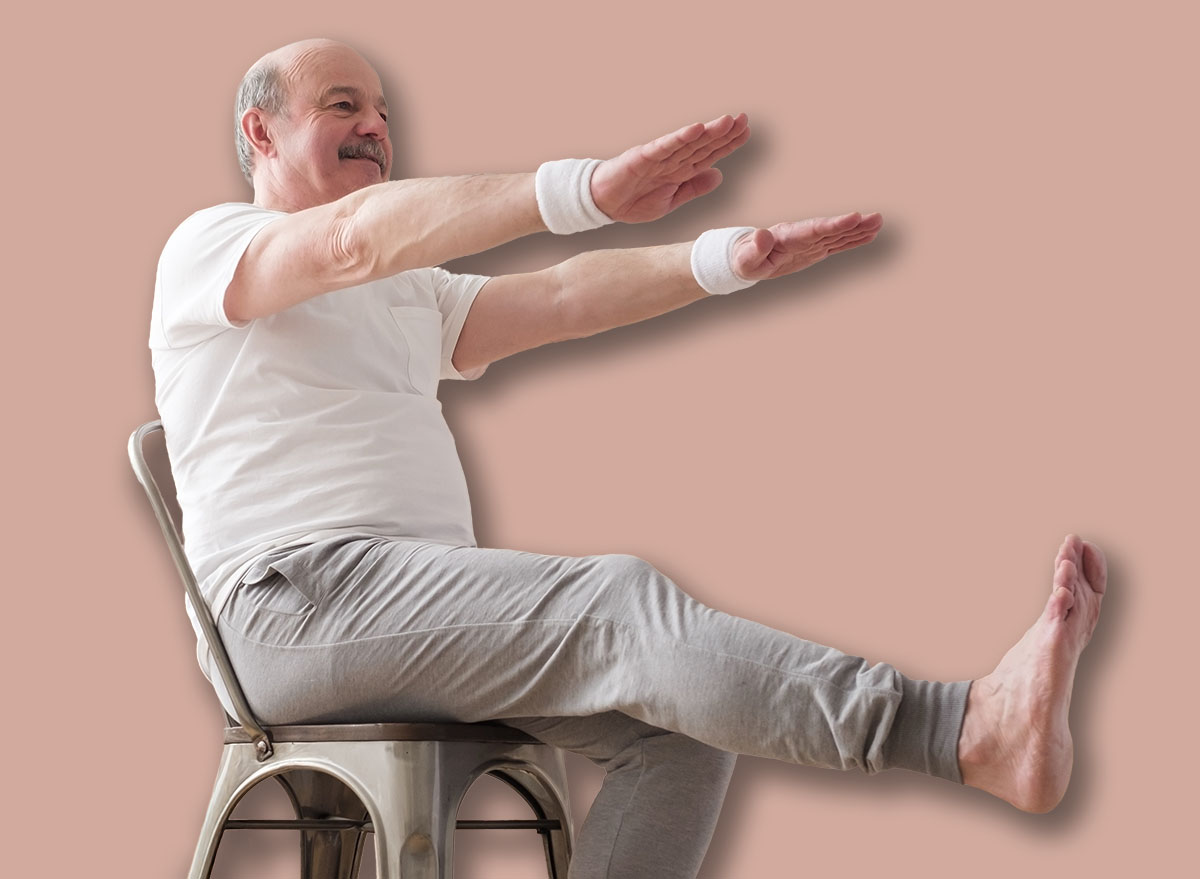
Seated leg extensions offer a targeted approach to strengthening the quadriceps, a muscle group indispensable for a multitude of lower body functions. These muscles are instrumental in straightening the knee, a critical action required for walking, ascending stairs, and, importantly, controlling the body’s descent when sitting down. Weak quadriceps are a significant contributing factor to falls among seniors because they compromise the ability to control landing or absorb impact effectively. The inability to eccentrically control knee flexion (the lowering phase) means a sudden loss of balance can lead to an uncontrolled drop, resulting in injury.
This exercise allows for the isolation of the quadriceps, meaning the effort is primarily concentrated on these muscles without requiring significant input from other stabilizing muscle groups. By performing leg extensions from a seated position, individuals can rebuild crucial quadriceps strength without placing undue stress on the knee joints or demanding high levels of balance, which can be challenging for those with compromised equilibrium. The controlled, deliberate movement strengthens the muscle fibers responsible for extending the leg, directly translating to improved stability during walking and a more controlled descent onto a chair or stairs, significantly reducing the risk of falls.
Assisted Step-ups: Mastering Stair Navigation and Dynamic Balance
Stair climbing stands as one of the most physically demanding daily activities for many older adults, requiring a complex interplay of strength, balance, and coordination. Assisted step-ups, performed with the support of a chair or stable surface, serve as an invaluable training tool that directly mimics this challenging movement pattern. Hernandez explains that this exercise not only cultivates functional leg strength but also markedly improves balance and overall coordination, skills that are pivotal for safely navigating varied terrains and changes in elevation.
The advantage of performing step-ups from a seated or semi-seated position, utilizing a chair for initial stability, is profound. It provides a secure starting point, offering support precisely when an individual is most vulnerable—at the initiation of the movement. This stability allows the exerciser to focus on the muscular effort required to lift their body weight against gravity onto an elevated surface, rather than expending energy on maintaining balance. Over time, consistent practice with assisted step-ups builds the power in the glutes and quadriceps needed to propel the body upwards, alongside the balance required to shift weight and stabilize on one leg, thereby significantly enhancing the capacity to confidently and safely ascend and descend stairs or curbs.
Seated Heel Raises: Fortifying Calf Muscles for Gait Efficiency and Stumble Recovery
Often overlooked, the calf muscles play an exceptionally critical role in both the mechanics of walking and the body’s ability to prevent falls. Strong calves are essential for maintaining balance, providing the propulsive force needed to push off the ground during walking (the "push-off" phase of gait), and crucially, for reacting effectively when one stumbles. Hernandez underscores that calf strength directly determines an individual’s capacity to "catch themselves" when they lose balance, transforming a potential fall into a recoverable stumble.
Weak calf muscles diminish the efficiency of the push-off phase, leading to a slower, less confident gait and making activities like stair climbing or quick directional changes particularly difficult for older adults. Seated heel raises specifically target the gastrocnemius and soleus muscles—the primary calf muscles—without requiring standing balance. By simply lifting the heels while seated, individuals can strengthen these vital muscles, improving ankle stability and the dynamic control needed for effective ambulation. This exercise directly contributes to a more confident stride, enhanced ability to navigate uneven surfaces, and a robust defense mechanism against unexpected stumbles, thereby significantly lowering the risk of fall-related injuries.
In conclusion, the integration of chair-based exercises into a senior fitness regimen represents a paradigm shift in promoting lower body strength, mobility, and independence. By addressing both the physical and psychological barriers often associated with traditional strength training for older adults, these adaptive movements provide a safe, effective, and accessible pathway to enhanced well-being. The insights from experts like Felicia Hernandez affirm that significant gains in muscle strength, balance, and functional capacity are entirely achievable through these targeted, supportive exercises. Embracing this adaptive approach empowers individuals to cultivate the physical resilience needed to navigate daily life with greater confidence, maintain their independence, and ultimately, enrich their quality of life during their golden years. Prioritizing consistency, listening to one’s body, and consulting with healthcare professionals before embarking on any new exercise program will further ensure a safe and beneficial journey towards enhanced vitality.
About the Author