
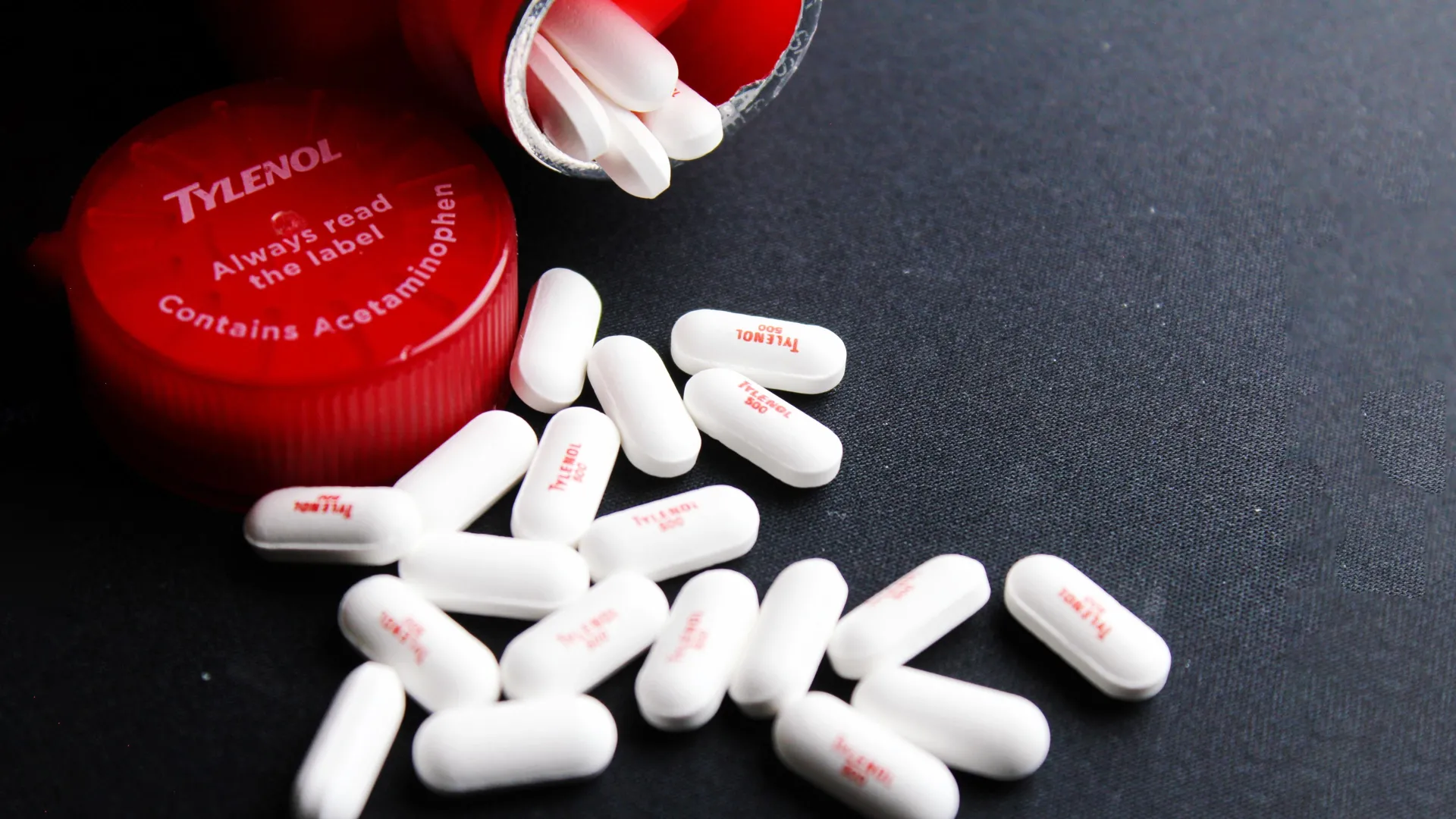
The pervasive reach of social media platforms has amplified unverified assertions linking acetaminophen, a ubiquitous over-the-counter analgesic, to the development of autism in children. However, a consensus among medical professionals firmly redirects attention to a far more tangible and extensively documented peril: the potential for severe overdose with this commonly administered medication. Far from being a theoretical concern, acetaminophen toxicity stands as a leading contributor to emergency room visits and fatalities stemming from non-prescription pharmaceuticals across the United States, according to Dr. Kennon Heard, a distinguished professor and chief of medical toxicology at the University of Colorado Anschutz Department of Emergency Medicine.
Annually, an estimated 56,000 individuals seek emergency medical care due to acetaminophen poisoning, with approximately 2,600 requiring hospitalization. This prevalent drug is implicated in nearly half of all acute liver failure cases documented in the U.S. and accounts for roughly 20% of all liver transplantations performed nationwide. Dr. Heard, whose research into acetaminophen poisoning spans over a quarter-century, is at the forefront of a significant, ongoing clinical trial investigating a novel therapeutic strategy aimed at mitigating liver damage in cases of severe overdose. This experimental intervention involves the administration of a medication typically employed to counteract poisoning from antifreeze components.
The institutions of the University of Colorado and Denver Health, which houses the renowned Rocky Mountain Poison & Drug Safety center, have historically been pivotal in this area of research for many decades. Dr. Heard expresses his enthusiasm, stating, "For the past 40 years, this has been the epicenter of acetaminophen research globally. A rich legacy of this type of work has been cultivated here, and I am delighted to be a part of it."
Understanding the Genesis of Acetaminophen Overdoses
Acetaminophen serves as the primary active ingredient in widely recognized brands like Tylenol and numerous generic pain relievers, prescribed for the management of mild to moderate pain and low-grade fevers. Its presence extends to a broad spectrum of over-the-counter formulations designed to alleviate symptoms associated with common colds, influenza, sinus conditions, and menstrual discomfort.
When adhered to precisely as directed, acetaminophen has a long history of safe and effective use over many decades. The emergence of adverse outcomes typically arises from deviations from recommended dosages, whether through the ingestion of an excessive quantity in a single instance or through the chronic, repeated intake exceeding prescribed limits.
Dr. Heard elaborates on the circumstances leading to accidental overdoses, noting, "There are instances where individuals inadvertently consume too much acetaminophen. Perhaps they are experiencing severe tooth pain and mistakenly believe that if two pills are effective, then four will be better, and eight even more so, perpetuating a dangerous escalation. Alternatively, it might involve individuals engaging in repeated, unintentional overdoses over time. These are the individuals who ultimately encounter serious complications."
Furthermore, intentional overdoses are frequently associated with acts of self-harm or suicide, Dr. Heard observes. He highlights a fundamental principle observed at poison control centers: "The paramount rule at the Poison Center is that if a substance is readily accessible, people will utilize it, and a substantial number of households maintain acetaminophen-containing medications in their medicine cabinets."
The Limitations of Conventional Antidotal Therapies
For an extended period, the medical community has relied on acetylcysteine as a highly effective antidote for acetaminophen overdose. When administered promptly, this agent has demonstrated a remarkable capacity to avert significant hepatic damage.
However, the efficacy of acetylcysteine diminishes precipitously if treatment initiation occurs beyond an eight-hour window following the overdose event.
"The challenge," Dr. Heard explains, "is that a considerable number of patients present for medical attention only after hepatic injury has already occurred. At this juncture, the effectiveness of acetylcysteine is significantly reduced, and in certain cases, it may prove to be largely ineffective."
Investigating an Antidote for Antifreeze Poisoning in Acetaminophen Overdose
The current clinical investigation, spearheaded by Dr. Heard and his esteemed colleagues, is centered on fomepizole. This pharmaceutical agent has received approval for the treatment of poisoning resulting from ethylene glycol and methanol, chemical compounds commonly found in antifreeze. Accidental exposure to these substances can occur, and in some instances, individuals struggling with alcohol use disorder have resorted to consuming antifreeze as a substitute for alcoholic beverages.
Fomepizole functions by inhibiting specific enzymes, namely alcohol dehydrogenases. By blocking these enzymes, the drug prevents the body from metabolizing ethylene glycol and methanol into their highly toxic byproducts.
Dr. Heard recounts that interest in repurposing fomepizole for acetaminophen overdose dates back to the 1990s, during his formative years in medical toxicology. The initial evidence emerged from individual patient case reports and findings from animal studies, particularly in scenarios involving severe overdose.
More recently, research has indicated a growing trend among clinicians to utilize fomepizole "off-label" – meaning for a purpose not officially approved – in the treatment of severe acetaminophen poisoning. Dr. Richard Dart, a professor of emergency medicine and a long-standing mentor to Dr. Heard, was instrumental in advocating for the formal evaluation of fomepizole in a controlled clinical trial. Dr. Dart has held the directorship of Rocky Mountain Poison & Drug Safety since 1992.
A Pilot Study to Establish Proof of Concept
The ongoing Phase II clinical trial is meticulously designed to ascertain whether the concurrent administration of fomepizole alongside standard acetylcysteine treatment can lead to a reduction in liver damage among patients deemed to be at high risk following an acetaminophen overdose. This study is classified as a "proof of concept" endeavor, intended to determine if the combination therapy exhibits sufficient promise to warrant progression to larger, more comprehensive trials.
Participants are randomly assigned to one of two treatment arms: receiving both medications or receiving acetylcysteine alone. The trial employs a double-blind methodology, ensuring that neither the patients nor the research personnel are aware of which specific treatment regimen each participant is receiving until the conclusion of the study.
"Our objective," Dr. Heard states, "is to compare the extent of liver damage, as quantified by liver enzyme levels, to determine whether fomepizole confers an additional protective benefit beyond that provided by the standard treatment."
Currently, patient enrollment is underway at Denver Health, UCHealth University of Colorado Hospital, Children’s Hospital Colorado, and several other participating sites. The recruitment process has been somewhat protracted, primarily due to the inherent difficulty in identifying patients who meet the stringent inclusion criteria for the study. Nevertheless, the research team anticipates enrolling approximately 40 participants within the next 12 to 18 months.
Should the findings from this initial trial prove to be positive, Dr. Heard anticipates that the research will advance to a larger-scale trial designed to investigate longer-term outcomes, including patient survival rates and the necessity for liver transplantation.
A Vital Precaution for Household Medicine Cabinets
Dr. Heard emphasizes the critical public health message he wishes to convey: "The paramount message I want to disseminate is that individuals must meticulously read medication labels, scrupulously avoid exceeding recommended dosages, and be acutely aware that acetaminophen may be present in multiple household products."
He concludes with a sobering observation: "We are beginning to recognize that the number of fatalities resulting from accidental overdoses is remarkably close to the number of individuals who intentionally ingest an overdose." Dr. Heard’s principal collaborators on this significant research project include Dr. Dart and Dr. Andrew Monte, also a professor of emergency medicine.
About the Author