
As individuals progress beyond their sixth decade, the body undergoes a series of natural physiological transformations that can influence overall physical condition, including the appearance and strength of the abdominal region. Factors such as a gradual decline in muscle mass, a slowing metabolic rate, and shifts in hormonal balance collectively contribute to changes in body composition. These developments can sometimes result in a less firm midsection and a perception of increased abdominal prominence, often referred to as lower belly overhang. While these changes are a normal part of aging, proactively addressing core strength offers substantial benefits far beyond mere aesthetics, encompassing improved posture, enhanced balance, and greater functional independence in daily life.
Cultivating a robust core is a cornerstone of healthy aging. The core musculature, comprising the deep abdominal muscles, obliques, rectus abdominis, and lower back stabilizers, functions as the body’s central powerhouse. It provides essential support for the spine, facilitates efficient movement, and plays a critical role in maintaining equilibrium, thereby reducing the risk of falls. For many older adults, traditional floor-based abdominal exercises can present challenges related to getting down and up, joint discomfort, or balance issues. This is where a targeted program of seated core exercises emerges as an exceptionally valuable and accessible solution.
The advantages of incorporating chair-based training into a fitness regimen for seniors are manifold. Primarily, performing exercises in a seated position significantly reduces the demands on balance, allowing individuals to concentrate more effectively on activating specific muscle groups. This focused engagement can be instrumental in establishing a stronger mind-muscle connection, which is crucial for building functional strength. Furthermore, seated movements inherently offer a lower impact alternative, safeguarding joints from undue stress, a common concern for those managing conditions like arthritis. A well-designed seated routine promotes greater control over movement patterns, fostering safer execution and minimizing the risk of injury. This enhanced sense of security often encourages greater consistency in training, leading to more sustainable progress over time. Personal trainers frequently observe that clients who initially struggle to activate their core muscles find greater success when starting with seated variations, as the stabilized position enables better isolation of the abdominal and oblique muscle groups.
A comprehensive approach to strengthening the abdominal region after 60 extends beyond simple flexion movements, embracing a variety of actions that challenge the core in multiple dimensions: flexion, extension, lateral flexion, and rotation, as well as resisting these movements (anti-rotation). The following five exercises, carefully selected and structured, are designed to engage the full spectrum of core muscles from the comfort and safety of a sturdy chair, supporting a firmer, more stable midsection.
Dynamic Seated Knee Lifts
This exercise specifically targets the lower portion of the abdominal wall and enhances hip flexor control, simultaneously building deep core stability. It teaches the body to maintain a braced posture while moving the lower limbs, a skill directly transferable to everyday actions such as walking or transitioning from a seated to a standing position. Executed with deliberate control, dynamic seated knee lifts generate significant tension through the deeper abdominal muscles. Over time, this augmented strength contributes to a more taut and supported area where abdominal laxity often manifests.
- Muscles Engaged: Predominantly the rectus abdominis (especially its lower fibers), transverse abdominis, hip flexors, and obliques.
- Execution: Begin by sitting upright in a stable chair with your feet flat on the floor, hip-width apart. Maintain a tall posture with your chest lifted and shoulders relaxed. Engage your abdominal muscles to brace your core, then slowly lift one knee towards your chest, using your core rather than just your leg muscles. Control the movement as you lower the foot back to the floor. Alternate legs, performing the movement smoothly and without rocking your torso.
- Recommendation: Complete 3 sets of 10 to 15 repetitions per leg, resting for approximately 45 seconds between sets.
- Variations for Progression: Consider performing single-leg lifts with a brief hold at the top, or introducing a slower tempo to increase time under tension.
- Key Form Cue: Focus on keeping your spine elongated and avoid any tendency to round your lower back during the lift.
Controlled Leg Flutters
Controlled leg flutters introduce a continuous tension stimulus to the lower abdominal muscles while simultaneously challenging coordination and muscular endurance. The alternating leg motion compels the core to actively stabilize the pelvis, thereby reinforcing superior control of the midsection. This movement also cultivates stamina within the hip flexors and the deeper layers of the abdominal wall. Consistent practice of controlled leg flutters aids in firming and strengthening the region beneath the navel.
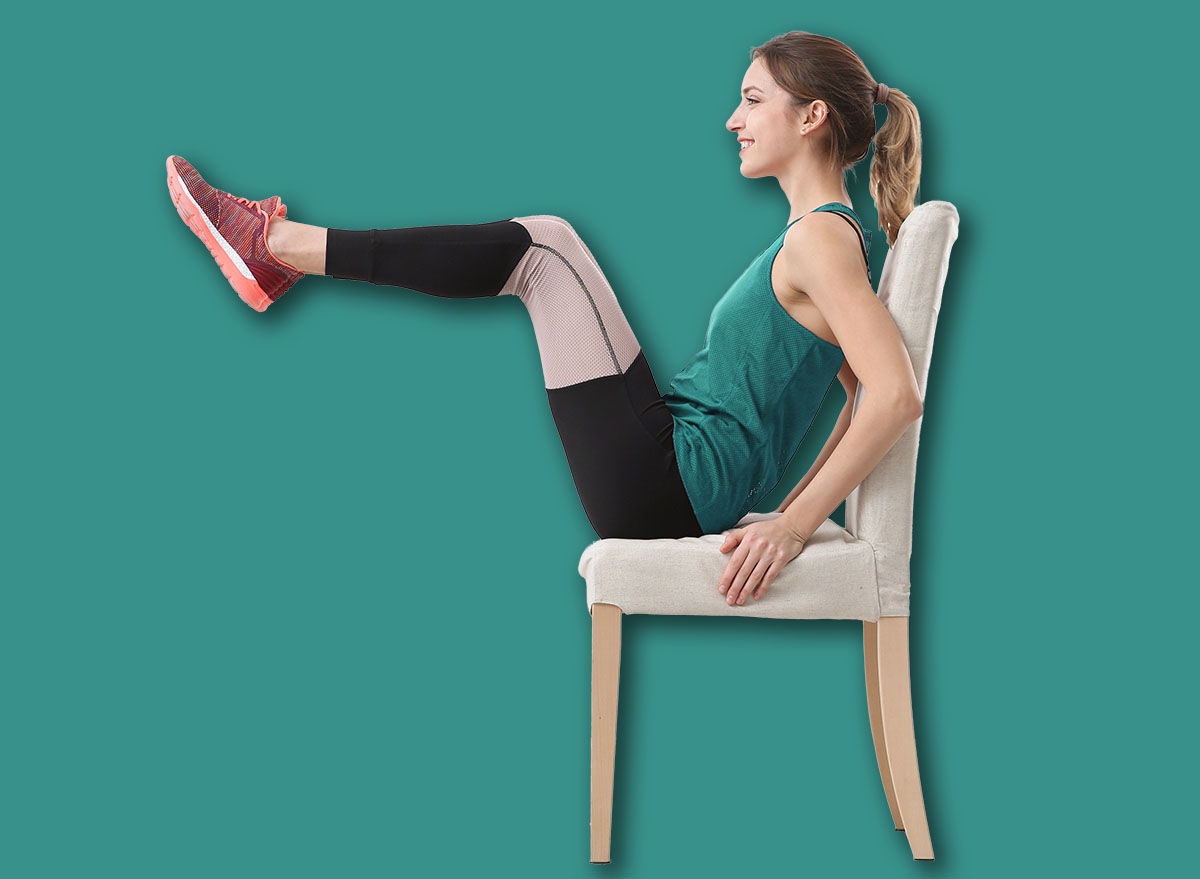
- Muscles Engaged: Lower rectus abdominis, hip flexors, transverse abdominis, and quadriceps.
- Execution: Sit tall in your chair, engaging your core and leaning back slightly to about a 45-degree angle, supporting yourself by gripping the sides of the chair. Extend both legs straight out in front of you, hovering them a few inches above the floor. Keeping your legs straight but not locked, perform small, rapid, alternating up-and-down movements with your legs, as if gently kicking in water. Ensure the movement originates from your hips, not your knees.
- Recommendation: Aim for 3 sets of 20 to 30 total flutter kicks, taking a 45-second rest period between sets.
- Variations for Progression: Experiment with lower kicks (closer to the floor) for increased difficulty or timed intervals to build endurance.
- Key Form Cue: Prioritize small, deliberate movements over speed, maintaining constant tension in the lower abdomen.
Seated Cross-Leg Kicks
Seated cross-leg kicks offer a more advanced challenge to the lower abdominal muscles compared to flutters, incorporating a wider range of motion and an element of rotational resistance. The crossing pattern demands that your core actively resist unwanted twisting while maintaining pelvic stability. This amplified demand enhances deep core engagement and improves neuromuscular coordination. Over time, regular performance of cross-leg kicks contributes to the development of stronger lower abdominal muscles, supporting a more defined waistline.
- Muscles Engaged: Rectus abdominis, transverse abdominis, hip flexors, and adductors (inner thighs).
- Execution: Adopt the same starting position as for controlled leg flutters, leaning back slightly with core engaged and hands gripping the chair sides for support. Extend both legs straight out. Instead of up-and-down movements, perform a controlled crossing motion, alternating which leg passes over the other. Imagine scissoring your legs horizontally in front of you. Keep the movement fluid and controlled.
- Recommendation: Perform 3 sets of 16 to 20 total crosses, with a 45-second recovery period between sets.
- Variations for Progression: Introduce slower tempo cross-leg kicks to maximize muscle activation or incorporate a brief pause at the peak of each cross.
- Key Form Cue: Maintain a stable lower back, ensuring your core is braced throughout the entire range of motion.
Seated Anti-Rotation Press (Pallof Press Variation)
The seated anti-rotation press is an exercise that fundamentally trains the core to resist rotational forces, a crucial skill for developing a firm, supportive midsection and protecting the spine. While many abdominal routines primarily focus on bending movements, anti-rotation strength is paramount for cinching the waist and improving overall posture. This exercise also reinforces the crucial bracing mechanics that safeguard the spine during various daily movements. Consistent practice cultivates deep core stability, which is instrumental in achieving a flatter abdominal appearance.
- Muscles Engaged: Primarily the transverse abdominis, obliques, rectus abdominis, and shoulder stabilizers.
- Execution: Secure a resistance band to a sturdy anchor point at approximately chest height, positioned to your side while seated in a chair. Sit sideways to the anchor point, holding the band handle with both hands pressed against your chest. Maintain an upright posture, keeping your core tightly braced. Slowly press the band straight out in front of you, resisting the band’s tendency to pull your torso towards the anchor. Hold for a moment, then slowly return the band to your chest. The key is to prevent your body from twisting.
- Recommendation: Complete 3 sets of 10 to 12 repetitions per side, allowing for a 45-second rest between sets.
- Variations for Progression: Increase band resistance, perform an overhead press variation, or incorporate an isometric hold at the extended position.
- Key Form Cue: Keep your shoulders level and squared forward, actively resisting any rotation towards the anchor point.
Seated Rotational Dumbbell Chops
The seated rotational dumbbell chop engages the core to stabilize while generating controlled rotational force. This dynamic pattern intensely activates the oblique muscles and deeper abdominal musculature, contributing to a more toned waistline and enhanced support for the lower abdomen. It additionally improves coordination between the upper and lower body, a benefit that becomes increasingly valuable for maintaining fluidity in everyday movements after 60. When performed with precision and control, this exercise builds functional core strength that directly translates to real-life activities.
- Muscles Engaged: Obliques, transverse abdominis, rectus abdominis, and shoulder muscles.
- Execution: Sit upright in a sturdy chair with your feet flat. Hold a light to moderate dumbbell with both hands at one shoulder, creating a starting position for a diagonal chop. Engage your core, then smoothly chop the dumbbell diagonally across your body towards the opposite hip, as if you’re chopping wood. Control the movement, allowing your torso to rotate through your ribs and core, not just your arms. Return to the starting position with control.
- Recommendation: Perform 3 sets of 10 to 12 repetitions per side, resting for 45 seconds between sets.
- Variations for Progression: Adjust the chop trajectory (high-to-low or low-to-high), or use a resistance band for a different tension profile.
- Key Form Cue: Initiate the rotation from your core and rib cage, ensuring your abdominal muscles drive the movement rather than relying solely on arm strength.
Integrating Core Work into a Holistic Wellness Framework
Achieving a firmer midsection and improving core strength after 60 is a multifaceted endeavor that thrives on consistency, intelligent exercise selection, and supportive daily habits. While targeted exercises build the foundational musculature, the routines and choices made outside of structured workouts significantly influence the speed and extent of progress. Individuals who experience the most rapid and sustainable improvements typically integrate their physical activity with a broader commitment to well-being.
- Nutritional Awareness: A balanced diet rich in lean proteins supports muscle repair and growth, while adequate fiber intake aids digestive health and satiety. Focusing on whole, unprocessed foods and managing caloric intake in alignment with activity levels is crucial for overall body composition.
- Optimal Hydration: Sufficient water intake is vital for metabolic processes, nutrient transport, and maintaining the elasticity of connective tissues, all of which contribute to overall physical health and performance.
- Restorative Sleep: Quality sleep is indispensable for hormonal regulation, including cortisol levels (which can influence abdominal fat distribution), and for facilitating muscle recovery and repair after exercise. Aim for 7-9 hours of uninterrupted sleep each night.
- Stress Management: Chronic stress elevates cortisol, potentially leading to increased visceral fat. Incorporating stress-reducing practices such as meditation, deep breathing, or engaging in hobbies can significantly impact body composition and overall well-being.
- Consistent General Activity: Beyond dedicated core workouts, maintaining an active lifestyle through walking, gardening, or other forms of light to moderate activity keeps the body mobile and metabolism engaged.
- Postural Mindfulness: Actively being aware of and correcting posture throughout the day, whether seated or standing, reinforces the benefits of core strengthening exercises and helps in maintaining a more upright and supported torso.
In conclusion, developing and maintaining a strong core is an empowering journey for individuals over 60, offering profound benefits for physical function, stability, and confidence. By embracing these accessible seated exercises with focus, consistency, and a mindful approach to overall lifestyle, one can significantly enhance abdominal support, improve posture, and contribute to a feeling of greater physical integrity. Always remember to listen to your body and consult with a healthcare professional or certified fitness expert before embarking on any new exercise regimen to ensure it aligns with your individual health profile and capabilities.
About the Author