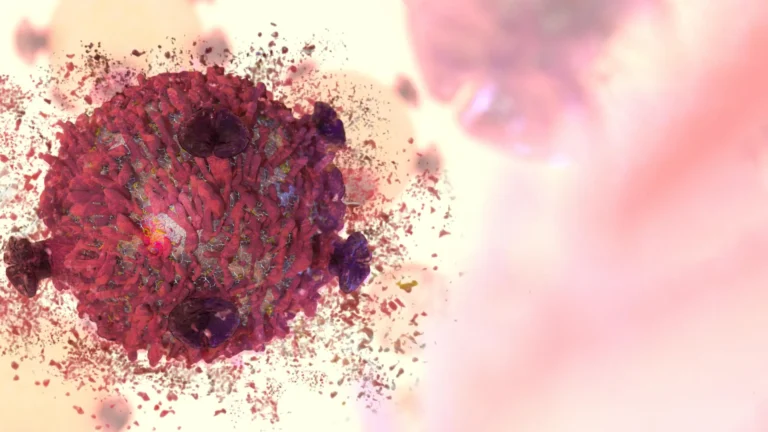
The persistent and alarming global toll exacted by fungal infections, claiming millions of lives annually, has long been exacerbated by a critical deficit in effective therapeutic interventions. This precarious landscape is now poised for a significant shift, however, as researchers at McMaster University have announced a groundbreaking discovery that could fundamentally alter the trajectory of antifungal treatment. Their extensive investigation has culminated in the identification of a unique molecular compound, designated butyrolactol A, which exhibits a remarkable capacity to target and disable a particularly virulent and dangerous fungal adversary: Cryptococcus neoformans.
Cryptococcus neoformans represents a formidable threat to human health, capable of precipitating severe, pneumonia-like illnesses that can prove fatal. The fungus poses an especially grave risk to individuals whose immune systems are compromised, a category encompassing patients undergoing cancer treatment and those living with advanced HIV infection. Adding to its menace, Cryptococcus demonstrates a disheartening resilience, frequently evading the efficacy of many established antifungal medications. This challenge is not isolated; other critical fungal pathogens, including Candida auris and Aspergillus fumigatus, exhibit comparable evasive strategies. The World Health Organization has accordingly designated these three fungi as priority pathogens, underscoring the urgent need for novel treatment paradigms.
The current arsenal available to clinicians for combating fungal infections is alarmingly limited, largely constrained to a mere three primary classes of antifungal agents. This scarcity of options is a direct consequence of the inherent biological similarities between fungal cells and human cells, a factor that complicates the development of drugs that can selectively target pathogens without inflicting collateral damage on the host.
The most potent class of antifungal drugs available, amphotericin, is a case in point. While undeniably effective in many scenarios, these medications are notorious for their substantial toxicity, often eliciting severe adverse effects in patients. This inherent harshness has led to the drug being colloquially, and somewhat grimly, referred to as "amphoterrible" within medical circles. "The fundamental challenge lies in the fact that fungal cells share a significant degree of genetic and structural similarity with human cells," explained Gerry Wright, a distinguished professor within McMaster University’s Department of Biochemistry and Biomedical Sciences. "Consequently, therapeutic agents designed to disrupt fungal cellular processes frequently exhibit a similar detrimental impact on human physiology, thereby severely restricting the range of viable treatment options for patients."
The remaining two major antifungal drug classes, the azoles and the echinocandins, present their own distinct limitations. Azoles, while capable of inhibiting fungal growth, generally do not possess the capacity to eradicate the pathogen entirely, offering only a temporary reprieve rather than a definitive cure. Echinocandins, once a valuable tool, have seen their effectiveness significantly diminished against Cryptococcus and a growing number of other fungal species due to the widespread emergence of drug resistance.
In light of these considerable obstacles—a constricted therapeutic landscape, a sluggish pace of new drug development, and escalating resistance—scientific inquiry has increasingly pivoted towards an alternative strategic approach. This innovative avenue involves the utilization of compounds known as adjuvants.
"Adjuvants function not as direct agents of pathogen destruction, like conventional drugs, but rather as ‘helper molecules’," elaborated Professor Wright, who is also an integral member of the Michael G. DeGroote Institute for Infectious Disease Research (IIDR). "Their primary role is to render the pathogens exquisitely vulnerable to existing medications, thereby re-sensitizing them to treatments that they might otherwise resist."
To identify a suitable adjuvant capable of overcoming the resistance exhibited by Cryptococcus, Professor Wright’s research team undertook a comprehensive screening process, meticulously examining thousands of diverse compounds housed within McMaster University’s extensive chemical library.
This extensive search yielded a particularly promising candidate: butyrolactol A. This molecule, originally isolated from specific strains of Streptomyces bacteria, had been documented for several decades but had remained largely unexplored and overlooked by the scientific community. When administered in conjunction with echinocandin-class antifungal drugs, butyrolactol A demonstrated a remarkable ability to empower these drugs to eradicate fungal strains that they were previously incapable of affecting.
Initially, the precise mechanism by which butyrolactol A exerted its influence remained elusive, leading the team to the brink of dismissing its potential. "This particular molecule was first identified in the early 1990s, and since then, it has essentially languished in obscurity," Professor Wright recounted. "Therefore, when it emerged as a significant hit in our screening assays, my initial inclination was to disregard it. My reasoning was that it was a known compound, bore a superficial resemblance to amphotericin, and thus was likely just another toxic entity, unworthy of further investigation."
However, the trajectory of this research was significantly altered by the unwavering dedication and persistence of Xuefei Chen, a postdoctoral fellow working within Professor Wright’s laboratory. "From the earliest stages of our investigation, the observed activity of this molecule appeared exceptionally promising," stated Chen, whose work has been central to the project’s advancement. "I felt a strong conviction that even a faint possibility of its capacity to revitalize an entire class of antifungal medicines warranted exhaustive exploration."
This commitment propelled the team into years of intensive, detailed investigation, a process Professor Wright characterized as "painstaking sleuthing and detective work." This arduous endeavor ultimately illuminated the precise molecular mechanism by which butyrolactol A disarms deadly fungi.
Chen’s pivotal discovery revealed that butyrolactol A functions by inhibiting a critical protein complex indispensable for the survival of Cryptococcus. Professor Wright vividly described the consequence of this inhibition: "When this essential system is jammed, it triggers a cascade of cellular dysfunction, leading to catastrophic consequences for the fungus." By disrupting this vital cellular machinery, the fungus becomes acutely susceptible to the action of antifungal drugs, including those it had previously rendered ineffective.
Subsequent experimental investigations extended the observed effects to another critical pathogen, Candida auris, demonstrating a similar susceptibility when treated with butyrolactol A in combination with echinocandins. The research team collaborated closely with colleagues in the laboratory of McMaster Professor Brian Coombes, also a fellow member of the IIDR, further validating these findings. The implications of these results are substantial, suggesting that the discovery of butyrolactol A holds significant clinical promise beyond its initial target, potentially offering a broader application in combating a range of challenging fungal infections.
The culmination of these findings, recently published in the prestigious scientific journal Cell, represents the culmination of over a decade of dedicated research. "The initial screening that brought butyrolactol A to our attention occurred back in 2014," Professor Wright noted. "More than eleven years later, thanks almost entirely to the tireless efforts of Xuefei Chen, we have not only identified a genuine drug candidate but also unveiled an entirely novel target for the development of future antifungal therapies." This significant breakthrough marks the second novel antifungal compound and the third new antimicrobial agent to emerge from Professor Wright’s laboratory within the past twelve months, underscoring the productive and impactful nature of their ongoing research into infectious disease.
About the Author