As individuals navigate the landscape of aging, maintaining physical fitness often presents evolving challenges. Among the most frequently cited concerns is the accumulation of abdominal fat, a phenomenon exacerbated by physiological shifts that occur naturally with advancing years. While conventional wisdom frequently points to exercises like crunches for targeting the midsection, a growing body of evidence and expert opinion suggests that alternative, more accessible, and safer methods may offer superior benefits, particularly for those over the age of sixty. This article delves into the science behind age-related core changes, examines the limitations of traditional abdominal exercises for older adults, and introduces a series of seated workouts championed by a leading specialist as a highly effective strategy for strengthening the core, improving metabolism, and reducing persistent abdominal adiposity.
The human core, comprising the muscles of the abdomen, back, and pelvis, serves as the central pillar of the body, instrumental in virtually every movement, from walking and lifting to maintaining balance and proper posture. With age, however, several factors conspire to weaken this critical region. Sarcopenia, the progressive loss of muscle mass and strength, affects all skeletal muscles, including those of the core. Concurrently, metabolic rates tend to slow, and hormonal changes, such as decreased estrogen in women and testosterone in men, can predispose the body to store fat more readily around the midsection, specifically visceral fat, which surrounds internal organs and poses significant health risks. This decline in core strength and the concomitant increase in abdominal fat are not merely cosmetic issues; they have profound implications for overall health and functional independence.
Daniella Rivka, a Neuro Restorative Movement Specialist and co-founder of The Neu Gym, a specialized adaptive fitness center in Dallas, underscores the far-reaching impact of a weakening core in later life. "A compromised core," Rivka explains, "struggles to provide adequate support for the spinal column, leading to increased discomfort and a heightened susceptibility to injury as other muscle groups are forced to compensate." She emphasizes that strengthening this foundational muscle group is paramount not only for managing body weight and counteracting the accumulation of abdominal fat, but also for enhancing metabolic function, which in turn supports greater physical activity. Beyond these benefits, improved posture, a direct outcome of a robust core, fosters better spinal alignment, alleviates strain on various muscles, and significantly boosts overall stability and efficiency of movement. For older adults, integrating targeted core strengthening into their regular routine is a vital step toward preserving independence and elevating their overall quality of life.
While crunches have long been a staple in abdominal workouts, their suitability for an aging demographic warrants reconsideration. Traditional crunches often involve lying on the back and lifting the upper body, which can place considerable strain on the neck and lower back, areas already vulnerable in older individuals due to age-related degeneration or pre-existing conditions. The act of getting down onto and up from the floor can also be a barrier for those with mobility challenges or joint pain. Furthermore, crunches primarily target the rectus abdominis, the superficial muscle responsible for the "six-pack" appearance, but may not sufficiently engage the deeper core muscles crucial for functional stability and injury prevention. For many seniors, the risk of improper form, potential discomfort, or even injury can outweigh the perceived benefits, leading to a reluctance to engage in core exercises altogether.
This is where seated exercises emerge as a compelling and often superior alternative. By providing a stable base, seated movements dramatically reduce the risk of falls and allow individuals to concentrate on activating their abdominal muscles without the added challenge of maintaining balance or contending with gravitational forces on the spine. Rivka highlights this advantage, stating, "Seated movements can surpass traditional crunches for older adults because they offer inherent stability, significantly reduce the potential for injury, and effectively engage the core musculature without imposing excessive stress on the lower back." This stable foundation is particularly critical as age-related changes frequently impact an individual’s balance and proprioception. The ability to modify these exercises easily to suit varying fitness levels and accommodate mobility concerns further enhances their accessibility and safety, making them a practical choice for a broad spectrum of older adults. Moreover, many seated core exercises are functionally relevant, mimicking movements performed in daily life, thereby translating to tangible improvements in everyday activities.

Let’s explore four specific seated exercises that Rivka advocates for their effectiveness in targeting abdominal fat, building strength, and improving overall physical well-being:
1. Seated Leg Lifts: This exercise focuses on engaging the lower abdominal muscles and hip flexors while promoting good posture.
- Execution: Sit upright in a sturdy chair with your feet flat on the floor, hip-width apart. Ensure your back is straight and slightly away from the backrest. Engage your core, then slowly lift one foot a few inches off the floor, keeping your knee bent at a 90-degree angle. Hold for a few seconds, then slowly lower. Repeat on the other side.
- Benefits: Strengthens the lower rectus abdominis and hip flexors, improves core stability, and can help alleviate lower back discomfort by strengthening supporting muscles. The controlled movement also enhances proprioception.
2. Seated Torso Twists: Designed to target the oblique muscles, these twists improve rotational core strength and spinal mobility.

- Execution: Remain seated upright with feet flat. Place your hands lightly behind your head or cross them over your chest. Keeping your hips stable and facing forward, slowly rotate your torso to one side, leading with your rib cage. Hold briefly, feeling the stretch and contraction in your obliques, then return to the center. Repeat on the opposite side.
- Benefits: Enhances the strength and flexibility of the oblique muscles, which are vital for twisting motions and lateral stability. It also promotes healthy spinal articulation and can improve posture.
3. Seated Bicycle Crunches: This dynamic exercise provides comprehensive core engagement, working the rectus abdominis and obliques while incorporating leg movement.
- Execution: Sit tall in your chair, hands behind your head or resting lightly by your ears. Lean back slightly, engaging your core, but maintain a straight back. Bring one knee up towards your chest while simultaneously rotating your torso to bring the opposite elbow towards that knee. Extend the leg back down as you return your torso to the center, then repeat on the other side in a continuous, controlled motion, mimicking a cycling movement.
- Benefits: Offers a more dynamic and comprehensive core workout than static holds, engaging multiple abdominal muscle groups simultaneously. It also improves coordination and adds a cardiovascular element.
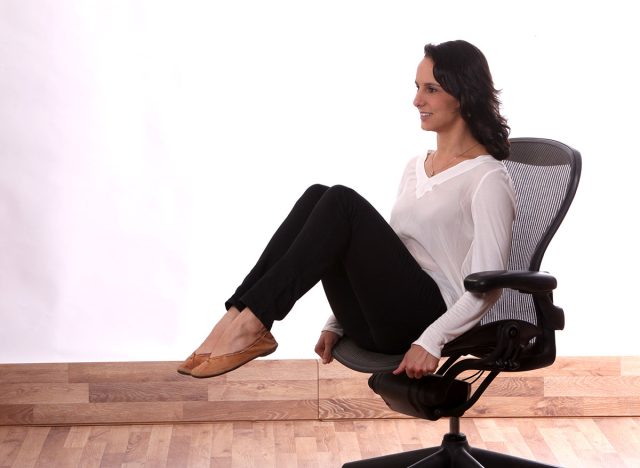
4. Seated Knee Tucks: This exercise primarily targets the lower abdominal muscles with a controlled, contracting movement.
- Execution: Sit at the edge of your chair, maintaining an upright posture and engaging your core. You can hold onto the sides of the chair for support. Lean back slightly without rounding your spine. Simultaneously bring both knees up towards your chest, crunching your lower abdominals. Slowly extend your legs back out without letting your feet touch the floor if possible, maintaining core tension.
- Benefits: Highly effective for strengthening the lower abdominal region and improving core endurance. The controlled nature of the movement helps in developing a strong mind-muscle connection, which is crucial for effective training.
For optimal outcomes, Rivka strongly advises performing these seated exercises with consistent regularity, aiming for three to four sessions per week. She emphasizes the critical importance of executing each movement through its full range of motion. "Focusing intently on maintaining proper form and technique during every session is paramount," Rivka asserts, "as this maximizes muscle activation and significantly minimizes the potential for injury." She recommends initiating with a lower number of repetitions and progressively increasing them as strength and endurance develop.
Beyond the structured exercise routine, a holistic approach is indispensable for achieving and sustaining abdominal health. Complementing these targeted workouts with a balanced dietary regimen is crucial. This involves prioritizing whole, unprocessed foods such as lean proteins, a diverse array of fruits and vegetables, nutrient-dense whole grains, and healthy fats. Such a diet not only fuels the body for exercise but also supports muscle repair and recovery, and plays a fundamental role in metabolic regulation and overall fat loss. Furthermore, integrating other forms of physical activity, such as brisk walking, swimming, cycling, or light resistance training, will amplify overall fitness, contribute to a higher caloric expenditure, and further aid in effective weight management. Lifestyle factors like adequate sleep, stress reduction, and consistent hydration also play a significant, albeit often overlooked, role in metabolic health and body composition.
By embracing this multifaceted strategy—combining targeted, safe seated core exercises with sound nutritional practices and a generally active lifestyle—older adults can effectively build formidable core strength, significantly reduce abdominal fat, enhance their posture, and cultivate a more dynamic and fulfilling life well into their golden years. These accessible fitness interventions empower individuals to proactively manage their health, ensuring sustained vitality and independence.
About the Author