The intricate world of human blood, a vital diagnostic frontier, is experiencing a transformative shift with the advent of a pioneering artificial intelligence system. This innovative platform, named CytoDiffusion, leverages advanced generative AI methodologies to meticulously scrutinize the morphology and ultrastructure of individual blood cells, promising a substantial enhancement in the diagnostic accuracy for a spectrum of hematological conditions, including critical diseases like leukemia. Developed through a collaborative effort by leading research institutions, this technology demonstrates an unprecedented capability to discern pathological cellular alterations with a consistency and precision that often surpasses the current benchmarks set by human experts, thereby offering a crucial pathway to mitigate instances of missed or ambiguous diagnoses.
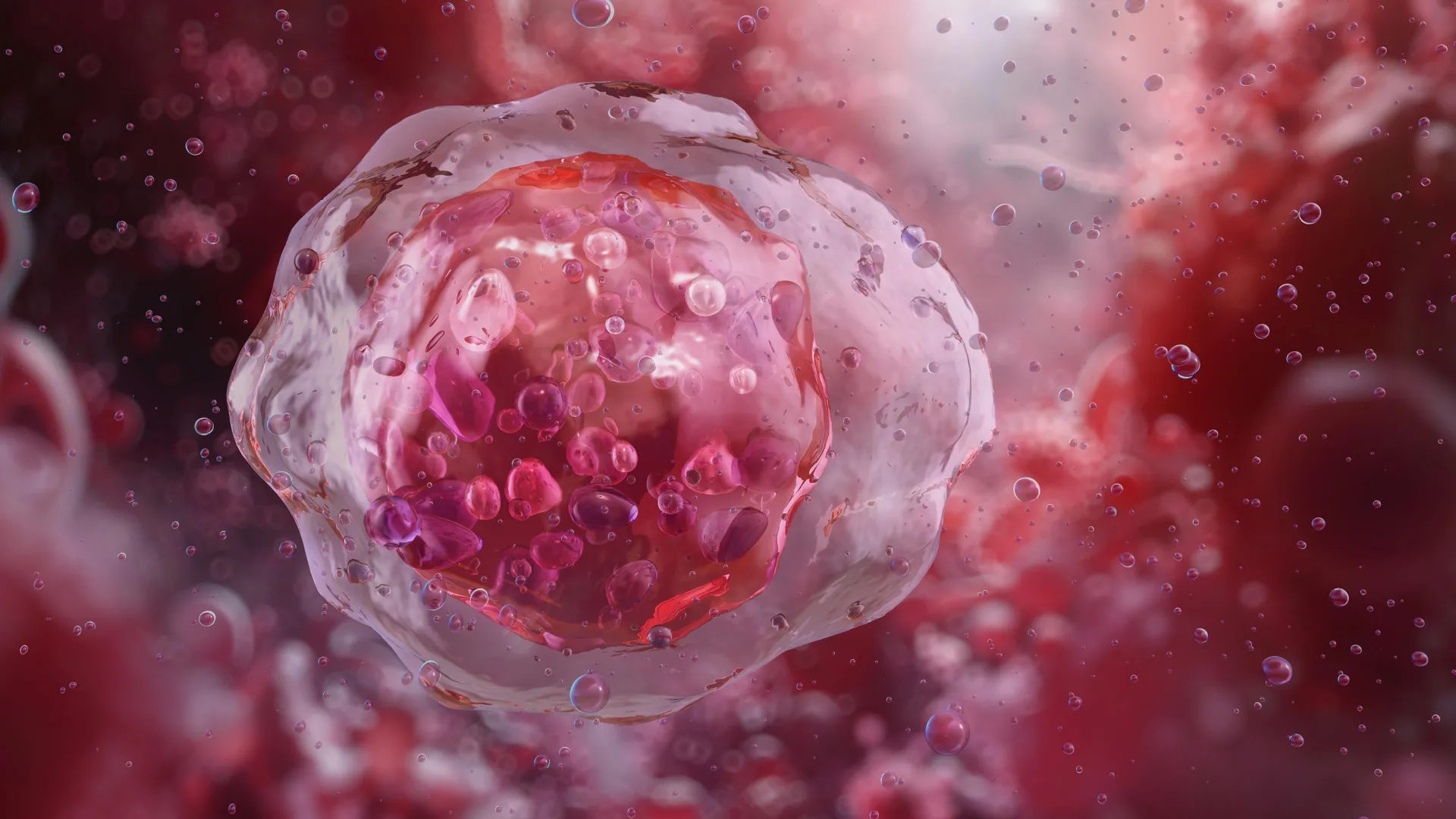
At the heart of CytoDiffusion’s sophisticated operation lies its foundation in generative artificial intelligence—a class of AI models famously exemplified by image synthesis tools such as DALL-E. Unlike conventional AI systems that primarily function by classifying input data into predefined categories based on overt patterns, CytoDiffusion delves much deeper. It meticulously analyzes the minute, often imperceptible, variations in cellular appearance when viewed under a microscope. This nuanced approach allows the system to comprehend the complete continuum of what constitutes a "normal" blood cell, enabling it to reliably flag even the rarest or most subtle cellular deviations that could signify the onset or presence of disease. This methodological distinction is critical; instead of merely recognizing anomalies, the system learns the underlying statistical distribution of how blood cells appear, making it adept at identifying anything that falls outside this learned distribution.
The formidable challenge of accurately diagnosing blood disorders hinges significantly on the ability to identify subtle differences in the size, shape, and internal structure of blood cells. Mastering this skill demands years of rigorous training and extensive practical experience for medical professionals. Even highly seasoned hematologists frequently encounter complex cases where consensus on diagnosis can be elusive, highlighting the inherent subjectivity and potential for variability in human interpretation. This diagnostic bottleneck is amplified by the sheer volume of data involved; a typical blood smear can contain thousands upon thousands of individual cells, rendering a comprehensive, cell-by-cell manual examination an impractical, if not impossible, undertaking within standard clinical workflows.
Dr. Suthesh Sivapalaratnam, a co-senior author from Queen Mary University of London, vividly recalls the formidable pressures faced by clinicians in this domain. He recounts his own experiences as a junior hematology doctor, frequently confronted with an overwhelming backlog of blood films requiring analysis after long shifts. This strenuous reality instilled in him an early conviction that artificial intelligence possessed the potential to significantly outperform human capabilities in such demanding, high-volume tasks. Simon Deltadahl, the study’s first author from Cambridge’s Department of Applied Mathematics and Theoretical Physics, echoes this sentiment, emphasizing the human limitation: "Humans simply cannot inspect every single cell in a smear—it’s logistically unfeasible." He underscores CytoDiffusion’s potential to automate routine analyses, efficiently triage common cases, and precisely highlight any unusual findings for subsequent human review, thereby optimizing clinical efficiency and diagnostic accuracy.
The development of CytoDiffusion was predicated on an unparalleled volume of training data. Researchers meticulously curated and utilized a colossal dataset comprising over half a million blood smear images sourced from Addenbrooke’s Hospital in Cambridge. This monumental collection is recognized as the largest of its kind globally, encompassing a vast array of common blood cell types, alongside crucial examples of rare cells and features that have historically presented significant challenges for conventional automated diagnostic systems. By training on such a diverse and extensive dataset, the AI model was able to construct a comprehensive understanding of the full spectrum of blood cell appearances. This robust training regimen confers a crucial advantage: resilience to variations inherent in real-world clinical settings, such as differences across hospitals, varying microscopic equipment, and diverse staining techniques, while simultaneously sharpening its ability to detect uncommon or pathological cells with enhanced reliability.
When subjected to rigorous evaluation, CytoDiffusion demonstrated remarkable performance, particularly in its capacity to identify abnormal cells indicative of leukemia. The system exhibited a significantly higher sensitivity compared to existing diagnostic tools. Furthermore, it matched or even surpassed the performance of leading current models, notably achieving these results even when trained with substantially fewer examples. A particularly salient feature of CytoDiffusion is its ability to quantify its own confidence level in each prediction. This "metacognitive" capability—knowing what it knows and, crucially, what it doesn’t know—represents a profound advancement. "While its accuracy was marginally superior to human specialists, the true differentiator lay in its profound understanding of its own uncertainties," explained Deltadahl. "Our model would never assert certainty and subsequently be proven incorrect, a scenario that, on occasion, can occur with human diagnosticians."
Professor Michael Roberts, also a co-senior author from Cambridge’s Department of Applied Mathematics and Theoretical Physics, highlighted the comprehensive nature of the system’s validation. "We rigorously assessed our methodology against numerous real-world challenges frequently encountered by medical AI, including entirely novel images, data acquired from different instrumentation, and the intrinsic degree of uncertainty embedded within diagnostic labels," he stated. "This multifaceted evaluation framework offers a holistic perspective on model performance, which we believe will be invaluable to the wider research community."
Adding another layer of intrigue to CytoDiffusion’s capabilities, the research team discovered its proficiency in generating synthetic images of blood cells that are virtually indistinguishable from authentic specimens. In a compelling "Turing test" scenario, ten highly experienced hematologists were tasked with differentiating between real blood cell images and those fabricated by the AI. Astonishingly, their success rate was no better than random chance. "This finding was genuinely surprising to me," Deltadahl admitted. "These are individuals who dedicate their professional lives to examining blood cells, yet even they could not reliably tell the difference." This revelation underscores the generative AI’s profound understanding of cellular morphology and its potential for creating realistic synthetic data, which could be instrumental for training future AI models or for educational purposes.
Beyond its immediate diagnostic utility, the researchers are committed to fostering broader scientific advancement. As a pivotal component of this initiative, they are making their expansive dataset, encompassing over half a million peripheral blood smear images, publicly accessible. This represents the largest open-source collection of its kind globally. "By openly sharing this invaluable resource, our aspiration is to empower researchers across the globe to develop and rigorously test novel AI models, thereby democratizing access to high-caliber medical data and, ultimately, contributing to improved patient outcomes worldwide," Deltadahl articulated.
Despite these impressive advancements and the system’s demonstrable superiority in certain metrics, the research team unequivocally stresses that CytoDiffusion is not engineered to supplant the critical role of highly trained medical professionals. Instead, its design philosophy centers on augmenting clinical capabilities, acting as an intelligent assistant that can swiftly flag potentially concerning cases for expert review and efficiently process routine samples, thereby liberating clinicians to focus their invaluable expertise on the most complex and critical diagnoses.
Professor Parashkev Nachev from UCL, another co-senior author, eloquently articulated the broader vision: "The intrinsic value of healthcare AI resides not merely in replicating human expertise at a reduced cost, but rather in enabling a greater diagnostic, prognostic, and prescriptive capacity than either human experts alone or simplistic statistical models can achieve." He further elaborated, "Our research strongly suggests that generative AI will play a central role in realizing this mission, not only enhancing the fidelity of clinical support systems but also deepening their insight into the inherent limits of their own knowledge. This crucial ‘metacognitive’ awareness—the understanding of what one does not know—is fundamental to sound clinical decision-making, and here we have demonstrated that machines may, in fact, excel at it more consistently than humans."
The team acknowledges that ongoing research is essential to further refine CytoDiffusion, particularly in enhancing its processing speed and comprehensively validating its performance across more diverse patient populations. Such validation is critical to ensure both the universal accuracy and equitable application of the technology across varied demographic and clinical contexts. This groundbreaking work was made possible through the generous support of numerous organizations, including the Trinity Challenge, Wellcome, the British Heart Foundation, Cambridge University Hospitals NHS Trust, Barts Health NHS Trust, the NIHR Cambridge Biomedical Research Centre, NIHR UCLH Biomedical Research Centre, and NHS Blood and Transplant. The collaborative efforts were channeled through the Imaging working group within the BloodCounts! consortium, an ambitious initiative dedicated to advancing blood diagnostics globally through the innovative application of AI.
About the Author