
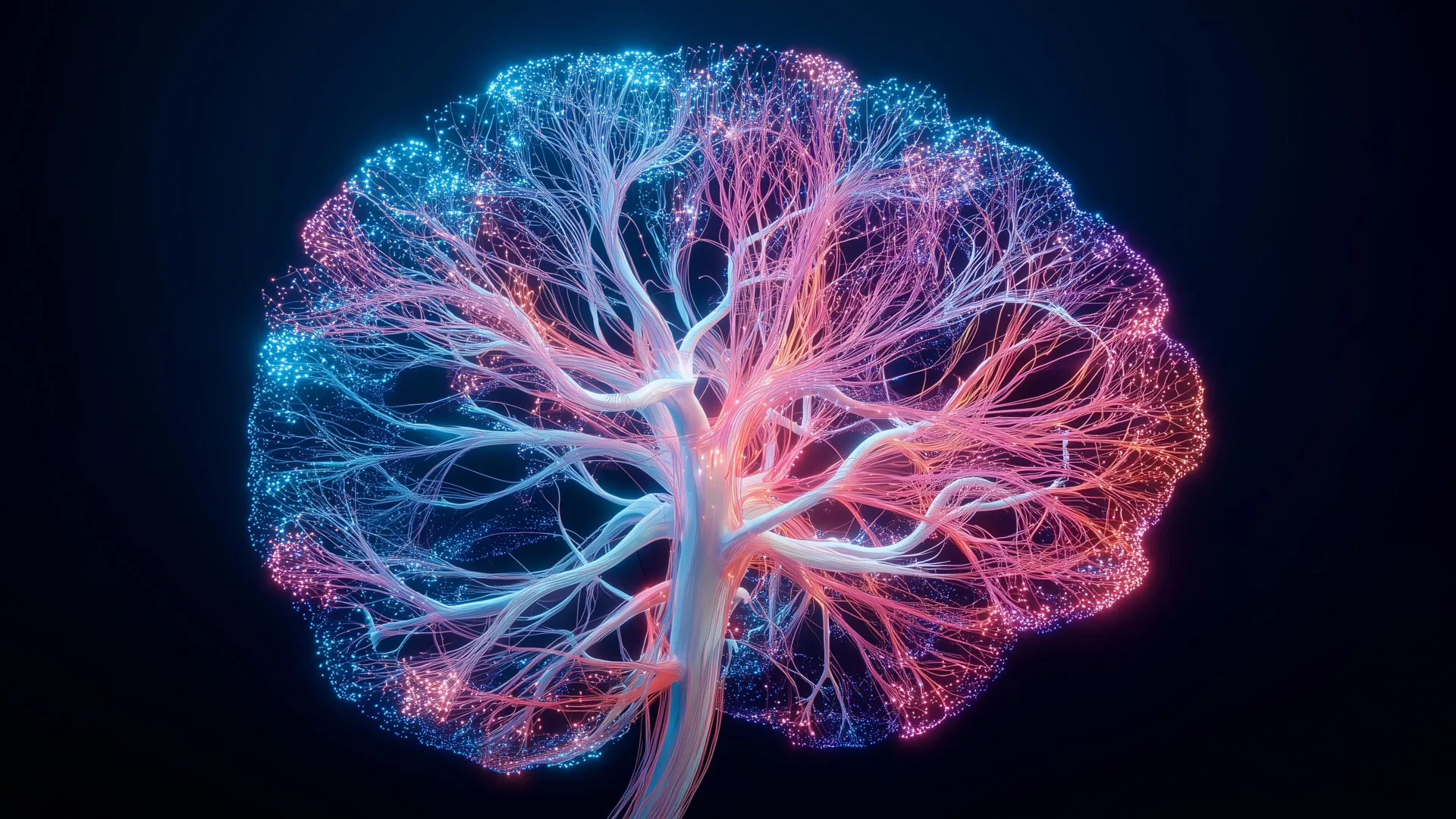
In a groundbreaking international research endeavor, neuroscientists Nicholas Hedger of the University of Reading and Tomas Knapen from the Netherlands Institute for Neuroscience and Vrije Universiteit Amsterdam have unveiled a profound revelation about human perception: the brain’s visual processing centers exhibit organizational principles remarkably akin to those governing touch, suggesting a fundamental, embodied connection between seeing and feeling. This discovery illuminates how visual input is transformed into tangible physical sensations, thereby contributing to our immersive, lived experience of reality. As Dr. Knapen aptly observes, this facet of human experience holds immense promise for advancements in artificial intelligence.
Consider a scenario where you witness a friend sustain a minor injury, such as a cut finger while engaged in a shared activity. The almost instantaneous recoil, the grimace, or the instinctive withdrawal of your own hand are not mere figments of imagination; they are manifestations of genuine neural activity occurring within the brain’s somatosensory cortex, the region dedicated to processing tactile information. This phenomenon prompts a compelling inquiry: how can the mere act of observing another person’s experience elicit a physical sensation of touch within oneself?
To unravel this intricate mechanism, a collaborative team of researchers from the United Kingdom, the United States, and institutions in Amsterdam—the VU, NIN, and KNAW—adopted an unconventional methodology: the analysis of cinematic content. Rather than relying on highly controlled laboratory experiments, the scientists opted to investigate brain responses during naturalistic viewing conditions, using excerpts from popular films like "The Social Network" and "Inception." The objective was to meticulously identify the neural systems responsible for enabling us to profoundly internalize visual stimuli.
The concept of "maps" within the brain refers to the organized distribution of neural information pertaining to the body and the surrounding environment. Within the somatosensory cortex, a highly systematic representation of the entire human body exists. One extremity of this neural map corresponds to sensations originating from the feet, while the opposite end processes tactile input from the head. These somatotopic maps are instrumental in the brain’s ability to precisely pinpoint the origin of sensory signals.
The discovery of analogous organizational maps within the visual cortex is particularly significant. It strongly suggests that the brain directly links incoming visual information to bodily sensations, establishing a deep-seated integration of sight and touch. Dr. Knapen highlighted the surprising extent of this finding, stating, "We discovered not one, or two, but a remarkable eight highly consistent maps within the visual cortex!" He further elaborated that the sheer number of these maps underscores the profound extent to which the visual brain communicates using the "language" of touch.
Crucially, these newly identified visual maps mirror the head-to-toe organization observed in the somatosensory cortex. This parallelism indicates that when we observe another individual, the brain structures this visual information in a manner strikingly similar to how it processes direct physical contact. This suggests that our visual perception of others inherently carries a dimension of embodied experience.
The existence of multiple somatotopic maps within the visual cortex naturally leads to questions about their functional roles. The researchers propose that each distinct map likely serves a unique purpose. Some maps appear to be specialized for the recognition of specific body parts, while others may be dedicated to determining the spatial location of those parts. Dr. Knapen acknowledged the possibility of additional functions yet to be uncovered, noting, "I believe there are many more purposes, but we simply haven’t had the opportunity to test them yet."
The specific map that becomes most active can be influenced by an individual’s attentional focus. For instance, if someone observes another person reaching for a coffee cup, their attention might be directed towards the hand’s action. Conversely, if their interest lies in the other person’s emotional state, their focus might shift to overall posture or facial expressions. The act of observing another person necessitates a multitude of visual interpretations of their bodily actions and states. The researchers posit that these maps are fundamental components of this intricate process.
While the presence of overlapping maps might seem counterintuitive from an efficiency standpoint, Dr. Knapen argues for the opposite. He explains that this redundancy allows the brain to integrate diverse types of information within a single neural space, facilitating dynamic translations of that information based on immediate relevance. This distributed processing mechanism likely enhances the brain’s capacity to adapt and respond to complex visual and social cues.
These findings have far-reaching implications across various scientific disciplines, including psychology, medicine, and technology. The identified body maps’ apparent involvement in emotional processing could significantly advance research in social psychology and clinical interventions. Dr. Knapen pointed out the potential benefits for individuals with autism spectrum disorder, who may experience challenges with such perceptual processing, stating, "Having this information could help us better identify effective treatments."
Furthermore, this research may shape the future trajectory of neurotechnology development. Current training paradigms for brain implants, which often instruct users to "try to think of a movement," could be expanded. If these embodied processes can be activated more broadly, it could unlock novel avenues for training and enhancing brain-computer interfaces.
Dr. Knapen also foresees substantial opportunities for artificial intelligence. He emphasizes that human bodies are intrinsically linked to our experiences and understanding of the world, a dimension largely absent in current AI systems that predominantly rely on text and video data. "Our work demonstrates the potential for very large, precision brain imaging datasets to fuel this development: a beautiful synergy between neuroscience and AI," he remarked. This research opens a new frontier for AI to incorporate a more embodied form of intelligence.
Despite the exciting technological and scientific possibilities, Dr. Knapen reiterated the deeply humanistic core of the research. He expressed his fundamental desire to comprehend the intricacies of human experience, concluding, "It truly feels as though we have just uncovered a central ingredient for it." This sentiment underscores the enduring quest to understand the essence of what it means to be human, a quest that this research significantly advances.
About the Author












