Timor-Leste’s Enduring Triumph: A Young Nation Eradicates Malaria, Setting a Global Precedent
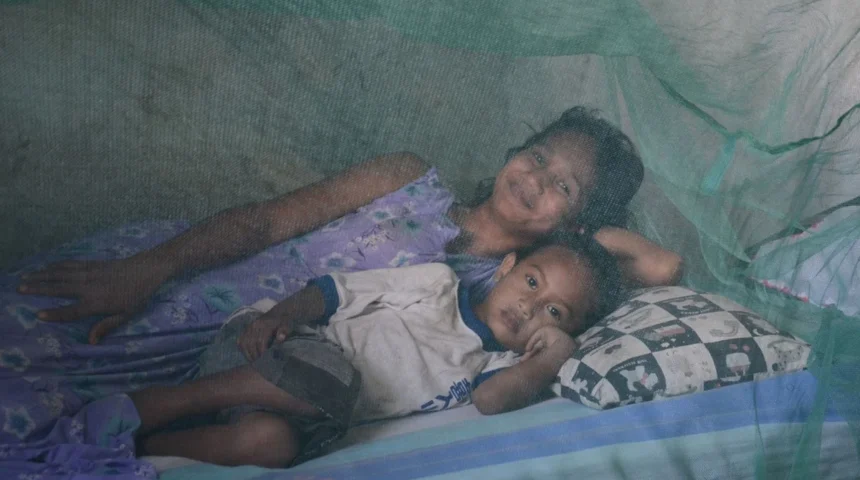
In a monumental public health victory, Timor-Leste has officially received confirmation from the World Health Organization (WHO) of its malaria-free status, marking a profound achievement for the Southeast Asian nation. This designation signifies the successful eradication of indigenous malaria transmission within its borders, a testament to decades of unwavering commitment, strategic interventions, and the resilience of its people. The announcement positions Timor-Leste as a beacon of what focused public health initiatives can accomplish, particularly for a country that emerged into independence less than a quarter-century ago.
Dr. Tedros Adhanom Ghebreyesus, the Director-General of the WHO, extended heartfelt commendations to the citizens and government of Timor-Leste for this significant milestone. He emphasized that the nation’s success powerfully demonstrates that the relentless advance of malaria can indeed be halted. This, he noted, is possible when robust political will converges with intelligently designed public health interventions, sustained domestic and international financial support, and the tireless dedication of health professionals. This comprehensive approach underscores a blueprint for other nations grappling with similar public health challenges.
This latest certification brings the global total of malaria-free countries and territories recognized by the WHO to 47. Within the WHO South-East Asia region, Timor-Leste now stands as the third country to earn this prestigious status, joining the ranks of Maldives, which achieved elimination in 2015, and Sri Lanka, certified in 2016. The rigorous process for WHO certification requires a country to provide irrefutable evidence that it has interrupted the chain of local malaria transmission throughout its entire territory for at least three consecutive years. This stringent criterion ensures the sustainability and credibility of the elimination claim.
Dr. Élia António de Araújo dos Reis Amaral, the Minister of Health for the Government of Timor-Leste, articulated the profound significance of this accomplishment, declaring, "We did it." She reflected on malaria as one of the nation’s most formidable and insidious adversaries, responsible for countless preventable deaths. The Minister paid tribute to the relentless efforts of health workers, the steadfast support of communities, and the collaborative spirit of partners like the WHO. She highlighted the dramatic reduction from over 223,000 cases to zero, emphasizing that this victory honors both the lives lost and the lives now safeguarded. Dr. Amaral stressed the imperative of continued vigilance and community engagement to prevent the re-entry of the disease, ensuring the permanence of this hard-won triumph.
Timor-Leste’s journey from a nation heavily burdened by malaria to one free of the disease is particularly striking given its recent history. After gaining full independence in 2002, the fledgling nation faced the monumental task of rebuilding its infrastructure, including a rudimentary health system. Malaria posed a significant and immediate threat, with clinically diagnosed cases soaring to a peak of more than 223,000 in 2006. Despite these formidable challenges, the government, through its Ministry of Health, swiftly prioritized malaria control, establishing the National Malaria Programme in 2003. This dedicated initiative was instrumental in planning, executing, and monitoring malaria control efforts across the nascent country.
The early years of the National Malaria Programme, initially staffed by only two full-time officers, were critical in laying the groundwork for future success. Their strong technical leadership, burgeoning managerial capacity, and meticulous attention to detail set a trajectory for progress. Within a few years, the country began implementing key diagnostic and treatment strategies. This included the introduction of rapid diagnostic tests (RDTs) for quicker identification of malaria parasites and the adoption of artemisinin-based combination therapy (ACT) as part of the National Malaria Treatment Guidelines, ensuring effective treatment for confirmed cases. Concurrently, free long-lasting insecticide-treated nets (LLINs) were systematically distributed to communities identified as being at the highest risk, a crucial step in vector control.
The momentum continued to build, and by 2009, with crucial support from the Global Fund to Fight AIDS, Tuberculosis and Malaria, Timor-Leste significantly scaled up its nationwide vector control initiatives. This involved a broad distribution of LLINs and the implementation of indoor residual spraying (IRS) in at-risk areas. Simultaneously, malaria diagnosis capabilities were expanded, utilizing both microscopy and RDTs at the point of care across all local health posts, ensuring broader access to accurate diagnosis even in remote regions.
A significant hurdle faced by Timor-Leste was the severe shortage of trained health workers and medical doctors. To address this, the government made substantial investments in developing its three-tier health system. This comprehensive structure comprises national hospitals, regional reference hospitals, community health centers (CHCs), and local health posts, strategically designed to ensure that the vast majority of residents could access healthcare services within an hour’s walk. Furthermore, in alignment with its policy on free universal healthcare, all citizens are provided with health services without charge at the point of care. To further extend reach into isolated communities, monthly mobile clinics and dedicated community outreach programs were established, bringing essential health services directly to rural populations.
The success story of Timor-Leste in combating malaria vividly underscores the indispensable role of robust national leadership and profound collaboration. The synergy between the Ministry of Health, the WHO, local communities, non-governmental organizations, various donor agencies, and multiple government sectors proved pivotal. A sophisticated, real-time integrated case-based surveillance system was implemented, facilitating rapid data collection and enabling immediate public health responses to any detected cases. Moreover, a cadre of extensively trained health workers ensures the timely detection and screening of malaria cases, with particular attention paid to border regions to prevent the re-introduction of the disease. These multifaceted, integrated efforts collectively paved the way for the nation to be officially recognized as malaria-free.
Dr. Arvind Mathur, the WHO Representative to Timor-Leste, characterized the certification as a defining national triumph. He attributed this success to courageous leadership, the relentless dedication of health workers, and the unwavering resolve of the Timorese people. Dr. Mathur highlighted that as a young nation, Timor-Leste maintained an acute focus on testing, treating, and swiftly investigating every potential case. He noted that ending transmission and sustaining zero deaths demands more than scientific knowledge; it requires sheer grit and determination. This victory, he concluded, provides enduring protection for current and future generations, serving as a powerful testament to what a determined nation can achieve against seemingly insurmountable odds.
The WHO’s certification process for malaria elimination is meticulously governed. The ultimate decision to grant malaria-free status rests with the WHO Director-General, who acts upon a recommendation provided by the Technical Advisory Group on Malaria Elimination and Certification, further validated by the Malaria Policy Advisory Group. This rigorous review process ensures that the declaration of elimination is based on comprehensive data and sustained efforts, providing confidence in the long-term sustainability of the achievement. For Timor-Leste, this certification is not merely an endpoint but a powerful affirmation of its capacity to overcome significant health challenges and build a healthier future for its citizens.

Related News