
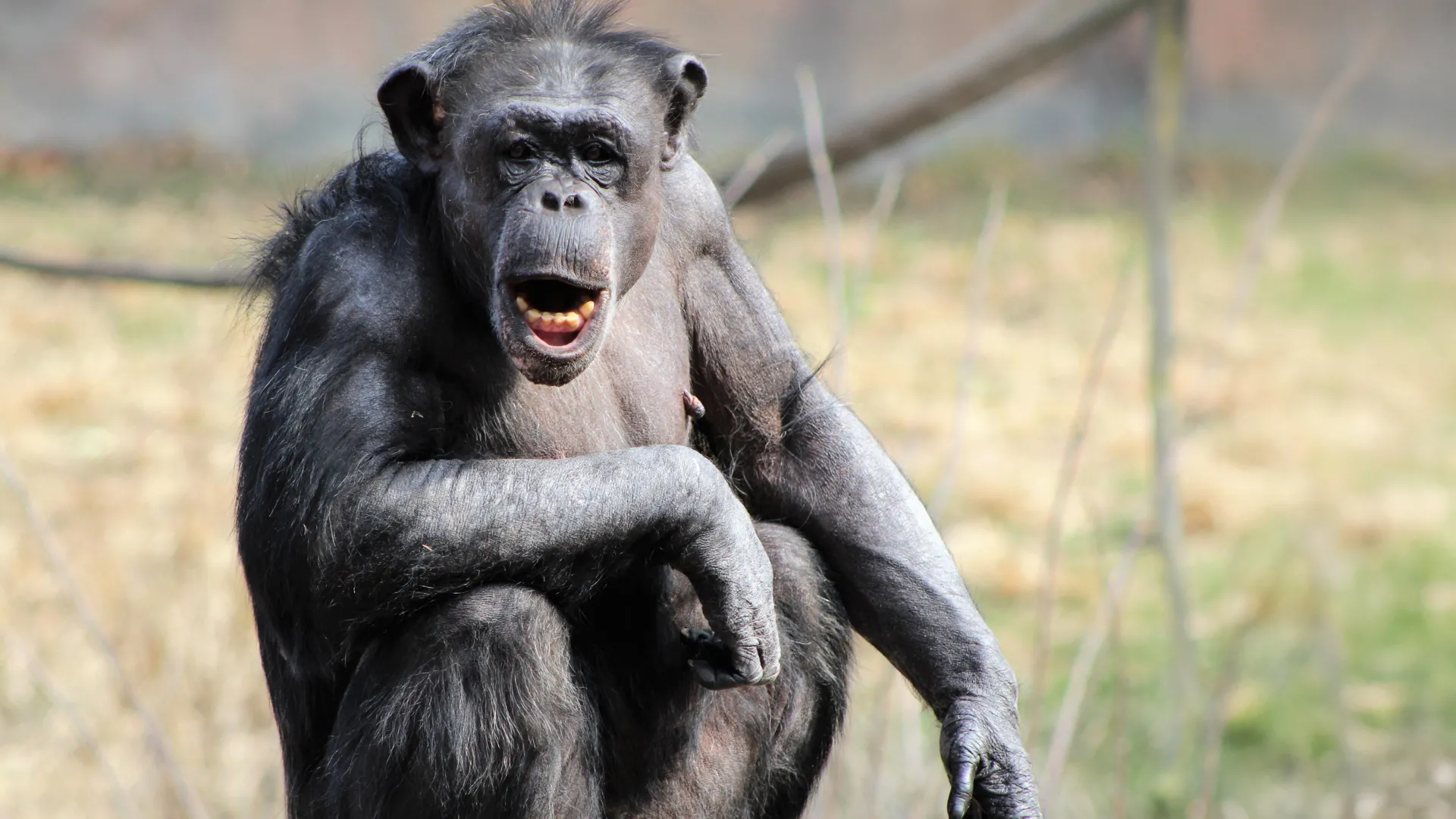
Recent investigations spearheaded by the University of Geneva (UNIGE) have unveiled a surprising neural phenomenon: specific regions within the human auditory cortex exhibit robust responses to the vocalizations of chimpanzees, a discovery that challenges previous assumptions about the exclusivity of human voice processing. This research, published in the esteemed journal eLife, posits that certain sub-divisions of the auditory processing centers in the brain may possess an innate or highly developed sensitivity to the calls of particular primate species, particularly those closest to us on the evolutionary tree. The implications of this finding are far-reaching, offering novel avenues for exploring the evolutionary trajectory of vocal recognition and its potential connections to the very origins of human language.
The intricate tapestry of human social interaction is woven with the threads of vocal communication, and a substantial portion of the human auditory cortex is dedicated to deciphering these complex sonic signals. A fundamental question that has long intrigued neuroscientists and evolutionary biologists is whether these sophisticated voice recognition capabilities are a uniquely human development or if they possess deeper evolutionary roots, shared with our primate ancestors. To delve into this evolutionary puzzle, a team of researchers from UNIGE’s Faculty of Psychology and Educational Sciences embarked on a sophisticated comparative study, meticulously designed to examine vocal processing across species. By analyzing how the human brain processes the vocalizations of species closely related to us, such as chimpanzees, bonobos, and macaques, the scientists aimed to pinpoint shared neural traits that might have predated the emergence of articulate language. This comparative approach provides a crucial window into how the foundational neural mechanisms for vocal communication may have begun to form, potentially long before the advent of spoken language as we understand it.
The experimental design involved a cohort of 23 human volunteers who were exposed to a carefully curated selection of vocal sounds originating from four distinct species. Crucially, human voices were included as a baseline or control stimulus to establish a point of comparison. Chimpanzee calls were specifically chosen for inclusion in the study due to the profound genetic and acoustic similarities that exist between humans and this primate species. Bonobo vocalizations were also incorporated into the experimental matrix, despite their often more melodious and bird-like acoustic qualities, to explore a different facet of primate vocal diversity. Furthermore, the calls of macaques were integrated into the study, representing a species that is evolutionarily and acoustically more distant from humans, thereby allowing for a broader comparative analysis. The researchers employed functional magnetic resonance imaging (fMRI) technology to meticulously map and measure neural activity across the auditory cortex as participants listened to these diverse vocal stimuli. Leonardo Ceravolo, a research associate at UNIGE’s Faculty of Psychology and Educational Sciences and the lead author of the study, articulated the core objective: "Our intention was to verify whether a subregion sensitive specifically to primate vocalizations existed."
The empirical findings emanating from this rigorous investigation largely corroborated the researchers’ initial hypotheses. A particular area within the auditory cortex, identified as the superior temporal gyrus, which is widely recognized for its pivotal role in processing sounds associated with language, musical appreciation, and the interpretation of emotional cues, displayed a marked increase in neural activation when participants were presented with certain primate calls. The study’s most compelling revelation, however, was the distinctiveness of this response when participants encountered chimpanzee vocalizations. "When participants heard chimpanzee vocalizations, this response was clearly distinct from that triggered by bonobos or macaques," Ceravolo elaborated. This differential activation pattern is particularly noteworthy when considering the close evolutionary kinship between humans and bonobos, who are genetically as proximate to us as chimpanzees are. Despite this close genetic relationship, the acoustic structures of bonobo vocalizations diverge significantly from those of chimpanzees. The observed neural response pattern thus suggests that the human brain’s reaction to primate calls is influenced not only by evolutionary relatedness but also by the degree of acoustic similarity in the vocalizations themselves.
This groundbreaking discovery opens up exciting new avenues for understanding the evolutionary development of the neural underpinnings of communication. It strongly suggests that certain neural pathways within the human brain may have retained a remarkable sensitivity to the calls of our closest primate relatives, a sensitivity that has persisted through evolutionary time. "We already knew that certain areas of the animal brain reacted specifically to the voices of their fellow creatures," Ceravolo observed. "But here, we show that a region of the adult human brain, the anterior superior temporal gyrus, is also sensitive to non-human vocalizations." This finding lends significant support to the hypothesis that humans and great apes share fundamental vocal processing abilities that predate the emergence of spoken language. Moreover, these insights could potentially illuminate the developmental processes by which voice recognition is acquired early in life. For instance, this line of research might offer crucial clarifications regarding how human infants begin to recognize familiar voices even before birth, while still developing within the womb, suggesting a deeply ingrained, perhaps even ancestral, capacity for vocal perception.
The intricate architecture of the auditory cortex, a region of the brain responsible for processing auditory information, is sculpted by a lifetime of experiences, yet it also appears to be pre-programmed with sensitivities shaped by our evolutionary past. The UNIGE study illuminates this duality by demonstrating that specific subregions, notably within the superior temporal gyrus, exhibit a preferential response to primate vocalizations. This area is not merely a passive receiver of sound; it is intricately involved in higher-order auditory processing, including the decoding of speech and the perception of emotional nuances within vocalizations. The finding that this region lights up in response to chimpanzee calls suggests a functional specialization that extends beyond purely human communication, hinting at an ancestral auditory landscape that influenced the development of our own sophisticated vocal processing capabilities.
The evolutionary journey of vocal communication is a complex narrative, and this research adds a significant chapter to our understanding. It challenges the notion that the human brain’s auditory system evolved in isolation, exclusively for the purpose of processing human speech. Instead, it proposes that the foundations of our auditory processing were laid much earlier, shaped by the need to interpret the vocalizations of our primate ancestors and relatives. This ancient sensitivity might have provided a crucial advantage, enabling early humans to better understand social cues, detect threats, and foster group cohesion within their environments. The specific activation pattern observed in response to chimpanzee vocalizations, distinct from that of bonobos or macaques, further underscores the nuanced interplay between evolutionary proximity and acoustic similarity in shaping neural responses.
The implications for the study of language acquisition are particularly profound. If the human brain retains a latent sensitivity to primate calls, it suggests that the neural circuitry supporting language may have been built upon a pre-existing framework for processing vocalizations. This could explain why infants are so adept at learning language, rapidly developing the ability to distinguish between phonemes and recognize familiar voices within their first few months of life. The in-utero recognition of maternal voice, a phenomenon well-documented in developmental psychology, could be an early manifestation of this innate auditory processing capacity, a capacity that is, in part, rooted in our shared evolutionary heritage with other primates.
Furthermore, this research opens up exciting possibilities for comparative neuroscience and primatology. By using the human brain as a model, scientists can gain new insights into the auditory processing capabilities of other primates. Understanding how their brains process vocalizations, and how these patterns compare to human responses, could shed light on the evolution of communication systems across the primate order. This comparative approach is essential for reconstructing the evolutionary history of vocal communication and for understanding the unique adaptations that have led to the development of human language.
The study’s methodology, employing fMRI to capture real-time brain activity, provides a powerful tool for exploring these complex neural processes. The ability to precisely identify which brain regions are activated by specific auditory stimuli allows researchers to move beyond theoretical speculation and gather empirical evidence for their hypotheses. The careful selection of vocal stimuli, encompassing a range of evolutionary and acoustic distances, was critical in isolating the specific neural signatures associated with different primate vocalizations.
In conclusion, the findings from the University of Geneva represent a significant advancement in our understanding of the human brain’s auditory processing capabilities and their evolutionary origins. The unexpected sensitivity of the human auditory cortex to chimpanzee vocalizations not only deepens our appreciation for our evolutionary kinship with other primates but also offers a compelling new perspective on the development of voice recognition and the very foundations of human language. This research serves as a powerful reminder that the human brain is a product of millions of years of evolutionary history, carrying within it echoes of its ancestral past.
About the Author












