As individuals progress into their midlife and beyond, typically past the age of 50 or 55, the pursuit of optimal physical fitness, particularly concerning core strength and abdominal fat reduction, often necessitates a thoughtful re-evaluation of exercise methodologies. While conventional wisdom frequently highlights static core exercises, a growing body of expert opinion suggests that dynamic, full-body movements, particularly specialized walking drills, can offer superior benefits for this demographic. These innovative approaches not only target the abdominal region more effectively than traditional static holds but also contribute significantly to overall metabolic health, balance, and functional longevity, all while being remarkably joint-friendly.
The physiological landscape of the human body undergoes several transformations with age. Muscle mass, known as sarcopenia, can begin to decline, metabolic rates tend to slow, and hormonal shifts often lead to a redistribution of fat, with an increase in visceral fat around the abdomen. This visceral fat, situated deep within the abdominal cavity, is not merely an aesthetic concern; it is metabolically active and linked to an elevated risk of various health conditions, including cardiovascular disease, type 2 diabetes, and certain cancers. Consequently, exercise strategies for mature adults must be designed to combat these age-related changes effectively, promoting both fat loss and the maintenance of lean muscle mass, alongside enhancing functional capabilities.
Core strength, often mistakenly equated solely with visible abdominal muscles, encompasses a much broader array of muscles that stabilize the spine and pelvis, facilitating movement and transferring power throughout the body. A robust core is fundamental for good posture, balance, injury prevention, and the efficient execution of everyday activities. Therefore, any fitness regimen aiming to improve the midsection should prioritize this holistic strengthening.

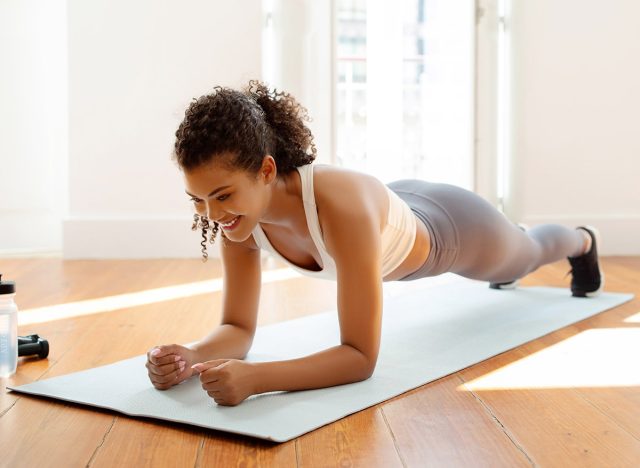
Many fitness enthusiasts, regardless of age, turn to exercises like planks for core development. Planks are undoubtedly valuable for cultivating static core stability and isometric strength, engaging multiple muscle groups to maintain a rigid, supported position. They teach the body to resist movement and are excellent for developing endurance in the deep abdominal muscles. However, when the primary objective shifts to reducing abdominal fat and significantly boosting caloric expenditure, particularly for individuals in their later years, the limitations of static exercises become more apparent. Michelle MacDonald, CSCS, and Founder at The Wonderwomen, emphasizes this distinction, noting that while planks are effective for overall body stability, "they are not effective for burning calories." She further elaborates that for those over 45, abdominal fat reduction, and indeed overall fat reduction, responds most favorably to physical activities that elevate total body energy expenditure and recruit large muscle groups in a dynamic fashion.
This is where specialized walking drills emerge as a powerful, yet often underestimated, alternative. Unlike static exercises, these dynamic movements engage the entire kinetic chain, challenging balance and coordination while simultaneously accelerating calorie burn, improving posture, and enhancing insulin sensitivity – a critical factor in metabolic health. The beauty of walking, in its various modified forms, lies in its accessibility and low-impact nature, making it an ideal choice for individuals who may experience joint pain or arthritis, which can be common in older adults. By integrating intelligent walking techniques into a regular routine, mature adults can foster a more dynamic core, shed stubborn abdominal fat, and significantly improve their overall physical resilience.
Here are four dynamic walking exercises, endorsed by fitness experts, that offer comprehensive benefits for core strength and abdominal fat reduction, particularly for those over 50:
1. Backward Walking: Enhancing Proprioception and Muscle Engagement
Often overlooked, walking backward, or retrowalking, is a profoundly effective exercise with multifaceted benefits. It fundamentally shifts the biomechanical demands placed on the lower body and core. Instead of relying predominantly on the hamstrings and glutes for propulsion, backward walking significantly activates the quadriceps muscles, which are crucial for knee stability and power. Furthermore, this unusual movement pattern presents a substantial challenge to balance and coordination, demanding heightened proprioceptive awareness—the body’s sense of its position in space. This heightened sensory input contributes positively to brain health by engaging neural pathways responsible for spatial awareness and motor control.
MacDonald highlights that backward walking is "one of the most researched yet underrated exercises." Beyond its impact on muscle activation and brain function, it also confers benefits for knee health by strengthening supporting musculature and improving overall walking mechanics. Crucially for fat loss, it burns more calories than forward walking at the same pace due to the increased effort required for coordination and muscle recruitment. To safely incorporate this, MacDonald recommends starting cautiously with two 10-minute sessions per week, gradually increasing duration as comfort and proficiency improve. Performing this on a clear, flat surface initially is advisable to prevent falls.
2. Uneven Surface Walking: Cultivating Stability and Neuromuscular Control
The modern world often confines our physical activity to predictable, flat surfaces, whether sidewalks, paved roads, or gym floors. However, intentionally seeking out varied terrains, such as natural hiking trails, undulating paths, or even cobblestone streets, can dramatically amplify the benefits of walking. This form of "uneven surface walking" transforms a simple stroll into a complex neuromuscular challenge.
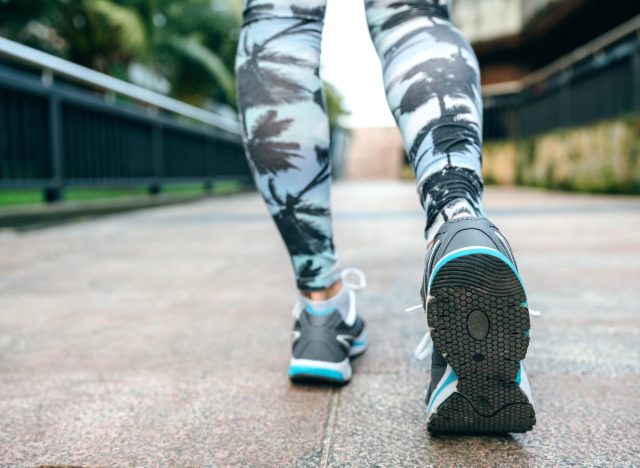
As MacDonald explains, traversing uneven ground compels the body to make "small but significant adjustments from the hips, knees, and upper body" with every step. This continuous micro-adjustment recruits a wider array of stabilizing muscles throughout the core, hips, and ankles that might remain dormant on flat surfaces. From a fat-loss perspective, this constant adaptive effort escalates overall muscle engagement and, consequently, energy expenditure. More importantly, from a longevity and functional fitness standpoint, regularly challenging these stabilizing systems markedly improves balance and agility, thereby reducing the risk of falls, which are a major concern for older adults. Integrating 20 minutes of uphill walking on a trail one to two times per week can yield substantial improvements in strength, stability, and caloric burn.
3. Load-Carrying Walking: Building Functional Strength and Boosting Metabolism
Incorporating external resistance into walking, known as load-carrying walking, is a highly effective strategy for total-body conditioning and core strengthening. This can be achieved through various methods, such as wearing a weighted vest, or by performing a farmer’s carry or suitcase carry with dumbbells, kettlebells, or even a heavy duffle bag. This approach is highly favored by many strength coaches for its dual benefits of calorie expenditure and profound core training.
The efficacy of load-carrying walking stems from the body’s necessity to dynamically counteract the added weight. When carrying an uneven load (as in a suitcase carry where weight is on one side), the core musculature, particularly the obliques and deep stabilizers, must work intensely to resist lateral flexion and rotation, preventing the body from leaning or collapsing to one side. With a more balanced load, like a weighted vest or farmer’s carry with weights in both hands, the entire core, back muscles, and glutes are heavily engaged to maintain upright posture and stability against the downward force. This robust engagement of large muscle groups significantly increases energy expenditure, making it far more potent for burning calories and building "real-world" strength than static exercises. MacDonald recommends completing six sets of 20 yards with an uneven load, switching sides for each set, or utilizing a weighted duffle bag if specialized free weights are unavailable. This exercise not only sculpts the midsection but also fortifies the entire posterior chain, vital for posture and daily function.

4. Incline Interval Walking: Maximizing Fat Oxidation with Minimal Impact
High-intensity interval training (HIIT) has long been lauded for its effectiveness in promoting fat loss and improving metabolic markers. However, traditional HIIT, which often involves running or jumping, can be strenuous on the joints, making it less suitable for many mature adults. Incline interval walking offers an intelligent, joint-friendly alternative, delivering similar metabolic advantages. This method involves alternating periods of high-intensity walking on an incline with periods of active recovery at a slower pace.
As MacDonald explains, research consistently demonstrates that "intervals of high intensity and increased muscle recruitment are superior for fatty acid oxidation and for improving insulin sensitivity." By introducing an incline, whether on a treadmill or a natural hill, the effort required intensifies significantly without needing to increase speed to a running pace. This boosts heart rate and engages the leg and glute muscles more profoundly. The interval structure then allows for periods of recovery, making the workout manageable and repeatable while still reaping the benefits of increased calorie burn and improved metabolic function. For individuals over 45, a 1:2 ratio of high-intensity work to active recovery is generally recommended. For instance, walk at a challenging incline for one minute (at a pace where holding a conversation is difficult), followed by two minutes at a slower, recovery pace to lower the heart rate. Begin with 15 to 18 minutes of this routine, progressively building up to 30 minutes as fitness improves.
In conclusion, for mature adults aiming to achieve a stronger core and reduce abdominal fat, a paradigm shift from solely static exercises to dynamic, integrated walking drills offers a more effective and sustainable pathway. Michelle MacDonald succinctly summarizes the rationale: "These walking exercises are effective because they engage the entire body, challenge balance and coordination, strengthen the core, and elevate heart rate in ways your body registers as meaningful stress." Evidence unequivocally supports that whole-body exercises incorporating resistance and varied intensity are more beneficial than static or low-effort movements for enhancing body composition and metabolic health in midlife adults. By embracing these innovative walking strategies, individuals can unlock a powerful, low-impact route to a healthier, more functional, and leaner physique, well into their golden years.
About the Author