As individuals progress through their fifth decade and beyond, many observe a noticeable decline in the firmness and definition of their upper arms. This common phenomenon, often attributed simply to "sagging," is far more complex than just a weakening of the biceps. It stems from a confluence of physiological changes, including age-related muscle loss, known as sarcopenia, and reductions in skin elasticity and collagen production. Addressing this requires a holistic approach that targets the entire upper arm complex—specifically the triceps, deltoids, and supporting muscles of the upper back—rather than focusing on isolated muscle groups. Traditional exercises, such as repetitive bicep curls, frequently fall short in delivering comprehensive results, as they primarily engage a single, smaller muscle while neglecting the broader muscular architecture crucial for both aesthetic firmness and functional strength.
A highly effective and increasingly recognized methodology for counteracting these age-related changes involves chair-based training. This innovative approach leverages the stability and support of a chair to facilitate movements that are not only safer for aging joints but also more conducive to deep muscle engagement and sustained tension. Unlike conventional standing exercises that might introduce balance challenges or place undue stress on the lower back, knees, or ankles, seated movements allow exercisers to concentrate solely on the target musculature. This focus minimizes momentum, ensuring that the muscles themselves perform the work, leading to sharper control, enhanced stability, and more efficient muscle recruitment where it is most needed. For those seeking to rebuild lost muscle tone, improve arm shape, and bolster overall upper body function without the risks associated with heavy lifting or dynamic standing maneuvers, chair-supported exercises offer a compelling solution.
The benefits of incorporating chair-assisted movements into a fitness routine extend well beyond superficial aesthetics. For mature adults, maintaining robust upper body strength is paramount for preserving independence and quality of life. Everyday tasks, from lifting groceries and reaching for objects on high shelves to pushing open heavy doors or getting up from a seated position, rely heavily on the strength and coordination of the arms, shoulders, and back. Chair-based exercises cultivate this functional strength by engaging muscles in patterns that mimic real-life movements, reinforcing neural pathways and improving neuromuscular control. Furthermore, by emphasizing controlled, deliberate motions, these exercises can significantly improve joint health. They allow for a full range of motion without excessive strain, thereby enhancing flexibility and reducing stiffness in the shoulders, elbows, and wrists—areas frequently affected by age-related wear and tear. The continuous time under tension inherent in many seated movements also promotes muscular endurance, a critical component for sustaining physical activity throughout the day.
The strategic selection of specific chair exercises is key to achieving optimal results. These movements are designed to target the posterior and lateral aspects of the upper arm and shoulder girdle, which are often the primary contributors to a less toned appearance. The following five exercises exemplify this comprehensive approach, each meticulously crafted to maximize muscle engagement while prioritizing joint safety and accessibility.
1. The Seated Triceps Press-Back
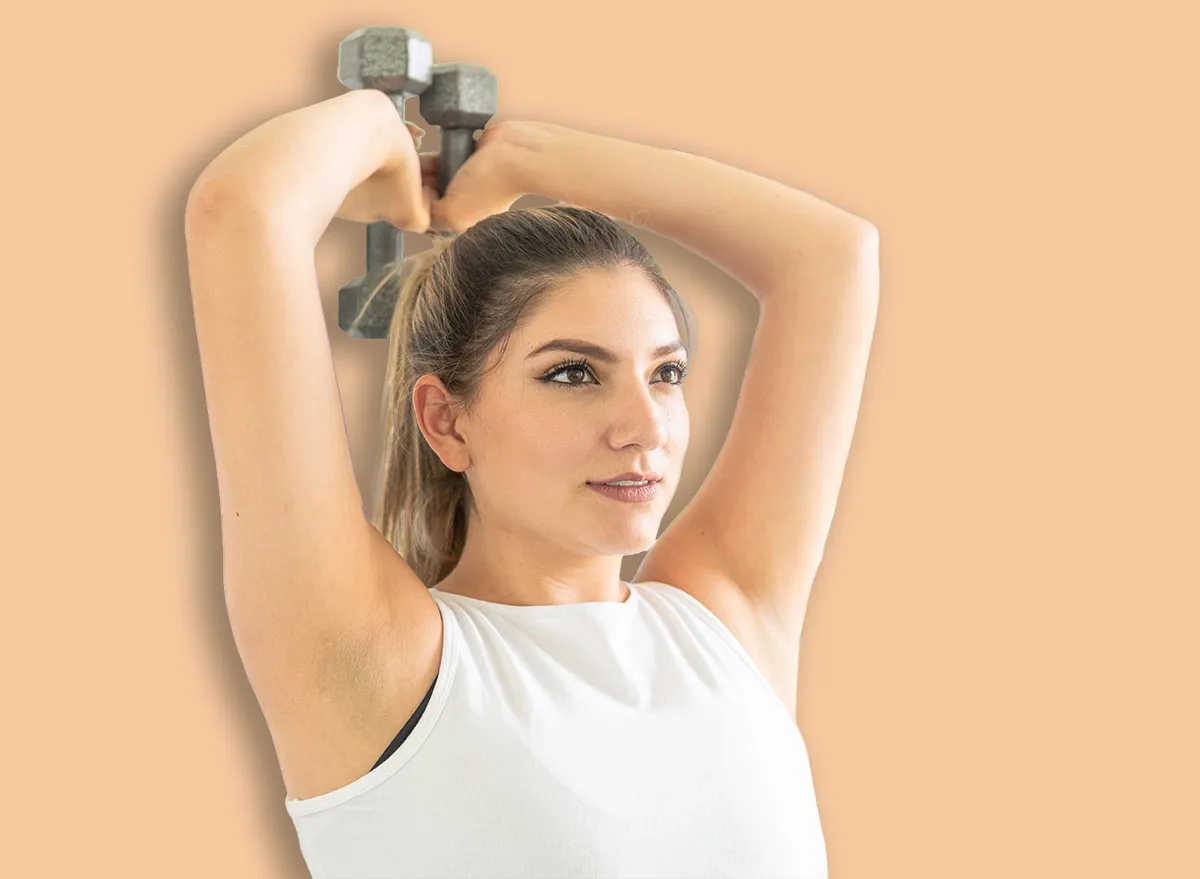
The triceps brachii, located on the back of the upper arm, is a three-headed muscle responsible for extending the elbow. It is often the primary area where individuals notice a lack of firmness. Many fitness programs inadvertently neglect this muscle’s full range of motion or fail to challenge it effectively. The Seated Triceps Press-Back directly addresses this by demanding sustained tension throughout the movement. Performed while seated with an upright torso, this exercise isolates the triceps by removing the assistance of hip or spinal momentum. The chair’s support allows for an intense focus on elbow extension and shoulder stability, ensuring that the triceps bears the brunt of the load. This deliberate, slow extension not only builds tension in the muscle fibers but also promotes an increase in muscle density, which translates to a firmer appearance where skin might otherwise seem loose. For individuals over 50, precise form is crucial; the seated position helps eliminate compensatory movements, guaranteeing that the target muscles are effectively stimulated without undue strain on the neck or lower back. Utilizing light dumbbells or even bodyweight resistance, this movement can feel surprisingly challenging, underscoring its efficacy in rebuilding muscular integrity.
2. The Overhead Arm Reach and Pull
Achieving overall arm definition, particularly around the shoulders, necessitates more than just targeting the triceps. It requires robust shoulder stability and integrated triceps strength, especially in the vertical plane. The Overhead Arm Reach and Pull pattern uniquely loads the arms in a manner infrequently challenged by everyday activities, particularly as people tend to reduce overhead lifting with age. With the spine safely supported and stacked by the chair, the arms are compelled to perform the entire range of motion. Each repetition involves a controlled stretch of the triceps as the arms extend overhead, followed by a powerful contraction as they pull back down. This unique stretch-to-contract dynamic powerfully engages the muscles without imposing excessive stress on the joints. Consistent execution of this exercise not only refines the shape of the arms but also reinforces crucial shoulder mechanics, significantly contributing to the prevention of pain and stiffness in the shoulder complex, a common complaint among older adults. It fosters a sense of resilience in the shoulder girdle, preparing it for diverse functional demands.
3. The Chair-Supported Push-Away
Functional strength often involves pushing movements, and the Chair-Supported Push-Away provides an excellent, joint-friendly alternative to traditional push-ups. This exercise ingeniously mimics the benefits of a push-up pattern without requiring floor work or placing undue strain on the wrists, elbows, or lower back. By leaning into the chair, the emphasis is strategically shifted onto the triceps and shoulders. Unlike bicep curls, which are primarily concentric (muscle shortening), the push-away demands that the arms stabilize the body while simultaneously generating force. This comprehensive engagement is precisely how functional strength is developed, preparing the upper body for practical tasks like pushing a door or moving furniture. The slow tempo and angled position ensure that the muscles remain under constant load throughout the movement, a superior method for building lasting firmness compared to brief, isolated lifts. Regular practice of this exercise contributes to tightening the entire upper arm region while simultaneously enhancing pressing strength, translating directly into greater ease with daily activities.
4. The Seated Lateral Lift Hold
A significant contributor to the perceived "softness" on the sides of the upper arms is often the underdevelopment or neglect of the shoulder stabilizers, particularly the medial deltoid. The Seated Lateral Lift Hold specifically targets this area. Instead of relying on momentum from swinging the arms, this exercise involves lifting the arms laterally and holding them in a raised position. This isometric contraction keeps the shoulders and upper arms under sustained tension, which is a critical stimulus for muscle development and firmness, especially in the mature body. The chair’s role in eliminating leg drive ensures that the arms and shoulder girdle are exclusively responsible for the work, preventing compensatory movements from the lower body. Isometric holds are particularly beneficial for aging joints because they build endurance and definition without requiring heavy loads, thus minimizing the risk of injury. This combination proves exceptionally effective for improving arm shape and contributing to better overall posture by strengthening the muscles that support the shoulder girdle.
5. The Chair Cross-Body Pulls
Achieving truly firm and functionally balanced arms requires more than just pushing strength; it also demands robust pulling capabilities. The Chair Cross-Body Pulls engage the often-overlooked posterior deltoids, rhomboids, and latissimus dorsi—muscles on the back of the shoulders and upper back that tend to weaken with age and contribute to a rounded posture and a less toned appearance. This exercise challenges coordination, control, and tension across the entire upper-arm and upper-back kinetic chain. The seated position plays a vital role by locking the torso in place, thereby preventing momentum from assisting the movement. Each pull is performed against resistance, tightening muscles through a controlled rotation and contraction. This not only builds strength but also reinforces the crucial balance between the anterior (front) and posterior (back) muscles of the upper body, an aspect that isolated bicep curls entirely fail to address. Cultivating this muscular equilibrium is fundamental for long-term arm firmness, enhanced shoulder health, and improved overall posture, making everyday movements feel lighter and more fluid.
For individuals embarking on or continuing an exercise regimen in their later years, a few general principles are essential. Always begin with a gentle warm-up to prepare the muscles and joints, and conclude with a cool-down period that includes stretching. Progressive overload, which means gradually increasing the challenge over time, is key to continued progress. This can be achieved by using light dumbbells, resistance bands, increasing the number of repetitions or sets, or performing movements with a slower, more controlled tempo. Listening intently to one’s body and avoiding any movements that cause pain is paramount. Consistency, rather than sporadic high-intensity workouts, yields the most sustainable and beneficial results. Furthermore, adequate hydration and a nutrient-rich diet that supports muscle repair and growth are indispensable components of any effective fitness plan.
In conclusion, the pursuit of toned, strong, and resilient upper arms after age 50 does not necessitate high-impact exercises or heavy weights that could strain delicate joints. Instead, a thoughtful, comprehensive approach utilizing chair-assisted exercises offers a safe, accessible, and remarkably effective pathway. By specifically targeting the triceps, deltoids, and supporting upper back muscles, these movements foster not only improved aesthetic definition but also significant enhancements in functional strength, joint health, and overall postural integrity. Embracing this holistic training philosophy empowers mature individuals to cultivate lasting upper body vigor, ensuring greater independence and a better quality of life.
About the Author