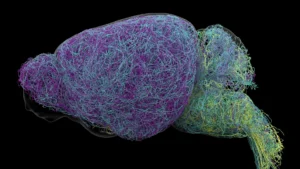
Scientists discover the hidden brain switch that assigns bees their jobs
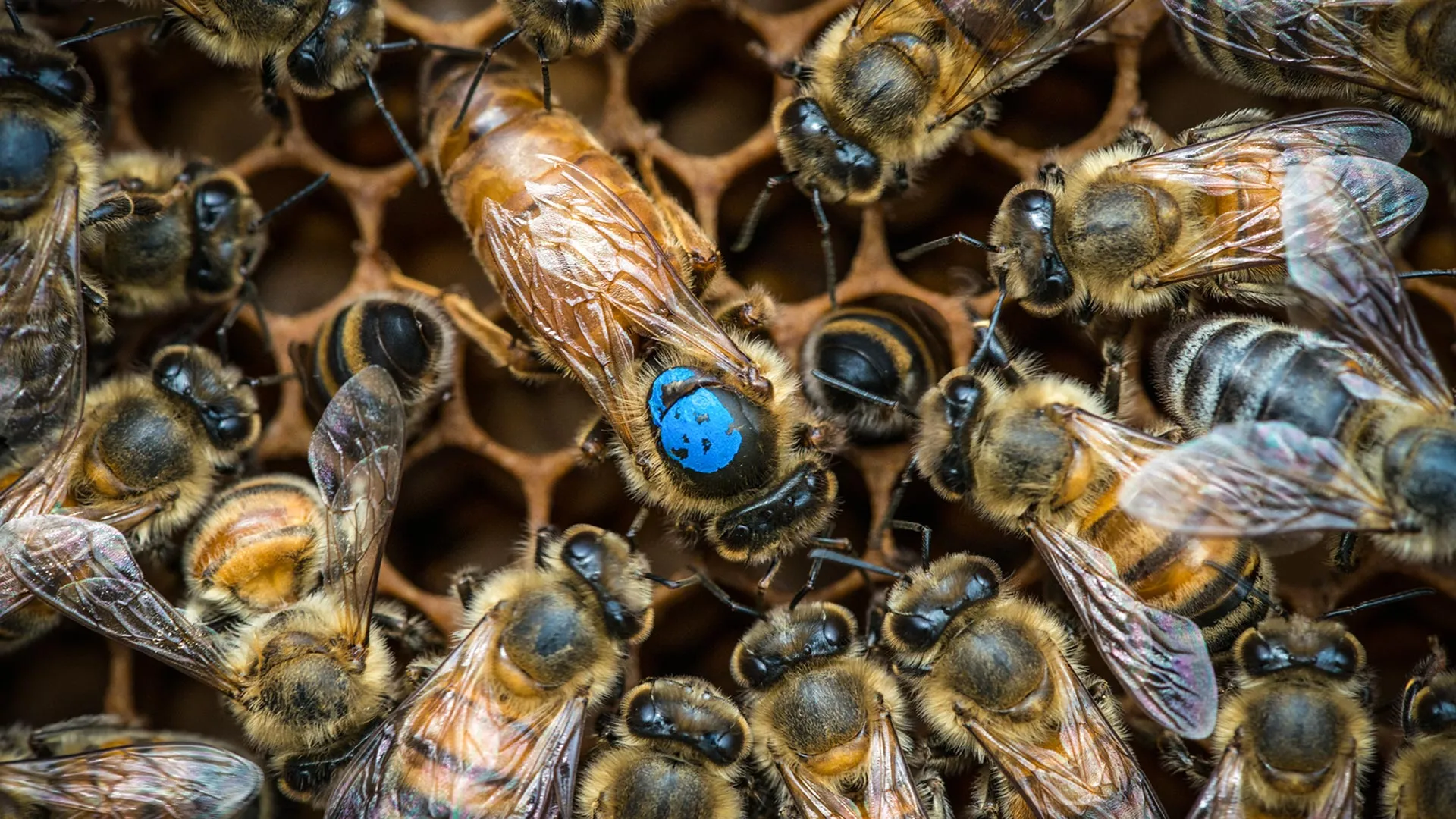
This intricate system of task allocation in a bee colony, a marvel of decentralized organization, operates without any discernible central command structure or explicit assignment of duties. Unlike human societies where responsibilities can be discussed and delegated, a bee hive functions as a highly coordinated superorganism where each individual plays a crucial, evolving role. The remarkable efficiency with which these insect communities manage their collective tasks has long fascinated scientists, prompting a deeper investigation into the underlying biological mechanisms.
The life cycle of a worker bee is intrinsically linked to a progressive shift in its responsibilities. Emerging from the brood, young bees are primarily dedicated to the intensive care of the queen and the nurturing of developing larvae, ensuring the colony’s future generations. As they mature, their duties expand to encompass the construction and maintenance of the hive’s intricate architecture, as well as its vigilant defense against potential predators and intruders. Only in the twilight of their working lives do these bees transition to foraging, venturing outside the colony to procure vital nectar and pollen resources. This predictable, age-dependent progression of tasks, a cornerstone of colony survival, is orchestrated by a complex interplay within the bee’s relatively small, yet highly sophisticated, brain, which contains approximately one million neurons. Until this recent research, the precise neural mechanisms governing this transition from one behavioral repertoire to another remained largely enigmatic.
Significant insights into this complex regulatory system emerged from prior investigations conducted by a research team at HHU, spearheaded by Professor Dr. Martin Beye of the Institute of Evolutionary Genetics. During their study of a gene designated as doublesex, the researchers observed an unexpected and striking alteration in worker bee behavior. When the expression of the doublesex gene was experimentally suppressed in older worker bees, these insects inexplicably reverted to performing tasks typically undertaken by much younger colony members, specifically, attending to the queen. This observation strongly suggested that the doublesex gene exerts a profound influence over the genetic and hormonal programming that governs age-related work behaviors within the colony.
The critical realization stemming from this discovery was that the doublesex gene’s activity is not uniform throughout the brain but is instead localized within specific neural circuits. This crucial finding provided Professor Beye’s team, alongside their collaborators from Cologne and Frankfurt/Main, with a targeted avenue for exploring how distinct regions of the bee brain exert control over complex social behaviors. By focusing on these gene-specific neural pathways, they could begin to unravel the intricate connections between genetic predispositions and observable actions.
The experimental design employed by the researchers involved the precise silencing of neurons intrinsically linked to the function of the doublesex gene. To achieve this delicate manipulation, they engineered a system whereby the doublesex gene was utilized to produce a protein capable of inhibiting neural activity. The activation of this inhibitory protein was then carefully controlled by introducing a specific dietary substance to the bees, allowing the scientists to selectively dampen electrical signaling in only the targeted neural circuits.
Following the targeted inhibition of these specific neural circuits, older worker bees exhibited a remarkable behavioral shift, reverting to their role as caretakers for the queen, a duty they would not normally perform at their advanced age. In contrast, when these neural circuits were left uninhibited, the bees continued to display their standard, age-appropriate behaviors, fulfilling the duties expected of their life stage. Dr. Jana Seiler, the lead author of the PNAS study, commented on the significance of these findings, stating that "The older worker bees then resumed caring for the queen, which only younger bees would do otherwise. When the circuits were not inhibited, the bees exhibited their normal, age-dependent behavior. In this way, we were able to control which tasks the worker bees performed." This direct manipulation offered unprecedented control over the observed task allocation.
These compelling results strongly indicate that the sophisticated organization of labor within a bee colony is fundamentally underpinned by neural communication and regulation. The research suggests a dynamic interplay where the reduction of activity in particular brain regions can lead to the increased prominence or activation of other neural circuits, thereby triggering a distinct set of behavioral responses. This implies that a complex internal signaling network, rather than a simple genetic switch, governs the complex transitions between different worker bee roles.
The study provides compelling early evidence that the intricate communication networks between different neural circuits are instrumental in determining an individual worker bee’s contribution to the colony, whether it involves nursing the queen, contributing to hive construction or defense, or undertaking foraging expeditions. This suggests a highly adaptable and responsive system, capable of adjusting individual roles based on internal neural states.
Professor Beye articulated the broader implications of this research, stating, "The ability to control the social behavior of bees offers us new opportunities to explore the fundamentals of innate behavioral diversity and social cooperation. The solution to the secret of how bees and other animals cooperate so well without a blueprint for work is likely hidden in the brain’s neural circuits." This work not only sheds light on the fascinating world of insect social behavior but also offers a valuable model for understanding the neural basis of cooperation and task allocation in other social species, potentially even providing insights applicable to human organizational structures and the fundamental principles of complex collective action. The neural circuits, it appears, hold the key to unlocking the secrets of efficient, decentralized teamwork.
Related posts:

Related News