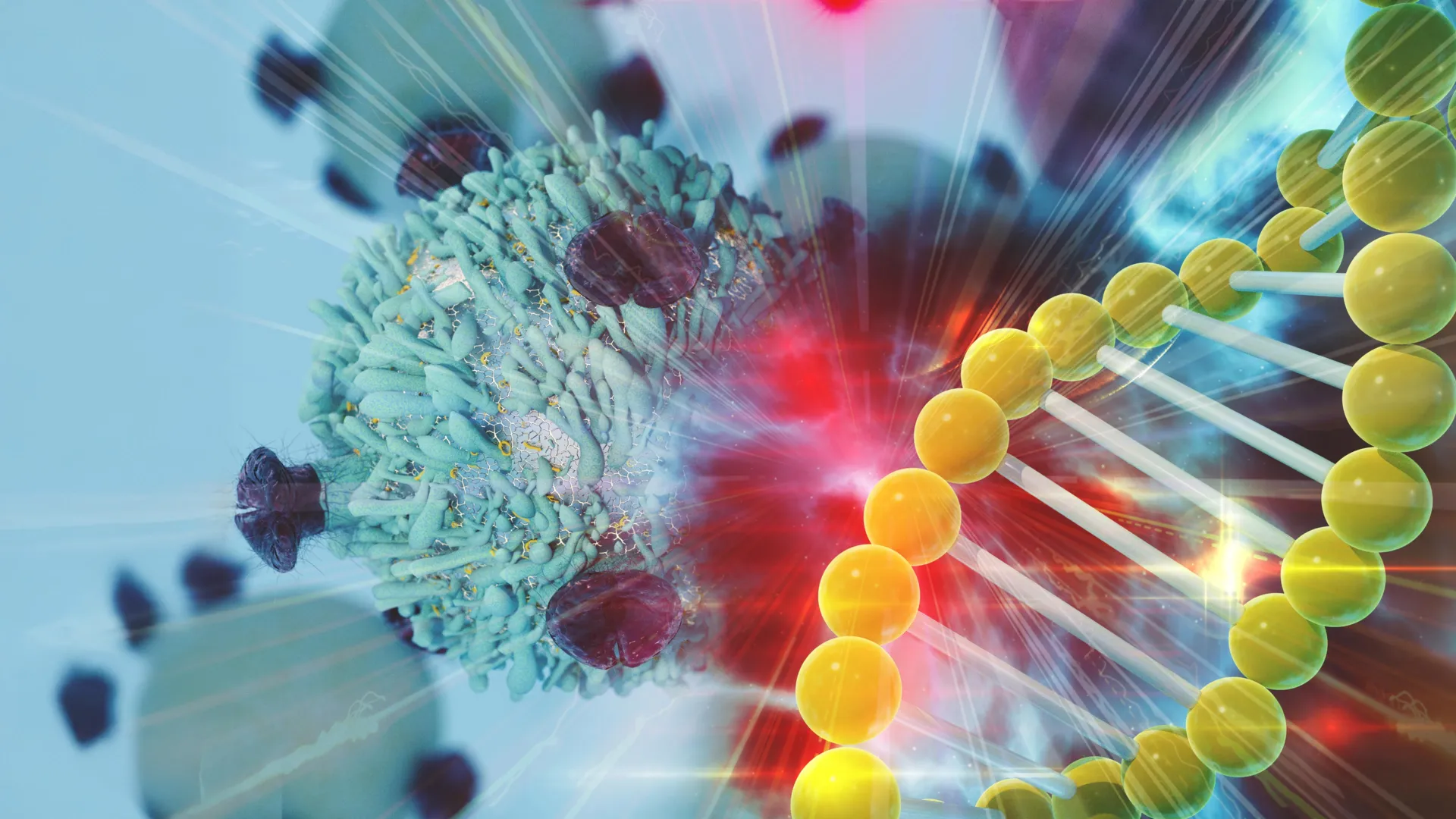
The intricate blueprint of life, deoxyribonucleic acid (DNA), faces ceaseless threats from both internal metabolic processes and external environmental factors. Maintaining the integrity of this genetic material is paramount for cellular function and organismal health. Among the myriad forms of DNA damage, a double-strand break (DSB), where both complementary strands of the DNA helix are severed simultaneously, represents one of the most catastrophic lesions. Unrepaired or inaccurately repaired DSBs can lead to chromosomal rearrangements, mutations, and ultimately, cellular dysfunction or malignant transformation. Healthy cells possess an array of sophisticated, high-fidelity repair mechanisms designed to meticulously restore these breaks. However, a groundbreaking investigation by researchers at Scripps Research has illuminated a critical cellular fallback strategy—a less precise, emergency repair pathway—and, crucially, identified why certain cancer cells become critically reliant on it for their survival, offering a novel avenue for therapeutic intervention.
The stability of the genome hinges on the cell’s ability to accurately detect and repair DNA lesions. When a DSB occurs, the cell typically mobilizes two primary repair pathways: homologous recombination (HR) and non-homologous end joining (NHEJ). HR is a high-fidelity mechanism that uses an undamaged homologous DNA template (usually the sister chromatid) to guide repair, ensuring accuracy. NHEJ, while faster, is considered more error-prone as it directly ligates the broken ends, often leading to small insertions or deletions. The choice between these pathways depends on the cell cycle phase and the nature of the damage. However, when these canonical, precise systems are overwhelmed or compromised, cells may activate alternative, more desperate measures to prevent collapse.
Central to this new understanding is a particular type of genetic entanglement known as an R-loop. These tripartite structures form when a newly transcribed RNA molecule remains hybridized to its DNA template, displacing one strand of the DNA double helix and leaving it single-stranded and exposed. While R-loops play beneficial roles in gene regulation, mitochondrial DNA replication, and immunoglobulin class switching under tight control, their unregulated accumulation poses a significant threat to genomic stability. Excessive R-loops can impede DNA replication, transcription, and repair processes, leading to replication stress and, critically, inducing double-strand breaks. The delicate balance of R-loop formation and resolution is therefore essential for cellular homeostasis, and its disruption is increasingly implicated in various pathologies, including neurodegeneration and cancer.
The Scripps team focused their investigation on a specific molecular machine called senataxin (SETX). SETX belongs to the helicase family of proteins, which are responsible for unwinding nucleic acid structures. Its primary role in maintaining genome integrity involves resolving detrimental R-loops. Mutations or deficiencies in the SETX gene have previously been linked to severe neurological conditions, such as ataxia oculomotor apraxia type 2 (AOA2) and a juvenile form of amyotrophic lateral sclerosis (ALS), underscoring its vital role in cellular health, particularly in highly metabolically active cells like neurons. Intriguingly, similar SETX gene alterations have also been observed in certain malignancies, including specific uterine, skin, and breast cancers. This dual connection between SETX dysfunction, neurological disease, and cancer raised a compelling question: how do cancer cells, already under immense genomic stress, manage to persist and proliferate when their ability to regulate these disruptive R-loops is impaired due to a defective or absent SETX protein?
To unravel this mystery, the researchers engineered cellular models lacking functional SETX and observed the cellular response to accumulating R-loops. As anticipated, these SETX-deficient cells exhibited an exacerbated accumulation of R-loops, particularly at sites where DNA double-strand breaks had formed. The ensuing genomic stress resulted in a significant increase in overall DNA damage. What truly astonished the scientific team, however, was the aggressive and unconventional manner in which these compromised cells attempted to counteract the overwhelming damage. Instead of succumbing, they activated an atypical and robust DNA repair mechanism known as Break-Induced Replication (BIR).
Break-Induced Replication (BIR) is a unique and often considered last-resort DNA repair pathway. Under normal physiological circumstances, BIR primarily functions to rescue stalled or collapsed DNA replication forks, particularly when large sections of DNA have been lost or extensively degraded. Unlike the precise, limited synthesis characteristic of homologous recombination, BIR initiates extensive DNA synthesis, copying long stretches of genetic material from a homologous template to fill in gaps and re-establish replication. While this process is highly effective at enabling cell survival in the face of severe genomic insults, it is notoriously error-prone. This extensive, rapid copying often introduces significant genomic rearrangements, including translocations, deletions, and gene amplifications, which can inadvertently fuel the very genetic instability that drives tumor evolution. This makes the cancer cell’s reliance on BIR a precarious, yet often necessary, gamble for survival.
The Scripps Research team meticulously deciphered the molecular cascade that triggers BIR in SETX-deficient cells. They discovered that without the corrective action of SETX, R-loops not only accumulate but do so specifically at the immediate vicinity of double-strand breaks. This localized buildup creates a significant impediment to the cell’s conventional, high-fidelity repair machinery, effectively jamming the system. Consequently, the broken DNA ends undergo excessive trimming, a process known as extensive DNA end resection, which exposes unusually long segments of single-stranded DNA. These elongated single-stranded regions serve as critical distress signals, actively recruiting and activating the specialized BIR machinery. A key component in this recruitment is PIF1, a helicase already recognized as essential for BIR pathway operation. The convergence of these exposed DNA regions and the PIF1 helicase forms the precise molecular trigger that compels the cell to launch the emergency BIR repair program.
This discovery highlights a profound vulnerability, leveraging the biological principle of synthetic lethality. Synthetic lethality describes a relationship between two genes or pathways where the individual disruption of either one is tolerated by the cell, but the simultaneous disruption of both results in cell death. In this context, SETX deficiency, while stressful, does not immediately cause cell death as long as the emergency BIR pathway is operational. However, if BIR is subsequently blocked in a SETX-deficient cell, the cell completely loses its capacity to repair critical double-strand breaks and rapidly undergoes apoptosis or necrosis. This dependency transforms what was a survival advantage for the cancer cell into a critical weakness that can be exploited therapeutically.
The researchers specifically identified three BIR-related proteins—PIF1, RAD52, and XPF—as being indispensable for the survival of SETX-deficient cells. Crucially, these proteins are not considered essential for the viability of normal, healthy cells. This differential requirement establishes a significant therapeutic window: by developing inhibitors that selectively target PIF1, RAD52, or XPF, it could be possible to induce cell death specifically in SETX-deficient tumor cells while sparing healthy tissues, minimizing off-target toxicities. This selective targeting is a cornerstone of modern precision oncology, aiming to deliver highly effective treatments with fewer debilitating side effects for patients.
While these findings represent a highly promising therapeutic strategy, the transition from laboratory discovery to clinical application is a complex and time-consuming process. The next critical steps involve the intensive search for potent and selective inhibitors of these BIR factors, ensuring they possess the desired pharmacological activity and an acceptable toxicity profile. Furthermore, the Scripps team is actively investigating the broader landscape of R-loop accumulation in various cancers. Identifying which specific tumor types accumulate the highest levels of R-loops, and under what specific conditions, will be crucial for effective patient stratification and predicting which patients are most likely to respond to BIR-targeted therapies.
The implications of this research extend far beyond cancers directly linked to SETX mutations, which are relatively uncommon. Many other pathways can lead to pathological R-loop accumulation, including the hyperactivation of oncogenes (genes that promote cancer growth) or aberrant hormone signaling, such as estrogen in certain breast cancers. Oncogene activation often leads to increased transcriptional activity and replication stress, both of which can foster R-loop formation. Similarly, altered hormone signaling can dysregulate gene expression and DNA replication, indirectly contributing to R-loop buildup. This broader mechanistic understanding suggests that a therapeutic approach targeting BIR could potentially be applicable to a much wider spectrum of tumors, significantly expanding its clinical reach and offering a new frontier in the development of precision oncology treatments that capitalize on fundamental vulnerabilities within cancer cells.
About the Author