Optimizing Stability: Foundational Leg Exercises for Enhanced Balance and Fall Prevention in Older Adults
Maintaining robust physical stability becomes an increasingly vital aspect of healthy aging, directly impacting an individual’s independence and overall quality of life. As people progress beyond their sixth decade, the natural physiological changes associated with aging often lead to a gradual decline in balance capabilities, escalating the risk of falls and subsequent injuries. Proactive engagement in targeted physical activity is paramount to mitigating these age-related shifts, fostering greater confidence in movement, and preserving the ability to navigate daily life with ease.
The intricate mechanism of human balance relies on a sophisticated interplay of three primary sensory systems: the visual system, which provides information about our surroundings and our position relative to them; the vestibular system, located in the inner ear, responsible for detecting head movements and spatial orientation; and the somatosensory system, which includes proprioception—the sense of where our body parts are in space, derived from nerve receptors in muscles, joints, and skin. With advancing age, each of these systems can experience a reduction in efficiency. Vision may diminish, inner ear structures can become less sensitive, and nerve receptors in joints and muscles may transmit information less rapidly or accurately to the brain. Consequently, the central nervous system must work harder and more slowly to interpret spatial cues and initiate corrective movements, making everyday tasks like walking on uneven terrain or quickly adjusting posture more challenging. This natural physiological progression underscores why even highly active individuals might observe a subtle decrease in their steadiness compared to their younger years.
Addressing this decline requires a strategic approach to exercise that emphasizes functional movements, strengthens key muscle groups, and enhances proprioceptive awareness without imposing excessive strain on aging joints. While exercises like lunges are beneficial for strength and mobility, their dynamic and often unilateral nature can present a higher balance challenge or risk for some older adults, depending on their current fitness level. Instead, a focus on foundational leg exercises that mimic real-life movements can yield more practical and rapid improvements in stability.
According to Denise Chakoian, a certified fitness trainer and owner of Core Cycle and Fitness LaGree in Rhode Island, with extensive experience across all age groups, a well-rounded regimen targeting the ankles, hips, glutes, and core is crucial. Chakoian emphasizes that these muscle groups must operate in concert for effective balance, just as they do in everyday activities. By concentrating on exercises that promote this integrated function, individuals can reduce their fall risk, enhance coordination, and build the confidence necessary for an active lifestyle. These movements are designed to be accessible, requiring minimal equipment while delivering substantial benefits in lower-body strength and stability.
Here are six foundational leg exercises recommended for daily practice to significantly enhance balance and fortify the body against falls:
-
Sit-to-Stand: This seemingly simple exercise is a cornerstone of functional strength, directly translating to the ability to rise from a chair, toilet, or bed independently. It primarily targets the quadriceps, glutes, and hamstrings, while also engaging the core for stability.
- Execution: Begin by sitting on a sturdy chair with feet flat on the floor, hip-width apart. Lean slightly forward, engaging your core, and push through your heels to stand up fully without using your hands for support if possible. Control the movement as you slowly lower yourself back down to the starting position, lightly tapping the chair before rising again.
- Benefits for Balance: Improves lower body power and endurance, essential for reactive balance and recovering from stumbles. The controlled descent enhances eccentric muscle strength, crucial for preventing falls.
- Progression: Start with a higher chair or use armrests for assistance, gradually transitioning to a lower surface or no hand support. Aim for 10-15 repetitions.
-
Single-Leg Stand: A direct challenge to static balance, this exercise significantly improves ankle stability and proprioception, critical for maintaining equilibrium on uneven surfaces or during quick directional changes.
- Execution: Stand tall with your feet hip-width apart, gaze fixed on a non-moving point in front of you. Gently shift your weight to one leg, lifting the other foot slightly off the ground. Aim to hold this position for 20-30 seconds. Keep a slight bend in your standing knee and engage your core.
- Benefits for Balance: Directly trains the ankle and foot intrinsic muscles, enhancing the body’s ability to sense and respond to subtle shifts in weight. It also strengthens the hip stabilizers on the standing leg.
- Progression: Start by holding onto a wall or sturdy furniture for support, gradually reducing dependence. Advance by closing your eyes for a few seconds or performing the exercise on a softer surface like a cushion, which further challenges proprioception. Perform 2-3 sets per leg.
-
Heel-to-Toe Walk (Tandem Gait): This exercise simulates walking on a narrow beam, requiring precise control and coordination, thereby improving dynamic balance and gait stability.
- Execution: Find an open space and imagine walking along a straight line. Place the heel of one foot directly in front of the toes of the other foot, so they are touching or nearly touching. Walk slowly and deliberately, focusing on maintaining your balance with each step.
- Benefits for Balance: Enhances proprioception in the feet and ankles, improves core stability, and refines the coordination between the lower body and the visual system. It directly translates to navigating narrow pathways or crowded spaces more safely.
- Progression: Increase the distance walked. For an added challenge, try looking straight ahead rather than at your feet. Aim for 10-20 steps in each direction.
-
Calf Raises: Strong calf muscles are indispensable for efficient walking, providing the necessary push-off power and aiding in ankle stability, which is vital for preventing trips and falls.
- Execution: Stand tall with your feet hip-width apart, holding onto a sturdy support like a wall or chair back if needed. Slowly raise yourself up onto the balls of your feet, lifting your heels as high as comfortably possible. Hold briefly at the top, then slowly lower your heels back down.
- Benefits for Balance: Strengthens the gastrocnemius and soleus muscles, which are crucial for ankle dorsiflexion and plantarflexion, supporting the foot’s role as the body’s primary contact point with the ground. This improves walking mechanics and reduces the likelihood of stumbling.
- Progression: Perform without support. Advance to single-leg calf raises, or add light weights. Aim for 2-3 sets of 10-15 repetitions.
-
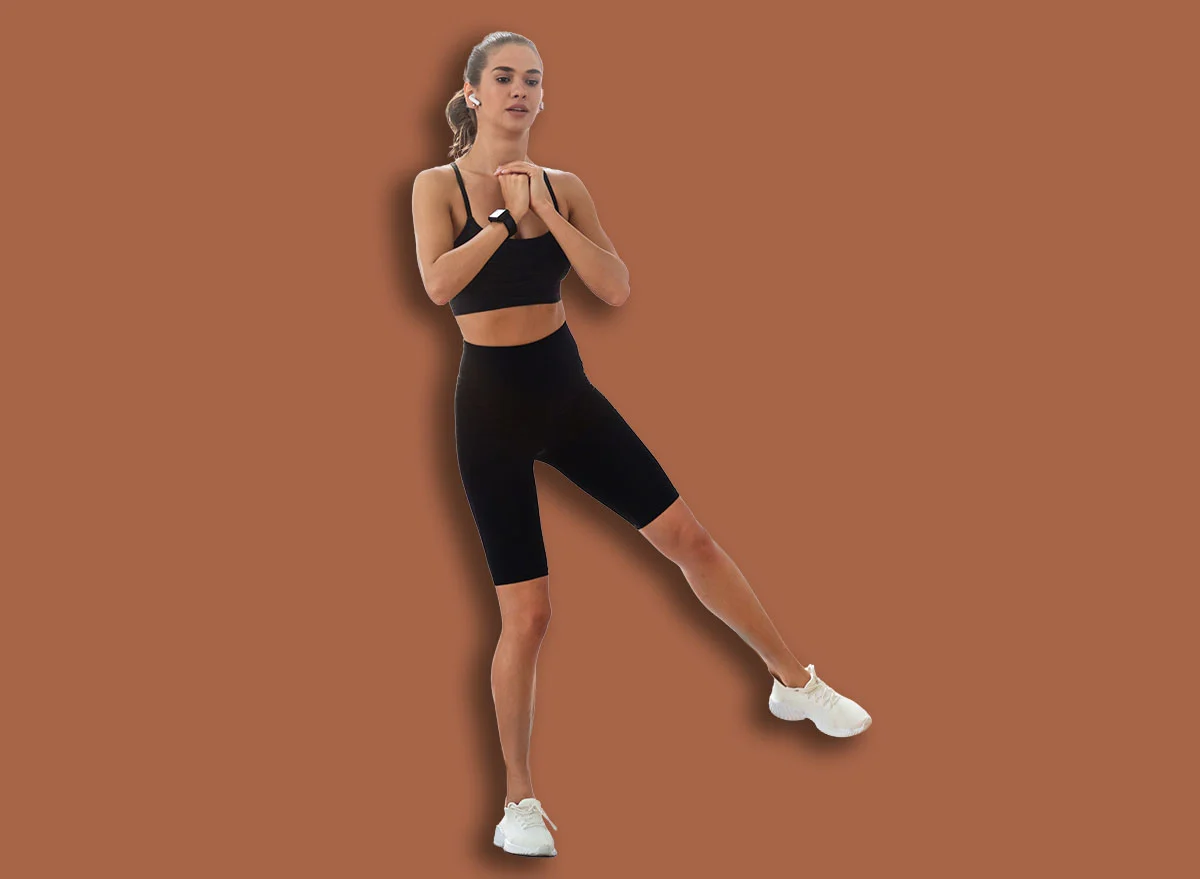
Standing Side Leg Raises: This movement targets the hip abductors, particularly the gluteus medius, which are crucial for lateral stability and preventing the body from swaying excessively during walking or when shifting weight.
- Execution: Stand tall with a slight bend in your knees, holding onto a support if necessary. Keeping your torso upright and core engaged, slowly lift one leg directly out to the side, leading with the heel. Avoid tilting your upper body. Lift only as high as you can maintain control, then slowly lower the leg back down.
- Benefits for Balance: Strengthens the muscles responsible for stabilizing the pelvis and hips, preventing unwanted side-to-side motion during gait and improving stability when transferring weight.
- Progression: Perform without support. Increase the range of motion while maintaining control. Aim for 2-3 sets of 10-15 repetitions per leg.
-
Step-Ups: Mimicking the action of climbing stairs or stepping onto a curb, step-ups are an excellent functional exercise for building lower body strength and improving balance control.
- Execution: Stand in front of a sturdy, low step or platform (e.g., the bottom step of a staircase, a fitness step). Place one foot entirely onto the step, then push through that foot to bring your other foot up, gently tapping the step or coming to a full stand. Step back down with control, one foot at a time, ensuring the entire foot lands safely.
- Benefits for Balance: Develops unilateral leg strength, coordination, and proprioception in the ankle and knee. It directly improves the confidence and capability needed for navigating changes in elevation.
- Progression: Increase the height of the step. Perform without holding onto support. Aim for 2-3 sets of 10-15 repetitions per leg, alternating the lead leg.
Consistency is a defining factor in realizing the full benefits of any exercise regimen. Integrating these movements into a daily routine, even for short durations, can yield significant improvements over time. Before embarking on any new fitness program, particularly for older adults, consulting with a healthcare professional or a certified fitness trainer is strongly recommended. They can provide personalized guidance, ensure exercises are appropriate for individual health conditions, and help establish proper form to maximize benefits and minimize injury risk.
Beyond the physical mechanics, the psychological impact of enhanced balance is profound. A reduced fear of falling translates into greater confidence, encouraging individuals to remain socially active, pursue hobbies, and engage more fully with their communities. This holistic approach to well-being, where targeted physical activity intersects with mental and emotional health, empowers older adults to embrace an active, independent, and fulfilling life. By prioritizing these foundational leg exercises, individuals can effectively counteract age-related balance decline, fortifying their bodies and minds for the years ahead.

Related News