As individuals navigate the landscape of life past their mid-fifties, the significance of a robust core extends far beyond superficial aesthetic goals, becoming an indispensable pillar of functional health and overall well-being. This central musculature, comprising the abdominal muscles, lower back, hips, and diaphragm, acts as the body’s powerhouse, orchestrating everything from maintaining upright posture and facilitating efficient breathing to enabling confident movement and safeguarding the spine against injury. A strong core is fundamental for transmitting force between the upper and lower extremities, ensuring fluidity and control in everyday actions such as walking, lifting groceries, or simply rising from a chair. The natural physiological shifts associated with aging, including a propensity for sarcopenia (age-related muscle loss), decreased bone density, and potential reductions in balance and flexibility, underscore the critical need for consistent core engagement. Neglecting this vital area can precipitate a cascade of issues, from chronic back pain and impaired balance to a diminished capacity for independent living.
While traditional floor-based core exercises are highly effective for many, they often present significant practical and physical hurdles for older adults. The act of transitioning to and from the floor can be challenging due to limitations in mobility, joint discomfort in the knees or hips, or even a fear of falling. Furthermore, lying on the floor can place undue strain on the neck and wrists for some individuals, making the exercise experience less comfortable and potentially counterproductive. These accessibility barriers frequently deter older populations from incorporating crucial core work into their fitness routines, inadvertently depriving them of its profound benefits.
This is where the humble chair emerges as a surprisingly powerful and profoundly accessible piece of fitness equipment, revolutionizing the approach to core strengthening for those over 55. A chair offers a stable, consistent platform that mitigates many of the obstacles associated with floor exercises. Its inherent stability removes concerns about balance, allowing exercisers to channel their complete focus into precise muscle activation and control. This reduction in extraneous effort means less pressure on sensitive joints like the wrists, neck, and lower back, transforming what might otherwise be a painful or intimidating experience into a comfortable and effective one. The consistent seated position also promotes better postural alignment during exercises, facilitating a deeper and more accurate engagement of core muscles.
Moreover, seated core drills often sharpen proprioception—the body’s awareness of its position in space—and muscle recruitment. Without the compensatory assistance from the legs and feet that might occur during standing or floor exercises, the trunk muscles are compelled to perform the primary work, leading to more targeted and efficient strengthening. The seated posture doesn’t restrict the range of motion; rather, it allows for effective training across all critical planes of movement, including flexion (bending forward), extension (bending backward), rotation (twisting), and anti-movement patterns (resisting unwanted motion). This comprehensive approach ensures a well-rounded and functionally relevant core development that directly translates to improved daily function and enhanced confidence.
Integrating these chair-based exercises into a daily regimen can foster remarkable improvements in stability, strength, and overall functional independence. Here are four foundational chair drills that specifically target different aspects of core strength, designed to be joint-friendly and highly impactful:
1. Seated Dynamic Spinal Twists (formerly Seated Medicine Ball Rotations)
This exercise precisely targets the oblique muscles, which are crucial for rotational movements, and the deep spinal stabilizers, enhancing the spine’s resilience and flexibility. Rotational strength is paramount for a multitude of daily actions, from turning to look over your shoulder while driving to reaching for an object on a high shelf. By performing these movements seated, momentum is minimized, compelling the core muscles to initiate and control the rotation entirely, thereby improving both strength and inter-body coordination.
- Muscles Engaged: Primarily the internal and external obliques, rectus abdominis, transverse abdominis, and erector spinae. These muscles work synergistically to facilitate and stabilize twisting movements of the torso.
- Execution Protocol: Begin by sitting tall at the edge of a sturdy chair, with feet flat on the floor and knees bent at a 90-degree angle. Hold a light medicine ball, small weight, or simply clasp your hands together at chest height. Engage your abdominal muscles, keeping your chest lifted and shoulders relaxed. Slowly rotate your upper body to one side, leading with your rib cage while keeping your hips relatively still and firmly rooted in the chair. Control the movement as you return to the center, then rotate to the opposite side. The movement should be deliberate and controlled, not jerky.
- Form Nuance: Visualize your torso as a pillar, rotating cleanly around its axis. Avoid leaning back or allowing your hips to shift excessively, as this reduces the core’s workload. Maintain a steady, controlled breath throughout the exercise.
- Prescribed Volume: Execute 2 to 3 sets, performing 10 to 16 total rotations (5-8 per side). Allow for a brief recovery period of 30 to 45 seconds between sets.
- Adaptations: For increased challenge, utilize a slightly heavier medicine ball or resistance band. For a simpler approach, perform the movement with hands clasped or arms extended.
2. Seated Abdominal Lifts (formerly Seated Knee Tucks)
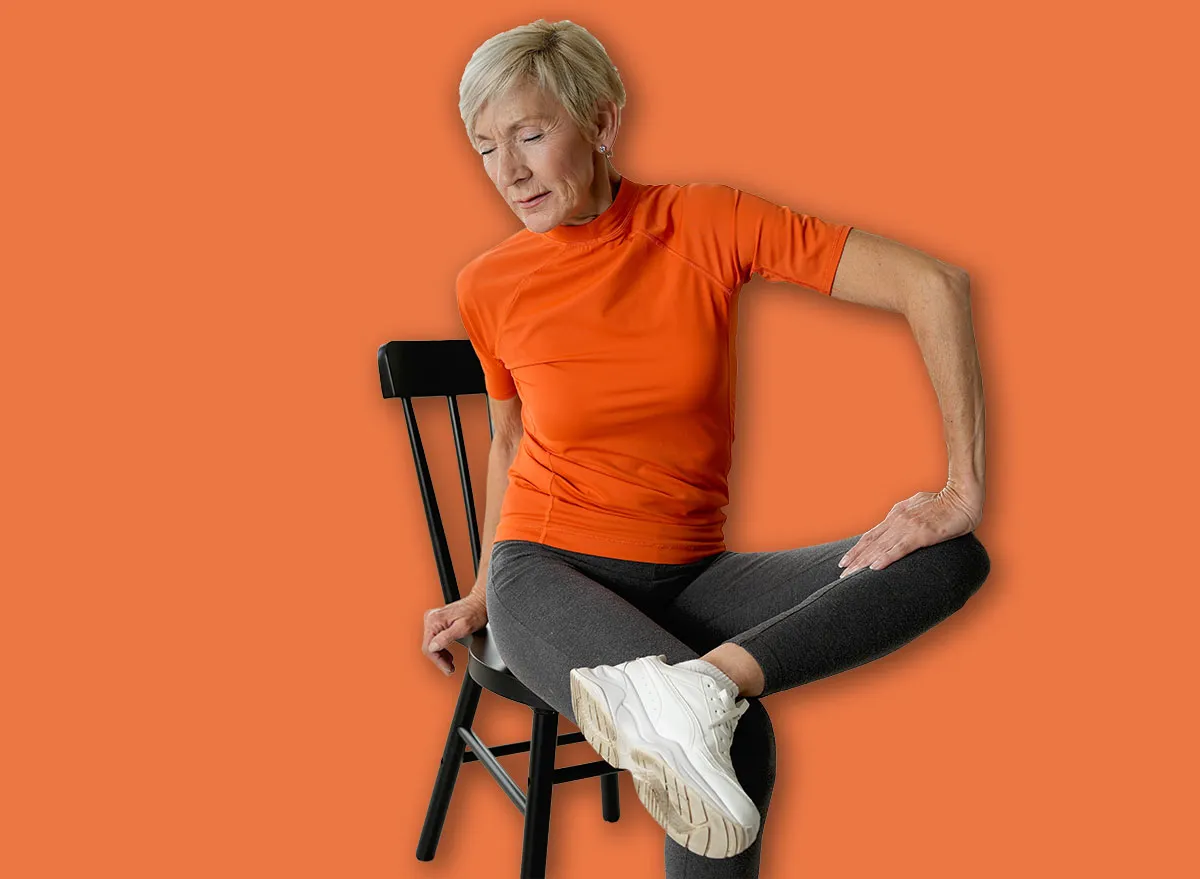
This movement specifically targets the lower abdominal muscles and engages the hip flexors, playing a vital role in pelvic stability and spinal articulation. It trains the core to brace and stabilize the pelvis while the legs are in motion, a critical function for activities like walking, climbing stairs, and maintaining balance. The seated position minimizes strain on the neck and lower back, allowing for a concentrated focus on abdominal contraction.
- Muscles Engaged: Predominantly the lower fibers of the rectus abdominis, transverse abdominis, and hip flexors (iliopsoas). These muscles collaborate to bring the knees towards the chest and stabilize the pelvis.
- Execution Protocol: Sit upright in your chair, near the front edge, with your hands gripping the sides for support. Lean back slightly, engaging your core without rounding your lower back excessively. Simultaneously draw both knees towards your chest, exhaling as they come in. Concentrate on squeezing your abdominal muscles. Slowly extend your legs back to the starting position, maintaining core tension and control.
- Form Nuance: The movement should originate from your abdominal muscles, not just your hip flexors. Avoid using momentum to swing your legs. Keep your lower back in a neutral position; a slight recline is acceptable, but excessive rounding should be avoided.
- Prescribed Volume: Perform 2 to 3 sets of 8 to 12 repetitions. Rest for 30 to 45 seconds between sets.
- Adaptations: For a less intense version, perform alternating single-leg lifts. To increase difficulty, slow down the tempo, holding the knees in for a few seconds, or add a light resistance band around the ankles.
3. Seated Leg Fluttering (formerly Seated Flutter Kicks)
This exercise emphasizes core endurance and sustained tension in the lower abdominal region and hip flexors, attributes that often diminish with age. By maintaining an upright seated posture, the abdominal muscles are continuously engaged to stabilize the torso while the legs perform independent, controlled movements. This drill reinforces proper posture and trains the core to resist fatigue, which translates to improved stamina in daily activities.
- Muscles Engaged: Primarily the lower rectus abdominis, transverse abdominis, and hip flexors. This exercise builds isometric endurance in these muscle groups.
- Execution Protocol: Position yourself at the front edge of your chair, sitting tall with your hands gripping the sides for support. Lean back slightly, engaging your core. Lift both feet a few inches off the floor, keeping your legs relatively straight but with a slight bend in the knees to avoid locking them. Begin to alternate small, controlled up-and-down movements with your legs, as if gently kicking in water. Maintain steady core engagement throughout.
- Form Nuance: The key is to keep your lower back stable and avoid excessive arching or rounding. The movement should be controlled and fluid, with small kicks rather than large, sweeping motions. As fatigue sets in, resist the urge to lean further back or let your core disengage.
- Prescribed Volume: Complete 2 to 3 sets, aiming for 20 to 40 total kicks (10-20 per leg). Take a 30 to 45-second break between sets.
- Adaptations: Beginners can start with bent-knee flutter kicks. For a greater challenge, try timed holds with one or both legs elevated, or perform the kicks at a slower, more controlled tempo.
4. Seated Isometric Anti-Rotation Press (formerly Seated Pallof Hold)
The isometric anti-rotation press is a cornerstone exercise for developing anti-rotational strength, a critical aspect of spinal health and injury prevention. This drill teaches the core muscles to resist external forces that attempt to twist or rotate the spine, rather than initiating movement. Performing it seated eliminates lower-body assistance, placing the workload directly on the trunk stabilizers. This translates to improved balance, enhanced posture, and superior control during dynamic daily activities.
- Muscles Engaged: The transverse abdominis, internal and external obliques, rectus abdominis, and deep spinal stabilizers are all heavily recruited to prevent unwanted rotation.
- Execution Protocol: Position a resistance band (secured to a sturdy anchor point at chest height) to your side. Sit perpendicular to the anchor point, grasping the band with both hands at chest height. Ensure there is tension in the band. Sit tall, engaging your core, and press the band straight out in front of you. Hold this extended position, resisting the band’s pull which attempts to rotate your torso towards the anchor point. Maintain a neutral spine and stable hips. Slowly return the band to your chest.
- Form Nuance: Imagine your ribs stacked directly over your hips. The goal is to remain perfectly still and stable, preventing any rotation of your torso. Breathe deeply and steadily, bracing your core as if preparing for a gentle impact.
- Prescribed Volume: Execute 2 to 3 sets, holding the extended position for 15 to 30 seconds per side. Rest for 30 to 45 seconds between sets.
- Adaptations: If a resistance band is unavailable, this exercise can be modified by holding a light weight (like a dumbbell or kettlebell) out in front and resisting the urge to lean to one side. Standing or half-kneeling variations offer progressive challenges for those who are ready.
Optimizing Your Chair-Based Core Strengthening Regimen
To truly harness the potential of chair-based core training, consistency and mindful execution are paramount. These drills, while seemingly straightforward, yield significant results when approached with intention and regularity.
- Prioritize Quality Over Quantity: Focus on executing each repetition or hold with impeccable form, engaging the target muscles deliberately. A few high-quality repetitions are far more beneficial than many sloppy ones.
- Master Your Breath: Integrate diaphragmatic breathing. Inhale deeply, allowing your belly to expand, and exhale fully, drawing your navel towards your spine to activate the transverse abdominis. Proper breathing supports core stability and muscle engagement.
- Embrace Gradual Progression: Start with the recommended sets and repetitions, and only increase the duration, repetitions, or resistance when you can comfortably maintain perfect form. Listen to your body and avoid pushing through pain.
- Consistency is Key: Aim to incorporate these exercises into your daily routine, even if only for a few minutes. Regular engagement builds cumulative strength and reinforces beneficial movement patterns.
- Listen to Your Body: Differentiate between muscle fatigue, which is desirable, and joint pain, which signals a need to adjust your form or reduce the intensity. Consult a healthcare professional or certified fitness expert if you experience persistent discomfort.
- Integrate and Diversify: While chair drills are excellent, they are one component of a holistic fitness approach. Combine them with other forms of activity like walking, light strength training, and flexibility exercises for comprehensive well-being.
By consistently integrating these accessible, chair-based core exercises into your daily life, individuals over 55 can build a foundation of strength and stability that profoundly impacts their confidence, mobility, and overall quality of life, fostering a more active and independent future.
About the Author