Prenatal Hormonal Environment May Explain Primate Brain Enlargement and Skeletal Feminization in Early Humans.
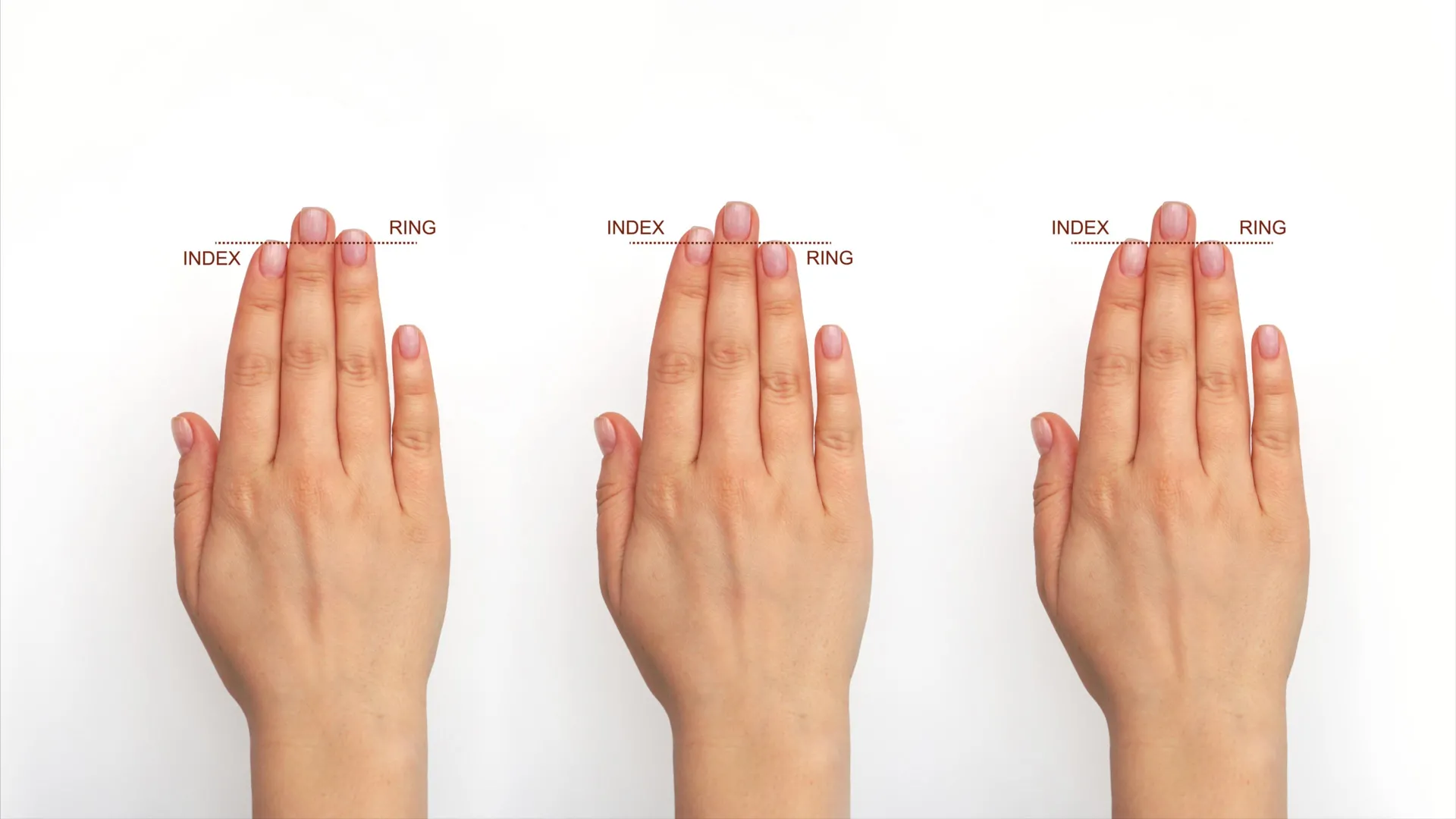
A recent scientific inquiry has illuminated a potential connection between the hormonal milieu experienced by developing fetuses and the evolutionary trajectory of the human brain, suggesting that a greater prenatal exposure to estrogen might have been a pivotal factor in the expansion of our species’ cranial capacity. This intriguing hypothesis is further supported by a subtle physical characteristic observable in individuals today: the relative lengths of their index and ring fingers, which researchers propose could serve as an enduring marker of these early hormonal influences. The study, a collaboration between academics at Swansea University and Istanbul University, delves into the intricate interplay between fetal hormones and developmental outcomes, offering a novel perspective on the deep past of human evolution.
At the heart of this research lies the concept of the 2D:4D digit ratio, a measurement derived from comparing the length of the second digit (index finger) to the fourth digit (ring finger). This ratio, meticulously studied by Professor John Manning, a leading figure in the field from Swansea University’s Applied Sports, Technology, Exercise and Medicine (A-STEM) research group, is understood to provide an indirect window into the balance of sex hormones, specifically estrogen and testosterone, that a fetus encounters during its gestational period, particularly in the critical first trimester. Individuals whose prenatal environment was characterized by a comparatively higher level of estrogen relative to testosterone tend to exhibit a longer index finger in proportion to their ring finger, resulting in a higher 2D:4D ratio. Conversely, a lower ratio typically indicates a greater prenatal androgenic influence.
The most recent findings, published in the esteemed journal Early Human Development, emerged from a comparative analysis conducted with colleagues from Istanbul University’s Department of Anthropology. The research team focused on a cohort of 225 newborns, comprising 100 boys and 125 girls. For each infant, the 2D:4D digit ratio was precisely measured and subsequently correlated with their head circumference. Head circumference is a widely accepted proxy for brain size in neonates and has been demonstrably linked to subsequent cognitive development and intelligence quotient (IQ) scores, although it is crucial to acknowledge that a multitude of genetic, environmental, and developmental factors ultimately shape an individual’s cognitive abilities.
The data revealed a statistically significant pattern: male newborns exhibiting a higher 2D:4D ratio, indicative of greater prenatal estrogen exposure, also tended to possess a larger head circumference. This observed correlation, however, was not replicated in the female infants within the study group. This sex-specific association is particularly compelling, suggesting that the impact of prenatal estrogen on cranial development might manifest differently between sexes, or that other hormonal or developmental pathways play a more dominant role in girls.
These findings lend substantial weight to a theoretical framework known as the "estrogenized ape hypothesis." This evolutionary concept posits that the significant increase in brain size that distinguishes Homo sapiens from our primate ancestors coincided with a broader suite of anatomical changes, including a reduction in skeletal robustness and a relative feminization of the skeletal structure when compared to earlier hominins. The hypothesis suggests that the hormonal shifts that facilitated brain enlargement may have also been associated with these other morphological transformations.
Professor Manning elaborated on the evolutionary implications of the study’s outcomes, stating, "This finding is relevant to human evolution because increases in brain size are found alongside feminization of the skeleton, what is known as the estrogenized ape hypothesis." He further noted that while high 2D:4D ratios in males have been previously linked to potential health challenges such as elevated risks of heart problems, diminished sperm counts, and a predisposition to schizophrenia, the evolutionary advantage conferred by larger brains may have effectively counterbalanced these drawbacks. "However, increases in brain size may offset these problems," he explained. "Thus, the evolutionary drive for larger brains in humans may inevitably be linked to reductions in male viability including cardiovascular problems, infertility and rates of schizophrenia." This suggests a complex evolutionary trade-off, where the development of enhanced cognitive abilities came at a potential biological cost for males.
The research team’s interpretation is that the substantial evolutionary advantages offered by larger brains likely outweighed the biological costs associated with the hormonal conditions that facilitated their development. Even if these hormonal environments carried certain risks, the cognitive benefits of a more complex brain were so profound that they propelled human evolution forward. This perspective highlights the nuanced nature of evolutionary processes, which often involve balancing competing selective pressures.
The current study contributes to a growing body of evidence suggesting that prenatal estrogen played a constructive role in the evolutionary development of the human brain. It is imperative to clarify that the researchers do not assert that finger length is a direct determinant of brain size. Instead, they propose that the 2D:4D digit ratio serves as a valuable proxy, an accessible marker for the hormonal exposures experienced during the critical early stages of fetal development. The identified association offers a tantalizing glimpse into the intricate ways in which prenatal hormones may have sculpted the evolutionary path of our species.
Professor Manning’s prior research endeavors have explored a diverse array of potential applications for digit ratio analysis, underscoring its utility as a non-invasive indicator of various biological and behavioral factors. His previous investigations have examined its correlation with patterns of alcohol consumption, outcomes following COVID-19 infection, and even oxygen consumption rates among professional footballers. These varied studies collectively highlight the broad scientific interest in digit ratio as a multifaceted marker with implications across different domains of human biology and health.
Related posts:

Related News