
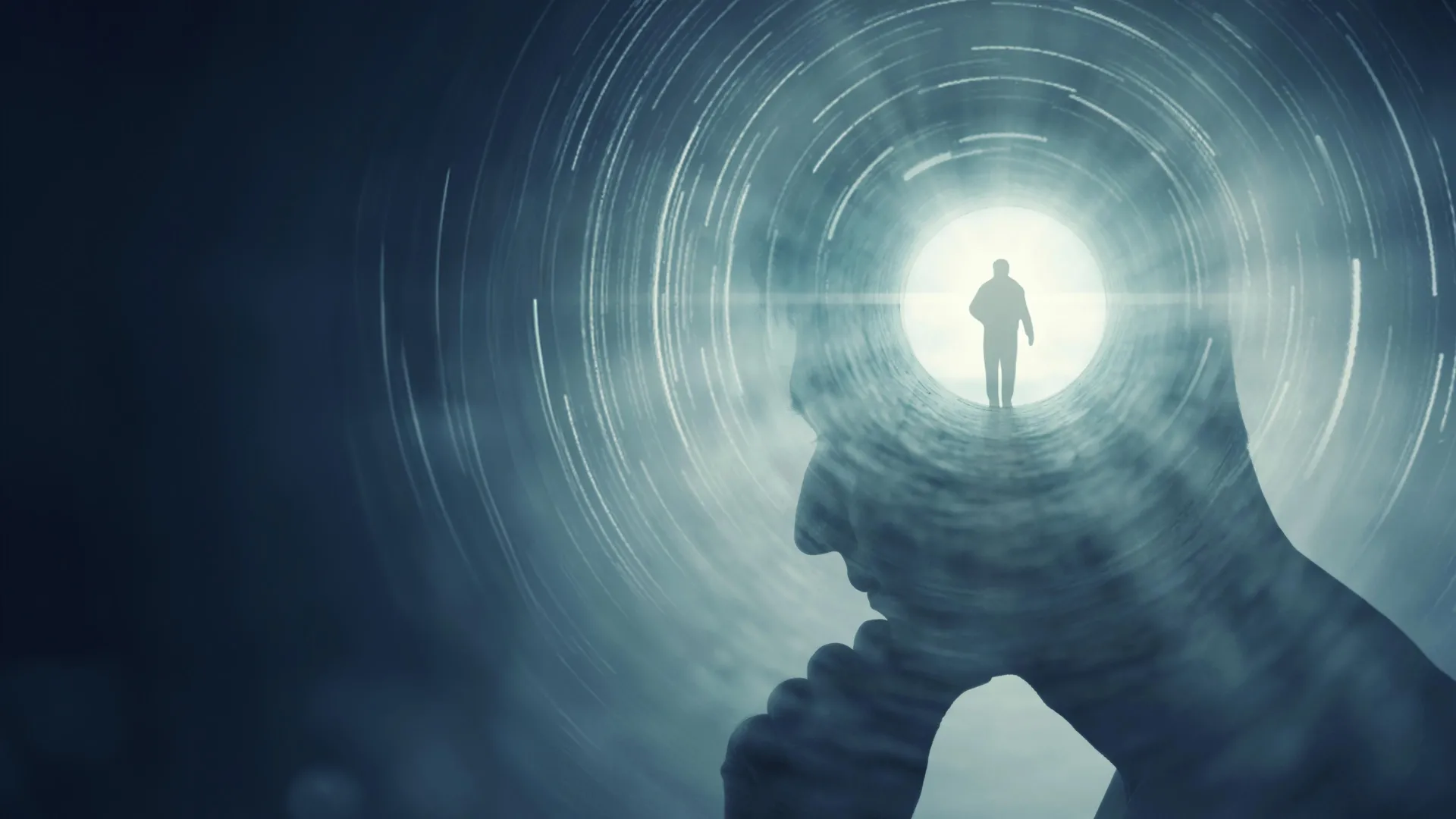
A paradigm shift is gaining traction within the scientific community, questioning the long-held assumption that consciousness is an exclusive product of the biological machinery of the brain. This fundamental re-examination, championed by prominent neuroscientist Dr. Christof Koch, was a central theme at the 15th "Behind and Beyond the Brain" Symposium, an esteemed gathering hosted by the Bial Foundation in Porto from April 8th to 11th. Dr. Koch, a distinguished figure whose career has been dedicated to unraveling the mysteries of the mind, presented compelling arguments that challenge the prevailing materialistic worldview.
For decades, scientific exploration of the mind has largely operated under a materialistic framework, positing that all phenomena, including subjective experience, can ultimately be explained by physical matter and its interactions. However, despite remarkable strides in mapping neural pathways, decoding brain activity, and understanding complex biological processes, a profound chasm remains: the inexplicable leap from electrochemical signals within neurons to the rich tapestry of our inner lives – our feelings, perceptions, and self-awareness. This enduring enigma, often referred to as the "hard problem" of consciousness, highlights a critical limitation in current neuroscientific models.
Dr. Koch’s discourse at the symposium illuminated three principal areas where existing scientific explanations falter, necessitating a broader perspective. Firstly, the inherent difficulty lies in comprehensively reducing the qualitative nature of conscious experience – the redness of red, the sting of sadness, the warmth of joy – to mere physical mechanisms. While we can identify the neural correlates of these experiences, the subjective feeling itself remains elusive to purely physical descriptions. How does the firing of neurons translate into the visceral sensation of fear or the profound appreciation of beauty? This is a question that continues to elude a definitive mechanistic answer.
Secondly, contemporary developments in fundamental physics have introduced profound questions about the very nature of reality. Concepts emerging from quantum mechanics and cosmology suggest that the universe might be far stranger and more interconnected than our everyday experience or traditional scientific frameworks can easily accommodate. These insights prompt a reconsideration of what constitutes fundamental building blocks of existence and whether consciousness, in some form, might precede or co-exist with matter, rather than being a mere emergent property. The observer effect in quantum mechanics, for instance, hints at a potential role for observation or consciousness in shaping physical reality, a notion that was once considered purely philosophical speculation.
Thirdly, the persistent observation of anomalous human experiences poses a significant challenge to strictly materialistic explanations. Phenomena such as near-death experiences (NDEs), profound mystical or spiritual states, and episodes of terminal lucidity – where individuals with severe cognitive impairment experience a sudden, temporary return of mental clarity before death – defy easy categorization within current neurobiological models. While skeptics often attribute these experiences to physiological or psychological factors, their recurring nature and the subjective reports of profound altered states of consciousness warrant deeper investigation and potentially a revision of our understanding of the mind-brain relationship.
In light of these persistent challenges, Dr. Koch advocated for a serious re-engagement with historical philosophical perspectives that proposed consciousness as a more fundamental aspect of the universe. Philosophies such as idealism, which posits that reality is fundamentally mental or consciousness-based, and panpsychism, which suggests that consciousness, or proto-consciousness, is an intrinsic property of all matter, are being revisited. These ancient ideas, once relegated to the fringes of scientific discourse, are now being re-examined through the lens of modern scientific inquiry.
Integral to this re-evaluation is Dr. Koch’s endorsement of the Integrated Information Theory (IIT). Developed by neuroscientist Giulio Tononi, IIT offers a quantifiable framework for understanding consciousness. It posits that any system, whether biological or artificial, possesses a degree of consciousness proportional to its capacity to integrate information. According to IIT, consciousness is not an all-or-nothing phenomenon but rather exists on a spectrum, with systems exhibiting higher levels of integrated information possessing richer subjective experiences. This theory provides a scientific avenue for exploring panpsychist ideas, suggesting that even rudimentary forms of consciousness might be present in simpler systems, thereby offering a potential scientific interpretation of the notion that consciousness is a fundamental property of the cosmos.
Dr. Koch’s own contributions to the field are substantial, shaping the trajectory of consciousness research for years. His tenure at prestigious institutions like MIT and Caltech, followed by his current role at the Allen Institute for Brain Science, has placed him at the forefront of exploring the neural underpinnings of awareness. His research has been instrumental in developing innovative methodologies for detecting signs of consciousness in individuals who appear to be unresponsive, such as patients in a vegetative state or those with severe brain injuries. These advancements are not merely academic; they have direct implications for clinical practice, potentially improving diagnostic accuracy and guiding therapeutic interventions for individuals with impaired consciousness. By pushing the boundaries of how scientists detect and interpret conscious states, Dr. Koch is not only advancing theoretical understanding but also forging practical pathways for identifying and potentially restoring awareness.
The ongoing dialogue surrounding the origins and nature of consciousness is one of the most profound scientific and philosophical quests of our time. While the brain undoubtedly plays a crucial role in mediating our conscious experience, the possibility that consciousness might be a more fundamental or pervasive aspect of reality than previously assumed opens up new and exciting avenues of exploration, challenging us to rethink our place in the universe and the very definition of existence. This evolving understanding, fueled by rigorous scientific investigation and a willingness to embrace complex, interdisciplinary perspectives, promises to reshape our comprehension of what it means to be alive and aware.
About the Author












