
The shoulder joint, a marvel of anatomical engineering, facilitates an extraordinary range of motion, underpinning countless daily activities from lifting a kettle to reaching for an item on a high shelf. For individuals navigating the landscape of life beyond fifty, maintaining robust and stable shoulders transcends mere aesthetic appeal, becoming a cornerstone of functional independence, injury prevention, and overall quality of life. As the body matures, physiological shifts such as sarcopenia—the age-related loss of muscle mass—and diminished tendon elasticity can compromise shoulder integrity, making purposeful and strategic strength training more critical than ever. Conventional wisdom often points towards elaborate gym apparatus for strength development, yet a focused approach utilizing seated exercises with free weights or resistance bands offers a uniquely effective pathway to fortify these complex joints, often surpassing the benefits of fixed-path machines for older adults.
The rationale behind prioritizing seated shoulder conditioning, particularly with non-machine-based implements, is multifaceted. A seated posture inherently minimizes the recruitment of lower body momentum, compelling the intrinsic musculature of the shoulder girdle to perform the lion’s share of the work. This isolation is invaluable for individuals seeking to rebuild strength precisely where it is needed, without relying on compensatory movements from the legs or torso. Furthermore, the unrestricted arcs of motion afforded by dumbbells, kettlebells, or resistance bands closely mimic real-world functional movements, promoting the engagement of synergistic and stabilizing muscles that are often underutilized by machine-guided exercises. This leads to a more comprehensive and transferable form of strength, enhancing proprioception—the body’s awareness of its position in space—and fostering healthier joint tracking.
Beyond the biomechanical advantages, seated free-weight or band exercises offer significant practical benefits for older adults. The shoulders are a delicate assembly of several smaller muscles, including the deltoids (anterior, medial, posterior heads) and the crucial rotator cuff group, which collaborate to enable smooth, powerful, and controlled movement. Due to this intricate structure, these muscles respond optimally to consistent, controlled training rather than sporadic, high-intensity sessions that can overstress aging tendons and ligaments. Performing exercises from a seated position makes it easier to manage the training volume, maintain impeccable form, and engage in more frequent sessions without subjecting the joints to undue impact or strain. This sustainable approach is paramount for long-term adherence and injury avoidance. Moreover, the accessibility of such exercises, performable with minimal equipment at home or in a less intimidating section of a gym, removes common barriers to consistent physical activity.
Let us explore five exemplary seated exercises designed to target the entire shoulder complex, enhance stability, and reinforce healthy movement patterns, thereby empowering individuals over fifty to sustain strength, confidence in daily tasks, and capability for years to come. These movements emphasize controlled execution, muscular engagement, and joint health.
1. Unilateral Seated Overhead Press
This exercise is a cornerstone for developing pressing strength while simultaneously demanding engagement from the core and shoulder stabilizers. Training one arm at a time, known as unilateral training, is particularly effective for identifying and correcting muscular imbalances that often remain masked during bilateral movements or when using fixed-path machines. The seated position crucially eliminates any assistance from leg drive, ensuring that the deltoids, triceps, and upper chest are the primary movers. Over time, consistent execution of this movement significantly enhances overhead control and builds confidence for real-world lifting scenarios.
- Muscles Engaged: Anterior deltoid, medial deltoid, triceps brachii, upper pectoralis major, and core stabilizing muscles.
- Execution Protocol: Begin by sitting upright on a sturdy bench or chair with back support, holding a dumbbell in one hand at shoulder height, palm facing forward or in a neutral grip (palm facing ear). Ensure your feet are flat on the floor, providing a stable base. Engage your core to maintain a neutral spine. With controlled movement, press the dumbbell directly overhead until your arm is fully extended but not locked. The path should ideally be slightly back, not straight forward, to align with the natural mechanics of the shoulder joint and prevent impingement. Slowly lower the dumbbell back to the starting position, resisting gravity throughout the descent.
- Prescription: Aim for 3 to 4 sets of 8 to 10 repetitions per arm. Allow 45 to 60 seconds of recovery between sets.
- Variations for Progression: Consider a neutral grip press (palms facing each other) for enhanced comfort, tempo-controlled presses (e.g., a slow, 3-second lowering phase) to increase time under tension, or alternating repetitions between arms for continuous core engagement.
2. Seated Lateral Dumbbell Raise
The lateral raise specifically targets the medial head of the deltoid, which contributes significantly to shoulder width and plays a critical role in abduction (lifting the arm out to the side) and overall overhead stability. Performing this exercise while seated negates the ability to use momentum from the lower body or torso, thereby isolating the medial deltoids and ensuring tension remains precisely on the target muscles. This focused activation helps protect maturing joints while still building muscle endurance and promoting a balanced shoulder aesthetic. Regular incorporation of lateral raises can contribute to improved shoulder symmetry and enhanced postural support.
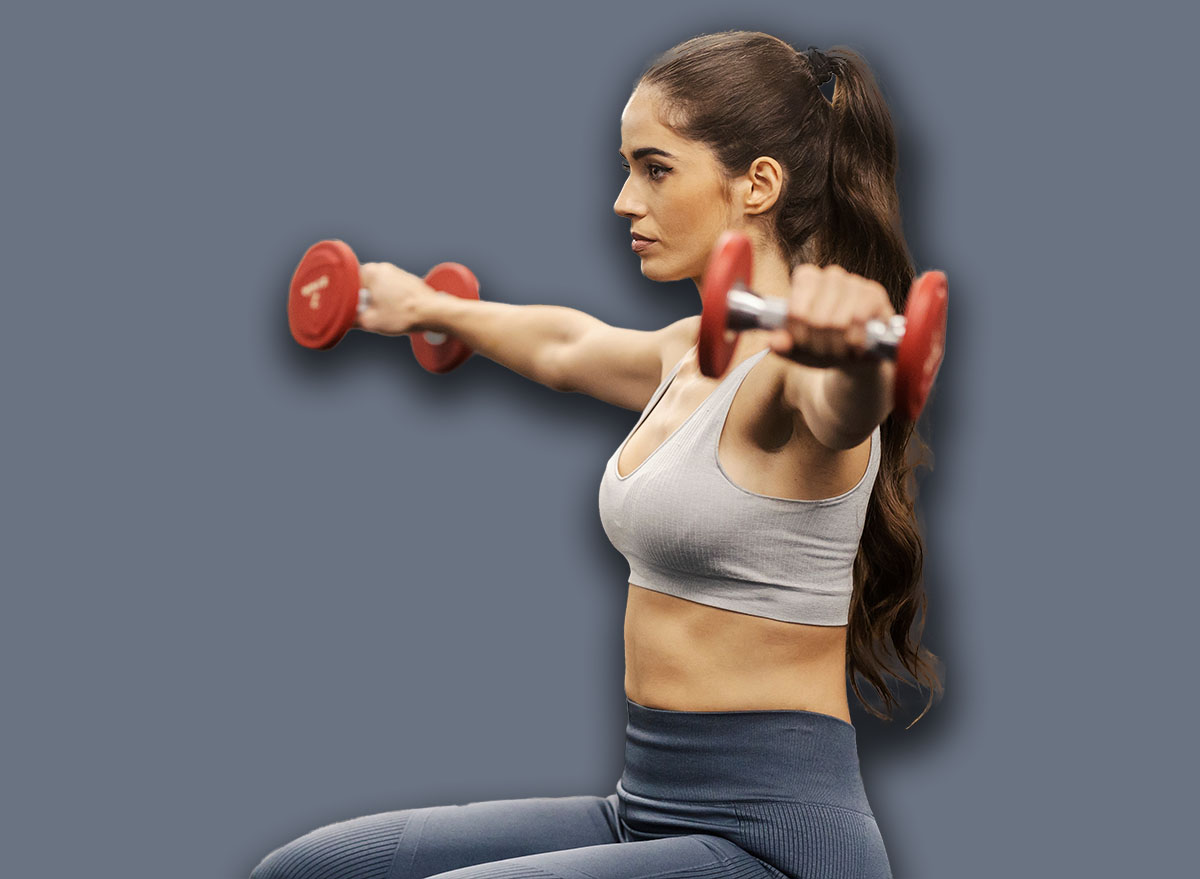
- Muscles Engaged: Medial deltoid, upper trapezius, and stabilizing muscles of the rotator cuff.
- Execution Protocol: Sit upright on a bench, holding a light dumbbell in each hand with palms facing your body, arms extended slightly bent at the elbows by your sides. Maintain a neutral spine and engaged core. Without shrugging your shoulders, smoothly lift the dumbbells out to the sides, leading with your elbows, until your arms are roughly parallel to the floor, forming a "T" shape. The weight should not exceed shoulder height. Focus on a controlled upward movement and a deliberate, slow descent back to the starting position, preventing the weights from swinging.
- Prescription: Execute 3 sets of 12 to 15 repetitions. Rest for 30 to 45 seconds between sets.
- Variations for Progression: Incorporate partial repetitions for increased burn, single-arm raises to challenge stability further, or extended tempo lowers (e.g., a 4-second eccentric phase) to maximize muscle fiber recruitment.
3. Seated Resistance Band Pull-Aparts
This often-overlooked exercise is highly effective for strengthening the posterior shoulder muscles and the upper back musculature, which are crucial for maintaining proper shoulder alignment and preventing discomfort. It specifically targets the rear deltoids, rhomboids, and mid-trapezius—muscles essential for good posture and overall joint stability. Executing band pull-aparts while seated reinforces correct torso positioning and minimizes compensatory movements, ensuring the focus remains on the targeted muscle groups. This movement beautifully complements pressing exercises, contributing to balanced shoulder development and injury resilience.
- Muscles Engaged: Posterior deltoid, rhomboids, middle trapezius, and the rotator cuff complex.
- Execution Protocol: Sit tall with a resistance band held in both hands, arms extended straight out in front of you at shoulder height, palms facing down, hands slightly wider than shoulder-width apart. Ensure the band has some tension. Engage your core and draw your shoulder blades down and back, initiating the movement by pulling the band apart horizontally. Focus on squeezing your shoulder blades together as if trying to hold a pencil between them. Control the return phase, allowing the band to slowly bring your hands back together without losing tension. Avoid shrugging your shoulders towards your ears.
- Prescription: Perform 3 to 4 sets of 15 to 20 repetitions. Rest for approximately 30 seconds between sets.
- Variations for Progression: Experiment with overhead pull-aparts for a different angle of attack, incorporate pause reps at the peak contraction, or try alternating grips for varied muscle activation.
4. Seated Cuban Press
The Cuban press is a sophisticated, multi-phase exercise designed to develop comprehensive shoulder strength, particularly through external rotation, which is vital for long-term joint health and stability of the rotator cuff. It meticulously improves coordination between the larger pressing muscles and the smaller, crucial rotator cuff stabilizers. This complex movement effectively reinforces safe overhead mechanics and significantly enhances shoulder resilience. It is best performed with lighter weights and an unwavering focus on controlled, deliberate execution throughout all phases.
- Muscles Engaged: Rotator cuff muscles (supraspinatus, infraspinatus, teres minor, subscapularis), anterior deltoid, medial deltoid, and upper back stabilizers.
- Execution Protocol: Sit upright with a light dumbbell in each hand. Begin with the dumbbells resting in front of your hips, palms facing your body. First, perform an upright row, pulling the dumbbells up towards your chest with elbows leading, until your upper arms are parallel to the floor and elbows are bent at 90 degrees. From this position, externally rotate your shoulders, pivoting your forearms upwards until the dumbbells are at shoulder height, as if holding them at the top of a bicep curl. Finally, press the dumbbells overhead, similar to a standard shoulder press. Reverse the motion through each phase with complete control: lower from overhead to the external rotation position, then internally rotate to the upright row position, and finally lower to the starting position.
- Prescription: Complete 2 to 3 sets of 6 to 8 repetitions. Allow 60 seconds of recovery between sets.
- Variations for Progression: Integrate pause rotations at the external rotation phase, utilize a resistance band for added continuous tension throughout the movement, or perform segmented repetitions, pausing briefly at each transition point.
5. Seated Front Dumbbell Raise
Front raises specifically target the anterior head of the deltoid, which is instrumental in lifting and reaching tasks that are fundamental to daily living. The seated execution of this exercise is crucial as it effectively eliminates momentum from the lower body and torso, ensuring maximal muscle activation in the anterior deltoids. This exercise not only builds strength in the front of the shoulder but also supports overall pressing power and shoulder endurance. When performed with meticulous control, it reinforces healthy shoulder mechanics and contributes to balanced shoulder development.
- Muscles Engaged: Anterior deltoid, upper pectoralis major, and core stabilizing muscles.
- Execution Protocol: Sit upright on a bench, holding a light dumbbell in each hand, palms facing your thighs, with arms extended by your sides. Maintain a strong, neutral spine and engaged core. With a slight bend in your elbows, smoothly lift the dumbbells straight out in front of you, without swinging, until your arms are parallel to the floor. Focus on using your shoulder muscles to initiate and control the lift. Slowly lower the dumbbells back to the starting position, resisting gravity throughout the descent. Avoid shrugging or using momentum.
- Prescription: Perform 3 sets of 10 to 12 repetitions. Rest for 45 seconds between sets.
- Variations for Progression: Try alternating raises between arms, use a weight plate for a different grip challenge, or implement tempo repetitions with a controlled eccentric phase.
Holistic Principles for Enduring Shoulder Health After Midlife
Achieving and maintaining robust shoulder strength post-midlife is a journey characterized by consistency and intelligent effort, rather than solely by maximal exertion. As the body ages, several overarching strategies become increasingly vital to complement targeted exercises:
- Prioritize Consistency Over Intensity: Regular, moderate training sessions yield superior results and minimize injury risk compared to infrequent, high-effort endeavors. Aim for 2-3 dedicated shoulder training sessions per week.
- Embrace Warm-up and Cool-down Rituals: Begin each session with dynamic stretches and light cardio to prepare joints and muscles, and conclude with static stretches to enhance flexibility and aid recovery.
- Listen to Your Body’s Signals: Differentiate between muscle fatigue and joint pain. Never push through sharp, persistent pain. Adjust weights, ranges of motion, or take rest days as needed.
- Implement Progressive Overload Mindfully: To continue building strength, gradually increase resistance, repetitions, or sets over time. However, this progression should be slow and deliberate, prioritizing flawless form above all else.
- Nourish Your Connective Tissues: A balanced diet rich in protein supports muscle repair, while nutrients like Vitamin C, Omega-3 fatty acids, and potentially collagen supplements can contribute to joint health and reduce inflammation.
- Maintain Optimal Posture: Poor posture, especially prolonged slouching, can compromise shoulder mechanics and lead to impingement. Regularly check and correct your posture throughout the day.
- Stay Hydrated: Water is essential for joint lubrication and overall cellular function, impacting the health and elasticity of connective tissues.
- Seek Professional Guidance: If you experience persistent pain, limited mobility, or are unsure about proper form, consult with a qualified physical therapist or certified personal trainer specializing in older adult fitness. They can provide personalized assessments and programming.
In conclusion, the pursuit of shoulder strength and resilience after fifty is a vital investment in one’s long-term health and autonomy. By embracing the targeted, controlled, and functional approach of seated exercises with free weights and resistance bands, individuals can effectively bypass the limitations of many gym machines. This methodology not only rebuilds and fortifies the complex architecture of the shoulder but also empowers a confident, active, and pain-free engagement with the world, ensuring that the critical functions of these indispensable joints remain robust for years to come.
About the Author










