The pursuit of a brighter smile has long been a cornerstone of personal grooming, yet many conventional methods for achieving this goal come with a significant caveat: potential damage to the delicate enamel layer of teeth. Over time, teeth can naturally lose their luster, a process exacerbated by factors ranging from genetic predispositions to the daily consumption of staining agents found in beverages like coffee, tea, and even certain foods such as tomatoes. While a plethora of chemical whitening products exist on the market, their efficacy is often counterbalanced by their aggressive nature, which can lead to enamel erosion, increased tooth sensitivity, and a heightened susceptibility to further discoloration. Addressing this critical imbalance between aesthetic improvement and oral health preservation, a team of researchers has unveiled an innovative, experimental whitening powder designed to be activated by the mechanical action of an electric toothbrush. This novel formulation, detailed in a recent publication in the journal ACS Nano, not only demonstrates a remarkable capacity to lighten stains in laboratory settings but also exhibits a protective effect on tooth structure, paving the way for a new paradigm in at-home dental care.
The development stems from a desire to move beyond the established reliance on peroxide-based bleaching agents, which form the active ingredient in many popular whitening strips, gels, and rinses. These traditional treatments operate by generating reactive oxygen species (ROS), molecules that effectively break down the chromophores – the parts of a molecule responsible for color – that cause stains. However, this chemical onslaught is indiscriminate, also affecting the protein matrix of tooth enamel, thereby compromising its integrity. This can manifest as a weakening of the enamel’s mineral structure, rendering teeth more vulnerable to the very issues they are intended to correct.
In stark contrast, the researchers, led by Min Xing, Wenhao Qian, Xuanyong Liu, and Jiajun Qiu, have engineered a material that circumvents these detrimental effects. Their creation is a unique compound engineered to produce ROS only when stimulated by the physical motion characteristic of an electric toothbrush. Crucially, this triggered release mechanism is coupled with an inherent ability to fortify and mend the tooth’s structure, rather than degrade it. This dual-action approach represents a significant leap forward, promising a whitening solution that actively contributes to long-term oral well-being.
The scientific foundation of this innovation lies in the sophisticated manipulation of material properties. The team synthesized their novel compound by integrating strontium and calcium ions with barium titanate, a ferroelectric ceramic material. This mixture was then subjected to high temperatures, resulting in the formation of a ceramic powder designated as BSCT. The key to its activation lies in the piezoelectric effect. When the BSCT powder is subjected to mechanical stress, such as the vibrations generated by an electric toothbrush, it produces a localized electric field. This field, in turn, catalyzes specific chemical reactions that lead to the controlled generation of ROS, precisely when and where they are needed for stain removal.
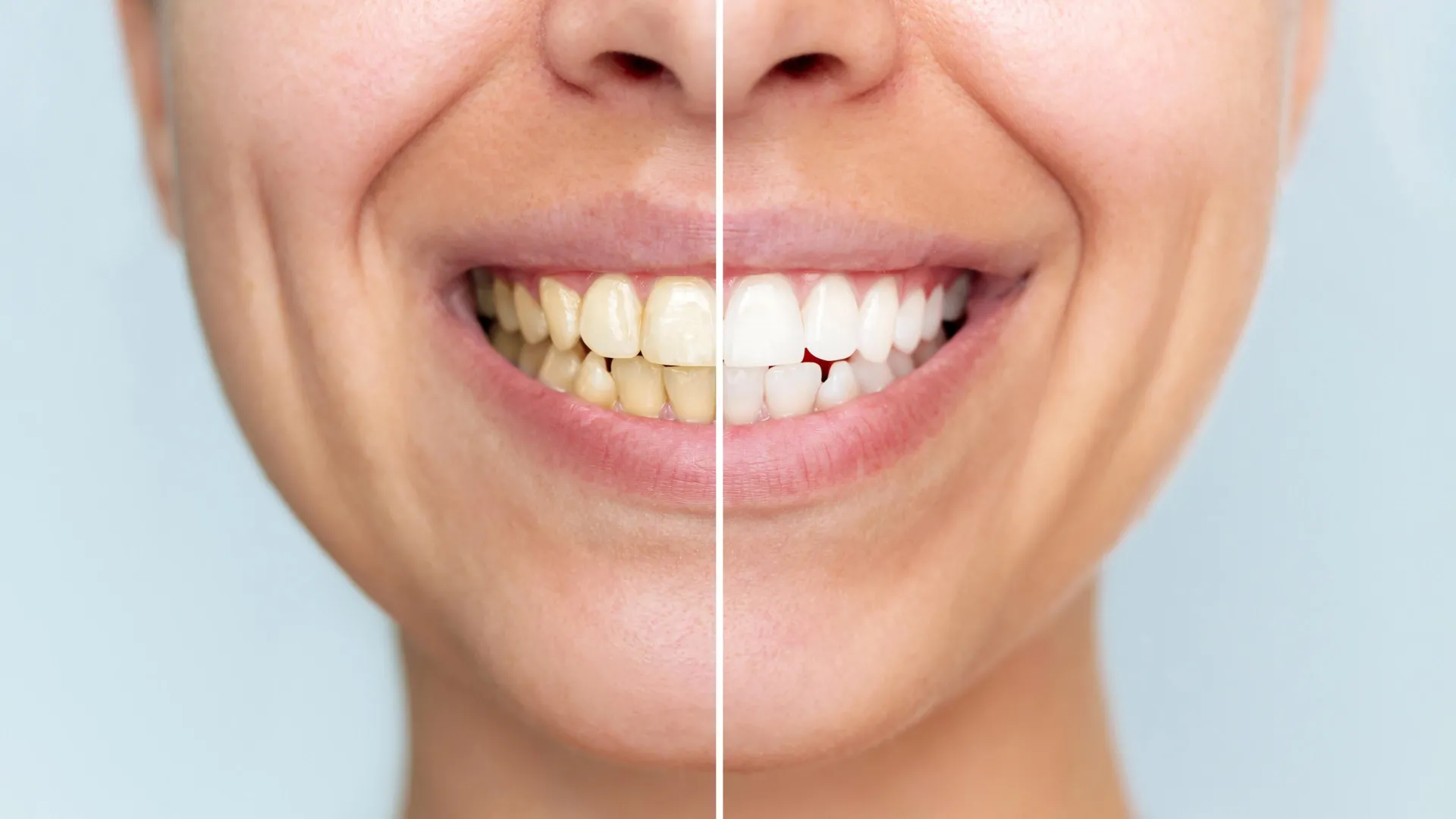
The efficacy of this vibration-activated powder has been rigorously tested in preliminary laboratory experiments. Human teeth that had been artificially stained with common culprits like tea and coffee were subjected to brushing with the BSCT powder utilizing an electric toothbrush. The results were compelling: within a four-hour period, a noticeable reduction in staining was observed. Further observation at the twelve-hour mark revealed that these teeth achieved nearly a 50% improvement in whiteness compared to control teeth treated with a simple saline solution under identical brushing conditions.
Beyond its whitening capabilities, the BSCT powder demonstrated a remarkable restorative function. The researchers observed that the material actively contributed to the repair of enamel and dentin that had been compromised by staining or other forms of damage. The presence of essential minerals within the powder formulation, including strontium, calcium, and barium, facilitated the deposition of these elements onto the tooth surface. This deposition process effectively rebuilt critical structural components, reinforcing the tooth’s natural architecture.
The positive impact of this novel formulation extended to assessments conducted in animal models. In a study involving rats that were fed a diet high in sugar – a known contributor to oral health issues – daily brushing with the BSCT powder for one minute over a four-week period yielded significant improvements in their oral microbiome balance. The treatment was found to effectively reduce the populations of detrimental bacteria, such as Porphyromonas gingivalis and Staphylococcus aureus, both of which are implicated in gum disease and other oral infections. Furthermore, the regimen led to a measurable decrease in levels of inflammation within the oral cavity.
While the BSCT powder has not yet been developed into a consumer-ready toothpaste, these promising findings lay a robust foundation for the development of a new generation of at-home dental care products. The potential exists for a whitening treatment that not only delivers superior aesthetic results but also actively safeguards and enhances overall oral health, offering a holistic approach to dental hygiene that addresses both appearance and well-being. The research team’s acknowledgment of funding from various prestigious institutions, including the Youth Innovation Promotion Association of the Chinese Academy of Sciences, the Science and Technology Commission of Shanghai Municipality, and others, underscores the significant scientific and governmental support behind this pioneering work. This collaborative effort highlights the global interest in developing safer and more effective solutions for common health and aesthetic concerns. The integration of materials science with dental applications, driven by the principles of controlled chemical reactions and biomechanical activation, signals a future where advanced scientific discoveries translate directly into tangible benefits for public health.
About the Author