
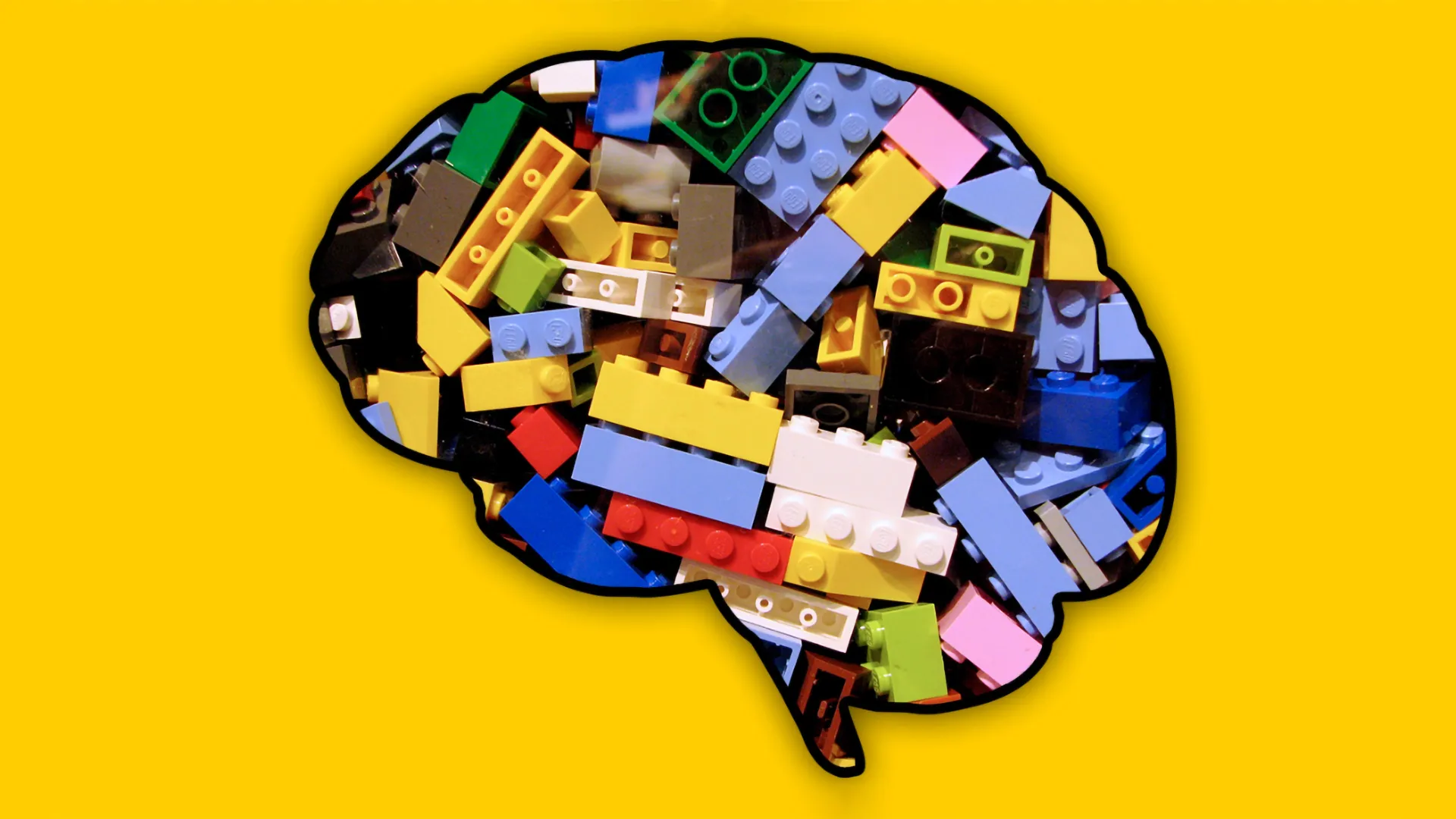
Artificial intelligence has achieved remarkable feats, from generating sophisticated prose to assisting in medical diagnoses with remarkable precision, yet it consistently falls short of the inherent mental adaptability of the human brain. While AI excels at specialized tasks, its capacity for real-time adjustment and learning in novel situations remains a significant challenge, a stark contrast to the human ability to fluidly assimilate new information and navigate unfamiliar environments. This inherent difference, according to groundbreaking research from Princeton University, can be attributed to the brain’s ingenious strategy of reusing and reconfiguring fundamental cognitive components, akin to modular building blocks, across a vast spectrum of experiences.
This novel insight, published in the esteemed journal Nature, challenges the notion that each new skill acquisition necessitates an entirely distinct neural pathway. Instead, the study’s senior author, Tim Buschman, Ph.D., an associate director at the Princeton Neuroscience Institute, explains that the brain’s flexibility stems from its ability to draw upon and recombine these fundamental cognitive elements. "State-of-the-art AI models can reach human, or even super-human, performance on individual tasks," Buschman elaborated. "But they struggle to learn and perform many different tasks. We found that the brain is flexible because it can reuse components of cognition in many different tasks. By snapping together these ‘cognitive Legos,’ the brain is able to build new tasks." This process, often referred to as compositionality, allows individuals to leverage existing knowledge and skills to tackle new challenges with an efficiency that current artificial systems struggle to replicate.
The principle of compositionality is readily observable in everyday life. Consider the individual who has mastered the mechanics of bicycle repair; the foundational understanding of tools, mechanics, and problem-solving readily transfers to the more complex task of motorcycle maintenance, albeit with added layers of specialization. Similarly, the culinary arts provide a clear illustration: a baker familiar with the fundamental processes of yeast activation, kneading, and oven management can adapt these skills to create a wide array of baked goods, from rustic loaves to delicate pastries, by integrating new techniques and ingredients. This ability to construct new competencies by drawing upon and repurposing existing ones has long been recognized as a hallmark of human intelligence, but the precise neural mechanisms underpinning this phenomenon have remained elusive, often yielding conflicting evidence.
To systematically investigate this intricate cognitive architecture, Sina Tafazoli, Ph.D., a postdoctoral researcher in the Buschman lab and lead author of the study, designed a series of experiments involving two male rhesus macaques. Rather than relying on real-world analogies, the researchers presented the primates with a set of visually distinct categorization tasks. These tasks involved discerning patterns within abstract, colorful, blob-like shapes displayed on a screen. The monkeys were trained to differentiate between shapes resembling a bunny and the letter "T," as well as to categorize colors as predominantly red or green. The complexity of these tasks was intentionally amplified by introducing varying degrees of ambiguity, requiring the animals to make nuanced judgments rather than simple binary distinctions.
The method for the monkeys to signal their decisions was meticulously chosen to allow for the isolation of cognitive processes. They were instructed to indicate their categorization by gazing in one of four specific directions on the screen. For instance, a leftward glance might signify a "bunny" classification, while a rightward gaze could represent a "T." The critical element of the experimental design lay in the deliberate overlap and divergence of task rules. Certain color and shape categorization tasks required the same directional cues for response, while both color tasks, despite employing identical categorization criteria, demanded distinct directional responses. This strategic arrangement enabled the researchers to meticulously observe whether the same neural patterns, the hypothesized cognitive building blocks, were activated when tasks shared particular features, irrespective of the overarching objective.
Analysis of the neural activity patterns, captured through advanced brain recording techniques, revealed a significant concentration of recurring neural signatures within the prefrontal cortex, a region of the brain renowned for its role in higher-order cognitive functions, including decision-making and executive control. These consistent patterns of neuronal firing, according to Buschman, represent the brain’s fundamental "cognitive Legos"—a repertoire of elemental processing units that can be flexibly assembled and reassembled to orchestrate a diverse range of behaviors. "I think about a cognitive block like a function in a computer program," Buschman explained. "One set of neurons might discriminate color, and its output can be mapped onto another function that drives an action. That organization allows the brain to perform a task by sequentially performing each component of that task."
The researchers observed that when an animal engaged in a specific task, such as color discrimination, a particular set of neural blocks responsible for processing color information would be activated in concert with blocks governing eye movements. Upon transitioning to a different task, such as shape discrimination, which might still involve similar eye movement patterns, the brain would dynamically reconfigure by activating the shape-processing blocks alongside the previously engaged eye-movement blocks. This remarkable pattern of shared activation was most pronounced in the prefrontal cortex, suggesting that this region serves as a central hub for this compositional cognitive strategy, a characteristic that appears less prominent in other brain areas.
Furthermore, the study illuminated another crucial aspect of the prefrontal cortex’s role in cognitive flexibility: its capacity to selectively suppress or "quiet" cognitive blocks that are not pertinent to the immediate task. This mechanism of actively downregulating irrelevant neural processes is vital for maintaining focus and preventing cognitive overload. Tafazoli highlighted the significance of this dynamic regulation: "The brain has a limited capacity for cognitive control. You have to compress some of your abilities so that you can focus on those that are currently important. Focusing on shape categorization, for example, momentarily diminishes the ability to encode color because the goal is shape discrimination, not color." By precisely controlling which cognitive modules are engaged or disengaged, the brain can optimize performance by concentrating its limited attentional resources on the most relevant task at hand.
The concept of these "cognitive Legos" offers a compelling explanation for the human capacity for rapid skill acquisition. Unlike many current AI systems that are prone to "catastrophic interference," where learning new information leads to the overwriting or forgetting of previously acquired knowledge, the brain’s modular approach allows for incremental learning and adaptation. "A major issue with machine learning is catastrophic interference," Tafazoli noted. "When a machine or a neural network learns something new, they forget and overwrite previous memories. If an artificial neural network knows how to bake a cake but then learns to bake cookies, it will forget how to bake a cake." The integration of compositionality into AI development holds the potential to create more adaptable and human-like artificial learning systems, capable of accumulating knowledge over time without sacrificing prior learning.
Beyond the realm of artificial intelligence, these findings carry profound implications for understanding and treating various neurological and psychiatric conditions. Disorders such as schizophrenia, obsessive-compulsive disorder, and certain forms of brain injury are often characterized by difficulties in applying learned skills in new contexts or adapting to changing circumstances. These challenges may arise from a disruption in the brain’s ability to seamlessly recombine its fundamental cognitive building blocks. Tafazoli expressed optimism for future therapeutic applications: "Imagine being able to help people regain the ability to shift strategies, learn new routines, or adapt to change. In the long run, understanding how the brain reuses and recombines knowledge could help us design therapies that restore that process." This research thus opens promising avenues for developing interventions aimed at restoring cognitive flexibility and enhancing adaptive functioning in individuals facing these debilitating conditions. The study received vital support from the National Institutes of Health.
About the Author












