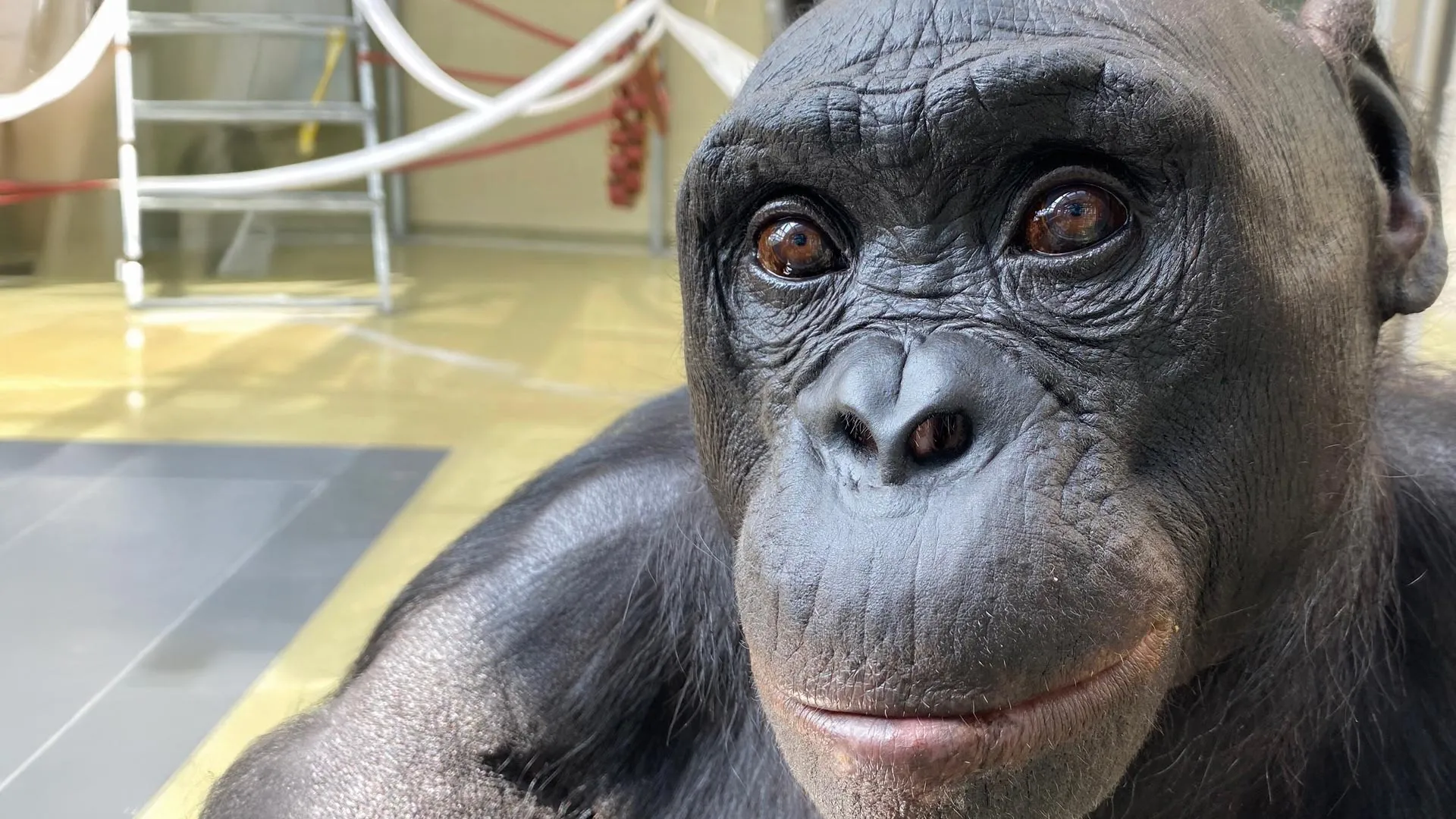
Groundbreaking research conducted at Johns Hopkins University has presented compelling evidence that sophisticated pretend play, a cognitive ability long considered a hallmark of human exceptionalism, is demonstrably present in at least one bonobo, significantly broadening our understanding of animal intelligence. Through a series of meticulously designed experimental scenarios, a single bonobo named Kanzi exhibited a consistent and repeatable capacity to engage with imaginary substances and objects, a finding that challenges deeply entrenched notions about the exclusivity of imaginative thought to our own species. This paradigm-shifting discovery suggests that the cognitive landscape of certain non-human primates may be far more nuanced and flexible than previously appreciated, pushing the boundaries of what we believed was exclusively a human mental faculty.
The implications of these findings extend beyond merely observing a novel behavior; they delve into the very evolutionary history of cognition. Researchers propose that the capacity to conceptualize and track non-existent entities likely resides within the cognitive repertoire of at least one enculturated ape, hinting at potentially ancient evolutionary roots for this mental skill. This suggests that the origins of imagination might trace back as far as 6 to 9 million years, to the common ancestor shared by humans and the great apes, indicating that this capacity may have been present in our shared lineage long before the divergence of our species. This perspective invites a profound re-evaluation of what constitutes uniquely human attributes and encourages a more expansive appreciation for the mental lives of other creatures.
Dr. Christopher Krupenye, a co-author of the study and an assistant professor in the Department of Psychological and Brain Sciences at Johns Hopkins, who specializes in animal cognition, articulated the profound nature of these results, stating that the ability to transcend the immediate reality of the present moment is truly a game-changer in our understanding of animal minds. He emphasized that imagination has historically been viewed as a cornerstone of the human experience, but the notion that it is not solely confined to our species represents a transformative shift in scientific thought. Krupenye drew a parallel to the revolutionary impact of Jane Goodall’s discoveries regarding tool use in chimpanzees, which fundamentally altered the definition of what it means to be human. He posits that this new research similarly compels us to reconsider our perceived uniqueness and to contemplate the richness of mental experiences that may exist among other species. The study, which offers these remarkable insights, has been formally published in the esteemed scientific journal Science.
The developmental trajectory of pretend play in human children provides a crucial comparative framework for understanding the significance of the bonobo’s behavior. Young human children typically begin to engage in make-believe activities, such as orchestrating imaginary tea parties, by approximately two years of age. Even infants as young as 15 months old often demonstrate rudimentary signs of understanding make-believe, exhibiting surprise when an adult pretends to empty a cup and then simulates drinking from it. Despite this extensive documentation of pretend play in human development, a notable void existed in the scientific literature regarding controlled experimental investigations into whether non-human animals possessed similar capacities. This gap persisted even in the face of numerous anecdotal observations, both from wild populations and captive environments, that hinted at such abilities. For instance, young chimpanzees in their natural habitats have been observed carrying sticks and treating them as if they were infants, and in captive settings, instances have been reported of chimpanzees appearing to drag imaginary blocks across the floor after having engaged with real wooden ones.
Driven by the desire to rigorously investigate the presence of pretend play under controlled conditions, Dr. Krupenye, along with co-author Dr. Amalia Bastos, a former postdoctoral fellow at Johns Hopkins now lecturing at Scotland’s University of St. Andrews, embarked on a series of carefully designed experiments. Their approach mirrored the familiar concept of a child’s tea party, focusing on Kanzi, a 43-year-old bonobo residing at the Ape Initiative. Kanzi was selected for the study due to prior reports suggesting he had exhibited signs of pretend behavior and possessed the ability to comprehend spoken questions by responding through pointing. Each experimental session involved Kanzi seated at a table opposite an experimenter, with the table meticulously arranged to resemble a playful social setting, featuring an assortment of empty cups, pitchers, bowls, and jars.
The core of the experimental design involved the meticulous tracking of invisible substances and imaginary items. In the initial phase, two empty transparent cups were placed alongside an empty transparent pitcher. The experimenter would then engage in a pantomime, pretending to pour "juice" into both cups. Subsequently, the experimenter would simulate emptying one of the cups and shake it to visibly demonstrate its emptiness, before posing the question to Kanzi: "Where’s the juice?" The results were striking: Kanzi predominantly indicated the cup that was intended to still contain the imaginary juice. This accuracy was maintained even when the experimenter strategically moved the cups around the table, suggesting a cognitive grasp of the object’s presence beyond its physical manifestation.
To rigorously exclude the possibility that Kanzi was operating under the assumption that real juice was somehow concealed within the cup, a second, more refined test was administered. In this iteration, one cup was filled with actual juice, while the other contained only the pretend version. When Kanzi was subsequently asked what he desired, his preference consistently and overwhelmingly leaned towards the cup containing the real juice, thereby confirming his discernment between the tangible and the illusory. A third experiment mirrored this logical structure, substituting grapes for juice. The experimenter would pretend to consume a grape from an empty container, then place it into one of two jars. After feigning the emptying of one jar, the question was posed: "Where’s the grape?" Once again, Kanzi reliably indicated the jar that held the imaginary grape. While Kanzi’s responses were not invariably correct, his accuracy rate demonstrated a statistically significant understanding of the pretend scenarios.
Dr. Bastos highlighted the profound significance of these findings, remarking that the data strongly suggest that apes possess the remarkable ability to conceive of things that are not physically present. She elaborated that Kanzi was capable of generating a mental representation of the pretend object while simultaneously understanding its non-real status. These groundbreaking results are anticipated to catalyze further research in this burgeoning field. Future investigations are likely to explore the extent to which other ape species, and indeed a broader spectrum of animal life, can engage in pretend play or track imaginary entities. The research team also expresses keen interest in examining related cognitive capacities, such as foresight and the understanding of others’ mental states, often referred to as theory of mind.
Dr. Krupenye concluded by emphasizing that imagination is a fundamental contributor to the richness of human mental lives, and the revelation that some of its foundational elements are shared with apes compels us to reconsider our assumptions about the existence of robotic, present-bound lifestyles in other animals. He argued that these findings should inspire a greater sense of ethical responsibility towards these creatures, advocating for their care and continued existence based on the understanding that they possess complex and vibrant minds.
About the Author