As individuals advance into their later decades, maintaining ease and confidence in daily activities, such as ascending a flight of stairs, often becomes a significant focus of physical well-being. The ability to navigate varied terrains and elevations is fundamental to preserving independence and quality of life. However, with the natural progression of aging, a decline in muscular strength, endurance, and coordination, medically termed sarcopenia and age-related balance deficits, can transform what was once a routine movement into a demanding task. Many fitness professionals observe that this challenge frequently emerges as one of the earliest indicators of diminished lower body function in adults over sixty. The complex biomechanics of stair climbing necessitate a synergistic effort from several major muscle groups, including the quadriceps for knee extension, the gluteal muscles for hip extension, the calves for propulsion, and an array of smaller stabilizing muscles within the hips and core to maintain equilibrium. When the robustness or stamina of these interconnected systems wanes, each upward stride demands considerably greater physiological exertion.
A common misconception in addressing this decline involves the immediate adoption of exercises like lunges. While lunges are undoubtedly effective for developing lower body strength and mobility in many populations, for older adults, particularly those beginning to experience a loss of leg strength or managing existing joint sensitivities, they can present certain disadvantages. The unilateral nature of a lunge, coupled with the deep knee flexion and requirement for substantial balance, can impose considerable stress on the knee joint. Moreover, the inherent instability of the lunge movement might prove counterproductive or even risky for individuals whose proprioception and balance systems are already compromised, potentially leading to a greater risk of falls or discomfort rather than fostering improvement. Therefore, a more judicious approach often involves incorporating exercises that optimize stability and functional muscle activation while minimizing undue joint strain.
Targeted standing exercises represent a highly effective alternative strategy for individuals seeking to bolster the specific muscular capabilities essential for vertical locomotion. These movements are designed to engage the primary propulsive and stabilizing muscles in a manner that closely mimics real-world actions, fostering improved balance, precise muscular engagement, and a reduction in adverse joint loading. Consistent participation in such a regimen can lead to tangible enhancements in the power and self-assurance required to ascend staircases comfortably. A key advantage of integrating standing exercises into a fitness routine is their direct translational benefit to everyday tasks. By training the lower limbs and core in an upright, weight-bearing posture, the body learns to generate force dynamically while simultaneously upholding equilibrium and proper alignment. This cultivation of functional strength seamlessly transfers to a multitude of daily movements, encompassing not only stair climbing but also navigating inclines, rising from a seated position, and maintaining stability during ambulation. The profound impact extends beyond mere physical capacity, contributing significantly to a greater sense of autonomy and a reduced apprehension about navigating varied environments.
The following selection of exercises has been specifically chosen to fortify the gluteal muscles, quadriceps, calf complex, and the critical hip stabilizers – all pivotal components in generating the upward drive for each step. The emphasis throughout these movements should be on controlled execution, maintaining optimal postural alignment, and consciously activating the target musculature during every repetition. Through diligent and regular practice, many individuals successfully reclaim the physical vigor and psychological assurance necessary to tackle stairs with renewed ease and confidence. It is always advisable to consult with a healthcare provider or a certified fitness professional before embarking on any new exercise program, particularly for those with pre-existing health conditions or mobility concerns.
1. Step-Ups: Replicating the Ascent Mechanics
Step-ups stand out as a cornerstone exercise for cultivating stair-climbing proficiency due to their direct simulation of the fundamental movement pattern. This exercise effectively recruits the primary muscles involved in lifting the body against gravity, making it exceptionally valuable for individuals aiming to restore their capacity for vertical movement. By stepping onto an elevated, stable surface, the working leg is compelled to generate the force required to propel the entire body upward, mirroring the mechanics of ascending a single stair. This action primarily engages the quadriceps, responsible for extending the knee, and the gluteal muscles, crucial for powerful hip extension. When executed with deliberate control, rather than relying on momentum, step-ups teach these muscles to produce sustained power, enhancing both strength and muscular endurance. The coordinated effort required also significantly contributes to improving overall balance and proprioception, which are vital for navigating uneven surfaces safely. Progressing the height of the step gradually allows for continued challenge and adaptation as strength improves.
2. Standing Calf Raises: The Propulsive Foundation
The calf muscles, comprising the gastrocnemius and soleus, play an indispensable role in the terminal phase of each stair-climbing step, providing the crucial "push-off" power that elevates the body further. A common contributor to early fatigue during longer staircases is insufficient strength in this posterior lower leg musculature. Integrating standing calf raises into a comprehensive strength regimen directly addresses this deficit, rejuvenating the propulsive force that often diminishes with age. Stronger calves enable a more efficient and less taxing upward movement, concurrently mitigating excessive strain on the knee joints by distributing the workload more effectively across the lower kinetic chain. This seemingly simple exercise can dramatically enhance the overall efficiency and stamina required for sustained vertical locomotion, preventing premature exhaustion and improving the fluidity of movement. Variations, such as single-leg calf raises, can further challenge balance and unilateral strength.
3. Standing Hip Extensions: Activating Gluteal Power
The gluteal muscle group, particularly the gluteus maximus, is paramount in generating the upward lift during stair climbing. When these powerful hip extensors are underdeveloped or weakened, the quadriceps are often forced to compensate, leading to increased fatigue in the front of the thigh and potential knee discomfort. Standing hip extensions offer a targeted approach to activating the glutes directly, simultaneously enhancing stability around the hip joint. This movement is highly beneficial for individuals who experience difficulty with uphill walking or prolonged stair ascents, as it specifically rebuilds the posterior chain power necessary for robust upward motion. By isolating and strengthening the glutes in a standing position, the exercise fosters better body mechanics and reduces the reliance on compensatory muscle groups, promoting a more balanced and sustainable pattern of movement. Proper form emphasizes squeezing the glutes at the peak of the extension and maintaining a stable core.
4. Standing Knee Drives: Dynamic Balance and Hip Flexor Strength
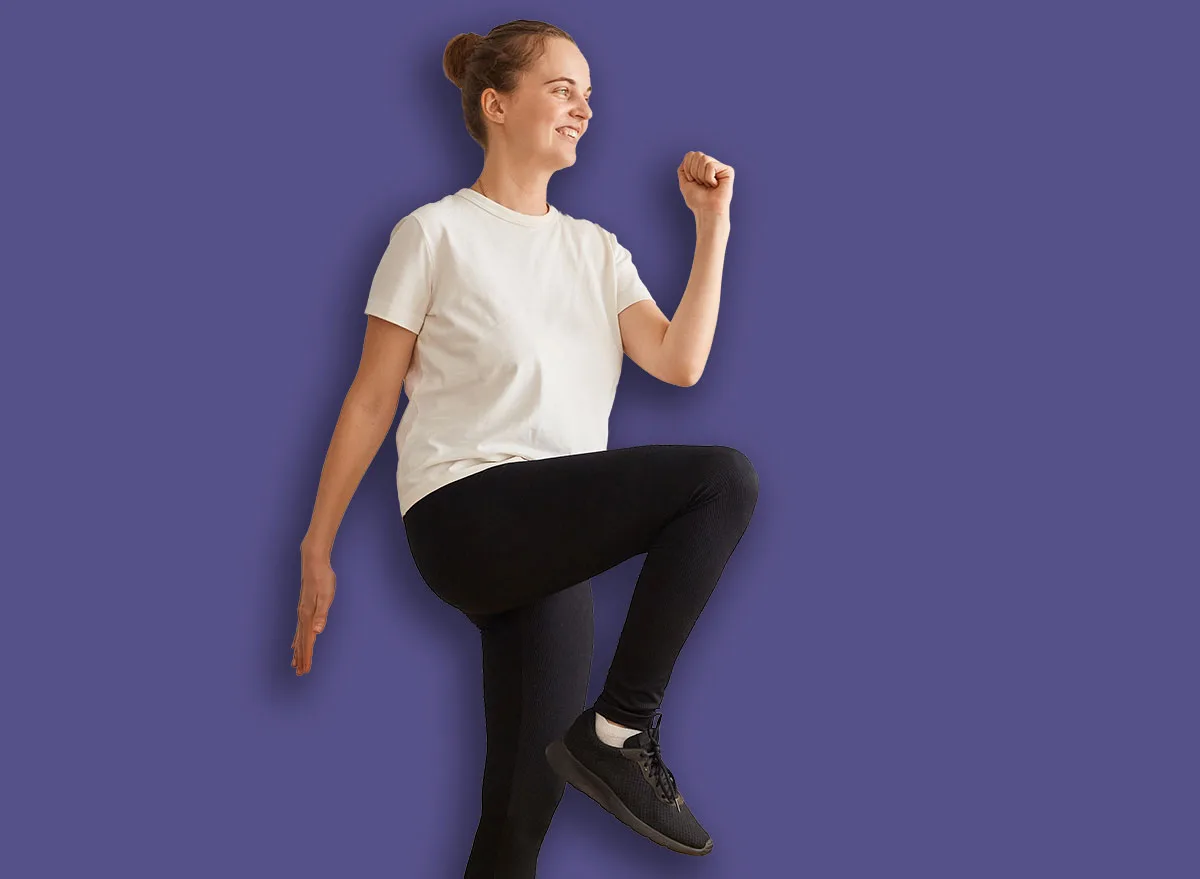
Standing knee drives are a dynamic exercise that not only fortifies the hip flexors and lower abdominal muscles but also significantly reinforces dynamic balance and coordination. This movement directly trains the body to lift the leg with purpose and strength, a critical component for confident and efficient stair climbing. The controlled elevation of the knee demands engagement from the iliopsoas and rectus femoris, crucial muscles for initiating the lift of the leg for the next step, preventing the tendency to drag feet or rely on momentum. Many clients report immediate improvements in their sense of coordination and stability after regularly incorporating controlled knee drives into their routine. This exercise encourages a deliberate and powerful leg lift for each step, contrasting with the passive, momentum-driven movements that can increase the risk of tripping. Furthermore, the engagement of the core muscles during a knee drive contributes to overall trunk stability, which is essential for maintaining an upright posture and preventing lateral sway during ambulation.
In conclusion, the strategic implementation of these standing, functional exercises offers a scientifically sound and practical pathway for older adults to regain or enhance their stair-climbing capabilities. Beyond the specific muscle groups targeted, these movements collectively improve balance, proprioception, and neuromuscular control – all critical elements for maintaining mobility and reducing the risk of falls in the aging population. By prioritizing functional movements that mirror daily activities and by adopting a progressive, mindful approach to exercise, individuals can significantly improve their physical robustness, foster greater independence, and enjoy a more active and confident lifestyle well into their senior years. The journey to better mobility is an investment in long-term health and well-being, empowering individuals to navigate their environments with renewed ease and vigor.
About the Author